Having a quick look at my ORCiD page I'm pleased to see that at some point I remembered to update it to add my most recent employment (even though not connected to science anymore, it would let someone see my career path).

I had also added a link to Mastodon at some point but I need to update that to point to this account:

https://orcid.org/0000-0002-3881-294X

#orcid #academia

ORCID

I had a quick look and found this paper from last year which includes in its abstract, this fact:

"We found an overall adoption rate of 72%, with adoptions rates ranging between academic disciplines from a low of 17% in the visual and performing arts to a high of 93% in biological and biomedical sciences"

93% is amazing and I hope those working in biological sciences continue to find it genuinely useful.

https://link.springer.com/article/10.1007/s11192-025-05300-7

#orcid #academia

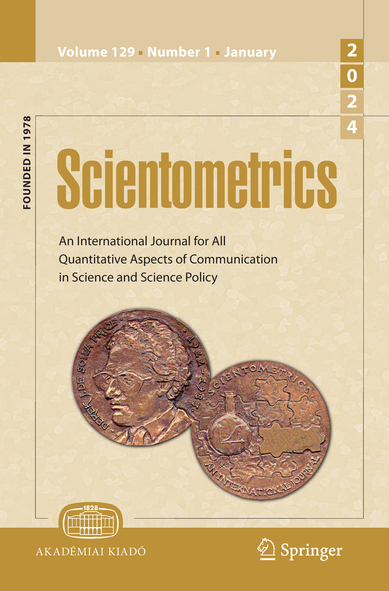
Understanding ORCID adoption among academic researchers - Scientometrics

Just over a decade ago, the ORCID (Open Researcher and Contributor Identifier) was created to provide a unique digital identifier for researchers around the world. The ORCID has proven essential in identifying individual researchers and their publications, both for bibliometric research analyses and for universities and other organizations tracking the research productivity and impact of their personnel. Yet widespread adoption of the ORCID by individual researchers has proved elusive, with previous studies finding adoption rates ranging from 3% to 42%. Using a national survey of U.S. academic researchers at 31 research universities, we investigate why some researchers adopt an ORCID and some do not. We found an overall adoption rate of 72%, with adoptions rates ranging between academic disciplines from a low of 17% in the visual and performing arts to a high of 93% in biological and biomedical sciences. Many academic journals require an ORCID to submit a manuscript, and this is the main reason why researchers adopt an ORCID. The top three reasons for not having an ORCID are not seeing the benefits, being far enough in the academic career to not need it, and working in an academic discipline where it is not needed.

SpringerLink

Over a decade ago, in September 2015, I wrote this blog post:

Why I still think people should be jumping on the ORCID bandwagon

https://www.acgt.me/blog/2015/9/8/why-i-still-think-people-should-be-jumping-on-the-orcid-bandwagon?rq=bandwagon

This was written a few months before I left academia to move into science communication. Rediscovering this blog post today made me wonder 'Has ORCID taken off?'

#orcid #academia

Why I still think people should be jumping on the ORCID bandwagon — ACGT

ACGT

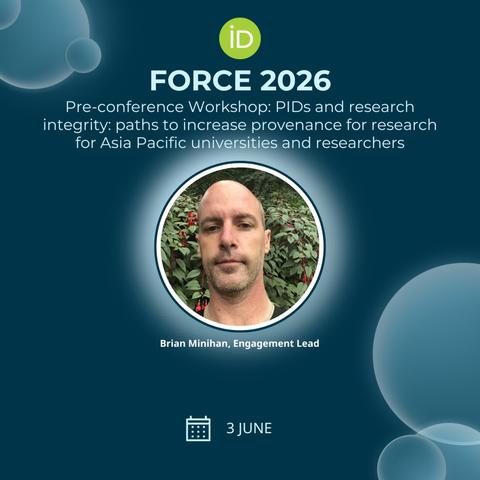
Heading to FORCE2026 in Singapore? Connect with ORCID! ✈️

Join Brian Minihan on Wed 3 June (9AM SGT) for an interactive workshop on using PIDs & #ORCID metadata to support research integrity in the APAC region.

Abstract: event.fourwaves.com/force2026/abstracts/a0544668-8728-4b89-b295-9736e6f43790

RE: https://scicomm.xyz/@ORCID_Org/116641396465428683

"Science has a [...] set of infrastructure for handling identity, provenance, integrity, and discoverability. Systems like arXiv, DOIs, CrossRef, Datacite, ORCID, OpenAlex, ROR, Retraction Watch, and PubMed form a kind of collaborative exoskeleton for scientific publishing and by extension, for modern scientific knowledge. Much as Github has been adapted for AI development, this infrastructure needs to be adapted for AI use in science."

#ai
#pids
#openalex
#retractionwatch
#ORCID
#ROR
#DOI

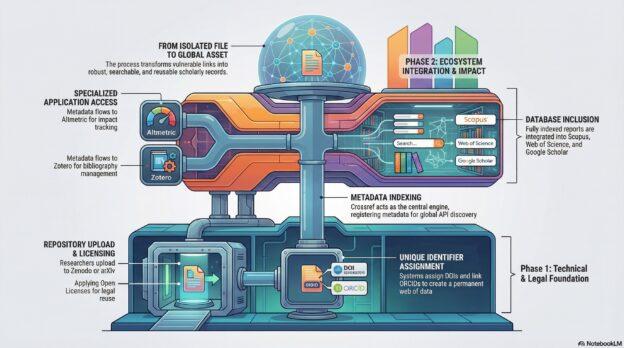
A large part of the economy deals in knowledge – and I’m not talking about education alone. Knowledge is a major ingredient, as well as a byproduct of, any credible attempt at societal change. A host of institutions – universities, governments, parliaments, think tanks and what have you – continuously produce knowledge.

Read the ad-free, no-tracking, complete blog post here: http://www.cottica.net/2026/04/08/frictionless-reports-harnessing-the-power-of-digital-and-open-for-knowledge-sharing/

THREAD 1/20

#digitallife #AltMetric #digital #DOI #ORCID #SCOPUS #WebofScience #Zenodo

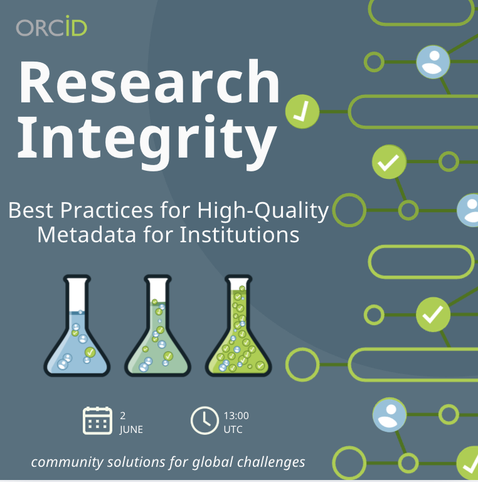
Is your institution’s impact getting lost in the noise? 🆘

When data is disconnected, it’s hard to get the credit you deserve in global rankings.

We’re continuing our collab with OA Switchboard Institutions. See how technical bridges can ensure your institution is authoritatively linked to every discovery your scholars make. 🛡️
Let’s move beyond the noise and build a more connected research ecosystem. 🤝
🚀

Register here to secure your spot: https://orcid-org.zoom.us/webinar/register/6717779209923/WN_o00xGyGNQj6t4G91IXq-pg

#ORCID #ResearchIntegrity #Metadata #Universities #ResearchInstitutions

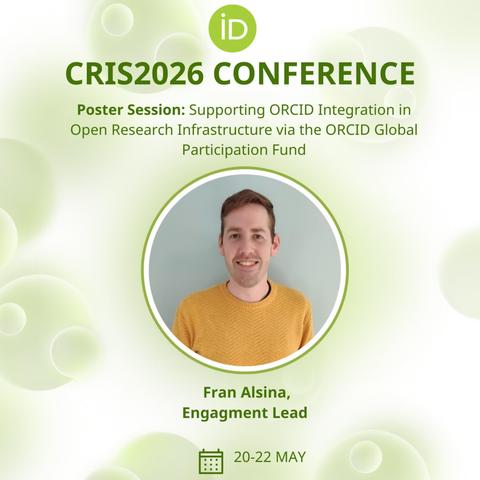
Heading to #CRIS2026? ✈️

ORCID's Fran Alsina is presenting on how the Global Participation Fund reshapes research infrastructure. Learn how #ORCID integrations in open-source tools create a more interoperable, trustworthy ecosystem.
🌐

Details: https://info.orcid.org/event/cris2026-conference/

Digital identity in science is not unified by default. Tools like ORCID and database checks can reveal mismatches and missing affiliations that affect visibility and credit.

🔗 https://www.nature.com/articles/d41586-025-04132-y

#ResearchIntegrity #ORCID #OpenScience #Bibliometrics #SciencePolicy

Researchers: here’s how to audit your fragmented digital identity

Services that track researcher profiles can splinter people’s online identities — but there are ways to keep them consistent.

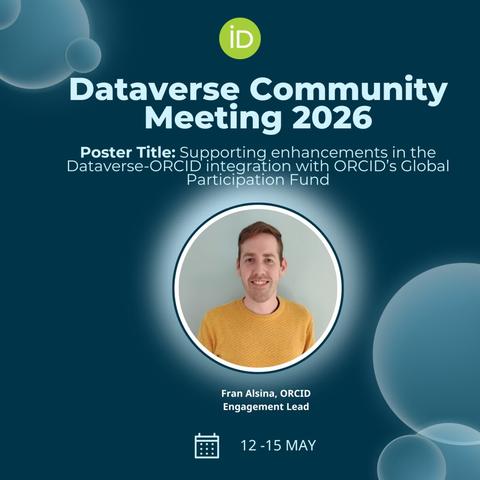
Join the conversation on AI, interoperability, and the future of data repositories at the Dataverse Community Meeting 2026. 🤖 🌐 Learn how #ORCID integrations can make your data more discoverable + connected.
📅12–15 May, Barcelona
🔗 More: https://info.orcid.org/event/dataverse-community-meeting/