Cosmic rays—accelerated atomic nuclei driven by astrophysical phenomena—provide ways to study how galaxies evolved. Using exascale computing power and an #INCITE award researchers are modeling both large- and small-scale behavior in these systems and developing a new model that accounts for unexplained turbulence. https://ascr-discovery.org/2025/02/untangling-the-cosmos/ #HPC #OLCF #ALCF
Untangling the cosmos - ASCR Discovery

More than a century ago, scientists pondered how evolution might be driven by mutations caused in part by cosmic rays that bombard Earth after the explosive demise of faraway stars. Yet how cosmic rays move through space has been an … Continue reading →

ASCR Discovery
Simulations to study new ways to catalyze hydrogen production could help with energy storage. Harvard University's Boris Kozinsky and his team are using machine learning to accelerate these complex calculations. https://ascr-discovery.org/2025/01/carbon-free-hydrogen/ Their #INCITE award includes allocations at both #ALCF and #OLCF. #HPC
Putting hydrogen to work - ASCR Discovery

Scientists, industries and policymakers have been working for years to find energy storage technologies that will help meet peak demand for transportation, power generation and other energy-hungry activities. Take, for instance, hydrogen, a promising option for energy storage that is … Continue reading →

ASCR Discovery
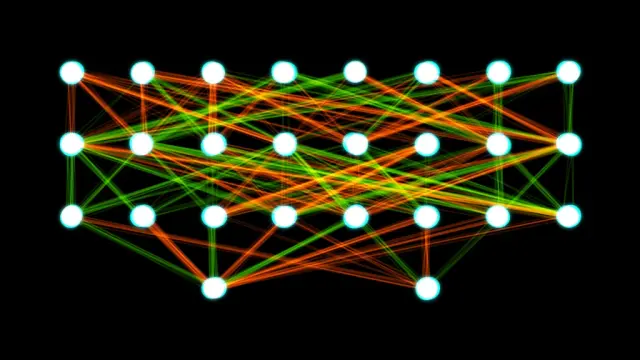
As large language models get bigger, they're increasingly difficult to train. But a team led by Abhinav Bhatele of University of Maryland has developed the open-source #AI training framework, AxoNN, which distributes the work across multiple GPUs. https://ascr-discovery.org/2024/11/we-the-ai-trainers/ The work is nominated for a 2024 ACM, Gordon Bell Prize at #SC24 and has been supported by an #INCITE allocation at #OLCF and #ALCF.
We the AI trainers - ASCR Discovery

Computer scientists are democratizing artificial intelligence, devising a way to enable virtually anyone to train their own AI models, no matter how big and complex the models may be. Their open-source AI training framework, AxoNN, is faster than several commercially … Continue reading →

ASCR Discovery
During the pandemic, Margaret Cheung pivoted to a career modeling the molecular mechanisms of disease transmission at Pacific Northwest National Laboratory. Using a digital twin of the process, she's helping to grapple with complex biological data and find new strategies to disrupt infections. https://ascr-discovery.org/2024/10/pandemic-preparedness/ #HPC #OLCF #ALCF #NERSC
Pandemic preparedness - ASCR Discovery

During the pandemic turmoil, Margaret Cheung reconsidered her career. At the University of Houston, she was approaching the physics of proteins theoretically, such as how they fold and interact, but the pandemic changed her life. “Most of my students and … Continue reading →

ASCR Discovery
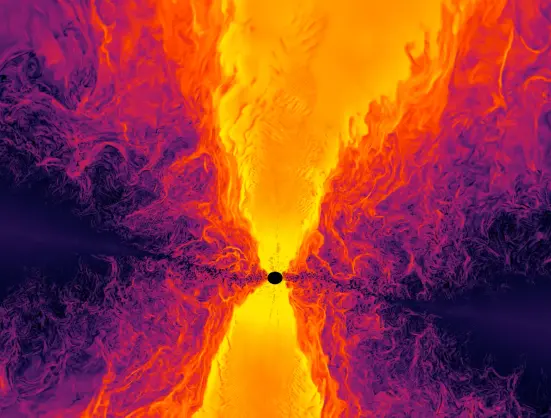
#Exascale computing is allowing James Stone of the Institute for Advanced Study to model how radiation affects accretion-- the energy release as gravity powerfully pulls matter inward-- at the center of black holes. https://ascr-discovery.org/2024/03/aiming-exascale-at-black-holes/ #Polaris #Frontier #ALCF #OLCF #doescience #HPC
Aiming exascale at black holes - ASCR Discovery

In 1783, John Michell worked as a rector in northern England, but his scientific work proposed that the mass of a star could reach a point where its gravity prevented the escape of most anything, even light. The same prediction … Continue reading →

ASCR Discovery
Exascale’s New Frontier: WarpX

Exascale Modeling of Advanced Particle Accelerators

Oak Ridge Leadership Computing Facility
Anyone in Helsinki at #CUG2023 ? Come see me wax poetic about the #OLCF streaming data analytics platform STREAM and the many lessons we learned along the way! It’s just 1.5 hours from now!
@the_curiostech Yeah, we do something very similar to create and serve images for our clusters at the #OLCF. We haven’t open sourced the code yet or I’d link you to it. Have you made any progress?
Someone needs to sync the #NERSC and #OLCF maintenance schedules so they are not offline at the same time 😁
#EarlyGroupWideHolidays #HPC
INCITE program awards supercomputing time to 56 projects to accelerate science and engineering research | Argonne Leadership Computing Facility