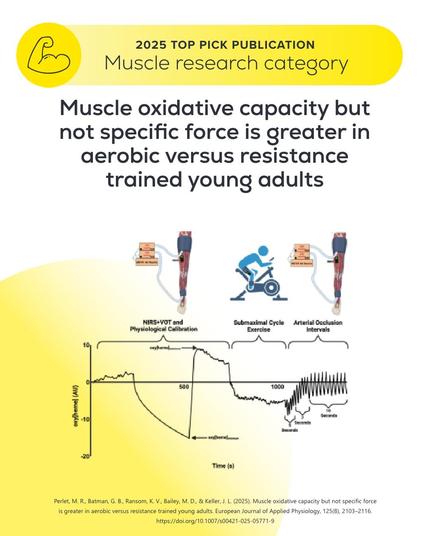
This week’s top pick comes from Perlet et al., who used the PortaMon to investigate how training history and sex-related differences shape NIRS-derived muscle values.

🟡 PortaMon allowed precise, non-invasive monitoring across varied training backgrounds
🔵 NIRS revealed clear sex-related differences in muscle oxygenation metrics
🟡 Insights like these contribute to more targeted and individualized approaches in sports science

🔗 https://publications.artinis.com/publication/perlet-muscle-2025/

#NIRS #MuscleResearch #SportsScience

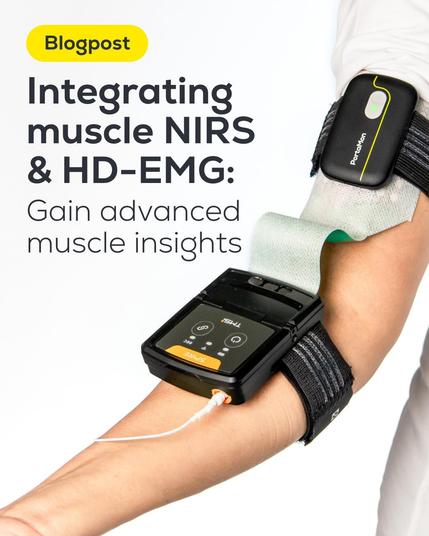
Our (f)NIRS devices are designed to integrate seamlessly with other modalities, such as high-density EMG (HD-EMG). By synchronizing NIRS and HD-EMG, researchers can gain deeper insight into the interaction between muscle activation and oxygenation, helping bridge the gap between central and peripheral measurements.

🔗 Learn more about integrating NIRS and HD-EMG in our latest blogpost: https://www.artinis.com/blogpost-all/integrating-nirs-and-hd-emg

#NIRS #HD_EMG #NeuroResearch #MuscleResearch #Artinis

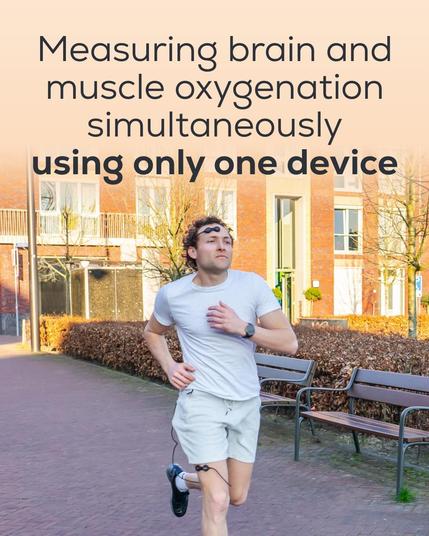
Our latest blogpost shows how the PortaLite MKII can simultaneously measure oxygenation in brain and muscle tissue, providing valuable insights for:

🟡 Sports Science: track both neural control and muscular effort during exercise
🔵 Clinical Research: assess recovery and rehabilitation strategies with combined insights
🟡 Hypoxia & Altitude Studies: capture systemic oxygenation in challenging conditions

Read more here 🔗 https://zurl.co/simul-measuring-blog

#NIRS #fNIRS #BrainResearch #MuscleResearch

Leksum and SLU launch revolutionary muscle research lab, enabling unprecedented long-term ICU condition studies to develop advanced therapies for muscle myopathies affecting millions worldwide. #MuscleResearch #MedicalInnovation

Ever wondered about the differences between Laser and LED in NIRS? 💡 Dive into our blogpost to understand how they vary in aspects like measurement depth, portability, cost, wavelengths, and safety.  You will also find out which technique is best suited for your research needs.

🔗 Learn more at https://www.artinis.com/blogpost-all/2018/8/13/what-is-the-difference-between-laser-and-led

#NIRS #fNIRS #laser #LED #brainresearch #muscleresearch

Laser and LED, what is the difference in NIRS? — Artinis Medical Systems | (f)NIRS devices

As an application Specialist at Artinis Medical Systems I get asked a lot what the differences are between lasers and LEDs. So, therefore a small blog to answer this question once and for all. Both laser and LED have their specific pros and cons. It depends very much on your research requirements wh

Artinis Medical Systems | (f)NIRS devices

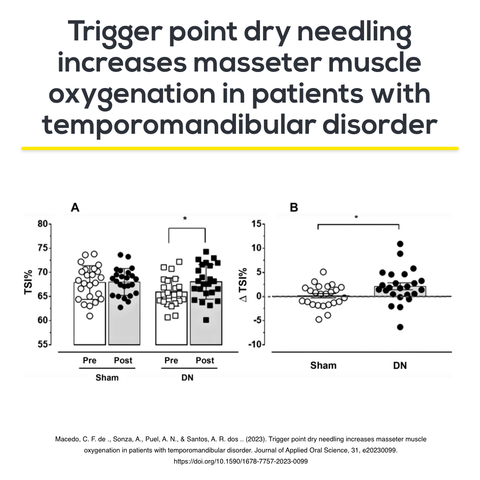
In their recent study, Ferreira de Macedo et al. discovered that trigger point dry needling (TDN) significantly boosts oxygenation in the masseter muscle of patients with temporomandibular disorder (TMD). An exciting finding which could mean better, faster relief for TMD sufferers!

🔬 The real-time insights provided by the PortaMon device offer new perspectives on how TDN enhances muscle health and recovery.

🔗 Read the full article at https://publications.artinis.com/publication/macedo-trigger-2023/

#NIRS #PortaMon #MuscleResearch

Trigger point dry needling increases masseter muscle oxygenation in patients with temporomandibular disorder | List of publications using Artinis Near Infrared Spectroscopy devices

Background: Temporomandibular disorder (TMD) is an umbrella term encompassing various clinical complaints involving the temporomandibular joints, masticatory muscles, and/or associated orofacial structures. Myogenous TMDs are the most frequent cause of chronic orofacial pain. Musculoskeletal pain is commonly associated with myofascial trigger points (MTPs), for which dry needling (DN) is a routine treatment. Objective: To investigate muscle oxygenation and pain immediately after DN application on an MTP in the masseter muscle of patients with myogenous TMDs. Methodology: Masseter muscle oxygen tissue saturation indices (TSI%) were assessed by near-infrared spectroscopy (NIRS) pre- and post-interventions by a randomized, controlled, double-blind, crossover DN/Sham clinical trial (primary outcome). Pain was investigated by the visual analog scale (VAS). In total, 32 individuals aged from 18 to 37 years who were diagnosed with myogenous TMD and myofascial trigger points in their masseter muscles participated in this study. Relative deltas for the studied variables were calculated. Data normality was tested using the Shapiro-Wilk test. According to their distribution, data were analyzed by two-way ANOVA and the Student's t-, and Mann-Whitney tests. Statistical analyses were performed using Prism® 5.0 (GraphPad, USA). Results: We found a significant difference (2,108% vs. 0,142%) between masseter muscle TSI% deltas after the DN and Sham interventions, respectively (n=24). We only evaluated women since men refused to follow NIRS procedures. Pain increased immediately after DN (n=32, 8 men), in comparison to Sham delta VAS. Conclusion: These findings show an increase in tissue oxygen saturation in the evaluated sample immediately after the DN intervention on the MTP of patients’ masseter muscle. Pain may have increased immediately after DN due to the needling procedure.

List of publications using Artinis Near Infrared Spectroscopy devices

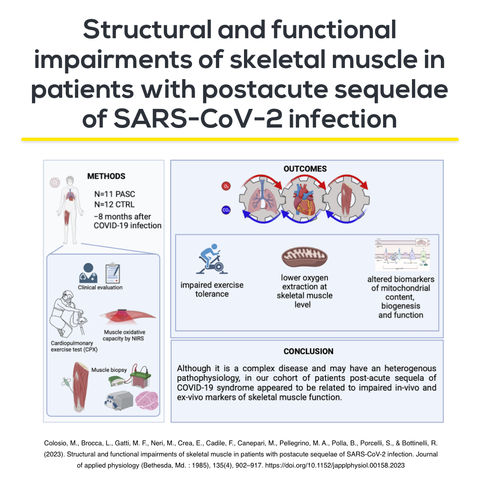
New research highlights how post-acute sequelae of COVID-19 (PASC) affect a significant number of patients, leading to symptoms such as fatigue and exercise intolerance. Using the PortaLite NIRS device, Colosio et al. offer new insights into muscle health post-COVID, helping to better understand and address the long-term effects of the virus.

🔗 Explore the full findings here: https://publications.artinis.com/publication/colosio-structural-2023/

#MuscleResearch #PortaLite #LongCOVID #Physiology

@PorcelliSimone @martacolosio

Structural and functional impairments of skeletal muscle in patients with postacute sequelae of SARS-CoV-2 infection | List of publications using Artinis Near Infrared Spectroscopy devices

Several months after mild acute SARS-CoV-2 infection, a substantial proportion of patients present persisting, and often debilitating, symptoms and sequelae. These patients show reduced quality of life due to exercise intolerance, muscle weakness, and fatigue. The present study supports the hypothesis that “peripheral” impairments at skeletal muscle level, namely, reduced mitochondrial function and markers of mitochondrial biogenesis, are major determinants of exercise intolerance and fatigue, “central” phenomena at respiratory, and cardiac level being less relevant. , Following acute coronavirus disease 2019 (COVID-19), a substantial proportion of patients showed symptoms and sequelae for several months, namely the postacute sequelae of COVID-19 (PASC) syndrome. Major phenomena are exercise intolerance, muscle weakness, and fatigue. We aimed to investigate the physiopathology of exercise intolerance in patients with PASC syndrome by structural and functional analyses of skeletal muscle. At least 3 mo after infection, nonhospitalized patients with PASC ( n = 11, age: 54 ± 11 yr; PASC) and patients without long-term symptoms ( n = 12, age: 49 ± 9 yr; CTRL) visited the laboratory on four nonconsecutive days. Spirometry, lung diffusion capacity, and quality of life were assessed at rest. A cardiopulmonary incremental exercise test was performed. Oxygen consumption (V̇o 2 ) kinetics were determined by moderate-intensity exercises. Muscle oxidative capacity ( k) was assessed by near-infrared spectroscopy. Histochemical analysis, O 2 flux ( JO 2 ) by high-resolution respirometry, and quantification of key molecular markers of mitochondrial biogenesis and dynamics were performed in vastus lateralis biopsies. Pulmonary and cardiac functions were within normal range in all patients. V̇o 2peak was lower in PASC than CTRL (24.7 ± 5.0 vs. 32.9 ± 7.4 mL·min −1 ·kg −1 , respectively, P textless 0.05). V̇o 2 kinetics was slower in PASC than CTRL (41 ± 12 vs. 30 ± 9 s −1 , P textless 0.05). k was lower in PASC than CTRL (1.54 ± 0.49 vs. 2.07 ± 0.51 min −1 , P textless 0.05). Citrate synthase, peroxisome proliferator-activated receptor-γ coactivator (PGC)1α, and JO 2 for mitochondrial complex II were significantly lower in PASC vs. CTRL (all P values textless0.05). In our cohort of patients with PASC, we showed limited exercise tolerance mainly due to “peripheral” determinants. Substantial reductions were observed for biomarkers of mitochondrial function, content, and biogenesis. PASC syndrome, therefore, appears to negatively impact skeletal muscle function, although the disease is a heterogeneous condition. NEW & NOTEWORTHY Several months after mild acute SARS-CoV-2 infection, a substantial proportion of patients present persisting, and often debilitating, symptoms and sequelae. These patients show reduced quality of life due to exercise intolerance, muscle weakness, and fatigue. The present study supports the hypothesis that “peripheral” impairments at skeletal muscle level, namely, reduced mitochondrial function and markers of mitochondrial biogenesis, are major determinants of exercise intolerance and fatigue, “central” phenomena at respiratory, and cardiac level being less relevant.

List of publications using Artinis Near Infrared Spectroscopy devices