
#MulticellularBacteria Evolve Defenses that Resemble the Immune System https://www.the-scientist.com/multicellular-bacteria-evolve-defenses-that-resemble-the-immune-system-71807

Targeted hypermutation of putative antigen sensors in multicellular bacteria https://www.pnas.org/doi/abs/10.1073/pnas.2316469121

"the team chose pink berries, which are millimeter sized aggregates of #bacteria living on the floor of #SaltMarshes in #WoodsHole, #Massachusetts that tend to evolve slowly... they’re wild, but they’re not so ephemeral and changing that we can’t ask mechanistic questions"
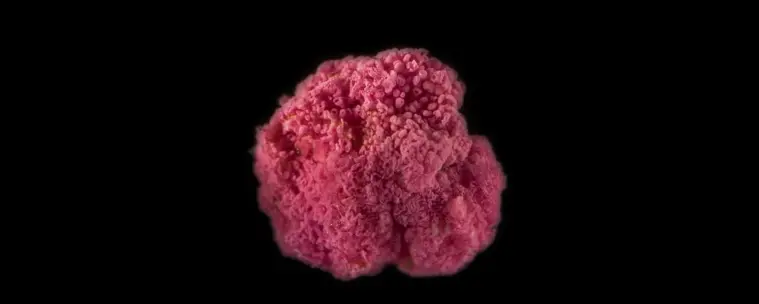
Multicellular Bacteria Evolve Defenses that Resemble the Immune System

Bacterial superorganisms must evolve defenses to fight off infections, and microbiologists found that they use a weapons cache coincidentally similar to that of the human immune system.

The Scientist Magazine®

@animalculum

Another example of #MulticellularBacteria, this time from the open ocean:

https://www.quantamagazine.org/ocean-bacteria-reveal-an-unexpected-multicellular-form-20221102/

Perhaps it’s quite common, but we’re just not used to looking?

Ocean Bacteria Reveal an Unexpected Multicellular Form | Quanta Magazine

Marine bacteria normally seen as single cells join together as a “microscopic snow globe” to consume bulky floating carbohydrates.

Quanta Magazine

Did flooding force bacterial #multicellularity? https://micro-bites.org/2022/11/07/did-flooding-force-bacterial-multicellularity/ #MulticellularBacteria #Bacteria #Microbes #Caves

Paper: Novel multicellular #prokaryote discovered next to an #underground stream https://elifesciences.org/articles/71920

How life went from one cell to #multicellular is a hotly debated topic among #scientists... A #limestone #cave in the northern #Kyushu Island of #Japan was hiding one clue: a fascinating new organism!

<strong>Did flooding force bacterial multicellularity?</strong>

The Very Bacterial Caterpillar https://schaechter.asmblog.org/schaechter/2022/11/the-very-bacterial-caterpillar.html by Jennifer Frazer

They are multicellular, an unusual state of affairs. Moreover, some of the cells differ from their comrades, hinting at specialization. They divide longitudinally ─ rather than transversely in the usual fashion.

#Evolution of longitudinal division in #MulticellularBacteria of the Neisseriaceae family https://pubmed.ncbi.nlm.nih.gov/35995772/