📄 The UMIST Database for Astrochemistry 2022
Quicklook:
Millar, T. J. et al. (2024) · Astronomy and Astrophysics
Reads: 164 · Citations: 92
DOI: 10.1051/0004-6361/202346908
🔗 https://ui.adsabs.harvard.edu/abs/2024A&A...682A.109M/abstract
#Astronomy #Astrophysics #Astrochemistry #MolecularData #MolecularProcesses
The UMIST Database for Astrochemistry 2022
Context. Detailed astrochemical models are a key component to interpret the observations of interstellar and circumstellar molecules since they allow important physical properties of the gas and its evolutionary history to be deduced. <BR /> Aims: We update one of the most widely used astrochemical databases to reflect advances in experimental and theoretical estimates of rate coefficients and to respond to the large increase in the number of molecules detected in space since our last release in 2013. <BR /> Methods: We present the sixth release of the UMIST Database for Astrochemistry (UDfA), a major expansion of the gas-phase chemistry that describes the synthesis of interstellar and circumstellar molecules. Since our last release, we have undertaken a major review of the literature which has increased the number of reactions by over 40% to a total of 8767 and increased the number of species by over 55% to 737. We have made a particular attempt to include many of the new species detected in space over the past decade, including those from the QUIJOTE and GOTHAM surveys, as well as providing references to the original data sources. <BR /> Results: We use the database to investigate the gas-phase chemistries appropriate to both O-rich and C-rich conditions in TMC-1 and to the circumstellar envelope of the C-rich AGB star IRC+10216 and identify successes and failures of gas-phase only models. <BR /> Conclusions: This update is a significant improvement to the UDfA database. For both the dark cloud and C-rich circumstellar envelope models, calculations match around 60% of the abundances of observed species to within an order of magnitude. There are a number of detected species, however, that are not included in the model either because their gas-phase chemistry is unknown or because they are likely formed via surface reactions on icy grains. Future laboratory and theoretical work is needed to include such species in reaction networks.
📄 The UMIST database for astrochemistry 2006
Quicklook:
Woodall, J. et al. (2007) · Astronomy and Astrophysics
Reads: 2 · Citations: 506
DOI: 10.1051/0004-6361:20064981
🔗 https://ui.adsabs.harvard.edu/abs/2007A&A...466.1197W/abstract
#Astronomy #Astrophysics #AstroSoftware #MolecularData #MolecularProcesses
The UMIST database for astrochemistry 2006
Aims:We present a new version of the UMIST Database for Astrochemistry, the fourth such version to be released to the public. The current version contains some 4573 binary gas-phase reactions, an increase of 10% from the previous (1999) version, among 420 species, of which 23 are new to the database. <BR />Methods: Major updates have been made to ion-neutral reactions, neutral-neutral reactions, particularly at low temperature, and dissociative recombination reactions. We have included for the first time the interstellar chemistry of fluorine. In addition to the usual database, we have also released a reaction set in which the effects of dipole-enhanced ion-neutral rate coefficients are included. <BR />Results: These two reactions sets have been used in a dark cloud model and the results of these models are presented and discussed briefly. The database and associated software are available on the World Wide Web at www.udfa.net. <P />Tables 1, 2, 4 and 9 are only available in electronic form at http://www.aanda.org
📄 The UMIST database for astrochemistry 2012
Quicklook:
McElroy, D. et al. (2013) · Astronomy and Astrophysics
Reads: 84 · Citations: 833
DOI: 10.1051/0004-6361/201220465
🔗 https://ui.adsabs.harvard.edu/abs/2013A&A...550A..36M/abstract
#Astronomy #Astrophysics #Astrochemistry #MolecularData #MolecularProcesses
The UMIST database for astrochemistry 2012
We present the fifth release of the UMIST Database for Astrochemistry (UDfA). The new reaction network contains 6173 gas-phase reactions, involving 467 species, 47 of which are new to this release. We have updated rate coefficients across all reaction types. We have included 1171 new anion reactions and updated and reviewed all photorates. In addition to the usual reaction network, we also now include, for download, state-specific deuterated rate coefficients, deuterium exchange reactions and a list of surface binding energies for many neutral species. Where possible, we have referenced the original source of all new and existing data. We have tested the main reaction network using a dark cloud model and a carbon-rich circumstellar envelope model. We present and briefly discuss the results of these models. <P />All codes, along with reaction networks and data files, are accessible at <A href="http://www.udfa.net">http://www.udfa.net</A>.
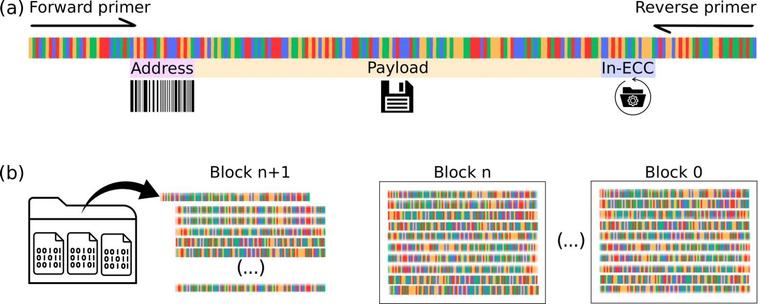
🧬 Can DNA molecules become the most reliable “hard drives” ever created?
🔗 Pantheon-DNA: Versatile encoding-decoding system with integrated adaptive NGS preprocessing algorithms for DNA data storage. Computational and Structural Biotechnology Journal, DOI: https://doi.org/10.1016/j.csbj.2025.09.002
📚 CSBJ: https://www.csbj.org/
#DNA #DataStorage #ComputationalBiology #Bioinformatics #DataScience #NextGenerationSequencing #SyntheticBiology #Genomics #MolecularData
 adsdaily
 CSBJ
CSBJ