
Bigfoot remains a moneymaking hoax

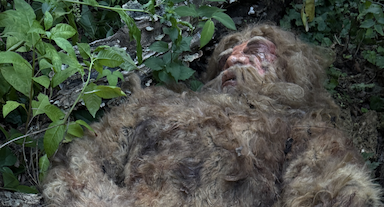
Once again, someone has rather uncreatively posed a hairy man prop as an amazing find and put it on display for all the rubes to pay to see.

See UPDATE below the story.

This time, it’s at the New York State Fair.

Dack

Self-titled Bigfoot expert Charles “Snake” Stuart claims to have found a dead Bigfoot specimen in the Adirondack Mountains in October 2024. A hastily cobbled together website at BigfootRemains.com shows the body. The site also contains a Press Release which details a trail of nonsense that describes the 8ft creature as Neanderthal-human hybrid coined “Dack”. There is sciencey fluff about his technique and the DNA results. He pretends to do a news interview. He wants money for more research. It’s all laughably bad.

There are many reports of Bigfoot in the New York mountains, so the basis for the claim was not extreme (as cryptid claims go). This is very much a pop cryptid example as the story is more about making bank than making history with a scientific find. There is nothing about this that is remotely believable; it’s designed for entertainment.

While I haven’t sought out the Bigfoot community response, I suspect it is overwhelmingly negative. They are pretty serious folk. Oh wait… this just floated in from infamous legit serious Bigfoot guy Matt Moneymaker with the BRFO:

Oh, he’s pissed, poor thing.

It’s likely there will be a few who are so gullible that they think this is real. Nevertheless, it’s getting some publicity so I bet it will be popular. For my own little side show, I hastily cobbled together a history of related cryptid gaffs.

Hank

Before there was Dack, there was Hank. In fact, Dack looks a lot like Hank. Maybe they are related. Hank was a hoaxed body created by Rick Dyer in 2014 made of of latex, foam and camel hair that Dyer and a partner toured around the US charging people $10 a head. According to the San Antonio Express News, they pocketed $60,000 before the jig was up. Dyer had claimed that he had shot the creature in Texas. This was a classic story of “fool me twice” because Dyer was already an established Bigfoot con artist so you were kind of daft if you fell for this a second time.

Rick Dyer and Hank

Georgia Bigfoot Body

Dyer and Matthew Whitton claimed to have encountered several Bigfoots in the Georgia woods in 2008. They dragged one huge dead body out and put it in a freezer, releasing a photo to the press. Partnering with well established Bigfoot huckster Tom Biscardi, they held a press conference revealing more photos. Many Bigfoot believers wanted this to be “the real deal” as Biscardi called it. But the hoax was short-lived. When the time came to examine the real body, the fakers bolted and the jig was up. It was a suit with added animal guts. This is the episode Moneymaker cites in his Facebook rant screenshotted above. I think these chuckleheads were trying to pull off another Minnesota Iceman caper, but they were too witless.

Minnesota Iceman

These hoaxes followed a pretty successful gaff that is still discussed today: the Minnesota Iceman. Originally known as the Siberskoye Creature, Frank D. Hansen’s specimen of a hairy ape man encased in ice, made the rounds in the US and Canada in 1968. Hansen’s tale of how he came to have the creature changed repeatedly. It had been found floating as a block of ice off the coast of Siberia (if this sounds like a Scooby Doo episode, that’s because it was), or it shot in Vietnam and transferred to the US, or Hansen shot it himself in Minnesota. The Iceman garnered attention from the founders of cryptozoology Bernard Heuvelmans and Ivan Sanderson who visited Hansen’s specimen (still encased in ice) and came away believing it was a real hominid carcass. Heuvelmans even wrote about it as real. The story of the Iceman is wild. Hit the TetZoo site for more. The conclusion is, you guessed it, it was a hoax – a latex prop made to appear like it had been shot in the eye. Creative! The ice did the job of obscuring the details. Clever! However, when government officials came sniffing around, Hansen stated the real body had been retrieved by the owner and he was using a replica prop instead. Convenient.

Step Right Up

There are many other examples of cryptid hoaxes – constructed, dead, or alive – that have been displayed in public for a fee. P.T. Barnum was great at this. He gave us the Cardiff Giant (actually a replica of a fake), and the Feejee mermaid in the mid 1800s. The “real” fake Cardiff Giant was supposedly a lithified giant man whose appearance was a sensation in New York in 1869. Created by George Hull, who spend a large amount of cash to have it constructed, he cleared a tidy profit by the end. Funny enough, a Facebook comment on “Dack” called it the Cardiff Giant 2.0. Eh, that commenter forgot a few examples in between.

The infamous Hodag of the late 1890s was a constructed beast from the Wisconsin woods that was so popular that it became the mascot for the town of Rhinelander. Gene Shepard was a noted storyteller and jokester, it’s unlikely many people believed this mash-up monster was real. Today, the Hodag has his own store and traveling shop that appears at cryptid town festivals.

The Jersey Devil, known in 1785 as the Leeds Devil, was advertised as being live on exhibit at Philadelphia’s Arch Street Museum for 10-cents admission. The “devil” was a cruelly concocted hoax where a kangaroo was painted with fake wings and prodded to jump around. The stunt didn’t save the sad excuse for a museum, which closed.

I’m sure I’m missing some examples. What we are seeing here is the art of the hoax. The audience always forgets that real discoveries aren’t made this way. They want to hope, and get a glimpse of something fascinating. Instead, they either get a rude awakening or they laugh at the joke that they willingly fell for. Maybe that’s worth a dime. But not much more.

Update #1

Bigfoot research personality Steve Kulls has discovered that the Charles Snake Stuart is really Brian Andrew Whiteley, a rather awful visual artist. So, as suspected, this is a stunt. It’s unclear if Whiteley will show up with the display at the fair, which starts tomorrow. Currently tickets are still selling via Eventbrite.

Cryptid fans continue to complain that this is bad for the reputation of the field. But hoaxes have been an integral and common part of cryptozoology since its beginning. In fact, the most successful hoaxes have built the foundation of several cryptids, including Bigfoot and Nessie, to the point that the way we think about the creatures today is inextricably tied to the hoax portrayal.

Update #2

Seems like the stunt was a success. He did show up at the fair and continues his schtick. People seem to like it. There is a sliver of my being that finds this outright hilarious. Other than the 13% or so that may take Bigfoot seriously, the rest of society sees it as a harmless tall tale, or as nonsense. I’m guessing that most of the visitors here are playing into the fun. But, there may be a spark, a feeling that this is what Bigfoot would really look like. Because we have no body, we build the description of cryptids based on media and art. The template of Bigfoot was from the Patterson Gimlin film. “Dack” is built from that template from nearly 60 years ago. Nessie’s image was built on the hoaxed Surgeon’s photo. Media depictions play a massive role in how we envision our most beloved cryptids.

I don’t know if Whiteley will make much net profit on this event, but he has succeeded in establishing himself as a B-grade jackass. He’s likely revelling in all this attention, succeeding where Rick Dyer failed.

See more on HOAXES.

For the Patterson Gimlin Film hoax, see here.

#1 #2 #Adirondacks #Bigfoot #BigfootHoax #cryptidHoax #fakeBigfoot #GeorgiaBigfootHoax #hoax #MinnesotaIceman #NewYorkStateFair #RickDyer #TravelingHoaxes https://sharonahill.com/?p=10164
Lost Monster Files is a cryptid bust

It would be awesome if there were no more faked-science TV shows. Back in 2017, I published a book on how amateur paranormal researchers pretend to do science. Around that time, there were so many TV and YouTube shows of people doing this – staging “investigations” using sciencey-looking gadgets and language and playing at being experts – that I couldn’t keep track of them all anymore. Unfortunately, they are still going strong.

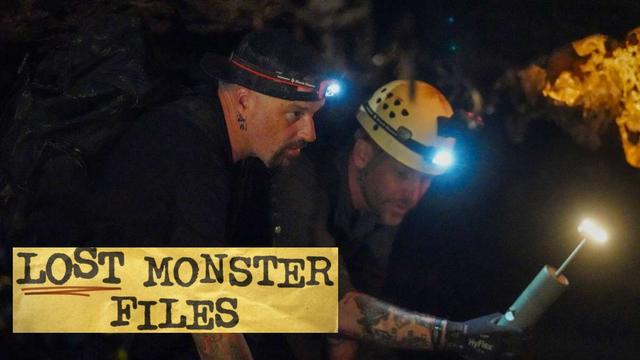
Cryptozoology is my favorite fringe subject, but it’s not fringe anymore, it’s mainstream. We can credit Monster Quest and Finding Bigfoot for the current popularity of self-styled cryptozoologists looking for mystery creatures. The latest cryptid show is Lost Monster Files on Discovery channel based on the files of Ivan T. Sanderson. It’s not low budget, but it’s low on originality and almost insultingly dumb.

I realize that people want to be on TV and hope make a living doing stuff like this, but I argue that these shows make the audience less knowledgeable about the topic because of the dumbing-down of the presented scenarios, and the exceptionally poor content passed off as “facts”.

Recap

Episode 1 explored the Carolina Chupacabra and the content failed to include anything interesting or new except what they seemingly made up. A condensed show can hardly begin to explore the complex history of the legendary creature and its strange cultural evolution. However, all history and much of the interesting details were entirely ignored for a ridiculous plot and very silly conclusion.

Episode 2 covered Sanderson’s work on ABSMery (the study of abominable snowmen accounts). The cast goes to British Columbia to follow up on an old Sasquatch/Bigfoot account. They confuse us without enlightening or even entertaining us. They find nothing.

Episode 3 is on the Thunderbird where the team finds an eagle’s nest but concludes, laughably, that there might be a still-living Teratorn or unknown giant eagle here.

I took a break from watching the show because it was worthless to me. I was curious, however, so I binge-watched the (hopefully) last three episodes.

Bernard is ghosted

Episode 4 was on the Minnesota Iceman, or “wild man” as the show calls it. The Iceman was a very popular sideshow promoted by Frank Hansen in 1968 depicting a body of what people thought of as a “cave man” frozen in ice. The team, as usual, ignores much of the important parts of the tale – that the Iceman model that was used still exists, that Hansen made money off it, and that Sanderson conducted his inspection of the body with Bernard Heuvelmans. Mention of Heuvelmans is entirely absent from this show, even though his history is entwined with Sanderson’s. While these extractions were done for time limitations, it makes the cast appear clueless to those of us who know that actual history. For drama, one half of the cast goes to the old Hansen farm to look for the real Iceman body they believe is buried there. The other half goes to the remote location where Hansen supposedly shot the creature where they have an “infrasound” experience. (Again. They had a similar thing happen in episode 2, which was also dropped with no consideration). The best find they come up with is a footprint, which they do not show on camera in any detail, but gush over it, claiming it matches Sanderson’s information about the creature having a really big toe. They conclude with misguided blather about evolution connected to Denisovans. They totally don’t know what they are talking about.

Heuvelmans is entirely absent from this show
even though his history is entwined with Sanderson’s.

Deception island

Episode 5 sent the team to Kodiak Island in Alaska to find out about the Kodiak sea monster. This was probably the worst episode. It was boring and, tracking with all the other episodes, absurd in premise. Their suggestion is that a plesiosaur twice the size of a blue whale (just all sorts of wrong) could still be living in the offshore ocean trench. Really reaching for an exciting conclusion, they suggest that the chemicals dumped after WW2 could have caused a genetic mutant to appear as a monster 30 years later. Ironically, the episode closed with a voiceover of Sanderson talking about truth and deception.

The cave “dragon” final episode

Episode 6 took the cast into a cave in Arkansas where they actually found something! The subject cryptid was the Gowrow – a made-up legend of a giant, spiny backed lizard. What caught my attention for this was the appearance of a USGS hydrologist discussing groundwater. I’m certain his words were cut and edited to lose all meaning because the jumbled word salad spewed about aquifers and caves was rubbish. Summing up their misinformed ideas about how water moves underground, they suspected that the Gowrow creature was travelling between a surface pond and cave systems via underwater passageways (they erroneously called “the aquifer”). This is a well-worn and mistaken idea often proposed for lake monsters that large creatures use subterranean passageways (through rock) to the ocean. The average person doesn’t know how groundwater moves, and this episode shows that ignorance in spades.

“Finding all that water in [the cave] was a gamechanger,” says Brittany, who seems to be the one to say the most ridiculous things in the show. Caves are created by water and typically still have water in them because they are under the surface.

The team descends into a cave. The location is not shown, but the implicit suggestion is that they “found” it, and it’s unexplored. This is clearly false, because the cave is too large and accessible for it to be unknown. It is extremely dangerous for inexperienced people to go a mile into a cave system like this, and there were no safety precautions shown for white nose syndrome protocols.

They find evidence of an alligator in the cave. And, they actually find the alligator.

https://www.youtube.com/shorts/d2LWxeWEGIo

I searched for more information about an alligator discovered in a cave in Arkansas and found nothing. According to the show, they were 80 miles from natural alligator habitat. There is no way this animal was native to this cave because it was too cold to comfortably exist here. It seems likely that it was let loose here. I’m not saying it was planted, it could have been released by an irresponsible person, but I can’t trust anything on this show.

Common threads in the episodes

Over the six episodes, there were common threads:

  • Oversimplification. In order to appeal to the non-technical viewer, to fit in an hour time frame, and to help the narrative, every scenario, find, and explanation was oversimplified, often to the extent that it was wrong. It was framed as “Sanderson studied this” + “There is a uptick in sighting of something like that in this area.” Therefore, “Sanderson was on to something, and we are going to just jump in and finish what he started.” This is a dull, banal, and misleading premise. Thus, my opinion is that this show makes people less well-informed on the topics covered.
  • Lack of expertise. Almost no experts appeared in the show. As I noted in the first review, the cast were hardly what I would consider “experts”. They spoke unintelligently about complex topics like evolution, zoology, geography, and history. The writers and research team for this show did a poor job. Brittany, in particular, was not even coached on how to pronounce words correctly. For example, “Cuvier” as in Georges Cuvier, is pronounced “curvier”. Twice. There is no excuse for such sloppiness.
  • Sham inquiry. I was entirely unconvinced that the investigation shown on screen was legitimate. It looked staged, heavily edited, and scripted to serve the pre-set narrative. This is typical of all paranormal nonfiction shows that attempt to portray a “scientific” approach, which instead shows the cast playing pretend scientist. It’s a cheap and lazy ploy.
  • Extreme conclusions. The obviously weak and questionable evidence was hyped as convincing and used to bolster their pre-existing narrative that they were successful in showing that something mysterious was going on. That’s how an entertainment show is structured. This is not for educational purposes. But that message is not always understood by the audience.
  • In conclusion, this was a typical scientifical paranormal TV show with hype and no substance. It wasn’t even entertaining. For anyone who knows anything much about cryptids, this show was a total dud.

    #alligatorCave #ArkansasAlligator #Bigfoot #cryptidTVShow #cryptids #Cryptozoology #DiscoveryChannel #evidence #IvanSanderson #LostMonsterFiles #MinnesotaIceman #ReviewOfLostMonsterFiles #science #television

    https://sharonahill.com/?p=9045

    Scientifical Americans

    Hill, Sharon A. (2017). Scientifical Americans: The Culture of Amateur Paranormal Researchers. Jefferson, NC: McFarland. ~See SPECIAL below for special offer.~ I wrote this book based on my Master's thesis in science education but I expanded it to include the explosion of TV and internet depictions of paranormal research that occurred from 2010 to 2016. There...

    Sharon A. Hill