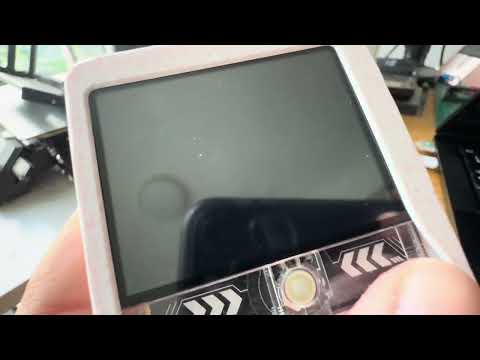
FUCKING FINALLY!
Been banging my head for about a week on this.
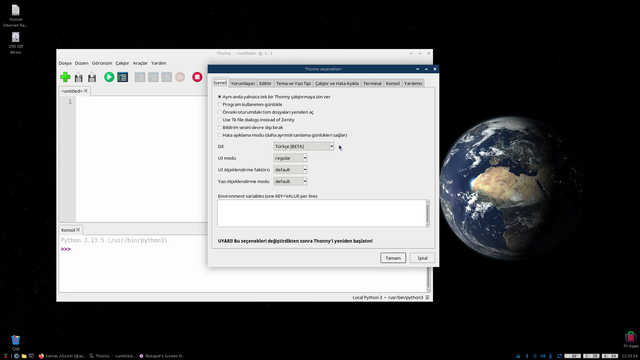
Solved with MicroPython, for now...
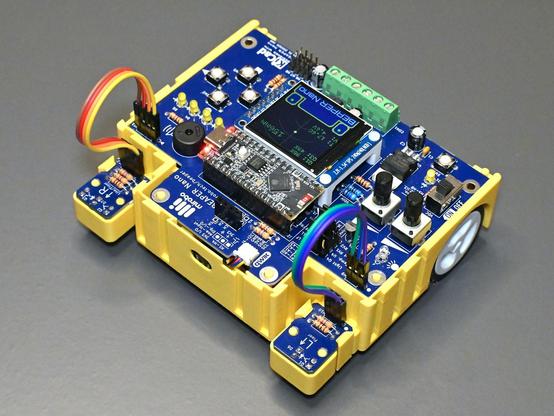
Display is based on ST7789.
FUCKING FINALLY!
Been banging my head for about a week on this.
Solved with MicroPython, for now...
Display is based on ST7789.
New video dropping at 7pm GMT today,
How to add Speech to your #Micropython (or #circuitpython) projects on #RaspberryPi Pico.
I also make a plant talk and a pico sing. Not to be missed!

25yo got a programmable rgb array and is writing #micropython programs to display #uspol #dataviz. Those are mildly interesting, but I don't know why anyone cares about polls after 2016, let alone 2024.
The interesting thing is the first contact with #embedded #software
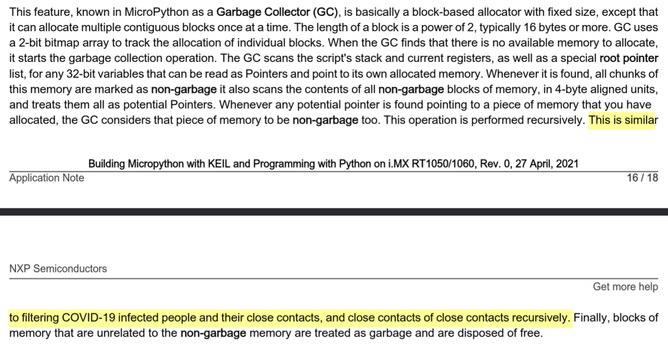
The first Real Problem is an intermittent out-of-memory condition that happens on the House, but not the Senate. (obvs more people, but both loop endlessly so it's not that simple.)
I'm walking thru how to find the leak, but socratically. Like "hmmmm.....I wonder what objects get created in each iteration?" and "If only there were some means of printing the mem usage."
SparkFun Thing Plus – ESP32-C5 board offers dual-band WiFi 6, Adafruit Feather pinout, LiPo battery support

Espressif has recently released the ESP-IDF v6.0 framework with support for ESP32-C5 and ESP32-C61, so we can expect more ESP32-C5 boards. Following the launch of boards like DFRobot FireBeetle 2 and the Espressif DevKitC-1, SparkFun has now launched its Thing Plus - ESP32-C5, an Adafruit Feather-compatible board based on the ESP32-C5. The timing is no coincidence. Although the ESP32-C5 dual-band WiFi 6 SoC was announced back in 2022, hardware makers have been waiting for stable software support. With the release of ESP-IDF v6.0, the ESP32-C5 moves from “preview” to “stable” and adds key features, such as Safe Bootloader OTA updates. This enables the ROM bootloader to fall back to a recovery partition if an update fails, making it reliable enough for companies like SparkFun to launch hardware for remote deployments and Matter-compatible smart home applications. SparkFun Thing Plus - ESP32-C5 specifications: Wireless module – ESP32-C5-WROOM-1 SoC – Espressif Systems ESP32-C5 CPU Single-core
I've ported the Software Automatic Mouth (SAM) speech synthesis to the #Raspberry Pi Pico and #MicroPython - it uses Programmable IO as well. No fancy components or hardware required, just an 8ohm speaker on a GPIO pin and GND. It can even sing!
Remember LEGO Vision Command from the early 2000s? We're so back!
The goal here is to make it easy for kids to use a phone as an extra "sensor" without purchasing any new stuff, or writing code to process video.
This is a simple color tracker with OpenCV, but there's more demos on the way. #micropython #lego
Programming language: MicroPython, a stripped-down version of Python 3
MicroPython is a variant of Python 3 with a reduced standard library, designed for microcontrollers and similarly constrained environments. The Amiga implementation, developed under human supervision by the AI "Claude", offers the following features:
Clintech Pico – The first Raspberry Pi RP2354B board offers 48 GPIOs in Raspberry Pi Pico form factor

Designed by Clintech Ltd. in Bulgaria, the Clintech Pico Board appears to be the first development board based on the Raspberry Pi RP2354B chip with 2MB on-chip memory. It retains the same form factor as a Raspberry Pi Pico 2 but adds extra GPIOs to make use of the 48 general-purpose GPIOs provided by the RP2354B chip. Like the Raspberry Pi Pico 2, this board features 40 castellated and through holes on the sides, exposing GPIOs 0–22 and 26–28, along with 3 debug pins. Additionally, the board includes 27 extra on-board through holes that break out the remaining GPIOs (23–25 and 29–47) as well as the QSPI interface (SD0–SD3 and SCLK) for external memory. Clintech Pico specifications: SoC - Raspberry Pi RP2354B CPU Dual-core Arm Cortex-M33 @ 150 MHz with Arm Trustzone, Secure boot Dual-core 32-bit RISC-V Hazard3 @ 150 MHz (3-stage in-order pipeline; RV32IMAC with Zba, Zbb, Zbs, Zbkb, Zcb, Zcmp, and
Піднімалося питання в доцільності використання ШІ (АІ) чи LLM. Наскільки можна прислухатися до його порад?
Якщо ви запитуєте, як правильно поступити в якійсь ситуації, то ви трохи звернулись не туди. АІ, це не про поради.
Але чи це зовсім не корисна річ?
Наведу приклад, як я користуюсь АІ.
Зацікавила мене тема з micropython.
Перше питання:
Що таке micropython? Розкажи про нього. Сфера застосування. Що він може робити, а що ні.
Отримав докладний опис, прочитавши який, ти можеш зрозуміти, чи потрібно рухатись далі, чи ні.
Друге питання:
Надай мені посилання на ресурси, які пов'язані з micropython. сайт проекту, github, документація, сторінки з переліком і описом цікавих ліб, реалізацій, проектів, то що.
Отримав непоганий перелік ресурсів, розбитий по категоріям.
Щоб мені самому таке нарити, я повинен був витратити годину.
Тут я отримав стислу інформацію, від якої я можу відштовхнутись і рухатись далі.
Що я роблю не так?