 news_kr
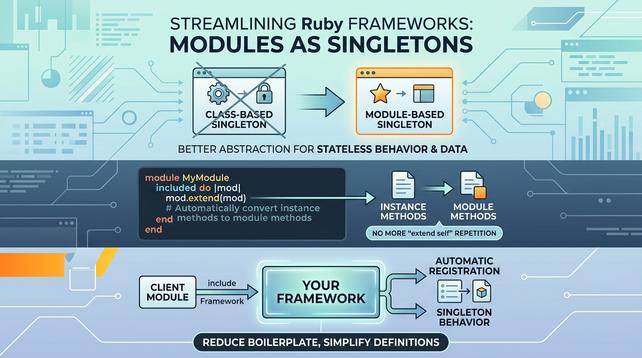
프레임워크 감지를 위한 Ruby 모듈 싱글톤 패턴: extend self 없이 구현하기
상태를 가지지 않는 단순 행위와 데이터의 집합이라면 클래스 대신 모듈을 싱글톤 객체로 사용하는 편이 더 적합한 추상화 수준을 제공한다.
#metaprogramming
https://ruby-news.dev/articles/framework-detection
프레임워크 감지를 위한 Ruby 모듈 싱글톤 패턴: extend self 없이 구현하기
상태를 가지지 않는 단순 행위와 데이터의 집합이라면 클래스 대신 모듈을 싱글톤 객체로 사용하는 편이 더 적합한 추상화 수준을 제공한다.
#metaprogramming
https://ruby-news.dev/articles/framework-detection
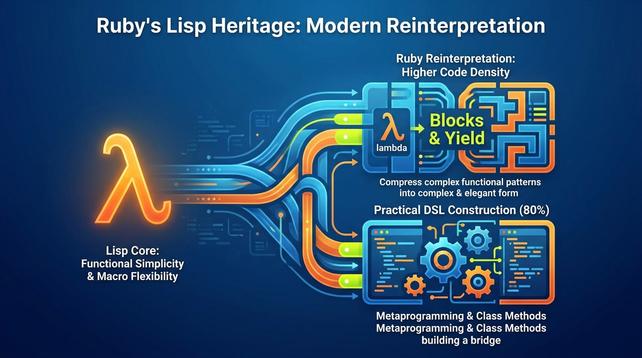
Ruby가 '받아들일 만한 Lisp'인 이유 (2005)
Ruby는 Lisp의 핵심인 함수형 프로그래밍의 간결함과 매크로 유연성을 현대적인 문법으로 재해석하여 제공한다.
#metaprogramming
https://ruby-news.dev/articles/why-ruby-is-an-acceptable-lisp-2005-random-hacks
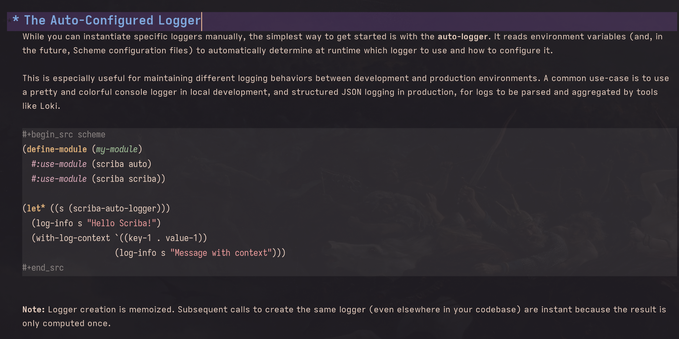
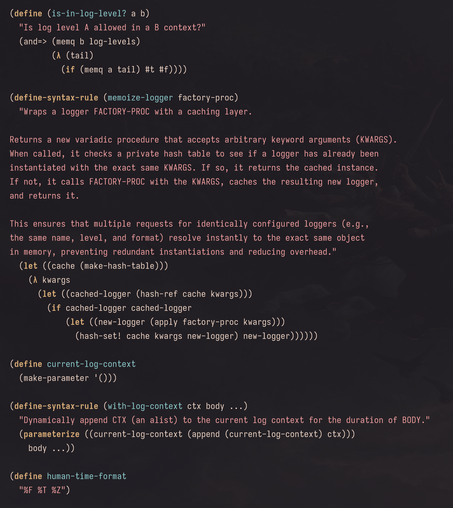
Scriba: a Lisp structured logging framework (Guile Scheme) v0.1.2
https://codeberg.org/jjba23/scriba
Now available officially in Guix (as guile-scriba) ✨️ 🐂
Scriba is a structured logging library for GNU Guile that prioritizes flexibility and observability.
Modular log routing, formatting, and filtering.
Multiple backends (console, color, JSON, syslog)
Support for out-of-the box auto config
#lisp #gnu #guile #scheme #guix #metaprogramming #software #dev #log #logging #logger #observability
Ruby는 Lisp인가? 개발자가 탐구한 Ruby와 Lisp의 관계
Ruby는 REPL과 매크로 기능을 갖추어 Lisp의 특성을 일부 공유하지만, 괄호 기반의 전위 표기법(Prefix Notation)이 없어 기술적으로는 Lisp이 아니다.
#metaprogramming
https://ruby-news.kr/articles/ruby-is-my-favourite-lisp-celia-king
Ruby는 Lisp인가? 개발자가 탐구한 Ruby와 Lisp의 관계
Ruby는 REPL과 매크로 기능을 갖추고 있어 Lisp의 특성을 일부 공유하지만, 괄호 기반의 전위 표기법(Prefix Notation)이 없어 기술적으로는 Lisp이 아니다.
a macro to generate other macros was the best idea ever: now confirmed
(with the last version of emacs-indigo for pretty-much-memory-safe molecule manipulation inside emacs!)
https://github.com/gicrisf/emacs-indigo
#emacs #lisp #chemistry #cheminformatics #metaprogramming #programming #code #coding #fp
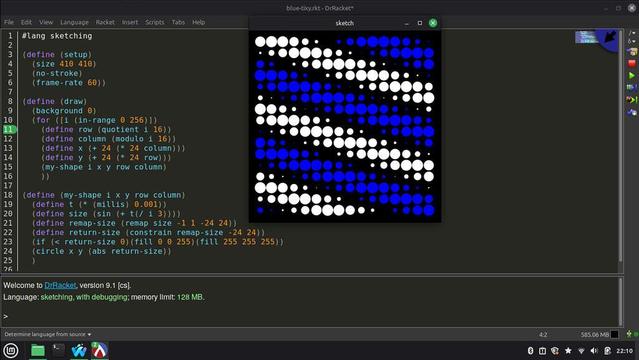
Racket meet-up: Saturday, 2 May 2026 at 18:00 UTC
EVERYONE WELCOME 😁
Announcement, Jitsi Meet link & discussion at https://racket.discourse.group/t/racket-meet-up-saturday-2-may-2026-at-18-00-utc/4191
#lisp #scheme #Racket #functionalprogramming #metaprogramming
C++Now 2026 SESSION ANNOUNCEMENT: Testing Everything in Constexpr by Braden Ganetsky
https://schedule.cppnow.org/session/2026/testing-everything-in-constexpr/
Register now at https://cppnow.org/registration/
Партитура для невидимого оркестра
Представьте себе пятиэтажный дом без лифта, построенный в конце пятидесятых, где-нибудь на отшибе Автозаводской, или еще лучше – в Купчино. Каждый этаж использует свой язык со своей записью. Не в переносном, а в самом прямом смысле: первый этаж общается кириллицей, второй – латиницей, третий – иероглифами, четвертый – клинописью, а пятый, подобно Витгенштейну, принципиально молчит, полагая, что о чем невозможно говорить, о том следует молчать. Почтальон, доставляющий корреспонденцию, вынужден нести пять экземпляров одного и того же письма, переведенного на каждый из этих языков, и каждый раз стучаться в дверь, надеясь, что адресат не переехал на другой этаж. Именно так устроен мир программирования. Проблема очевидна любому, кто хоть раз пытался написать инструмент для анализа кода. Допустим, вы создали превосходный анализатор цикломатической сложности для Python. Он великолепен: находит вложенные условия, считает точки ветвления, рисует графы потоков управления. Затем к вам приходит коллега и спрашивает: «А для Ruby сделаешь?» И тут выясняется, что весь ваш труд – все эти обходчики деревьев, все эти паттерн-матчинги над питоновским AST – нужно переписать заново. С нуля. Для другого дерева, с другими узлами, другой семантикой и другими подводными камнями. А потом придет третий коллега и попросит то же самое для Haskell . MetaAST to the rescue
https://habr.com/ru/articles/1024412/
#ast #абстрактное_синтаксическое_дерево #metaprogramming #metamodel
 Josep Bigorra (jjba23)
 bot
bot Dr. Bruce Simpson
 Giovanni Crisalfi
 Racket
 C++Now
 Habr
Habr