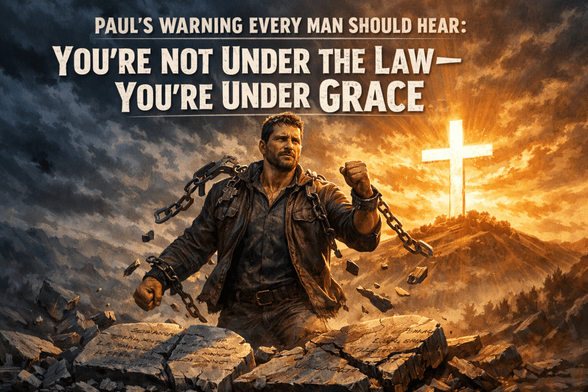
Paul’s Warning Every Man Should Hear: You’re Not Under the Law—You’re Under Grace

2,362 words, 12 minutes read time.

Why This Truth Hits Home for Me—and Why It Should for You

Brother, I’ve been hinting at this idea for a while now in my writings, and it’s time to lay it out plain. This isn’t some side note or pet theory—it’s something that makes up a core part of my faith. For years, through stories of redemption, grace breaking through broken lives, reflections on what it really means to walk with Christ, and digging deep into Scripture, I’ve kept coming back to this truth: the Law of Moses, including those so-called “Ten Commandments,” was Israel’s national contract, not a universal burden for every believer. It was conditional, tied to their covenant at Sinai, and Gentiles like us were never signed on. Paul drops the hammer on it—”you are not under law but under grace” (Romans 6:14)—and that shift from performance to freedom has anchored my walk more than anything else.

Digging Deeper: What the Law of Moses Really Is

Let’s pause right here and go a lot deeper into this, because if we’re going to talk man-to-man about freedom in Christ, we need to nail down what the Law of Moses actually is. This isn’t just background noise—it’s the foundation that makes Paul’s warning hit like a gut punch. The Law of Moses, or the Mosaic Covenant, isn’t some vague set of good ideas or eternal principles floating out there for anyone to grab. No, it’s a specific, historical agreement God made with the nation of Israel after He delivered them from slavery in Egypt.

Think about the context: these people had been crushed under Pharaoh’s boot for generations, building pyramids with their blood and sweat. God steps in with miracles—plagues, parted seas, manna from heaven—not because they earned it, but by sheer grace. Then, at Mount Sinai, He offers them a covenant: “Now therefore, if you will indeed obey my voice and keep my covenant, you shall be my treasured possession among all peoples, for all the earth is mine; and you shall be to me a kingdom of priests and a holy nation” (Exodus 19:5–6). They agree—not once, but multiple times: “All that the Lord has spoken we will do” (Exodus 19:8; 24:3,7). It’s voluntary, but it’s binding on them and their descendants as a nation.

What exactly is this Law? It’s the Torah—the instructions, statutes, commandments, and ordinances laid out primarily in Exodus through Deuteronomy. We’re talking 613 mitzvot in Jewish counting: moral guidelines like “You shall not murder” (Exodus 20:13), ceremonial rituals like sacrifices and festivals (Leviticus 23), civil laws for justice in their society (Exodus 21–23), and even dietary rules (Leviticus 11). It’s often divided into categories—moral, ceremonial, civil—but the Bible doesn’t slice it that way; it’s one cohesive covenant package. And here’s the key: it came with promises. Obey, and you’d get blessings like fruitful land, protection from enemies, and prosperity (Deuteronomy 28:1–14). Disobey, and curses like drought, defeat, and exile (Deuteronomy 28:15–68). This wasn’t about individual salvation by works; it was national—tied to their life in the Promised Land, their role as God’s witnesses to the nations.

The structure echoes ancient suzerain-vassal treaties common in the Near East: a powerful king (God) offers protection and identity to a weaker people (Israel) in exchange for loyalty. God sets the terms, recalls His deliverance (the historical prologue), lays out the stipulations (the laws), calls witnesses (heaven and earth), and spells out blessings and curses. It’s a contract, brother—solemn, enforceable, and exclusive to Israel.

Why Gentiles Aren’t Under It: We Were Never Part of the Deal

Now, why aren’t Gentiles under this? Simple: we weren’t part of the deal. The covenant was explicitly “between me and the people of Israel” (Exodus 19:3; Leviticus 26:46). Paul hammers this home: “the covenants… the giving of the law… belong to the Israelites” (Romans 9:4). Gentiles were outsiders—”excluded from citizenship in Israel and foreigners to the covenants of the promise, without hope and without God in the world” (Ephesians 2:12).

Sure, non-Jews could join as proselytes, getting circumcised and adopting the whole Law (Exodus 12:48–49), but it was never mandatory for the rest of us. God had already given universal principles earlier, like the Noahide laws in Genesis 9—basic stuff like don’t murder, don’t eat blood with life in it, establish courts of justice, no idolatry, no blasphemy, no sexual immorality, and no theft or kidnapping. These apply to all humanity as descendants of Noah. But the Mosaic Law was Israel’s unique yoke, designed to set them apart as a holy nation (Exodus 19:6). Gentiles were accountable to God through conscience and natural revelation (Romans 1:18–20; 2:14–15), but not this specific covenant.

History proves it: Israel struggled under it. The prophets rail against their failures, leading to exile. It revealed sin, but couldn’t fix the heart (Romans 3:20; 7:7–12). That’s why a New Covenant was promised (Jeremiah 31:31–34), one written on hearts, not stone—fulfilled in Christ.

This belief shapes everything for me. Growing up, I saw guys buckling under legalism—trying to “keep the Law” to feel worthy, only to burn out. But Scripture freed me: the Law was good, holy, and just (Romans 7:12), but it was temporary for Israel, a “guardian until Christ came” (Galatians 3:24). For Gentiles, imposing it now is like trying to drive a tank through a modern battlefield when you’ve got air support—it’s the wrong tool for the fight. Grace through Jesus changes the game.

Most guys hear the Ten Commandments preached like they’re the unbreakable code: post them up, memorize them, live by them or you’re slipping. It feels right—strong, disciplined, masculine even. But digging into Scripture, especially how Jesus fulfills and Paul explains, shows something tougher and more liberating. The Hebrew calls them Aseret HaDibrot—the Ten Statements, Ten Sayings, Ten Declarations, or even Ten Utterances—not cold mitzvot commands from the root for “command.” From davar meaning word, speech, or thing, these were majestic divine declarations God spoke directly at Sinai, revealing His character and framing Israel’s identity in covenant—like a father laying out heart-level expectations for his sons after yanking them from slavery. Not a checklist to earn favor, but relational words protecting the bond, categorizing the broader 613 mitzvot without making these the “only” or “top” ones. Jewish tradition even dialed back emphasizing them in daily prayer to avoid folks thinking they trumped the full Torah.

This matters because clinging to the old framework as binding law can chain us to performance Christianity—always proving we’re good enough. But grace says the work’s done. You’re accepted first, then you live from that strength. I’m going to walk you through three hard truths straight from the Bible that back this up. First, the Mosaic Covenant was Israel’s exclusive contract—Gentiles were never bound by it. Second, Jesus fulfilled the Law completely, shifting us from obligation to relationship. Third, Paul’s teaching releases us into the freedom of grace so we can live like men who are secure, not scrambling.

The Mosaic Covenant Was Israel’s Exclusive Contract—Gentiles Were Never Bound by It

Let’s cut through the fog. God didn’t hand the Law to humanity like a global rulebook. He gave it to Israel after redeeming them from Egypt by pure grace—no works on their part earned the exodus. At Sinai, He says, “If you obey me fully and keep my covenant, then out of all nations you will be my treasured possession… a kingdom of priests and a holy nation” (Exodus 19:5–6). Israel agrees voluntarily: “All that the Lord has said we will do” (Exodus 19:8; 24:3,7). It’s bilateral, conditional—blessings for obedience, curses for rebellion (Deuteronomy 28; Leviticus 26). The structure echoes ancient treaties: a sovereign king offers protection and identity to a vassal people in exchange for loyalty.

Paul makes it crystal: the covenants, the law, the promises belonged to Israel (Romans 9:4). Gentiles were “alienated from the commonwealth of Israel and strangers to the covenants of promise” (Ephesians 2:12). We had conscience bearing witness (Romans 2:14–15), but no Mosaic yoke.

This exploded at the Jerusalem Council in Acts 15. Judaizers demanded Gentile believers get circumcised and keep Moses’ Law to be saved. The apostles pushed back hard. Peter: “Why are you putting God to the test by placing a yoke on the neck of the disciples that neither our fathers nor we have been able to bear?” (Acts 15:10). James: don’t burden them; just practical guidelines for fellowship (Acts 15:19–20). Salvation? By grace through faith—no add-ons from the old contract (Acts 15:11).

For a man grinding through responsibility, this is gold. You’re not renegotiating terms you never agreed to. The contract wasn’t yours. Freedom starts there—no scrambling to measure up.

Jesus Fulfilled the Law, Shifting Us from Obligation to Relationship

Jesus enters as the true Israel. He doesn’t abolish the Law—He says, “Do not think that I have come to abolish the Law or the Prophets; I have not come to abolish them but to fulfill them” (Matthew 5:17). Fulfill means complete the purpose: live it perfectly, bear its curse, accomplish what it pointed to. Sacrifices shadowed His death; festivals His redemptive work; the system a tutor leading to faith in Him (Galatians 3:24; Hebrews 10:1).

He sums it up: love God fully and love neighbor as self—on these hang the Law and Prophets (Matthew 22:37–40). Not new rules, but the heart motive exposed. He declares foods clean (Mark 7:19), heals on Sabbath calling it mercy (Mark 2:27; Matthew 12:7 quoting Hosea 6:6). The moral essence reflects God’s character, but Jesus accomplishes what Israel couldn’t—taking the curse (“Cursed is everyone hanged on a tree,” Galatians 3:13) so the Abrahamic blessing hits Gentiles by faith (Galatians 3:14).

This flips the script for leadership. Law demanded performance for blessing. Jesus gives blessing first—then calls us to respond in love. It’s like a brother who takes the hit in the fight, wins the battle, then hands you the victory and says, “Now live free—no more proving.” Acceptance comes before action.

Paul’s Teaching Releases Us from the Law’s Yoke into the Freedom of Grace

Paul, the apostle sent specifically to Gentiles like us, doesn’t pull punches. He lays it out raw and clear. In Galatians 3:23–25 he says the law functioned as a guardian—a temporary overseer—until Christ came; now that faith has arrived, “we are no longer under a guardian.” Straight talk in Romans 6:14: “you are not under law but under grace.” Ephesians 2:14–15 shows Christ Himself “broke down the dividing wall of hostility” by abolishing “the law of commandments expressed in ordinances,” forging one new humanity out of Jew and Gentile. Colossians 2:16–17 drives it home: don’t let anyone judge you over food and drink, festivals, new moons, or Sabbaths—these were shadows pointing forward; the substance is Christ.

Does this mean we throw morality overboard? Not even close. Paul insists love fulfills the law (Romans 13:8–10; Galatians 5:14—”the whole law is fulfilled in one word: ‘You shall love your neighbor as yourself'”). We live by the Spirit now, producing fruit that no external code could ever manufacture—love, joy, peace, patience, kindness, goodness, faithfulness, gentleness, self-control (Galatians 5:22–23). We’re under the “law of Christ” (Galatians 6:2; 1 Corinthians 9:21)—bearing one another’s burdens, restoring gently, walking in love—not grinding under Mosaic obligation.

This is warrior ground, brother. The world screams at you to grind harder, achieve more, prove your worth every single day. Grace flips the script: rest in what’s already finished. Fight temptation not to earn security, but from the security you’ve already got. Lead your home, your wife, your kids from a place of deep acceptance instead of insecurity. Serve others without keeping score, because your standing isn’t on the line anymore. The old yoke is shattered; the new life runs on resurrection power—the same Spirit that raised Jesus from the dead now lives in you.

Conclusion: Grace Over Law—Stand Firm in the Liberty You’ve Been Given

Brother, this core truth—grace over law, fulfillment in Christ—has shaped my faith through every story I’ve written, every trial I’ve faced. Paul’s warning isn’t optional; it’s liberation. You’re not under the Law. You’re under grace. That changes the fight entirely.

If this hits you square in the chest—maybe you’re worn out from performance Christianity, or you’re hungry for the kind of freedom that lets you breathe and lead without constant fear of falling short—take the next step. Drop a comment below and tell me where law vs. grace is hitting you hardest right now. Subscribe to get more no-fluff, straight-talk studies delivered right to your inbox—built for men who want truth that actually strengthens the spine. Or shoot me a direct message; let’s talk it out brother-to-brother, no judgment, just real conversation.

Stand firm therefore in the liberty with which Christ has made us free (Galatians 5:1). The yoke is broken. The fight is different now. He’s got you—and He’s not letting go.

Call to Action

If this study encouraged you, don’t just scroll on. Subscribe for more bible studies, share a comment about what God is teaching you, or reach out and tell me what you’re reflecting on today. Let’s grow in faith together.

D. Bryan King

Sources

Disclaimer:

The views and opinions expressed in this post are solely those of the author. The information provided is based on personal research, experience, and understanding of the subject matter at the time of writing. Readers should consult relevant experts or authorities for specific guidance related to their unique situations.

#613Mitzvot #Acts15 #AseretHaDibrot #bibleStudyForMen #biblicalGrace #blessingsAndCursesDeuteronomy28 #ChristBrokeDividingWall #ChristianFreedom #ChristianMenEncouragement #Colossians21617 #conditionalCovenant #Ephesians212 #Ephesians21415 #freedomFromLegalism #freedomInChrist #fruitOfTheSpirit #fulfilledInChrist #Galatians3 #Galatians51 #Galatians514 #GentilesAndTheLaw #GentilesNotBound #graceChristianity #graceOverPerformance #graceThroughFaith #graceVsLaw #HebrewTenCommandments #Jeremiah313134 #JerusalemCouncil #JesusFulfilledTheLaw #lawAsGuardian #lawOfChrist #LawOfMoses #legalismVsGrace #loveFulfillsTheLaw #Matthew517 #menSBibleStudy #MosaicCovenant #MosaicLawForIsrael #newCovenant #noLongerUnderLaw #NoahideLaws #notUnderLawButUnderGrace #PaulApostleToGentiles #PaulSWarning #PaulSTeachingOnLaw #performanceChristianity #Romans614 #Romans94 #SinaiCovenant #SpiritLedLife #standFirmGalatians51 #standFirmInLiberty #TenCommandments #TenDeclarations #TenStatements #warriorFaith #yokeOfTheLaw

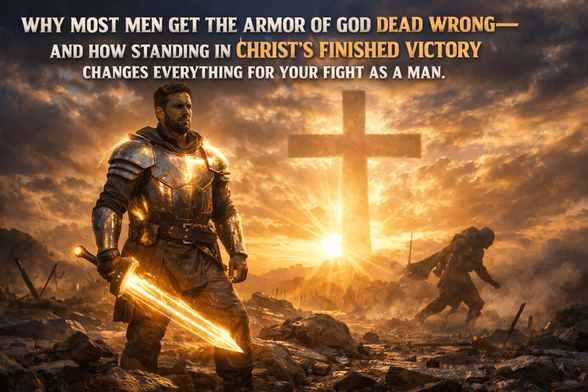
Why Most Men Get the Armor of God Dead Wrong – And How Standing in Christ’s Finished Victory Changes Everything for Your Fight as a Man

1,796 words, 10 minutes read time.

Brother, let’s cut straight to it. I’ve sat through more sermons on Ephesians 6 than I can count, and almost every one painted the same picture: you’re a spiritual Rambo, strapping on God’s armor to go toe-to-toe with the devil, swinging the sword to finally defeat him and claim your victory. It pumps you up, gets the blood flowing—like suiting up for the big game or heading into a tough job site where everything’s on the line. But here’s the hard truth I’ve come to grips with after digging deep into the text: that’s not what Paul is saying. Not even close.

The real message of the full armor of God isn’t about us gearing up to win a battle that’s still raging. It’s about standing firm in a war that’s already been decided—at the cross. Jesus disarmed the enemy, shamed him publicly, and triumphed over every dark power (Colossians 2:15). We’re not fighting for victory; we’re fighting from it. And as men—leaders, providers, protectors—this truth hits different. It frees us from the exhausting grind of trying to prove ourselves strong enough and calls us to rest in the strength of the One who already crushed the head of the serpent.

In this study, I’m going to walk you through three key truths that flip the script on how we’ve often heard this passage taught. First, we’ll look at the Old Testament roots showing this armor belongs to the Messiah Himself. Second, we’ll unpack Paul’s repeated command to “stand”—not attack, not conquer, but hold the ground Christ has taken. Third, we’ll see the prison context where Paul wrote this, staring at a Roman guard’s gear, and how he turned the empire’s symbol of domination into a declaration of Christ’s ultimate rule. By the end, you’ll see why so many of us have been wearing ourselves out swinging at shadows when we could be standing unshaken in the Conqueror’s strength.

I’ve wrestled with this myself. There were seasons when life felt like constant hand-to-hand combat—marriage strains, work pressures, temptations hitting from every angle. I’d pray harder, fast longer, quote more verses, thinking if I just armored up better, I’d finally knock the devil out. But exhaustion set in. Burnout. Doubt. Until I saw what Paul really meant: the armor isn’t for us to forge victory. It’s Christ’s own, handed to us because we’re in Him. That changed everything. No more striving like a lone wolf. Just standing like a son secure in his Father’s win.

The Armor Isn’t Ours to Build—It’s the Messiah’s Victory Gear Shared with Us

Let’s start where Paul draws his imagery: not primarily from the Roman soldier chained to him (though that’s coming), but from the Old Testament portraits of God as Warrior. Go back to Isaiah. In chapter 59, verse 17, the Lord Himself arms up for battle against injustice and evil: “He put on righteousness as a breastplate, and a helmet of salvation on his head.” Chapter 11:5 adds, “Righteousness shall be the belt of his waist.” And Isaiah 52:7 describes the feet bringing the gospel of peace. Sound familiar? Paul isn’t inventing this gear list. He’s echoing how the prophets described Yahweh coming to rescue His people, clad in divine armor to crush oppression.

Think about that for a second. The armor of God is first and foremost God’s armor—the equipment the Messiah wears when He rides out to defeat His enemies. Paul, writing to a church steeped in Jewish Scripture (even the Gentiles knew these texts), wants them to see: this isn’t generic battle kit. It’s the very armor Jesus wore when He went to the cross and turned the tables on every spiritual tyrant. Colossians 2:15 nails it—He disarmed the rulers and authorities, paraded them in shame, triumphing over them in His crucifixion and resurrection.

As men, we love the idea of suiting up ourselves, forging our own strength. It’s like rebuilding an engine from scratch—satisfying when it roars to life because you did it. But Paul says no. The belt of truth? That’s Jesus—”I am the truth.” The breastplate of righteousness? His perfect record credited to us. The shoes of peace? The reconciliation He bought with His blood. The shield of faith? Resting in His faithfulness. Helmet of salvation and sword of the Spirit? He is our deliverance and the living Word. We’re not manufacturing this armor through more discipline or willpower. We’re putting on Christ Himself (Romans 13:14 echoes this).

I remember a time when I was leading a men’s group, guys pouring out struggles with porn, anger, fear of failure. We prayed warfare prayers, bound demons, declared victory. Some breakthroughs came, but many guys just burned out. Why? We were treating the armor like tools we wielded in our power, instead of clothing ourselves in the Victor. When we grasp that this is Messiah’s gear—proven in the ultimate battle—we stop striving like orphans and start standing like sons. The pressure lifts. You’re not the one who has to disarm the enemy; He already did. Your job? Abide in Him, let His victory flow through you.

This Christ-centric view anchors everything. The original audience—Christians in Ephesus facing pagan pressures, emperor worship, spiritual darkness—needed to know their God wasn’t distant. He had come in Jesus, won decisively, and now shared His triumph. Same for us. In a world screaming at men to hustle harder, prove yourself, this says: rest in the finished work. Lead your family, work with excellence, resist temptation—not to earn the win, but because the win is already yours.

Paul’s One Command: Stand—Because the Ground Is Already Taken

Now zoom in on the Greek. Paul hammers one verb four times in verses 11-14: “stand.” Not “charge,” “overcome,” or “destroy.” Stand. Withstand in the evil day, having done all, still stand. The word is histēmi—hold your position, don’t budge, remain firm. It’s defensive posture, like a lineman anchoring against a blitz, refusing to give an inch.

Why this emphasis? Because the decisive victory happened at Calvary. Satan isn’t an equal opponent still duking it out for supremacy. He’s a defeated rebel throwing tantrums, firing parting shots, trying to bluff us off the territory Christ claimed. Our struggle (verse 12) is real—against rulers, authorities, cosmic powers—but it’s asymmetrical. Like mopping up resistance after D-Day. The beachhead is secured; now hold it.

Men, we hate passivity. Standing feels weak, like surrendering the initiative. We’d rather go on offense—declare, bind, advance. I’ve been there, leading prayer walks, shouting decrees. Powerful in moments, but unsustainable. Paul says the real strength is disciplined restraint: submit to God, resist the devil, and watch him flee (James 4:7). Not because we’re tougher, but because the Stronger One lives in us.

Look at the original audience. Ephesus was magic central—Acts 19 shows books of sorcery burned, riots over Artemis. These believers faced real spiritual opposition: fear, temptation to compromise, pressure to bow to idols. Paul doesn’t tell them to launch crusades. He says stand—clothed in Christ’s armor—because the powers are disarmed. Their schemes (methodia—cunning tricks) can’t ultimately prevail.

Practically, this hits our male battles hard. Pornography ambush? Don’t scramble to fight harder in your flesh. Stand in the truth that you’re dead to sin, alive in Christ (Romans 6). Anger flaring at work or home? Hold ground in His peace. Fear of failure as provider? Helmet of salvation reminds you: secured eternally. The enemy wants you reacting, chasing shadows. Standing says: I know who won. I know whose I am.

One anecdote sticks with me. A buddy, former Marine, shared how combat taught him the power of holding a position. Advance too far without support, you get cut off. Dig in where command says, you win the day. Same here. Christ advanced to the cross, secured salvation. Our orders: hold that line in daily life.

Written in Chains: Paul’s Bold Reversal of Roman Power

Finally, the context that seals it. Paul pens Ephesians from prison—likely house arrest in Rome, chained to a Praetorian guard (Philippians 1:13). Scholars widely agree: as he dictates, he’s eyeing a Roman soldier’s full kit. Belt holding the tunic, breastplate gleaming, hobnailed sandals, massive shield, crested helmet, short sword. Symbols of Caesar’s unbeatable might.

Paul takes that image—the empire’s tool of control—and flips it. The real panoplia (full armor) belongs to God. Rome thinks it rules; Christ has triumphed over every authority, including the spiritual ones backing empires. The prisoner declares: I’m not bound by Rome. I’m clothed in the Conqueror’s gear.

This irony would’ve hit the original readers like a freight train. They lived under occupation, tempted to fear Caesar’s power. Paul says: look at your guard. His armor is impressive, but temporary. Christ’s is eternal, victorious.

For us men, it’s the same gut punch. We face “empires”—corporate ladders, cultural pressures to conform, personal demons whispering inadequacy. We feel chained: bills, expectations, past failures. Paul, literally chained, writes from victory. His circumstances scream defeat; his theology roars triumph.

I’ve felt chained—depression hitting hard, questioning my manhood. But staring at this text, I see: the armor turns weakness to strength. Prisoner Paul stands freer than his guard. So do we.

Wrapping It Up: Live as Men Who Know the War Is Won

Brother, the full armor of God isn’t a call to become super-soldiers defeating Satan through grit. It’s an invitation to stand in the Messiah’s finished triumph—His armor on us, His victory ours.

We saw the Old Testament roots: this is God’s own gear, worn by Jesus to crush evil. We unpacked Paul’s command: stand, because the ground is taken. We felt the prison irony: even chained, we’re clothed in unbreakable power.

This changes how we fight as men. Lead without fear-mongering. Love without striving to prove worth. Resist sin without white-knuckling. Rest in Him, and the enemy flees.

If this hit home, drop a comment—share where you’re standing today. Subscribe to the newsletter for more raw studies like this. Reach out if you need a brother in the foxhole. We’re not alone.

Stand firm. The Victor lives in you.

Call to Action

If this study encouraged you, don’t just scroll on. Subscribe for more bible studies, share a comment about what God is teaching you, or reach out and tell me what you’re reflecting on today. Let’s grow in faith together.

D. Bryan King

Sources

Disclaimer:

The views and opinions expressed in this post are solely those of the author. The information provided is based on personal research, experience, and understanding of the subject matter at the time of writing. Readers should consult relevant experts or authorities for specific guidance related to their unique situations.

#abidingInJesus #ArmorOfGod #armorOfGodMeaning #beltOfTruth #bibleStudyForMen #BibleTruth #biblicalManhood #biblicalMasculinity #breastplateOfRighteousness #ChristSVictory #ChristianLeadership #ChristianMen #Colossians215 #crossTriumph #defeatedEnemy #Ephesians6 #EphesiansCommentary #EphesusChurch #exegeticalStudy #faithEncouragement #fightFromVictory #finishedWorkOfChrist #fullArmorOfGod #GodSArmor #graceOverStriving #helmetOfSalvation #hermeneuticsEphesians #Isaiah5917 #James47 #menSBibleStudy #menSFaith #menSMinistry #MessiahSArmor #OldTestamentArmor #overcomingTemptation #PaulInPrison #prayerInWarfare #prisonEpistles #putOnTheArmor #resistTheDevil #restInChrist #RomanArmor #shieldOfFaith #shoesOfPeace #spiritualArmor #spiritualBattle #spiritualDisciplines #spiritualStrength #spiritualWarfare #standFirm #standInChrist #standNotAttack #standYourGround #swordOfTheSpirit #theologicalStudy #victoryInJesus #warfarePrayer

Why Most Men Get the Armor of God Dead Wrong – And How Standing in Christ’s Finished Victory Changes Everything for Your Fight as a Man

Discover why most men misunderstand the Armor of God in Ephesians 6. This in-depth Bible study reveals we fight from Christ’s finished victory—not for it. Learn to stand firm in His triumph a…

Bryan King

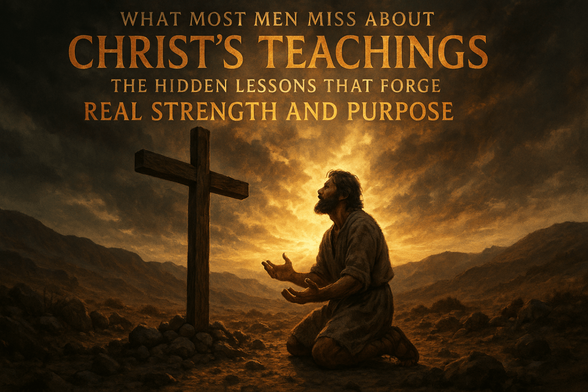
What Most Men Miss About Christ’s Teachings: The Hidden Lessons That Forge Real Strength and Purpose

8,539 words, 45 minutes read time.

Christ’s Message Isn’t Soft

I used to think Jesus was the kind of man who smiled politely, never raised His voice, and quoted poetry while walking on the beach. Somewhere along the line, churches and cheap art made Him look harmless—fragile even. But then life shattered my little ideas of control. Responsibilities piled high, pride cracked, and comfort turned hollow. That’s when His words stopped sounding gentle and started sounding like commands from a battlefront.

Jesus didn’t come to make men “nice.” He came to make them new. And new doesn’t happen without fire. If you ever read His teachings in their real context—in the time, culture, and chaos where He actually spoke—you realize how wild, dangerous, and liberating they really are. Christ wasn’t giving moral tips. He was giving orders in a war for your soul.

What most men miss about Jesus’ teaching is that His path doesn’t make you safe—it makes you solid. Let’s slow down and actually dive into His words like first-century men hearing them for the first time—through the sweat, shame, hope, and raw courage they carried.

The Strength in Surrender

When Jesus said, “If anyone wants to follow Me, let him deny himself, take up his cross daily, and follow Me,” He was not preaching poetry. Those words landed like a blade between bone and spirit. The men who heard them didn’t picture a decorative necklace—they pictured Rome’s favorite instrument of fear. The cross meant suffocation, humiliation, absolute loss. To “take up your cross” was not a metaphor for mild inconvenience. It meant you were already dead, walking under a verdict. And Jesus looked into the eyes of hardworking men living under Roman occupation and demanded they choose that death willingly, every day.

The command hit a world defined by dominion. Rome measured worth by conquest; your power was proven by whose back you stood on. The religious elite measured holiness by performance; strength meant the spotless record no one else could match. Jesus cut through both illusions with one sentence. Deny yourself—kill your own throne. Take up your cross—drag the instrument of your ego’s execution through the dust. Follow Me—walk My road, where glory and suffering are indistinguishable until resurrection.

That kind of teaching doesn’t survive inside comfort. It requires a death we don’t want. I’ve learned that no man really encounters God until he collides with the end of himself. I used to confuse pride for perseverance, stubbornness for courage. I thought striving harder was the same as leading. But I was just building idols that bore my face. Every success still left a whisper of panic: “What happens when the illusion breaks?” That’s the kind of question God eventually answers with a wrecking ball.

When your plans burn down, you start seeing the difference between achievement and obedience. I kept thinking if I tightened my grip, I could hold the pieces together. But control is just fear pretending to be strength. Real strength begins in surrender—the moment you unclench your fists and admit that you’re not the one running the universe. That admission feels like defeat. It’s actually deliverance.

Rome defined power as domination; Jesus defined it as submission to the Father’s will. That’s why the cross scandalized not just Romans but everyone watching. Imagine the disciples hearing this call in history’s harsh light: ordinary Jewish tradesmen forced daily to see crosses lining the roads where rebels had been executed as warnings. They knew that aroma, the buzz of flies, the reminder that Rome owned their flesh. And Jesus—this carpenter with miracles and military-sized crowds—tells them, “That’s the path.” No rebellion, no takeover, not even self-defense. Just surrender.

It sounded insane. But then they watched Him live it. Every step of His ministry redefined leadership and masculinity. He confronted evil without arrogance, held power without flaunting it, and when the moment of total dominance came—when He could have summoned legions of angels—He let Himself be bound. That wasn’t helplessness; it was control so extreme it surrendered itself. Rome thought it was nailing Him down. But He was laying Himself down. That’s the secret God plants in every man who follows Him: the truth that no one can take your life if you’ve already offered it up.

That’s what “dying daily” means—it’s not self-loathing; it’s self-emptying. Every sunrise you decide again: Will I live for my comfort or His command? Will I worship my need to control or follow the One who commands oceans to still? That is why surrender has to be practiced daily. Ego resurrects overnight. Pride never stays buried without supervision. You kill it this morning and find it flexing in the mirror tomorrow. So every day becomes another execution; one that brings resurrection in its wake.

Those early Christians got it because death wasn’t theoretical for them. They were chased, jailed, burned, mocked. Yet the letters they wrote talk about joy, freedom, peace. They had discovered something Rome couldn’t manufacture—life on the far side of surrender. Their power didn’t come from avoiding suffering but from interpreting it through eternity. A man who’s already surrendered can’t be owned. You can beat him, but you can’t intimidate him. Every threat loses its teeth against a soul that’s already died once.

This kind of surrender also heals a man’s mind. We live clenched—trying to fix everything, build everything, control every outcome. The modern world rewards anxiety disguised as ambition. But surrender resets your wiring. You stop reacting like a caged animal, start moving like a soldier under command. You still fight, but your motive changes. You’re no longer fighting to win approval or secure control; you’re fighting to stay faithful. That shift—from earning to obeying—is the turning point where God starts shaping a man into something steady, dangerous, holy.

Surrender doesn’t make you a spectator; it makes you a weapon. The paradox runs deep: The man who refuses to bow becomes brittle and breaks. The man who bows daily becomes unbreakable. Jesus bowed all the way to the tomb, and on the third day, hell itself let go. That’s the template. The way up is down; the way to strength is surrender; the only victory worth anything is resurrection that comes after crucifixion.

If you want to know what this looks like in real time, think of the moments that tempt you most: when your pride flares, when your lust pushes, when anger surges. Each is a miniature cross waiting for you to climb on. Painful? Always. Necessary? Every single time. Because surrender trains you to stop building altars to yourself. It breaks the addiction to control that’s been eating men alive since Eden’s first lie—“You can be like God.”

Following Christ means finally quitting that lie. It’s hearing Him say, “Take up your cross,” and understanding that death isn’t the threat—it’s the doorway. You don’t carry the cross as a symbol; you carry it as your agreement with heaven: “I’m done pretending I run this life.” And when you walk under that weight daily, your spine straightens, your fears shrink, and peace—real, grounded, quiet peace—moves in.

That’s why the cross is a paradox of power. Rome used it to control, but Jesus transformed it into freedom. The world still uses fear as a leash, but the surrendered man bites through it. He becomes the kind of man who doesn’t crumble under loss because he never built his strength on what can be taken away.

So yes, surrender slices deep. It dismantles your ego. It rearranges your ambitions. It costs everything you think you own. But on the other side, it gives you back something stronger, cleaner, eternal. When you finally lose yourself, you find the only life sturdy enough to last forever.

The cross is not an ornament. It’s an invitation. And if you decide to take it up—daily, deliberately—you don’t become weak. You become untouchable, because everything worth killing in you has already been crucified. The man who’s died before he dies doesn’t fear anything—not even death itself.

Power Through Meekness

When Jesus looked out over that slope above the Sea of Galilee and said, “Blessed are the meek, for they shall inherit the earth,” His listeners didn’t hear a soothing proverb. They heard a paradox that grated against everything their culture valued. Around them, the world belonged to the loud and the armed. Rome kept peace by breaking bones. The Herods built glory on coin and cruelty. Jewish zealots swore vengeance by the knife. In that atmosphere, the word meek landed like a riddle. How could restraint, quietness, submission ever inherit anything except chains?

But meek—in Greek, praus—did not mean weak. Every soldier standing on a Roman street knew that word. It was the term cavalry trainers used for a stallion after months of breaking and drilling. The horse stayed a beast of power: muscle coiled for speed, lungs built for the charge. Yet it moved only when touched; it stopped the instant its rider breathed the command. Praus strength was the kind that had passed through discipline. It could still destroy, but only at the Master’s bidding. It was strength refined into precision.

Jesus chose that word deliberately. He wasn’t creating a soft category of holy passivity. He was describing the posture of men who have submitted their fire to God: weapon‑grade souls under divine command. The Romans celebrated those who mastered others. Jesus blessed those who had finally mastered themselves.

If you read the Beatitudes in their first‑century setting, you realize how revolutionary they were. He wasn’t offering an escape from the world; He was teaching the conditions for ruling it under God. The meek “inherit the earth” because they’re the only kind of men who can handle possession without corruption. The unbroken man, still led by impulse and ego, conquers and then consumes. The meek man, tested by submission, builds what lasts.

Scripture gives flesh to this kind of power. Moses, called the meekest man on earth, stood unarmed before Pharaoh, the most powerful ruler alive, and refused to flinch. His meekness didn’t shrink him—it steadied him. Decades in the desert had burned away the brash temper that once killed an Egyptian. Now his anger served his mission, not his vanity. When God spoke, Moses moved; when God stayed silent, Moses waited.

Then look at Jesus before Pilate. The governor bristled with political power. Around Him, soldiers waited for the signal to strike. One sentence from Christ could have ended the trial, humiliated the court, or summoned angels. But He stood still. The silence wasn’t defeat; it was perfect composure. Heaven itself held its breath while meekness stared down empire. That’s praus in flesh—authority bridled by obedience.

Modern culture still doesn’t have a category for that kind of man. We measure aggression, charisma, volume, followers. We hand the earth to whoever can shout the longest. But Jesus doesn’t anoint conquerors; He trains custodians. He looks for men who can hold a sword without letting it own them. Power without control burns churches, families, and nations alike. The meek man is the one who has fought the inner war long enough to trust his own hands with fire.

I’ve felt the danger of untamed strength in my own life. Words sharper than knives launched in anger, decisions driven by adrenaline, moments where I needed to prove I was right. Every time I “won,” something in me shrank. Real manhood isn’t about conquering others—it’s about conquering the storm inside. Meekness doesn’t erase passion; it purifies it. It’s the difference between lightning that scorches the ground and lightning that lights the sky.

Discipline doesn’t come easy. It’s forged in the same crucible Jesus described earlier—self‑denial, daily surrender, patient obedience. A man becomes meek when he’s finally stopped performing for approval, when he no longer needs to dominate to feel alive. That’s when God starts to entrust him with influence. Because he’s not chasing power for validation; he’s channeling power for service. A meek man can lead armies, build nations, raise sons, love one woman with ferocity—because every action flows from alignment, not appetite.

Centuries of commentators have noted that the meek “inherit the earth,” not because they grab it, but because every other contender eventually implodes. Empires crumble under their own arrogance. Aggressors die young. But meek men endure. Their strength isn’t in the war of the moment; it’s in the long obedience over years. History keeps handing them the ground others fought over and lost.

Every culture that has ever glorified dominance eventually rediscovers this truth. Power secured by fear erodes; power anchored in character endures. The meek carry both sword and plow and know when to use each. They are the quiet healers after the loud men burn out. Jesus saw that, standing in that occupied land. He promised the inheritance of earth to His kind of warrior—disciplined, obedient, patient, fierce only when love demands it.

So when you hear “Blessed are the meek,” don’t picture a timid saint stepping aside. Picture the warhorse—eyes steady, muscles alive, reins held lightly by the Rider he trusts completely. That is godly manhood: not muscle without mercy or mercy without muscle, but both, synced to the rhythm of heaven’s command.

Meekness doesn’t dim a man’s fire; it focuses it. It takes all that restless energy we waste proving ourselves and welds it into purpose. It’s what allows a man to protect without controlling, to lead without boasting, to fight without hatred. It’s what makes a man safe in power and strong in service. That’s the raw heart of praus—the power that bends so it doesn’t break, that conquers self so it can inherit the earth.

Leadership by Service

Nothing captures how violently Jesus redefined authority like that moment in John 13. The story unfolds in a real room, on a real night, under the shadow of real death. The disciples didn’t know what was coming, but He did. Within hours, soldiers would come through the garden. Within a day, Rome would drive spikes through His wrists. Every empire on earth would have used such a last meal to solidify hierarchy—to remind followers who commanded and who obeyed. And Jesus, knowing the weight of time and eternity pressing against Him, stands from the table, strips down to a servant’s towel, fills a basin, and kneels.

First‑century men would have felt the jolt in their stomachs. Foot‑washing wasn’t a gesture; it was the lowest task in the household economy. Roads were bare dirt layered with sweat and manure from men and beasts. Even Jewish slaves could refuse the chore. The guests reclined; the servant crawled. That’s why Peter recoiled when Jesus reached for his feet. Every cultural instinct screamed No. Rabbis didn’t wash disciples’ feet—disciples washed rabbis’. For their Master to take the servant’s role felt wrong in the bones.

But that’s exactly what Jesus wanted them to feel. The shock was the teaching. He was burning a new shape of leadership into their memory. He looked up from the floor, wet towel in His hands, and said, “You call me Teacher and Lord, and you are right, for so I am. If I, then, your Lord and Teacher, have washed your feet, you also should wash one another’s feet.” (John 13:13‑14)

That line undercuts the entire human idea of rank. In a world where greatness meant being served, Jesus made greatness synonymous with service. The towel replaced the throne. It wasn’t sentimental humility—it was a manifesto: the kingdom of God runs on inverted power structures. The only men He trusts with authority are those willing to lay it down.

Look at the context closely. This is not a calm seminar lesson. The air was thick with tension. Judas was already looking for an opening to betray Him. The other disciples were still arguing who would be the greatest. The cross was hours away. Jesus wasn’t escaping pressure; He was modeling leadership under fire. While every other man in that room itched to secure his position, Jesus secured His by kneeling.

When the early Church remembered this scene, they didn’t romanticize it. They used it as the pattern for every form of Christian leadership—apostles, pastors, husbands, employers, soldiers. The rule was simple: you don’t grasp power, you steward it; you don’t demand honor, you earn it by service. That was unthinkable in Rome, where humility was a slave’s defect, not a virtue. Yet this small band of men, washed by their Teacher, would soon upend the empire by embodying that upside‑down ethic.

The historical weight of that act makes it impossible to reduce to politeness. Jesus was performing a living parable of the incarnation itself: God taking on the dirt of creation to lift it clean. The basin in His hands foreshadowed the blood that would wash their souls by sunrise. When the Master knelt, heaven stooped to earth. That’s not hospitality; that’s revolution at basin level.

And it’s still as offensive now as it was then. Because everything in modern manhood still wants the upper seat, the last word, the recognition. We crave being admired more than being useful. But Christ keeps pointing back to that basin. Leadership in His kingdom starts on your knees. The warriors of heaven aren’t identified by armor but by towels draped over their arms.

For years I misunderstood that. I thought serving made a man small—that it meant getting walked on, ignored, drained. But service in Christ isn’t weakness; it’s voluntary strength. It’s choosing to go low when you could stand tall, because you trust the One who sees in secret. The man who serves out of obedience doesn’t become smaller; he becomes indestructible. You can’t humiliate someone who has already decided humility is victory.

That kind of leadership transforms every arena—a marriage, a team, a business, a brotherhood. A husband who serves his wife leads her better than the man who shouts about respect. A boss who shoulders the hard tasks with his workers earns loyalty beyond salary. A pastor who listens before he commands becomes the voice people hear as safety, not control. Servant leadership breaks the cycle of domination that rots every human hierarchy.

When Jesus finished washing those feet, He didn’t tell the disciples to admire Him for the gesture. He told them to copy it: “I have given you an example, that you should do as I have done to you.” (John 13:15) The authority for that command came not from the power He displayed but from the power He refused to use.

So this is where greatness hides—in the grime, under the towel, in the quiet choice to serve when no one notices. Every man who follows Jesus walks that same tightrope: pride whispering “You deserve more,” while Christ whispers “Go lower.” Over time you discover the secret—that the lower you go, the larger you grow. The towel doesn’t take away the crown; it proves you’re ready to wear it.

Overcoming Failure Through Forgiveness

When Peter asked, “Lord, how many times shall I forgive my brother who sins against me? Up to seven times?” he thought he was being heroic. The rabbis of his day taught three strikes of mercy—the fourth was justice. So Peter more than doubled that number, maybe expecting a nod from Jesus for such apparent generosity. Instead, Jesus hit him with a number that shattered the ledger: “Not seven times, but seventy times seven.” (Matthew 18:21‑22)

Every man standing there knew the idiom wasn’t an equation. It was a command to end the counting. In a culture built on honor, revenge, and reputation, that sounded like lunacy. The ancient Near East ran on reciprocity; injury demanded repayment. “An eye for an eye” wasn’t cruelty—it was civilization’s brake on escalating blood feuds. Forgiveness beyond what the Torah required cut against the bone of national and masculine identity.

To understand the shock, step into the first‑century world. In the Roman code, virtus—from which we get “virtue”—literally meant manliness, courage, domination. Mercy was a vice fit for women and slaves. The Jewish zealots considered forgiveness betrayal. Every man carried some version of the same code we still live by: never back down, never forget, never let it go. Jesus’ command bulldozed that entire system in one breath.

He wasn’t calling for softness. He was calling for something the old codes could never reach: freedom. Forgiveness, in Christ’s mouth, isn’t approval of evil; it’s refusal to let evil chain you to it. When you forgive, you demolish the power your offender still holds over your peace. You refuse to stay captive to the story of what hurt you. That’s not weakness—that’s warfare of the highest order.

The cross proves it. Rome nailed Him up to silence Him, and His answer was, “Father, forgive them.” That sentence is the most explosive act of masculine strength in history. He absorbed the blow and drained it of poison. He didn’t retaliate; He redeemed. Hanging there stripped, bleeding, mocked, He exercised a kind of authority none of His enemies could touch: the ability to love while dying. That is the template for every man who wants to be free.

Real forgiveness requires more ferocity than revenge ever will. Anyone can hit back; it takes a crucified will to bless instead. Forgiving doesn’t erase justice—it removes vengeance from your grip and hands it to God. That shift is where the bitterness dies. The act costs you your pride, your right to obsess over the wound, your satisfaction at the thought of payback. But what you get instead is oxygen.

Through history, you can see forgiveness marking the strongest men of faith. Joseph, face to face with the brothers who sold him, said, “You meant it for evil, but God meant it for good.” David spared Saul twice when the hunted had the hunter at his mercy. Stephen, stones raining down on him, echoed his Lord’s words—“Do not hold this sin against them.” Every one of those moments explodes with power precisely because it defies instinct. Vengeance fuels the cycle; mercy ends it.

I’ve tasted that poison of unresolved anger. You think it keeps you strong, keeps you motivated, keeps the edge sharp—but it corrodes every gear it touches. Forgiveness doesn’t justify what happened; it just refuses to let yesterday command your manhood. It’s breaking the feedback loop that keeps dragging you back to the pain.

Jesus knew that unchecked resentment would devour His disciples faster than persecution ever could. That’s why He didn’t cap forgiveness with a number. He commanded a posture. “Seventy times seven” means mercy on a loop. He wasn’t asking men to be doormats; He was training them to be weapons of grace sturdy enough to transform a hostile world. The early Church understood this: their strength wasn’t in retaliating against Rome but in forgiving Rome so completely that soldiers ended up joining them.

For us, the stakes are the same. Every man carries wounds from betrayal, humiliation, or failure. They whisper at night, infect our temper, twist our decisions. Forgiveness is how we bleed that poison out before it hardens into legacy. You want to pass strength to your sons? Show them what it looks like to release instead of retaliate. The world expects violence; it never knows what to do with mercy lit like a torch inside a warrior’s chest.

Forgiveness doesn’t cancel manhood—it crowns it. It’s the final proof that your identity isn’t controlled by anyone else’s sin. A forgiven man becomes unstoppable because he moves light. His past no longer dictates his pace. That’s why Jesus linked forgiveness so tightly with following Him: carrying a cross leaves no hands free for grudges.

So if you’re still counting offenses, still rehearsing the list, still nursing the story of what someone did—you’re living by the wrong math. Start subtracting. Release the debt. Hand it up. Let your masculinity be measured not by how fiercely you strike, but by how completely you forgive. That isn’t sentimental. It’s strategic. It’s how men built in the image of Christ fight evil and stay free.

The Courage of Integrity

When Jesus said, “Let your ‘Yes’ be ‘Yes,’ and your ‘No,’ ‘No,’” He was standing in the middle of a world fluent in manipulation. The Jews of His time had developed layers of oath systems to give the illusion of honesty—swearing by the temple, by heaven, by Jerusalem—each oath carrying a different level of seriousness. It looked like credibility, but it was mostly camouflage: ways to sound truthful without the burden of actually being true. The Greeks treated rhetoric the same way—eloquence over accuracy, verbal strength as social weapon. Into that noise Jesus spoke a sentence so simple it felt like blunt force: Stop layering your words. Say what’s real. Mean it. Live it.

Integrity in that context wasn’t just a moral upgrade; it was rebellion. Rome built power on oath and allegiance. A citizen’s promise was tethered to imperial propaganda. Jesus stripped all that away and tied honesty directly to God’s image. “Let your ‘Yes’ be ‘Yes’” meant your existence itself was the oath. The old system demanded people swear by something greater than themselves. Jesus implied that a disciple’s words needed no external guarantor. The truth dwelling inside would carry its own authority. In the Kingdom, trustworthiness wasn’t theatrics; it was character.

For first‑century men, that hit close to pride. A public man’s reputation rested on his ability to promise great things and deliver just enough to keep control. Christ called for something rarer: absolute congruence between lip and life. The man He described doesn’t shade his commitments, doesn’t overpromise, doesn’t soften a “no” to dodge offense. His speech has weight because his heart is welded to reality. Forged under pressure, the seams don’t split when life heats up.

That’s why Jesus linked lies to the devil in John 8. Falsehood isn’t just error; it’s participation in darkness. Every time you twist the truth to gain favor, you mimic the serpent who warped words in Eden. Integrity, then, is not simply virtue—it’s warfare. To speak truth in a world of spin is combat training for eternity. It’s resistance against the forces that fracture souls and societies.

Think how radical that remains right now. We live in the age of half‑truth and curated image, contracts printed in font too fine to read, “authentic” lives filtered for followers. We call exaggeration marketing, deception negotiation, hypocrisy politics. Into that fog, Christ still speaks the shortest sentence with the longest reach: Say yes and mean yes. Say no and mean no. Anything more, He warned, “is from evil.” Words matter because they create worlds. Lies build cages. Truth builds foundations.

Integrity isn’t natural. It’s hammered into you the way a blade is tempered—reheated, hammered again, cooled, tested until trustworthy. Every time pressure tempts you to bend your word—a promise made in passion, a business deal cushioned in gray, a vow muttered before God—you’re standing at that forge. The weak metal warps. The true steel holds. That’s what Jesus was after: men whose speech had tensile strength.

Notice something deeper in His command: He’s not outlawing vows. Israel’s Torah made room for solemn covenants before God. What He bans is theatrical swearing meant to disguise deceit. Honesty doesn’t need performance. When your “yes” and “no” come from a heart aligned with the Father, simple language carries divine weight. The early Church fathers said that a Christian’s word should be as binding as an oath because the Spirit Himself witnesses every syllable.

This isn’t about legalism; it’s about integrity as identity. If we claim to belong to the Truth, we can’t twist it. And the cost will come. A man who speaks straight will lose deals, friends, invitations. But he gains something no crowd can grant: stability. The unflinching man becomes the one everyone calls when the storm hits, because his word has proven good in rain or shine. He may not be charming, but he’s trusted. He may not impress, but he endures. The Kingdom measures that weight higher than prestige.

This standard confronts me every day. It means admitting the small lies I tell to make myself look better, the promises I make too quickly, the silence I use to dodge responsibility. Each one is a fracture in my word’s edge. Integrity requires fusion: the welding of speech and spirit. Sometimes repentance is the only way to repair it—owning the gap between what I said and what I delivered, then closing it through obedience.

When Jesus speaks of “yes and no,” He’s sketching the kind of disciple who mirrors His own nature. Jesus’s words never missed alignment with His actions. When He said, “I will,” the blind saw. When He said, “I forgive,” the condemned walked free. His promises were not rhetoric; they were reality. That’s the model of masculinity Scripture gives: truth carried through to completion. Anything less is noise.

Integrity, at its rawest, is the peace of a man whose inner and outer lives match. When your conscience no longer has to wince after every conversation, when you can let silence follow your words without fear they’ll boomerang back as hypocrisy—that’s freedom. It isn’t glamorous, but it’s strong. It’s the kind of character God trusts with influence.

Our reputations don’t make us dependable—our obedience does. The moment truth costs you comfort and you still tell it, you become a man the world cannot buy. That’s the gospel of “yes” and “no.” In a culture addicted to loopholes, Christ calls men to be solid—so that every word they speak becomes a small echo of His eternal one: faithful and true.

Facing Temptation Like a Warrior

Before Jesus ever healed a body or preached a sermon, He walked straight into the wilderness. Matthew writes that the Spirit—not accident, not bad luck—led Him there (Matthew 4:1–11). That small detail sets the stage. The desert wasn’t exile; it was ordination. In Scripture, wilderness always means exposure. It’s where comfort strips away and character surfaces. No crowds, no applause, no safety net—just sand, silence, and the weight of hunger.

To a first‑century audience, the wilderness wasn’t symbolic. It was memory—brutal, historical, collective. Israel had once crossed the Red Sea full of promise and then bled forty years in that same barren land, failing every test of trust. The prophets looked back on those generations and called the desert the place of testing. Every Jewish man knew that history. So when Jesus vanishes for forty days with no bread, they weren’t picturing a private retreat; they were hearing a declaration: I’m walking the path you couldn’t finish. I’m going to win where Israel lost.

Forty days of fasting wasn’t exhibitionism. It was discipline, training, and identification all at once. In the near East’s arid heat, fasting tears away illusions fast. Hunger removes the filters. It’s the same principle that mothers, soldiers, and laborers have learned instinctively: exhaustion reveals who you really are. The devil waited for that moment of weakness, because temptation always times its approach for the low point—when your stomach growls, when your pride aches, when you’re bored or afraid or starving for affirmation.

Satan’s three challenges were surgical: appetite (“turn these stones to bread”), identity (“prove You’re the Son of God”), and allegiance (“bow and I’ll give You kingdoms”). They weren’t random offers; they were the same idols that owned human history—comfort, vanity, and control. Each strike aimed to make Jesus act independently of His Father. Each whisper said, “Be your own source. Take what’s yours.” The devil’s voice hasn’t changed much since Eden.

What makes Jesus’ counterattack lethal is its simplicity. He doesn’t debate. He doesn’t invent. He draws steel from the Word. Three times, He strikes back with Scripture—Deuteronomy, the very book that chronicled Israel’s wilderness collapse. It’s as if He’s holding their ancient failure in His hands and rewriting the ending with obedience. Every verse He quotes begins with “It is written,” not “I feel.” It’s deliberate combat technique: choose revelation over reaction. That’s how He won—not with novelty, but with memory of His Father’s truth.

That historical backdrop gives the story its weight. When Israel faced scarcity, they demanded manna. When threatened, they doubted God’s protection. When offered idols, they worshiped them. Jesus endured all three conditions in concentrated form and reversed them by faith. Where His ancestors cursed, He trusted. Where they grasped, He restrained Himself. The battlefield wasn’t bread or power or miracle—it was allegiance. Whoever defines your obedience owns your destiny.

That’s still the terrain every man has to cross. We keep pretending temptation is situational—a woman, an argument, a website, a drink, an opportunity. But the real fight happens before those moments, in the wilderness of the heart. Every day, you’re training for one of two masters: self‑rule or divine rule. When pressure hits, your reflex reveals your preparation. Jesus didn’t improvise in the desert. He didn’t flip through scrolls trying to remember a verse. The Word was already stitched into His bloodstream. That’s preparation.

A Christian man doesn’t resist temptation by adrenaline or bravado. He resists by discipline long before the test arrives. The wilderness exposes whether you’ve built that preparation into your soul. It’s why the armor of God in Ephesians starts with truth and the sword of the Spirit—the Word itself. When you know Scripture intimately enough to answer lies without hesitation, temptation loses its surprise.

Our culture loves impulse strength—the loud talk, the quick fix, the adrenaline rush to prove you’re untouchable. That’s not strength; that’s theater. Jesus’ kind of strength is slow‑boiled. It grows in obedience when no one sees. The man who trains his mind on Scripture while things look calm becomes the one who stands steady when chaos breaks. In temptation, you fight like you’ve practiced.

The wilderness narrative also reminds us that testing is neither failure nor punishment. The Spirit led Jesus there. God Himself sets the training ground for those He intends to use. If you find yourself stripped of comfort, wrestling with appetites or pride or the need to control every outcome, it might not be abandonment at all. It might be recruitment. The desert is draft notice for men who want to walk in authority.

When Jesus came out of the wilderness, He didn’t limp; He launched His ministry. Luke says He returned “in the power of the Spirit.” The temptation hadn’t weakened Him—it tempered Him. That’s the paradox: conquering temptation doesn’t just protect your soul; it multiplies your power. Self‑control becomes spiritual authority. The man who has faced hunger and said no, who’s stared at shortcuts and walked past them, who’s been offered kingdoms and chosen obedience—that man is safe to trust with influence.

That’s what the wilderness still does for us. It doesn’t change God’s love for you; it tests your capacity to carry it. It’s the training ground where you learn to fight inner battles before outer victories. Jesus blazed that path not to prove divinity but to model discipline. He didn’t defeat temptation so we wouldn’t have to; He defeated it to show us how.

So when the dry season hits—when you feel alone, unseen, starved for meaning—don’t waste energy complaining about the desert. Start training in it. Load your heart with truth while the silence still stands. The devil always tests the unprepared, but he flees from the disciplined. When the next temptation comes—and it always does—you won’t need to scramble. You’ll already have your sword drawn, your footing firm, your answer clear: “It is written.”

Living with Eternal Vision

To the average man living under Roman occupation, “the good life” was not a dream—it was a chase. The empire sold a vision carved in marble and blood: land, legacy, comfort, the ability to finally stop scraping and breathe easy. Power meant security. Wealth meant dignity. Every man was pressed into that hierarchy, fighting for scraps of recognition from a system designed to keep him small. So when Jesus stood in the open air and said, “Seek first the kingdom of God and His righteousness, and all these things will be added to you,” His words detonated quietly against the foundations of that world. He wasn’t denying the realities of hunger, taxes, oppression. He was detonating the lie that survival was life’s highest goal.

Read the Sermon on the Mount in its historical frame and you see the tension. These were men worried about bread, clothes, tomorrow’s work, Caesar’s next decree. They wanted the Messiah to break Rome, not their anxiety. Jesus meets that restlessness head‑on. “Stop worrying about what you’ll eat or wear. Look at the birds. Look at the lilies.” He isn’t romanticizing nature; He’s forcing perspective. The same hand that feeds sparrows and paints wildflowers rules empires. If that hand holds you, why grind yourself into dust chasing what dies? Seek first—the hierarchy of pursuit changes everything.

That command isn’t anti‑ambition. It’s an exorcism of corrupted ambition. God designed men to build, to create, to push boundaries. But when your goals orbit yourself—your comfort, your name, your safety—they shrink your soul to the size of your ego. Jesus isn’t telling us to quit working; He’s reorienting what the work is for. The Kingdom is not a metaphor for church buildings and Sunday schedules. It’s the reign of God rolling through human lives and history, a new order of values in the shell of a broken world. Seeking it first means re‑aiming every ambition you have at something eternal.

For the fisherman hearing those words, the message was practical: business stays, but priority shifts. Casting nets still feeds families, but now each cast becomes vocation under divine command. For the tax collector, it meant integrity replaces greed as the measure of success. For the Roman soldier secretly listening in the crowd, it meant the sword becomes servant to justice, not idolatry. The kingdom rearranges everything without destroying your humanity.

Jesus was dealing with the spiritual disease underneath anxiety: mistrust. “Gentiles run after all these things,” He said, meaning people who live like God doesn’t care about them. Worry lives where faith hasn’t yet been applied. His solution wasn’t denial—it was allegiance. Your focus determines your freedom. Keep chasing survival, and fear will always outrun you. Chase the kingdom, and provision starts chasing you.

When He said, “All these things will be added,” He wasn’t promising an easy paycheck. He was promising alignment. Once you put the eternal first, temporal needs find their proper scale. Until you do, every meal, every bill, every plan looms larger than your calling. The promise of added things is not prosperity gospel fluff; it’s divine efficiency—God freeing you from the stomach‑knot of constant scarcity thinking so that you can invest your energy where it matters.

Eternal vision doesn’t shrink drive; it sanctifies it. The man who seeks the Kingdom first doesn’t lose ambition—he loses panic. His motivation becomes mission. His victories stop being ego trophies and start being testimonies of grace. He still works, sweats, strategizes, and fights, but he does so from peace instead of fear. The Kingdom first man can lead in the boardroom or the battlefield because he’s not owned by outcome.

I’ve lived both sides of that pursuit. When I chased the “good life,” I woke up every morning feeling behind. No matter what I achieved, I couldn’t outrun the void. The deals closed; the applause faded; rest never came. When I finally shifted the chase—first things first—it was like oxygen filling collapsed lungs. Work stopped being drudgery because it connected to worship. The kingdom doesn’t eliminate hustle; it redeems it. Every task becomes a way to reflect the King’s character—excellence becomes devotion, generosity becomes strategy, patience becomes warfare.

That eternal focus goes beyond personal sanity—it changes how a man leads his world. A father living for eternity raises sons who understand integrity better than ambition. A husband living for eternity sees marriage not as contract but covenant. A leader living for eternity handles authority like stewardship, not privilege. When Christ becomes the axis of your calendar and decisions, stress still knocks at the door, but peace answers it.

Jesus knew the Roman model of success would crumble within centuries. He also knew the same pattern would repeat in every civilization to come: men destroying themselves for temporary crowns. His remedy still stands. The life anchored in the Kingdom can’t be toppled because its rewards outlast decay. You can strip a man of his job, his house, even his body, but you can’t bankrupt a man whose treasure is eternal. That inheritance doesn’t depend on Caesar; it depends on obedience.

The challenge for us moderns is identical. We chase empires made of deadlines and devices, and we call it progress. Jesus’ words still cut through with surgical clarity: Stop running after the things everybody else runs after. Trade panic for purpose. Make eternity your metric.

When you seek the Kingdom first, your hands keep working but your heart stops grinding. You start to measure time differently—not by hours billed or likes gained, but by the presence of the King in what you build. That’s freedom. That’s the good life Christ promised—not abundance without effort, but peace without panic, ambition without idolatry, meaning without manipulation.

So chase hard, yes. Build, create, conquer. But aim it higher. Seek first His Kingdom and His righteousness. Every empire falls; every paycheck fades. The man who works for eternity never runs out of purpose because his work outlives him. That’s not religion—it’s clarity. That’s the battle plan Jesus dropped into a world drunk on survival: establish eternity in a mortal life, and you’ll finally be free to live.

Christ’s Teachings Make You Dangerous (in the Right Way)

When a man takes Jesus seriously—when he reads His words in their raw historical weight, when he lets them burn against his pride and reshape his values—he becomes something this world doesn’t know how to categorize. He becomes steady, not safe. Controlled, not passive. Dangerous, not destructive. The teachings of Christ don’t domesticate men; they forge them. They take wild energy and turn it into sacred precision. That’s what happened to the fishermen, zealots, and tax collectors who first followed Him. They began as ordinary, impatient, self‑absorbed men, and ended as unbreakable ones.

Jesus confronted them the same way He confronts us—by burning down everything false. He didn’t gather them to boost morale; He enlisted them into surrender. “Deny yourself, take up your cross, and follow Me.” That’s where their transformation started, and it’s where every man who answers His call begins. Real strength isn’t inherited or performed. It’s the by‑product of dying to control. When you finally stop clinging to your self‑authored life, you discover that surrender wasn’t weakness at all—it was the doorway to unstoppable resilience.

That’s the first secret of Christ’s masculinity: the paradox of strength in surrender. The world still screams that power means domination. Christ whispers that power starts on your knees. He took the ugliest emblem of Roman tyranny—the cross—and turned it into a throne of indestructible authority. Every man who follows Him walks that same paradox. You die before you die, so nothing else can kill you.

Then, from that ground of humility, He built the next layer: meekness. Not fragility, but control. He blessed the meek—the warhorse strength refined by obedience. That single word, praus, took the feral energy of manhood and yoked it to divine restraint. Meekness is the man whose emotions are reined by wisdom, whose might serves mercy, whose anger bows to justice. The undisciplined man might look fierce, but he burns everything he touches. The meek man endures because his strength belongs to Somebody greater than himself.

Christ’s way of leadership tore through every hierarchy Rome or religion could imagine. In a world obsessed with rank, He wrapped a towel around His waist and washed feet. That basin in John 13 wasn’t a prop—it was a declaration of how heaven governs. Greatness isn’t asserted through dominance but proven through devotion. He knelt before men who would soon betray Him, and told them, “Do what I’m doing.” Servant leadership isn’t a public‑relations strategy; it’s the rulebook for every man who wants authority that lasts longer than applause.

That posture of service bleeds directly into forgiveness. When Peter offered to forgive seven times, Jesus multiplied it to seventy times seven. Forgiveness, He showed, is warfare, not niceness. It’s how a man defuses poison before it calcifies inside him. The cross revealed forgiveness as divine courage: “Father, forgive them.” In a culture that confuses revenge for justice, forgiving is still the most radical act of masculinity left. You reclaim your future by releasing your past. Whatever or whoever hurt you no longer owns you.

That same foundation produces integrity—the simple, crushing clarity of “Let your yes be yes and your no be no.” In a world addicted to spin, Christ demanded congruence. Your word becomes your covenant. Integrity doesn’t impress; it builds trust. It’s quiet steel welded between heart and mouth that only pressure reveals. Jesus embodied it; His promises didn’t waver when the nails went in. When your yes and no align with truth, your life stops creaking under the weight of pretense.

And because He refused shortcuts, He faced temptation first and won it publicly. Before the miracles, before the crowds, He fought Satan in the desert—alone, starving, unprotected. The same temptations that shredded Israel—comfort, pride, control—He met head‑on and crushed with Scripture, steady and slow. That wilderness wasn’t theater; it was revelation. Every battle a man will ever fight is first fought inside. Jesus proved victory begins in preparation, not bravado. You don’t fight temptation by adrenaline; you fight it by training your heart to breathe truth until it becomes reflex.

All His teaching funnels toward eternal vision. “Seek first the kingdom,” He said, watching men grind themselves to survive under Rome’s taxes and expectations. Jesus didn’t tell them to stop working; He told them to stop worshipping their work. When your aim shifts from empire-building to kingdom-building, ambition changes flavor. You still build, but for a King who is never threatened, for a reward that doesn’t rot. Survival stops ruling you; serenity takes its place. Every task becomes worship, every job a mission, every hour a chance to plant eternity in temporary soil.

That’s the pattern He gave us: surrender, meekness, service, forgiveness, integrity, preparation, vision. It’s not theory; it’s a blueprint for masculinity that won’t collapse. And every piece connects back to Him—to the Son of God who rode against the grain of human strength, who showed what power looks like nailed open‑handed to a cross. You can distill His entire philosophy into this: die before you lead, serve before you rule, forgive before you fight, obey before you speak. Then, and only then, can you inherit the kind of authority that remakes the world instead of repeating its corruption.

The first‑century world called those men dangerous because they couldn’t be bought or threatened. Rome could imprison them, but not silence them. Religion could curse them, but not destabilize them. They carried towels and swords of truth in the same hands—serving, confronting, building, bleeding. They were meek but unmovable, humble but relentless, hammered into coherence by the teachings of their Master. That same danger lives wherever a man takes Jesus seriously enough to live this out.

Following Christ makes you unpredictable to systems built on ego. You’ll speak truth and refuse manipulation. You’ll wield strength without cruelty, lead without arrogance, forgive without fragility, work without worshipping your work. Your presence itself becomes resistance—against chaos, against despair, against every small god that demands your loyalty. You become the kind of man darkness dreads: quiet, crucified, consistent.

Jesus didn’t come to build safe men; He came to build solid ones. Safety is about preservation; solidity is about purpose. A safe man avoids the fight. A solid man stands in it—anchored, calm, surrendered to a higher command. That’s what His teachings produce: a man immune to panic because his kingdom can’t be shaken, a man who can humble himself without losing authority, a man who can serve without losing strength.

Every lesson we’ve traced—strength through surrender, power through meekness, leadership through service, courage through forgiveness, integrity through honesty, victory through preparation, and purpose through eternal vision—forms the armor of that man. Each piece beats ego thinner and welds faith thicker. Put together, they make you dangerous—not because you’re violent, but because you’re free.

Freedom is the final product of the teachings of Christ. Not the cheap freedom of indulgence, but the hard-earned freedom of alignment. The man ruled by God can’t be ruled by fear. The man built on kingdom purpose can’t be seduced by temporary glory. The man who knows how to kneel never collapses when life hits.

Christ’s words forge that kind of danger—holy, grounded, unstoppable. They turn impulse into clarity, swagger into endurance, impulse into obedience. You don’t come out of His presence nicer; you come out with eyes steady enough to love enemies and hands strong enough to lift neighbors.

So yes—follow Him all the way. Let every line He spoke cut through the layers until nothing false remains. Let His paradoxes reshape your bones. Because when you walk in step with His teaching, you stop being manageable. You become a man this world can’t explain: humble enough to kneel, brave enough to die, steady enough to lead, and dangerous enough to outlast every kingdom that built itself without Him.

He didn’t come to make you tame. He came to make you true. And in a world built on lies, that truth is the most dangerous thing you could possibly become.

Call to Action

If this study encouraged you, don’t just scroll on. Subscribe for more bible studies, share a comment about what God is teaching you, or reach out and tell me what you’re reflecting on today. Let’s grow in faith together.

D. Bryan King

Sources

Disclaimer:

The views and opinions expressed in this post are solely those of the author. The information provided is based on personal research, experience, and understanding of the subject matter at the time of writing. Readers should consult relevant experts or authorities for specific guidance related to their unique situations.

#1stCenturyJewishCulture #ancientContextOfGospels #applyScriptureDaily #applyingScriptureToLife #authenticChristianity #authenticFaith #authenticLivingFaith #BiblicalContext #biblicalFoundation #biblicalManhood #biblicalMasculinity #biblicalPurpose #biblicalWisdom #ChristCenteredLife #ChristSTeachings #ChristianBlogForMen #christianCharacter #ChristianGrowth #ChristianHistoryInsight #ChristianIdentity #ChristianLeadership #ChristianManhood #ChristianMentorship #ChristianObedience #ChristianObedienceExplained #ChristianPerseverance #ChristianPurpose #ChristianStrength #ChristianTransformation #ChristlikeManhood #consistentFaith #crossBearingDiscipleship #crucifixionSymbol #dangerousInTheRightWay #denyYourselfMessage #devotionForMen #discipleshipMeaning #eternalVision #everydayDiscipleship #facingTemptation #facingTrials #faithAsArmor #faithForMen #faithUnderPressure #faithBasedCourage #fearlessFaith #firstCenturyMeaningOfCross #followJesusDaily #forgiveness #GodSDesignForManhood #godlyDiscipline #godlyStrength #godlyWisdom #GospelFoundation #GospelLessonsForToday #GreekAndHebrewStudy #hiddenLessonsOfJesus #HolySpiritPower #honestyAndCourage #howToFollowJesus #humilityAndCourage #humilityInAction #integrity #JesusAndMasculinity #JesusExampleOfManhood #JesusMessageToMen #JesusOnHumility #JesusSurrenderMeaning #JesusTeachingsForMen #JesusWordsExplained #kingdomFirstLiving #kingdomMindset #kingdomPurpose #leadershipByService #leadershipExamplesFromChrist #lessonsFromJesusLife #lifeTransformationInChrist #liveLikeJesus #liveSurrendered #livingForEternity #manhoodAndHumility #masculineDiscipleship #meaningOfForgiveness #meaningOfMeek #meeknessExplained #meeknessPowerUnderControl #menOfFaithJourney #menOfTheBible #menSBibleStudy #menSFaithBlog #menSSpiritualLifestyle #modernChristianMen #modernDiscipleshipForMen #moralCourage #moralResponsibility #NewTestamentLessons #obedienceToScripture #powerOfIntegrity #powerOfRestraint #powerThroughMeekness #powerUnderControl #practicalBibleLessons #practicalFaithForMen #purityInTemptation #purposeForMen #purposeThroughObedience #realMenFollowChrist #RomanCrucifixionContext #RomeDuringJesusTime #rootedIdentity #ruggedFaith #scripturalInsight #servantHeartLeadership #servantLeaderMindset #servantLeadership #spiritualAuthority #spiritualBattle #spiritualGrowthForMen #spiritualLeadership #spiritualResilience #spiritualSurrenderJourney #strengthInSurrender #strengthShapedByFaith #strengthThroughFaith #strongMenOfGod #surrenderAndStrength #surrenderNotWeakness #surrenderToGod #theBeatitudesExplained #transformationThroughTruth #trustGodFully #walkingWithChrist #warhorseAnalogy #warriorMindset

How the Birth of One Baby in a Nowhere Town Flipped the Entire World Upside Down (And Still Shakes Men to the Core 2,000 Years Later)

1,985 words, 11 minutes read time.

Brother, let’s get this straight right out of the gate: the birth of Jesus Christ was not a sentimental footnote to history. It was the single most disruptive event the planet has ever seen. A teenage virgin gives birth in a barn, her fiancé stands guard with nothing but a carpenter’s hammer and a promise from an angel, shepherds drop their staffs and sprint through the night, and the eternal Son of God—the One who spoke galaxies into existence—takes His first breath in a feeding trough that still smelled like livestock. That moment was D-Day for the kingdom of darkness. Rome never recovered. Satan never recovered. And every man who has ever pulled on boots, shouldered responsibility, or stared into the abyss of his own failures has had to deal with the fallout ever since.

Tonight we’re going trench-deep into three ways this one birth detonated the old order and rewrote reality for every last one of us:

  • It demolished every counterfeit throne that ever claimed to be final.
  • It invaded the human heart with a love that refuses to stay theoretical or safe.
  • It weaponized hope in a world that had forgotten how to fight—and gave broken men a battle cry that death itself cannot silence.
  • Lock in, grab strong coffee, and let’s go to work.

    He Dropped a Bomb on Every Throne That Ever Claimed to Be Final

    When that baby cried in Bethlehem, every empire on earth felt the tremor even if they didn’t understand it yet. Caesar Augustus was busy taking a census—basically flexing his administrative muscle to remind the world exactly how many souls he owned. Herod the Great, that paranoid Edomite puppet-king, was pouring concrete into massive building projects while simultaneously sharpening knives for anyone who looked at his crown sideways. Both men believed power was measured in legions, tax revenue, and the ability to make people disappear in the night. They were wrong.

    God sent the birth announcement to exactly zero senators, zero priests, and zero generals. Instead, He dispatched a heavenly strike team to a group of night-shift shepherds—men who ranked somewhere between migrant workers and social lepers in first-century Judea. Luke records the angel’s words: “Glory to God in the highest, and on earth peace among those with whom he is pleased!” (Luke 2:14). That single sentence was sedition wrapped in song. Rome bragged about the Pax Romana—peace through superior firepower and absolute submission. Jesus announced peace through divine favor, and that favor was not for sale to the highest bidder. It was lavished on the overlooked, the outcasts, the guys pulling graveyard shift on a hillside that smelled like sheep and smoke.

    This was the opening salvo of a revolution that would topple Rome without a single legion ever lifting a sword against it. Within four centuries the emperor himself would be bowing the knee to the Carpenter’s Kid. Herod’s dynasty? Wiped out in one generation. Augustus’s Julian line? Extinct. The pyramids of power got inverted overnight. The last became first. The mighty got eviction papers written in angelic fire. And the pattern has never stopped repeating. Every petty tyrant, every corner-office caesar, every locker-room alpha who thinks dominance is the ultimate currency eventually watches his little empire crumble while the Kingdom born in that barn just keeps advancing.

    I’ve seen it in my own life. I spent years building a personal empire—rank, reputation, bank account, body fat percentage, whatever metric I could control. Then one deployment, one divorce, one funeral at a time, the whole thing cracked. That’s when the manger started making sense. Real power doesn’t sit on a throne demanding tribute; it lies in a trough receiving gifts it doesn’t need, because it already owns everything. The birth of Jesus is God’s declaration that the only throne that lasts is the one that looks like a cross, and the only crown that endures is made of thorns. Everything else is temporary real estate.

    He Invaded the Human Heart with a Love That Refuses to Stay Theoretical

    We men are hard-wired for loyalty, brotherhood, and sacrifice. Give us a hill to take or a brother to carry out of the fire and we’ll run through walls. But sin took that wiring and twisted it into tribalism, domination, and distance. We started believing that vulnerability is weakness, that needing someone is failure, that real men stand alone. Then God did the most terrifying thing imaginable: He showed up helpless.

    The eternal Son—the One through whom and for whom all things were created—emptied Himself. The Greek word is kenosis, and it’s brutal in its beauty. He poured out every ounce of divine privilege and took on the full weight of human limitation. The hands that set the boundaries of the sea now clutched Mary’s finger for balance. The voice that said “Let there be light” now cried for milk. This was not a demotion; it was an invasion. God didn’t send a representative. He came Himself, boots on the ground, skin in the game, moving into the mud and blood of our existence.

    Think about what that means for you personally. Every shame you’ve never voiced, every addiction you fight in the dark, every leadership failure that still keeps you awake at 0300, every time you’ve looked in the mirror and hated what you saw—Jesus has been lower. He chose it. Not because He had to, but because He refused to love you from a distance. The incarnation is God saying, “I’m not fixing your mess from orbit. I’m getting in the trench with you.” That’s not pity. That’s solidarity. That’s the kind of love that doesn’t stand over you with a clipboard; it stands beside you with scars.

    I remember sitting in a VA waiting room years ago, leg shredded from an IED, marriage in ashes, faith hanging by a thread. Some well-meaning brother handed me a tract that basically said, “Jesus knows your pain.” I wanted to punch him. Then I opened to Philippians 2 and read that the same God who owns the universe willingly became a slave, willingly went lower than I’d ever been, willingly carried wounds deeper than mine. The manger and the cross are bookends of the same truth: there is no place you can go, no depth you can sink to, where He is not already waiting with scarred hands outstretched.

    That’s the love that rewires a man from the inside out. It kills pride without killing the man. It destroys isolation without destroying accountability. It turns lone wolves into band-of-brothers soldiers who lead by serving and love by laying down their lives.

    He Weaponized Hope in a World That Had Forgotten How to Fight

    The Roman world knew despair like we know oxygen. Stoics told you to master your emotions and die with dignity. Epicureans told you to grab pleasure before the void swallowed you whole. Both were coping mechanisms for a world without hope. Then the sky over Bethlehem exploded with light and the angels shouted one Greek word on repeat: euangelizomai. Gospel. Good news. Not good advice, not a better philosophy, not a self-help program. News. Something happened. The war turned. The King has landed.

    And the beachhead wasn’t a fortress or a palace—it was a feeding trough. Because if God can break into human history through something as fragile as a baby’s birth, then there is no darkness He cannot breach, no addiction He cannot break, no marriage He cannot resurrect, no prodigal He cannot bring home. If the invasion began with a child, then your weakness is not a liability; it’s the exact place He loves to show up strongest.

    Hope is no longer a feeling or a wish. Hope has a name, a birthday, and eventually a tomb that couldn’t hold Him. The resurrection finishes what the incarnation starts, but everything hinges on this: the hope of the world once weighed eight pounds and change. That means hope has hands that can hold yours when you’re shaking. Hope has lungs that breathed our air and a heart that stopped so yours could start again.

    I’ve clung to that hope in the blackest nights—burying brothers, holding my own child while the doctors shook their heads, staring at bank accounts that mocked every promise I ever made. When everything else failed, the manger still stood. Because if God kept His word when the stakes were a virgin, a stable, and a Roman cross, He’ll damn sure keep it when the stakes are my family, my failures, and my future.

    This is the battle cry the angels handed us: the war is already won. The King has come. Live like it. Fight like it. Lead your home like it. Love your wife like it. Raise your kids like it. Face your giants like it. Because the same God who invaded history through a baby’s cry will finish the job through a warrior’s shout—on the day every knee finally bows and every tongue confesses that Jesus Christ is Lord.

    The Bottom Line: One Birth, Total Victory

    The birth of Jesus Christ demolished every throne built on fear and pride. It invaded the human heart with a love that refuses to stay distant or safe. It weaponized hope and handed broken men a victory that death itself cannot revoke.

    Two thousand years later, the Roman Empire is a tourist attraction, Caesar is a salad, and Herod is a cautionary tale. But that baby is still King—ruling from the right hand of the Father and from the center of every heart that has bowed the knee.

    So here’s the question burning on the table tonight, brother: Are you still trying to run your own little empire, or are you ready to surrender to the only King who was willing to be born in your place, bleed in your place, and rise to guarantee you can stand?

    Get on your knees. Confess it all. Then get back up and live like the war is already won—because it is.

    Now I want to hear from you. Which of these three truths is hitting you square in the chest right now—the throne-breaker, the heart-invader, or the hope-weaponizer? Drop it in the comments. If this lit a fire under you, subscribe to the newsletter—we go hard every week with zero fluff, just truth for men who refuse to stay soft. And if you’re ready to lock arms and go deeper, hit my DMs. Iron sharpens iron, brother.

    Let’s roll.

    Call to Action

    If this study encouraged you, don’t just scroll on. Subscribe for more bible studies, share a comment about what God is teaching you, or reach out and tell me what you’re reflecting on today. Let’s grow in faith together.

    D. Bryan King

    Sources

    Disclaimer:

    The views and opinions expressed in this post are solely those of the author. The information provided is based on personal research, experience, and understanding of the subject matter at the time of writing. Readers should consult relevant experts or authorities for specific guidance related to their unique situations.

    #angelsGoodNews #BethlehemBirth #biblicalCourage #BiblicalLeadership #biblicalManhood #birthOfJesus #ChristianMenStudy #ChristianRevolution #ChristmasBattleCry #ChristmasForMen #ChristmasRealMeaning #ChristmasTheology #ChristmasTruth #divineInvasion #downfallOfEmpires #EmmanuelMeaning #eternalKing #euangelizomai #GodBecameMan #GodWithUs #gospelForMen #gospelPower #heartInvader #HerodAndCaesar #hopeInChrist #hopeWeaponized #humilityOfChrist #incarnationOfChrist #ironSharpensIron #JesusBirthChangedHistory #JesusFlippedTheWorld #JesusInAManger #kenosisExplained #KingdomOfGod #Luke2Commentary #masculineChristianity #masculineDiscipleship #menSBibleStudy #NativityPower #PaxRomanaVsPeaceOfChrist #Philippians2Kenosis #purposeOfIncarnation #realChristmasStory #revolutionOfGrace #servantKing #shepherdsAnnouncement #strongFaith #throneBreaker #throneOfGod #unbreakableHope #unshakableFaith #victoryInChrist #virginBirth #warriorFaith #whyJesusWasBorn

    Why God Chose the Night Shift: When Heaven’s Greatest Announcement Went to Society’s Rejects

    3,631 words, 19 minutes read time.

    I’ve been thinking about that night in Bethlehem when God did something that still makes religious folks uncomfortable. He took the most important announcement in human history—the birth of the Messiah—and delivered it first to a bunch of guys who smelled like sheep and couldn’t get invited to a synagogue potluck if their lives depended on it. Let me tell you why this matters for every man who’s ever felt like he’s on the outside looking in.

    This isn’t just a sweet Christmas story we tell kids. This is God showing us exactly how He operates, and brother, it’s going to challenge everything you think you know about who gets a seat at God’s table. We’re going to dig into three game-changing truths: first, why shepherds were the absolute bottom of the social barrel in first-century Judaism; second, how God’s choice reveals His upside-down kingdom values; and third, what this means for men today who feel disqualified from God’s work because of their past, their job, or their reputation.

    Look, I get it. Most of us have been in rooms where we didn’t belong. Maybe it was a church where everyone seemed to have their act together while you were still trying to figure out which end was up. Maybe it was a family gathering where your relatives looked at you like you were the black sheep—pun intended. Or maybe you’ve just carried that weight of knowing you’re not the guy people think of when they imagine “godly men.” Well, buckle up, because what happened in those fields outside Bethlehem is about to flip your perspective on who God uses and why.

    The shepherds weren’t just working-class guys pulling an honest wage. In the religious economy of first-century Palestine, they were untouchables. These men couldn’t testify in court because their word meant nothing. They couldn’t keep the ceremonial laws because their job made them perpetually unclean. They were the guys that “good” Jewish families warned their daughters about. And God looked at all the priests in the temple, all the scribes with their scrolls, all the Pharisees with their phylacteries, and said, “Nah, I’m going to tell the sheep guys first.”

    That decision wasn’t random. It wasn’t because God couldn’t find anyone else awake at 2 AM. This was strategic. This was intentional. This was God firing the first shot in a revolution that would turn the religious world upside down. And if you’ve ever felt like you’re too messed up, too far gone, or too ordinary for God to use, then you need to understand what really happened that night when heaven invaded earth and chose the night shift to be its first witnesses.

    The Untouchables: Understanding the Shepherd’s Place in Jewish Society

    Let me paint you a picture of what it meant to be a shepherd in first-century Judea, and trust me, it’s not the romantic image we get from stained glass windows. These guys were the ancient equivalent of the crew that cleans portable toilets—necessary for society but nobody wanted to shake their hand afterward. The religious establishment had basically written them off as a lost cause, and here’s why.

    First, the job itself made you religiously unclean pretty much 24/7. Think about it like being a diesel mechanic who can never quite get the grease out from under his fingernails, except instead of grease, it’s ritual impurity that excludes you from worship. Shepherds had to handle dead animals, work on the Sabbath (because sheep don’t take days off), and live in the fields where they couldn’t perform the ritual washings required by Jewish law. They were perpetually disqualified from temple worship by the very nature of their work. It’s like being a Christian who can never go to church because your job requires you to work every Sunday forever.

    The Mishnah, which is basically the Jewish rulebook from that era, lumps shepherds in with tax collectors and gamblers as people whose testimony wasn’t valid in court. Let that sink in. If you were a shepherd and you witnessed a crime, your word literally didn’t count. You were legally invisible. The religious leaders considered shepherding such a sketchy profession that they taught young men to avoid it at all costs. There’s actually a rabbinic saying that goes, “No position in the world is as despised as that of the shepherd.” These weren’t just blue-collar workers; they were pariahs.

    But here’s where it gets even more interesting. Many scholars believe the shepherds watching their flocks that night near Bethlehem weren’t just any shepherds—they were likely watching the temple flocks. These were the sheep destined for sacrifice in Jerusalem, just six miles away. So you’ve got these religiously unclean men raising religiously pure animals. They could touch the sacrifice but never participate in the worship. They provided the lambs for Passover but couldn’t celebrate it properly themselves. Talk about irony—they were essential to the religious system that excluded them.

    The social stigma went beyond religious issues. Shepherds were often accused of being thieves because they grazed their flocks on other people’s land. Whether this was always true or just a stereotype, it stuck. Imagine being automatically suspected of theft every time you showed up in town, like a biker gang rolling into a suburban neighborhood. Mothers would grab their kids, merchants would watch their goods more carefully, and “respectable” people would cross to the other side of the street.

    These men lived on the margins in every sense. They slept under the stars not because it was romantic but because they had to. They smelled like animals because they lived with animals. They were tough as nails because they had to fight off wolves and bears with nothing but a staff and a sling. They were the ancient world’s roughnecks, doing dangerous, dirty work that nobody else wanted to do. And when they came to town, everybody knew it and nobody was happy about it.

    This is the crowd God chose for the greatest birth announcement in history. Not the high priest in his fancy robes. Not the Sanhedrin with their theological degrees. Not even the righteous common folk who kept the law and said their prayers. God sent a sky full of angels to guys who probably hadn’t seen the inside of a synagogue in years. He chose men whose testimony wouldn’t hold up in a human court to be the first witnesses of the divine invasion. And brother, if that doesn’t tell you something about how God operates, you’re not paying attention.

    God’s Upside-Down Kingdom: Why Heaven Chose the Outcasts

    When that night sky exploded with angelic glory over those shepherds’ fields, God wasn’t just making a random personnel decision. He was declaring war on every human system that says some people matter more than others. This wasn’t God working with what He had available—this was God making a statement that would echo through every generation about how His kingdom operates. And let me tell you, it’s the complete opposite of how we naturally think.

    Consider the logistics for a moment. God could have announced Christ’s birth anywhere. The temple in Jerusalem was just six miles away, filled with priests who knew the prophecies backward and forward. Herod’s palace had scribes who could have immediately connected the dots to Micah’s prophecy about Bethlehem. There were synagogues full of faithful Jews who had been waiting for the Messiah for generations. But God bypassed all the “qualified” candidates and went straight to the disqualified. It’s like a CEO skipping the board meeting to announce the company’s biggest news to the night janitors first.

    This pattern runs throughout Jesus’ entire ministry, but it starts here in the fields. The shepherds become the prototype for everyone Jesus would later choose—tax collectors like Matthew, zealots like Simon, fishermen like Peter who couldn’t keep his foot out of his mouth. Jesus consistently picked the people the religious establishment had written off. He touched lepers, ate with sinners, and made a Samaritan the hero of one of His most famous parables. The shepherd announcement wasn’t a fluke; it was the mission statement.

    But here’s what really gets me: the message the angels delivered. “Do not be afraid; for behold, I bring you good news of great joy which will be for all the people.” All the people. Not just the religious elite. Not just the morally upright. Not just the people who had their act together. The angels were essentially telling these outcasts, “This includes you. Especially you.” The very men who couldn’t bring a lamb to the temple for sacrifice were the first to meet the Lamb of God who would take away the sins of the world.

    The Greek word for “good news” in Luke’s account is “euangelion”—the same word we get “evangel” and “evangelical” from. In the Roman world, this word was used for major imperial announcements, like the birth of an emperor or a military victory. But God didn’t send this “euangelion” to Rome or even to Jerusalem’s power brokers. He sent it to men who represented everything the power structures despised. God was establishing a new empire, and He was recruiting from the bottom up.

    Think about the shepherds’ response. They didn’t form a committee to discuss whether they were worthy to go see the Messiah. They didn’t worry about their appearance or their smell. They didn’t say, “But we’re unclean!” They just went. Luke tells us they went “with haste.” These men who were used to being excluded didn’t hesitate when heaven included them. They ran toward the invitation instead of away from it. That’s what happens when you finally realize God’s grace isn’t dependent on your religious resume.

    And when they found Mary and Joseph and the baby, something beautiful happened. These rough men became the first evangelists. Luke says they “made known the statement which had been told them about this Child.” The guys whose testimony didn’t count in court became heaven’s witnesses. The men who were kept at arm’s length by religious society became the first to spread the good news. God didn’t just include them; He commissioned them. He turned their disqualification into their qualification.

    This is the scandal of the Gospel in its first moments. Before Jesus challenged a single Pharisee, before He healed on the Sabbath, before He claimed to forgive sins, God had already thrown down the gauntlet. By choosing shepherds, He declared that His kingdom operates on different principles than human kingdoms. In God’s economy, the last are first, the weak are strong, and the outcasts get front-row seats. The very people religion pushes to the margins, God pulls to the center.

    What This Means for Men Today: Your Disqualification Might Be Your Qualification

    So here’s where this ancient story crashes into your life like a sledgehammer. Every man reading this has felt like those shepherds at some point. Maybe you’re the guy who works with his hands while others work with their minds, and you’ve wondered if God speaks more clearly to people with theology degrees. Maybe you’ve got a past that makes you feel permanently stained, like those shepherds who couldn’t get ceremonially clean no matter how hard they scrubbed. Or maybe you’re just an ordinary dude doing ordinary work, wondering if God really has any use for someone who isn’t changing the world from a platform or a pulpit.

    Let me tell you something straight up: God’s recruitment strategy hasn’t changed. He’s still looking for shepherds. He’s still bypassing the self-righteous to get to the real. He’s still choosing the foolish things to shame the wise, the weak things to shame the strong. That thing you think disqualifies you? That might be exactly why God wants to use you. Your testimony might not hold up in the court of religious opinion, but it counts in the kingdom of God.

    I think about men I know who feel like modern-day shepherds. The construction worker who thinks his vocabulary is too rough for church. The recovering addict who’s sure everyone can still smell the addiction on him. The divorced guy who feels like he’s wearing a scarlet letter in the singles ministry. The businessman who made some shady deals before he met Christ and wonders if that disqualifies him forever. The blue-collar father who can’t quote Scripture like the seminary graduates but loves Jesus with everything he’s got. Brothers, you’re in good company. You’re in shepherd company.

    Here’s what the shepherd story teaches us: God doesn’t need your perfection; He wants your availability. Those shepherds didn’t clean up before they went to Bethlehem. They showed up smelling like sheep, and that was exactly how God wanted them. Your authenticity, your brokenness, your rough edges—these aren’t obstacles to God using you. They’re often the very things that make you useful. Because when God does something amazing through someone like you, nobody can mistake it for human achievement. It’s obviously God.

    The shepherds also teach us about immediate obedience. When heaven shows up in your life—through a Scripture that hits you between the eyes, through a need you can meet, through an opportunity to share your story—don’t wait until you feel qualified. The shepherds didn’t form a self-improvement committee before they went to see Jesus. They went immediately, as they were. That’s the kind of response God is looking for. Not perfect people, but responsive people. Not the qualified, but the available.

    But here’s the real kicker: after meeting Jesus, the shepherds went back to their sheep. They didn’t become priests or scribes or anything other than what they were. But Luke tells us they returned “glorifying and praising God for all that they had heard and seen.” They went back to the same fields, the same sheep, the same low-status job—but they were different. They had a story to tell. They had met the Messiah. Their occupation hadn’t changed, but their purpose had. They were still shepherds, but now they were shepherds who had seen the Lamb of God.

    This is what God wants to do with you. He doesn’t necessarily want to change your job or your circumstances. He wants to change you. He wants to take you—with all your baggage, all your failures, all your ordinariness—and make you a witness to His grace. He wants to use your story, especially the parts you’re ashamed of, to reach other shepherds who think they’re too far gone for God to care about.

    The religious establishment of Jesus’ day never got over His preference for the wrong crowd. They killed Him for it, actually. But He never apologized for it. From the shepherds at His birth to the thief on the cross at His death, Jesus consistently chose the outcasts. And He’s still doing it today. He’s looking for men who know they don’t deserve grace but are desperate enough to receive it anyway. Men who won’t let their past disqualify them from their future. Men who understand that God’s power shows up best in human weakness.

    So whatever field you’re watching tonight—whether it’s a literal job site or a metaphorical place of isolation—know this: you’re not too far from God’s reach. Your disqualifications might be exactly what qualify you for God’s use. The same God who sent angels to shepherds knows exactly where you are and what you’re dealing with. And He’s got good news of great joy for you too. The question is: will you respond like the shepherds? Will you run toward the invitation instead of away from it? Will you let God use your story, mess and all, to reach other men who need to know they’re not too far gone?

    The shepherds teach us that God’s grace doesn’t wait for us to get our act together. It meets us in the field, in the middle of our ordinary, messy lives. It chooses us not in spite of our outsider status but because of it. Because God’s kingdom has always been built by the wrong people—the ones religion rejects but heaven recruits. And brother, if you’re reading this and feeling like you don’t measure up, like you’re too stained or too simple or too far gone, then congratulations. You’re exactly the kind of person God specializes in using. Welcome to the shepherd club. The angels have a message for you too.

    Conclusion

    Brothers, we’ve walked through those ancient fields together and discovered something that changes everything. God chose shepherds—the untouchables, the unreliable, the unclean—to receive heaven’s greatest announcement. Not because He had no other options, but because He was establishing a kingdom where the last are first and the outcasts get front-row seats. This wasn’t a divine accident; it was a divine declaration about how God operates.

    We’ve seen how these shepherds lived on the absolute bottom rung of Jewish society, excluded from worship by the very work that provided animals for worship. We’ve discovered how God’s choice of these men was the opening shot in a revolution that would flip every human value system on its head. And we’ve connected those ancient fields to our modern lives, recognizing that God is still recruiting shepherds—men who think their past, their job, or their struggles disqualify them from God’s work.

    Here’s what I want you to take away from this: Your story matters. Your mess has a message. Your disqualifications might be exactly what God wants to use. Those shepherds went back to the same fields, but they went back changed. They had encountered the Lamb of God, and even though their circumstances didn’t change, their purpose did. They became witnesses to grace, living proof that God shows up for the people religion writes off.

    So here’s my challenge to you: Stop waiting to be good enough for God to use you. Stop believing the lie that your past mistakes or current struggles put you on God’s bench. The same God who sent angels to shepherds knows exactly where you are right now, and He’s got work for you to do. Not when you get cleaned up. Not when you get your theology degree. Not when you finally have your life together. Right now, as you are, with all your rough edges and sheep smell.

    If this hit home for you, if you’re realizing that maybe God’s been trying to recruit you while you’ve been disqualifying yourself, then let’s keep this conversation going. Subscribe to our newsletter where we dig into more truths about how God uses ordinary, broken men to build His extraordinary kingdom. Leave a comment below and share your own shepherd story—how has God used your disqualifications as qualifications? And if you need someone to talk to, someone who gets what it’s like to feel like an outsider looking in, reach out to me directly. Sometimes we all need another shepherd to remind us that we’re not too far gone for grace.

    The shepherds teach us one final thing: when God includes you, you don’t keep it to yourself. They couldn’t help but tell everyone about what they had seen and heard. That’s what happens when grace breaks through—it overflows. You become a witness not because you have to, but because you can’t help it. Your story of being found in the field becomes hope for other men still hiding in theirs.

    So whether you’re reading this at 2 AM because you can’t sleep, sitting in your truck on a job site, or stealing a few minutes between the chaos of life, hear this: The God who announced His Son’s birth to shepherds is announcing something to you today. You’re not too rough, too stained, or too ordinary for His purposes. In fact, you might be exactly what He’s looking for. The fields where you feel most alone might be where heaven shows up with good news of great joy.

    The angels are still singing, brother. The question is: are you ready to leave your field and see what God has for you? The shepherds didn’t hesitate. Neither should you. Your Bethlehem moment might be closer than you think, and trust me, you don’t want to miss it because you thought you weren’t good enough to show up. In God’s upside-down kingdom, the shepherds get the first invitation. And that invitation still stands today.

    Welcome to the story, shepherd. Now go tell somebody what you’ve seen.

    Call to Action

    If this study encouraged you, don’t just scroll on. Subscribe for more bible studies, share a comment about what God is teaching you, or reach out and tell me what you’re reflecting on today. Let’s grow in faith together.

    D. Bryan King

    Sources

    Disclaimer:

    The views and opinions expressed in this post are solely those of the author. The information provided is based on personal research, experience, and understanding of the subject matter at the time of writing. Readers should consult relevant experts or authorities for specific guidance related to their unique situations.

    #biblicalMasculinity #biblicalOccupationalStigma #biblicalShepherdLife #biblicalSocialHierarchy #biblicalSocialOutcasts #ChristmasShepherdsStory #ChristmasStoryMen #divineRecruitmentStrategy #firstChristmasWitnesses #GodChoosesOutcasts #GodChoosesShepherds #GodChoosesTheLowly #GodRecruitsOutcasts #GodUsesBrokenPeople #GodUsesImperfectPeople #GodUsesOrdinaryPeople #GodUsesTheDespised #GodUsesTheRejected #GodUsesTheUnqualified #GodUsesTheWeak #GodSGraceForMen #GodSGraceOutcasts #GodSKingdomValues #GodSSurprisingChoices #GodSUpsideDownKingdom #JewishSocietyOutcasts #Luke2Shepherds #menFeelingUnworthy #menSBibleStudy #menSBibleTeaching #menSChristianGrowth #menSChristianLiving #menSDevotionalStudy #menSFaithJourney #menSSpiritualEncouragement #menSSpiritualGrowth #outcastsInTheBible #shepherdsAndAngels #shepherdsAnnouncementBirth #shepherdsBethlehemFields #shepherdsBiblicalTimes #shepherdsDivineAnnouncement #shepherdsFirstEvangelists #shepherdsFirstMissionaries #shepherdsGlorifyingGod #shepherdsGoodNews #shepherdsHumbleBirth #shepherdsImmediateObedience #shepherdsMeetJesus #shepherdsNativityStory #shepherdsReligiousExclusion #shepherdsRitualImpurity #shepherdsSocialStatus #shepherdsSpreadNews #shepherdsTempleFlocks #shepherdsTestimonyInvalid #shepherdsWitnessChrist #templeShepherdsBethlehem #uncleanShepherds

    God's greatest announcement went to society's rejects—shepherds who couldn't even testify in court. 🐑 Your disqualifications might be exactly what qualifies you for God's work. Stop waiting to be "good enough." He recruits from the bottom up. ⚡

    #MensBibleStudy #GodsGrace #ChristianMen

    https://bdking71.wordpress.com/2025/12/25/why-god-chose-the-night-shift-when-heavens-greatest-announcement-went-to-societys-rejects/?utm_source=mastodon&utm_medium=jetpack_social

    Why God Chose the Night Shift: When Heaven’s Greatest Announcement Went to Society’s Rejects

    Discover why God chose shepherds—society’s outcasts—to receive history’s greatest announcement. Learn how your disqualifications might be exactly what qualifies you for God’s work…

    Bryan King

    When God Calls You to Lead Through the Unknown: 3 Battlefield Lessons from Joseph’s 90-Mile March to Bethlehem

    3,096 words, 16 minutes read time.

    I’ve been thinking about Joseph lately. Not the flashy coat guy—the other one. The carpenter who got handed the most impossible assignment in human history: “Hey, your fiancée is pregnant, but it’s not yours, and by the way, you need to protect the Son of God.” No pressure, right?

    If you’ve ever felt the weight of responsibility crushing your shoulders, if you’ve ever had to lead when you didn’t have all the answers, if you’ve ever wondered how to be strong when everything feels uncertain—then Joseph’s journey to Bethlehem has something to teach you. This isn’t just a Christmas card story. It’s a masterclass in masculine faith under fire.

    I want to walk you through three hard-won lessons from that brutal 90-mile trek from Nazareth to Bethlehem. These aren’t feel-good platitudes. They’re battlefield tactics for when God calls you to step up and lead through the chaos. Because here’s the truth: God often calls men to protect what’s precious precisely when the path forward looks impossible.

    Joseph’s Silent Strength: When Real Leadership Doesn’t Need Words

    I’ve noticed something about Joseph that hits me right in the gut every time I read these passages. In the entire biblical account, Joseph never speaks. Not one word. Matthew and Luke record his actions, his obedience, his protection of Mary and Jesus—but they never record him saying anything. And brother, that silence speaks volumes about the kind of man he was.

    Think about it. Most of us men feel the need to explain ourselves, to justify our decisions, to make sure everyone knows we’re in charge. I know I do. When I’m leading my family through a tough decision, I want to lay out my reasoning, defend my position, make sure everyone understands why I’m doing what I’m doing. But Joseph? He just acts. When the angel tells him to take Mary as his wife, he does it. When the government demands he travel to Bethlehem for a census, he goes. When another dream warns him to flee to Egypt, he packs up in the middle of the night.

    This wasn’t passive silence—this was the silence of a man who understood that sometimes leadership means shutting up and doing the work. It’s like a master craftsman at his bench. He doesn’t need to announce every cut he makes or explain why he’s using a particular joint. His work speaks for itself. Joseph was that kind of man, and in a world full of loud voices and empty promises, we need more men like him.

    Consider the cultural powder keg Joseph was navigating. In first-century Jewish society, honor and shame weren’t abstract concepts—they were social currency. Mary’s pregnancy before the wedding ceremony would have been scandalous beyond our modern comprehension. The law allowed for public disgrace, even stoning. Joseph had every legal right to expose her, to protect his own reputation, to walk away clean.

    But Matthew 1:19 tells us Joseph was a “righteous man” who didn’t want to disgrace her publicly. He planned to divorce her quietly. Even before the angel’s intervention, Joseph chose protection over self-preservation. He chose her honor over his own vindication. That’s the kind of strength I’m talking about—the strength to absorb the blow so someone else doesn’t have to.

    The Greek word used for “righteous” here is “dikaios,” which means more than just following rules. It implies a man aligned with God’s character, someone who embodies justice tempered with mercy. Joseph could have been technically right and morally wrong. Instead, he chose the harder path—the path of sacrificial protection.

    I think about this when I’m facing decisions that affect my family. How often do I choose the path that makes me look good versus the path that protects those under my care? How often do I prioritize being right over being righteous? Joseph’s example cuts through my excuses like a hot knife through butter.

    The journey to Bethlehem itself reveals more of Joseph’s character. Put yourself in his sandals for a moment. Your wife is nine months pregnant. The Roman government—the occupying force that has crushed your people under its boot—demands you travel 90 miles through bandit-infested territory to register for a tax census. The safe thing, the reasonable thing, would be to find an exemption. Surely a pregnant woman could stay home?

    But Joseph goes. Why? Because sometimes obedience to earthly authority is part of our witness. Paul would later write in Romans about submitting to governing authorities. Joseph lived it out decades before Paul penned those words. He didn’t protest, didn’t complain (at least not that we’re told), didn’t use Mary’s condition as an excuse. He simply prepared for the journey and led his family forward.

    This is construction-site leadership. When you’re pouring a foundation, you don’t get to wait for perfect weather. You work with what you’ve got. You adapt. You protect your crew from the elements as best you can, but the work must go on. Joseph understood this. He couldn’t change the census decree. He couldn’t make the journey shorter. He couldn’t guarantee comfortable accommodations in Bethlehem. But he could be faithful with what was in his control: getting his family safely from point A to point B.

    The Cost of Obedience: When Following God Disrupts Everything

    Let me be straight with you—obedience to God will wreck your five-year plan. If you’re looking for a faith that fits neatly into your life without messing up your schedule, your finances, or your reputation, then you’re looking for something other than biblical Christianity. Joseph’s journey to Bethlehem is Exhibit A in God’s habit of calling men to costly obedience.

    Think about what this census meant for Joseph’s livelihood. He was a “tekton” in Greek—traditionally translated as carpenter, but really meaning a construction worker, someone who worked with wood and stone. In a world without power tools, building a reputation and client base took years of consistent work. Every day away from Nazareth was a day not earning, not building relationships with customers, not teaching apprentices. This wasn’t a vacation; it was an economic disruption.

    I’ve been there. Maybe you have too. That moment when following God’s call means walking away from the secure job, the familiar routine, the predictable income. It’s like being asked to dismantle the engine you just spent months rebuilding because God has a different vehicle in mind. Everything in you screams that this is inefficient, wasteful, even irresponsible. But obedience rarely follows the rules of human efficiency.

    The timing of the census adds another layer of difficulty. Mary is “great with child” as Luke puts it. Any man who’s been through pregnancy with his wife knows the anxiety of those final weeks. You’re checking for signs of labor, making sure the midwife is on standby, keeping everything ready for that moment when it all kicks off. Now imagine loading your nine-months-pregnant wife onto a donkey for a week-long journey through rough terrain.

    This wasn’t just inconvenient—it was dangerous. Ancient travel was hazardous under the best circumstances. Bandits prowled the roads between cities. The terrain between Nazareth and Bethlehem includes significant elevation changes. There were no hospitals along the way, no emergency services to call. If Mary went into labor on the road, Joseph would have to handle it with whatever help he could find from fellow travelers or nearby villagers.

    But here’s what grips me about Joseph: he doesn’t negotiate with God. He doesn’t say, “Lord, I’ll go after the baby is born.” He doesn’t look for loopholes in the census law. He counts the cost and pays it. This is the kind of radical obedience that separates spiritual boys from spiritual men.

    The physical journey itself would have been grueling. Having made similar trips through that terrain, I can tell you it’s not a casual stroll. The route from Nazareth to Bethlehem covers approximately 90 miles, depending on the path taken. In good conditions, with a healthy person walking, you might cover 20 miles a day. With a pregnant woman? Maybe 10-15 miles on a good day. We’re talking about a week or more of travel.

    Each night would bring its own challenges. Where to sleep? Travelers often camped in the open or sought shelter in caves. How to keep Mary comfortable? The basic provisions they could carry would have been minimal—bread, dried fish, water skins, a few blankets. Every morning meant packing up and facing another day of dust, sun, and uncertainty.

    I think about Joseph watching Mary’s discomfort increase with each passing mile. Any husband knows the helpless feeling of watching your wife in pain and not being able to fix it. Yet he pressed on. Why? Because sometimes obedience means leading your family through discomfort toward a purpose you can’t fully see yet.

    The economic cost extended beyond lost wages. Travel required money—food for the journey, fodder for the donkey, potentially tolls or fees along the way. The census itself was about taxation, adding insult to injury. Joseph was spending money he probably couldn’t spare to register for taxes he didn’t want to pay to an empire he didn’t choose to serve.

    But this is where Joseph’s faith shines brightest. He understood something we often forget: God’s commands don’t come with exemption clauses for inconvenience. When God says move, you move. When earthly authority aligns with God’s greater purpose (even unknowingly), you submit. Not because it’s easy or comfortable or makes sense, but because faithfulness is measured in obedience, not outcomes.

    This challenges me to my core. How often do I treat God’s commands like suggestions, weighing them against my comfort and convenience? How often do I delay obedience until the timing suits me better? Joseph’s immediate, costly obedience exposes my excuses for what they are—failures of faith dressed up as wisdom.

    Providence in the Chaos: Finding God’s Hand in Life’s Detours

    Brothers, if there’s one thing I’ve learned from walking with God, it’s this: His GPS doesn’t work like ours. We want the fastest route with no traffic. God often takes us on what looks like detours through construction zones, only to reveal later that the “delay” was the whole point. Joseph’s journey to Bethlehem is the perfect example of divine providence disguised as government bureaucracy.

    On the surface, this whole situation looks like a cosmic comedy of errors. A census forces a pregnant woman to travel at the worst possible time. They arrive in Bethlehem only to find no room anywhere. The Son of God is born in what was likely a cave used for sheltering animals, laid in a feeding trough. If you were scripting the entrance of the Messiah, this isn’t how you’d write it.

    But pull back the lens and watch God’s sovereignty at work. Seven hundred years before Joseph loaded Mary onto that donkey, the prophet Micah wrote, “But you, O Bethlehem Ephrathah, who are too little to be among the clans of Judah, from you shall come forth for me one who is to be ruler in Israel” (Micah 5:2). God used a pagan emperor’s tax grab to fulfill ancient prophecy. Caesar Augustus thought he was flexing Roman might. In reality, he was an unwitting servant moving chess pieces on God’s board.

    This is what I mean by providence in the chaos. Caesar didn’t know about Micah’s prophecy. He didn’t care about Jewish messiahs or ancient promises. He wanted an accurate count for taxation. But God specializes in using the plans of kings and rulers to accomplish His purposes. Proverbs 21:1 says, “The king’s heart is a stream of water in the hand of the LORD; he turns it wherever he will.”

    Think about that for a minute. The most powerful man in the known world issues a decree that disrupts millions of lives, and behind it all, God is directing the stream toward His intended destination. Joseph and Mary probably didn’t feel the providence in the moment. They felt the ache in their feet, the dust in their throats, the anxiety of finding shelter. But they were walking in the very center of God’s will.

    I’ve lived this truth more times than I can count. The job loss that led to a better position. The closed door that redirected me toward God’s actual plan. The inconvenient move that positioned our family for unexpected ministry. What looked like chaos was actually divine choreography. But here’s the catch—you rarely see it in real time. Providence requires the rearview mirror.

    Consider the “no room in the inn” situation. The Greek word Luke uses is “kataluma,” which can mean inn, but more likely refers to a guest room. Bethlehem was Joseph’s ancestral home—he probably had relatives there. But the census had brought many descendants of David back to town. The guest rooms were full. So they ended up in the lower level where animals were kept, possibly a cave adjacent to a house.

    From our perspective, this seems like failure. The King of Kings born in a barn? But God’s perspective is different. The shepherds—religious and social outcasts—could approach a cave more easily than a house. The manger, a feeding trough, becomes a profound symbol: Jesus, the Bread of Life, placed where food goes. What looked like plan B was actually plan A all along.

    This reshapes how I view the detours in my own journey. That career path that got derailed? Maybe God was protecting me from something I couldn’t see. The ministry opportunity that fell through? Perhaps God had a different field for me to plow. Joseph’s journey teaches me that faith isn’t about understanding the route—it’s about trusting the Navigator.

    There’s another layer of providence here that speaks to the spiritual warfare every man faces. Herod the Great ruled in Jerusalem, paranoid and murderous. If Jesus had been born in the capital city, in a palace or prominent house, Herod would have known immediately. The humble circumstances weren’t just fulfilling prophecy about the Messiah’s lowly birth—they were providing tactical cover. God hid His Son in plain sight, protected by obscurity.

    Joseph would later need this lesson when angels warned him to flee to Egypt. The gifts of the Magi—gold, frankincense, and myrrh—suddenly make sense not just as worship offerings but as travel funds for refugees. God’s providence extends beyond getting us to the right place; it includes providing for the journey we don’t yet know we’ll need to take.

    This is construction wisdom at its finest. A good builder doesn’t just plan for ideal conditions. He accounts for weather delays, supply chain issues, unexpected site conditions. He builds margin into the timeline and budget. God’s providence works the same way. What looks like random chaos often turns out to be divine preparation for challenges we can’t yet see.

    The Challenge Before You

    Brother, as I reflect on Joseph’s journey, I’m confronted by how far my own faith falls short of his example. It’s easy to read these stories like mythology, forgetting that Joseph was a real man with real fears, real bills to pay, real concerns about his pregnant wife. He wasn’t a superhero—he was a blue-collar worker who chose obedience over comfort, protection over reputation, faith over sight.

    The question that haunts me, and I hope haunts you, is this: What is God calling me to do right now that I’m avoiding because it’s inconvenient, costly, or uncomfortable? Where am I negotiating with God instead of obeying? What vulnerable person in my life needs my protection more than I need my reputation?

    Joseph’s legacy isn’t measured in words spoken or battles won. It’s measured in faithful steps taken on a dusty road to Bethlehem, in nights spent watching over a young mother and miraculous child, in choosing righteousness when vindication would have been easier. He shows us that godly masculinity isn’t about dominance or control—it’s about surrendered strength used in service of God’s purposes.

    The journey to Bethlehem reminds us that God’s plans rarely align with our timelines. His purposes often disrupt our comfort. His providence works through apparent chaos. But for men willing to lead with silent strength, embrace costly obedience, and trust divine providence, He accomplishes the impossible.

    So here’s my challenge to you, and to myself: Stop waiting for perfect conditions to obey God. Stop expecting the path of faith to be convenient. Stop measuring success by comfort and stability. Instead, ask God for the courage to lead like Joseph—quietly, sacrificially, faithfully. Ask Him to show you who needs your protection, what journey He’s calling you to take, what costly obedience He’s requiring of you today.

    If this resonates with you, if Joseph’s example has challenged your comfortable Christianity like it’s challenged mine, then let’s walk this road together. Subscribe to our newsletter for more biblical truth aimed straight at the hearts of men. Leave a comment sharing your own journey of costly obedience—sometimes knowing we’re not alone makes all the difference. Or reach out to me directly if you need a brother to talk through what God might be calling you to do.

    The road to Bethlehem was never about the destination. It was about who Joseph became along the way—a man who could be trusted with the sacred because he was faithful with the mundane. That same transformation is available to us if we’re willing to take the first step.

    Remember, brother: Your Bethlehem journey might start tomorrow. Will you be ready?

    Call to Action

    If this study encouraged you, don’t just scroll on. Subscribe for more bible studies, share a comment about what God is teaching you, or reach out and tell me what you’re reflecting on today. Let’s grow in faith together.

    D. Bryan King

    Sources

    Disclaimer:

    The views and opinions expressed in this post are solely those of the author. The information provided is based on personal research, experience, and understanding of the subject matter at the time of writing. Readers should consult relevant experts or authorities for specific guidance related to their unique situations.

    #adventDevotion #BethlehemJourneyLessons #biblicalCourage #biblicalExample #biblicalFatherhood #biblicalManhood #biblicalMasculinity #biblicalMentorship #biblicalTeaching #biblicalWisdom #ChristianHusband #ChristianLiving #ChristianMenLeadership #ChristianMenSStudy #ChristianResponsibility #ChristmasFaithStory #ChristmasStoryForMen #ChristmasTheology #costlyObedience #discipleship #divineProvidence #faithApplication #faithInChaos #faithJourney #faithUnderPressure #faithfulLeadership #followingGodThroughUncertainty #GodSProvidence #GodSSovereignty #GodSTiming #godlyLeadership #gospelTruth #JosephAndMaryStory #JosephCarpenterFaith #JosephJourneyToBethlehem #JosephSObedience #KingdomLeadership #masculineFaith #masculineSpirituality #menSBibleStudy #menSDevotional #menSFaithJourney #menSMinistry #menSSpiritualGrowth #nativityStoryMeaning #practicalChristianity #protectiveLeadership #radicalObedience #righteousMan #sacrificialLove #silentStrength #spiritualBattles #spiritualGrowthMen #spiritualLeadership #spiritualMaturity #spiritualStrength #spiritualWarfare #trustingGod #trustingGodSPlan