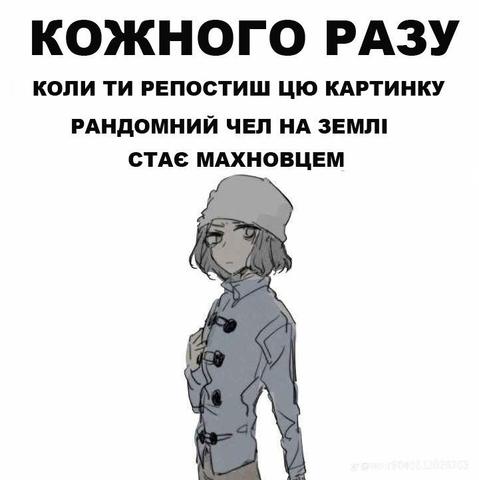
#Makhno #history
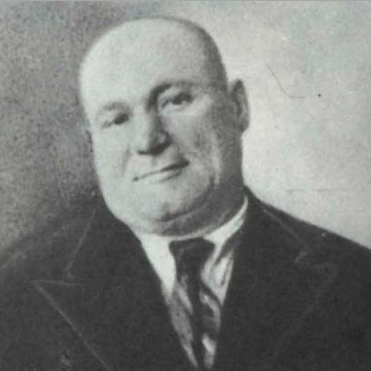
"Nestor Ivanovych Makhno (1888–1934) was a pivotal figure in the Russian Civil War, leading the Makhnovshchina, a peasant anarchist movement in southern Ukraine from 1918 to 1921. Influenced by Pyotr Kropotkin’s mutual aid and Mikhail Bakunin’s insurrectionism, Makhno’s ideology diverged from William Godwin’s pacifist rationalism by embracing militant direct action, shaped by the violent context of war and his Zaporozhian Sich-inspired peasant ethos. Makhno fought both Bolshevik centralism and White Guard restorationism, positioning his movement as a 'third force' defending peasant interests against exploitation. His alliances with the Bolsheviks were tactical, collapsing over their authoritarian policies like prodrazvyorstka (grain requisition). Despite executing pogromists, his movement faced accusations of anti-Semitism, complicating its legacy. Makhno’s philosophy, forged in prison discussions with Peter Arshinov and encounters with Kropotkin, emphasized immediate revolutionary action over theoretical purity, blending Ukrainian anti-imperialism with anti-state ideals. In exile, his memoirs defended Makhnovshchina as a peasant liberation struggle, critiquing Bolshevik 'state capitalism.' Compared to Godwin’s gradualism, Bakunin’s collectivism, and Kropotkin’s scientific anarchism, Makhno’s praxis was uniquely agrarian and militarized, proving anarchism’s revolutionary potential but also its vulnerability to organized power. His failure to sustain a stateless society underscores the challenges of anarchist governance amidst civil war. Makhno’s legacy endures as a symbol of anti-authoritarian resistance, reflecting the tensions between revolutionary ideals and practical realities, with lasting influence on anarchist thought and peasant movements."
https://theanarchistlibrary.org/library/michael-kuznetsov-the-makhnovshchina-through-the-prism-of-the-psyche?v=1767049598
 Descontrol Editorial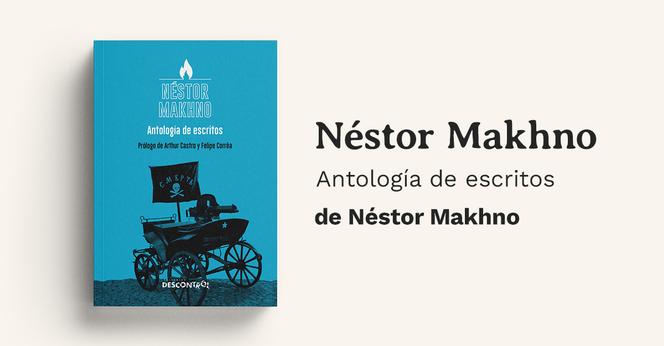
 Esme Ciredutemps
 Levka
Levka
 PugJesus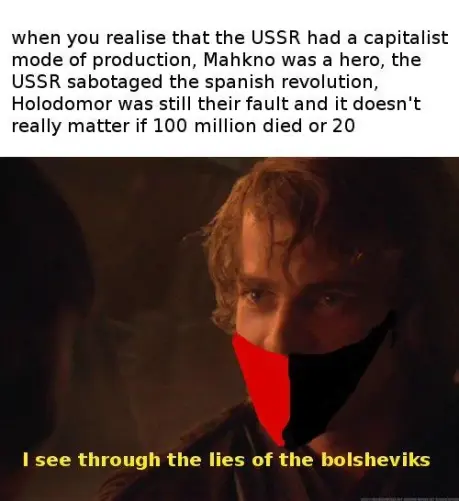
 Nikolas Kozloff has moved
 Peter Riley
 .
.
 joene 🏴