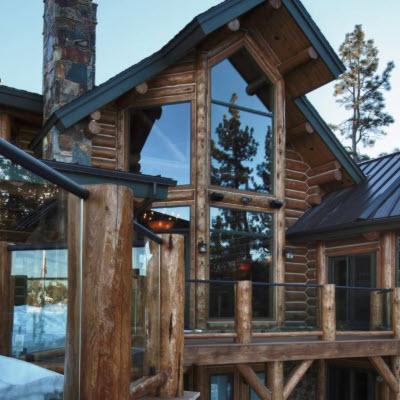
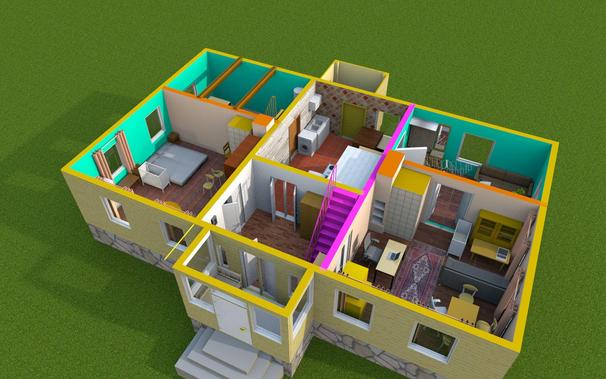
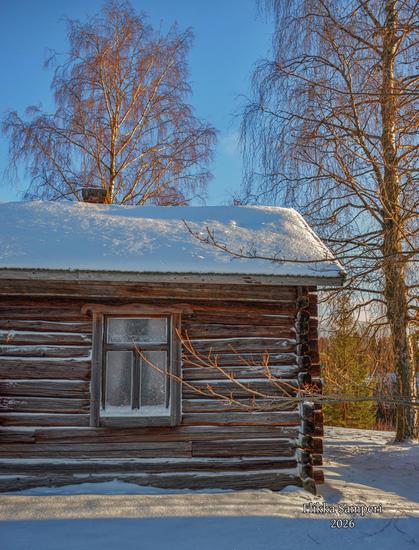
There are usually 5 basic steps to finishing your log home:
1. Prep the surface
2. Preserve against rot, bugs and fire.
3. Apply the stain, clear coats if using
4. Apply the chinking and sealants
5. Relax and enjoy your work!
Photo credits to Perma-Chink.
There are usually 5 basic steps to finishing your log home:
1. Prep the surface
2. Preserve against rot, bugs and fire.
3. Apply the stain, clear coats if using
4. Apply the chinking and sealants
5. Relax and enjoy your work!
Photo credits to Perma-Chink.
A log shaper, for shaping logs so they fit together snugly to build a log house.
https://www.skelbiu.lt/skelbimai/rastu-apdirbimo-stakles-su-15m-begiais-82238834.html
Similar to a thicknesser, but with shaped blades. One for the convex top and one for the concave bottom of a log.
#LogHouse #Machinery #Woodworking #Construction #Planer #LogShaper #Skelbiu
Last good weather, maybe. Replaced a rotted out windowsill before winter. This window will be replaced with a much smaller one, but we didn't get around to that this year, so I'm patching it for now.
Used reclaimed wood from the stash I've been collecting from around the farm.
Mortar cart attacks.
And fills the cracks.
Since we didn't get around to doing the full foundation job, I'm at least patching the cracks with lime mortar so it doesn't get worse in winter.
Not aiming for a pretty job, just need to finish it today as the weather will soon be too cold. It will get cast into concrete anyways 😱
#Stone #Foundation #Lime #Mortar #Repair #DIY #LogHouse #Homestead
Log house for sale, buyer must arrange transport. Some stability issues.
If the roof was removed only recently, many of these beams will still be good and it used to be normal to construct or repair other buildings with recycled logs from previous ones.
We're looking for some (old house) logs ourselves, but cannot do a deal where we have to disassemble and remove a whole house for obvious reasons.
Limewash is an interesting material. It's not paint, you just throw a bunch of slaked lime into water and keep it there. The longer you keep it under water, the finer it gets.
When you need it, dredge out a quantity of the stuff with enough liquid so it's like creamy yoghurt.
Best applied with a thick brush, likes to splash everywhere and is caustic enough to etch an aluminium ladder, so protect yourself.
It goes on looking thin but hardens by absorbing atmospheric CO2 (yup, carbon capture, or recapture at least) and turns whiter as it does.
Unlike cement and many modern paints, it is moisture permeable and so lets the log "breathe" and not rot underneath.
It's also antibacterial, so used to be applied regularly in animal barns.