 ater
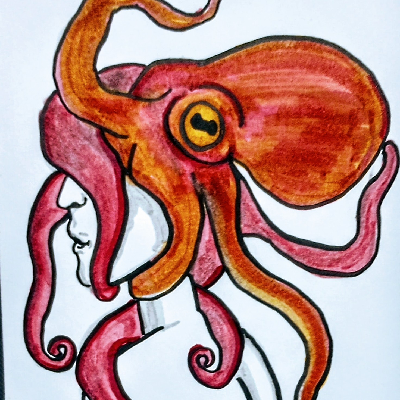
aterA different kind of invertebrate art than my usual for #PrideMonth
Happy #MothersDay! Here are some mamas of the invertebrate world.
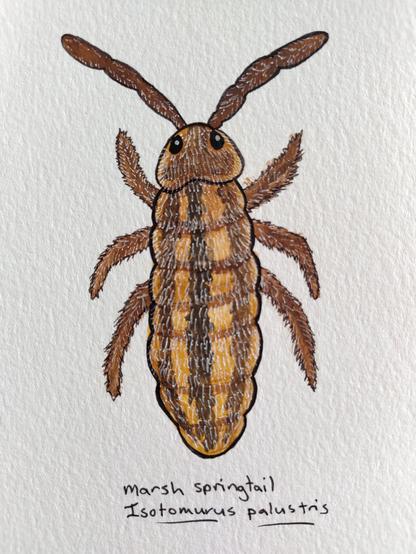
Today for #MarshMadness I've painted a marsh springtail, Isotomurus palustris. Springtails are not insects but their own class of hexapods called Collembola. They are named for the tail-like appendage (furcula) which is held under tension beneath the abdomen. When released it snaps against the ground, propelling the springtail through the air.
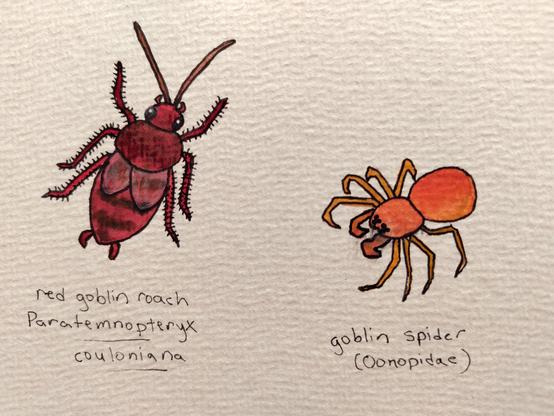
Hmm... The termite mimic creature I shared yesterday for #GoblinWeek was not popular ... Can't imagine why. To make it up to you I have two creatures today, each named "goblin."
Goblin spiders (family Oonopidae) are tiny little guys with somewhere between 0 and 6 eyes, depending on the species. They are frequently found in fossilized amber.
Goblin roaches (Paratemnopteryx couloniana) seem to have been named that by the people who raise them as feeder insects. Like most feeder bugs, they're pretty easy going and cannot fly, though they might get a little jumpy.
#InsectArt #InvertArt #SpiderArt #spider #watercolor #SciArt
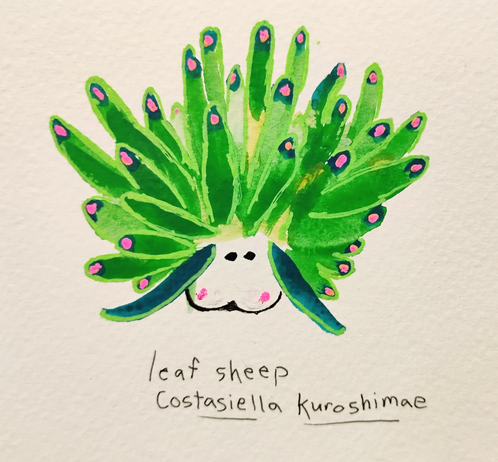
A couple of squishy little guys for today's #ArtAdventCalendar, both of which gain their superpowers from their food!
The leaf sheep (Costasiella kuroshimae) is a sea slug that sequesters chloroplasts from the algae it eats, making it one of the few known animals capable of photosynthesis.
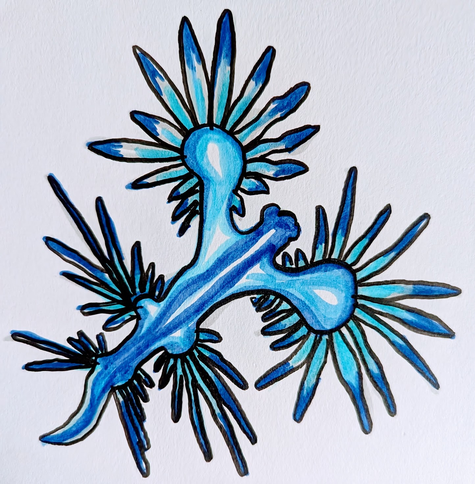
Blue dragons (Glaucus atlanticus) are seas slugs that feed on venomous siphonophores like the man-o-war. They sequester the stinging nematocysts and concentrate the venom into their own tissues for use in both defense and hunting prey.
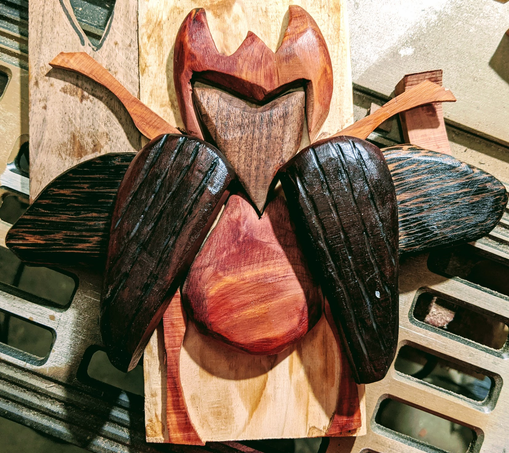
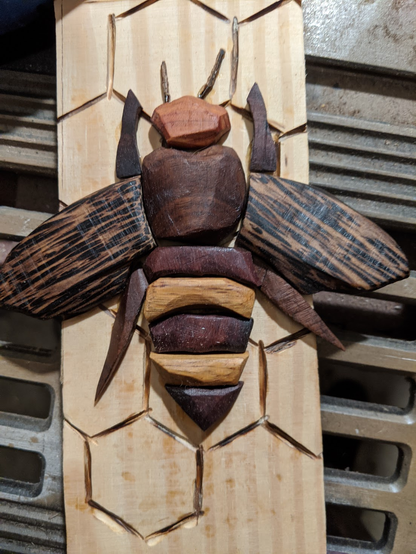
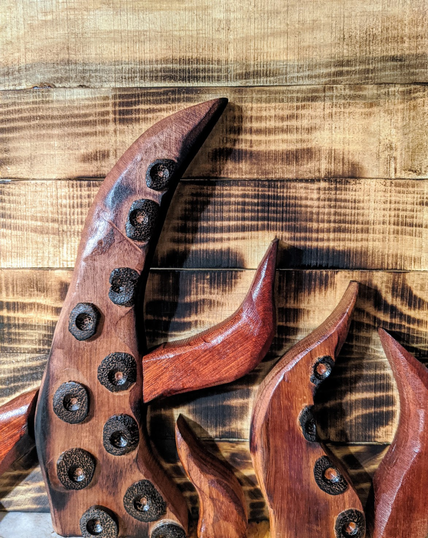
Some more 3d art for today's #ArtAdventCalendar, this time carved from wood scraps.
Today for #ArtAdventCalendar, I have all of the insects I painted in 2024 for #Invertober (I missed it this year, due to moving). Rather than going with the official prompt list, I focused on invertebrates found in my home state of Colorado.
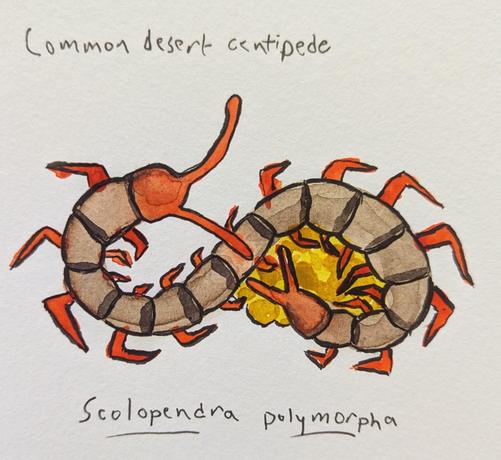
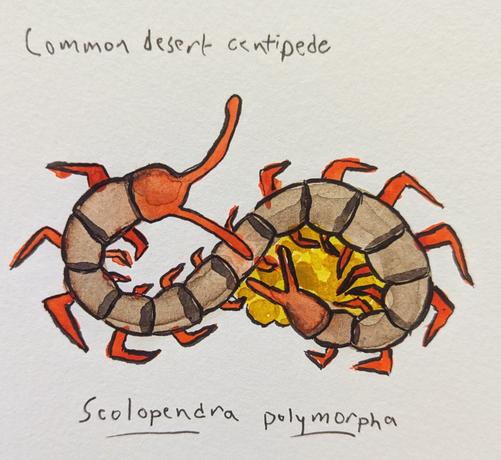
Today is World Egg Day so here's a painting I did for #Invertober last year of a sweet mama desert centipede and her clutch of eggs.
Centipedes never actually meet to reproduce - males just drop off a spermatophore somewhere on the ground for a female to pick up and inseminate herself with later. Females do all the parenting, too, protecting, feeding, and even grooming her clutch of baby 'pedes.
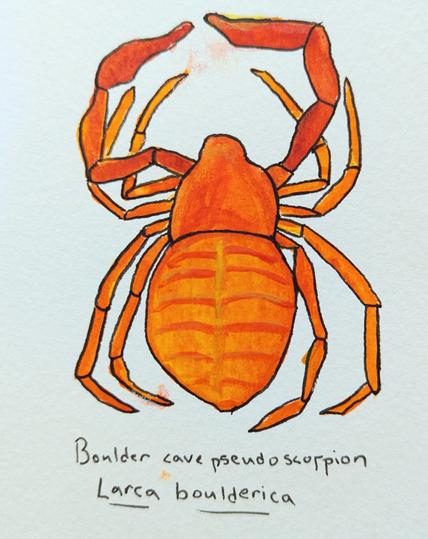
For #Arachtober today I have another painting I did for #Invertober last year, of a Boulder cave pseudoscorpion - Larca boulderica. First discovered by a particularly curious family of cavers in 2008, the species was finally formally described as a unique species last year.