🎭 Ah, Utah! The land where #VPNs are apparently so sinister that websites must now don a superhero cape and fight masked villains themselves! 🦸‍♂️ Because nothing screams "effective policy" like holding sites accountable for something they can't control in the first place. 🙄
https://www.tomshardware.com/software/vpn/utah-becomes-first-us-state-to-target-vpn-use-with-age-verification-law #Accountability #Legislation #Utah #InternetPolicy #SuperheroWebsites #HackerNews #ngated
Utah first state to hold websites liable for users who mask their location with VPNs — law goes into effect, designed to prevent bypassing age checks

Senate Bill 73 holds websites liable for users who mask their location.

Tom's Hardware

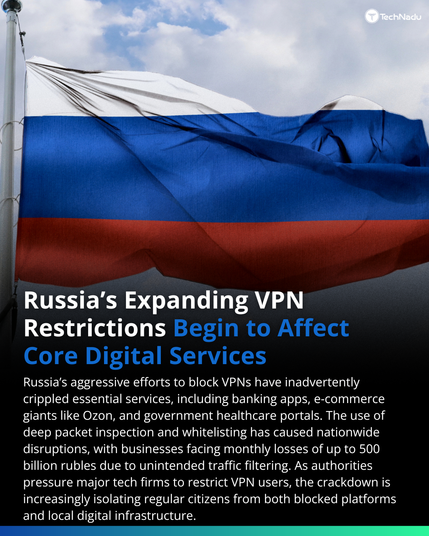
Russia’s VPN crackdown is now impacting core services ⚠️
• Banking outages
• E-commerce disruptions
• Messaging app restrictions
• Govt systems affected
DPI filtering causing unintended traffic blocks.

https://www.technadu.com/russia-vpn-crackdown-impacts-banking-and-online-services/627170/

#Cybersecurity #VPN #InternetPolicy

Don't miss David Kaye's 2016 ONU speech — a clear, passionate take on freedom of expression at the UN. Packed with sharp insights on human rights and internet policy, it's a must-watch for anyone who cares about digital rights. #DavidKaye #UnitedNations #FreeSpeech #HumanRights #FreedomOfExpression #InternetPolicy #PeerTube #English
https://mplayer.demouliere.eu/videos/watch/19f78f73-36ab-48db-b799-0a8fbc954396
20160614 ONU David Kaye Speech

PeerTube

The proposed repeal of the Internet Free Speech Law is heading to the US Senate. This law has long protected online expression, and its removal could shift content moderation toward heavier censorship. Supporters and critics alike warn that this could redefine digital speech and government power online.

Watch here: https://www.youtube.com/watch?v=GLH-Uomg2j0

#FreeSpeech #DigitalRights #InternetPolicy

The Law That Protects Your Online Speech Is Under Attack

YouTube
The Ofcom Files, Part 2: IP Blocking the UK is Not Enough to Comply with the Online Safety Act

A follow up to The Ofcom Files. Some notes on Ofcom’s strategy to date. As many of you know, I represent the U.S. website 4chan, pro bono, in its U.S. federal lawsuit against the UK…

Preston Byrne
How much EU is in DNS4EU?

This is another post that started after several toots on mastodon. Most of the things presented here were already tooted by other people, but I think this is a good chance to write a mini tutorial about what to look at. We’ll use DNS, whois, BGP and your favourite search engine. What is DNS4EU? To quote the web page: Supported by the European Union Agency for Cybersecurity (ENISA), the European Union’s DNS4EU secure-infrastructure project provides a protective, privacy-compliant, and resilient DNS service to strengthen digital sovereignty and security for EU citizens, governments, and critical infrastructure.

Techlog
Postel's Law and the Three Ring Circus · Alex Gaynor

Mozilla’s response to proposed remedies in U.S. v. Google | The Mozilla Blog

Last week the Department of Justice and some state attorneys general filed revised proposed remedies in the U.S. v. Google LLC search case. If the proposed

Im #Newsletter diese Woche: Öffnet die geopolitische Lage der digitalen Zivilgesellschaft ein Gelegenheitsfenster, Tech in Europa neu zu denken? https://internetobservatorium.substack.com/p/aus-dem-internet-observatorium-128 #Digitalpolitik #Digitalisierung #Internetpolicy #DigitaleSouveränität
Aus dem Internet-Observatorium #128

Vom Techlash zum Gelegenheitsfenster / Trumps Krypto-Reserve

Aus dem Internet-Observatorium

Cloud Policy: A History of Regulating Pipelines, Platforms, and Data - Jennifer Holt (The MIT Press, 2024)

#OpenAccess #InternetPolicy #CloudComputing #PublicInfrastructure #USA: "Cloud Policy is a policy history that chronicles how the past century of regulating media infrastructure in the United States has eroded global civil liberties as well as democratic principles and the foundation of the public interest. Jennifer Holt explores the long arc of regulating broadband pipelines, digital platforms, and the data centers that serve as the cloud's storage facilities—an evolution that is connected to the development of nineteenth- and twentieth-century media and networks, including railroads, highways, telephony, radio, and television. In the process, Cloud Policy unearths the lasting inscriptions of policy written for an analog era and markets that no longer exist on the contemporary governance of digital cloud infrastructure.

Cloud Policy brings together numerous perspectives that have thus far remained largely siloed in their respective fields of law, policy, economics, and media studies. The resulting interdisciplinary argument reveals a properly scaled view of the massive challenge facing policymakers today. Holt also addresses the evolving role of the state in the regulation of global cloud infrastructure and the growing influence of corporate gatekeepers and private sector self-governance. Cloud policy's trajectory, as Holt explains, has enacted a transformation in the cultural valuation of infrastructure as civic good, turning it into a tool of commercial profit generation. Despite these current predicaments, the book's historical lens ultimately helps the reader to envision restorative interventions and new forms of activism to create a more equitable future for infrastructure policy."

https://direct.mit.edu/books/oa-monograph/5830/Cloud-PolicyA-History-of-Regulating-Pipelines