 OCTADE
@[email protected]
[copypasta]
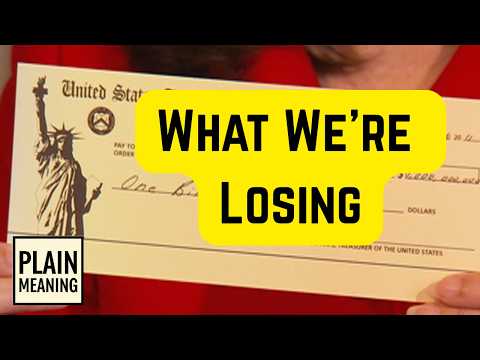
Why Are You Paying Just to Pay?
https://youtu.be/khCCvjDXhsM
Paying to Pay | How the System Makes Money Moving Your Money
You go to work.
You get paid.
And then — almost immediately — you start paying money…
just to use that money.
In this episode of Plain Meaning, we examine how paying money became something you have to pay for.
We explore:
• What actually happens when you tap your card at a register
• Why your money doesn’t move when you think it does
• How “authorization,” “clearing,” and “settlement” really work
• What the financial system calls the “float” — and who profits from it
• Why banks are using your money long before you spend it
• The 1978 Supreme Court decision that dismantled state interest rate limits
• How federal regulators expanded fees beyond interest
• The role of the 1990s deregulation era in locking the system into place
• How government mandates pushed Americans into card-based payments
• Why faster technology didn’t make payments cheaper — only more profitable
• How countries like Brazil and Poland built systems that move money instantly and at near-zero cost
For decades, the system has been explained in simple terms:
You pay.
They get paid.
But that’s not what happens.
Your money is held.
Delayed and routed through institutions that profit from the time it spends in transit.
The delay has a name.
It’s called the float.
Watch until the end for the deeper question:
If it is now possible to move money instantly —
and at almost no cost —
why are you still paying to use your own money?
#Payments #DigitalPayments #CreditCards #DebitCards #Fintech #CardFees #InterchangeFees #BankingSystem #FinancialRegulation #PlainMeaning #checking #cash
[copypasta]
Why Are You Paying Just to Pay?
https://youtu.be/khCCvjDXhsM
Paying to Pay | How the System Makes Money Moving Your Money
You go to work.
You get paid.
And then — almost immediately — you start paying money…
just to use that money.
In this episode of Plain Meaning, we examine how paying money became something you have to pay for.
We explore:
• What actually happens when you tap your card at a register
• Why your money doesn’t move when you think it does
• How “authorization,” “clearing,” and “settlement” really work
• What the financial system calls the “float” — and who profits from it
• Why banks are using your money long before you spend it
• The 1978 Supreme Court decision that dismantled state interest rate limits
• How federal regulators expanded fees beyond interest
• The role of the 1990s deregulation era in locking the system into place
• How government mandates pushed Americans into card-based payments
• Why faster technology didn’t make payments cheaper — only more profitable
• How countries like Brazil and Poland built systems that move money instantly and at near-zero cost
For decades, the system has been explained in simple terms:
You pay.
They get paid.
But that’s not what happens.
Your money is held.
Delayed and routed through institutions that profit from the time it spends in transit.
The delay has a name.
It’s called the float.
Watch until the end for the deeper question:
If it is now possible to move money instantly —
and at almost no cost —
why are you still paying to use your own money?
#Payments #DigitalPayments #CreditCards #DebitCards #Fintech #CardFees #InterchangeFees #BankingSystem #FinancialRegulation #PlainMeaning #checking #cash
 Yonhap Infomax News
 Alex Jimenez
 eliza-ng