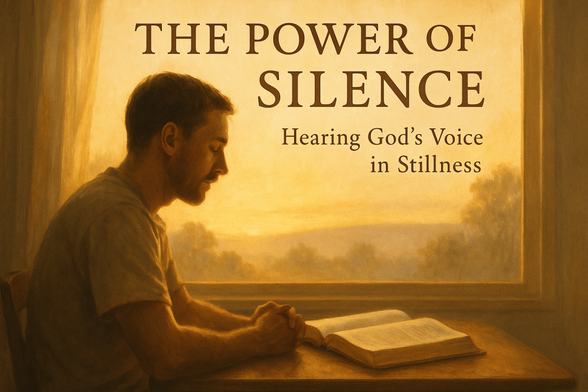
The Power of Silence: Hearing God’s Voice in Stillness
1,210 words, 6 minutes read time.
“Be still, and know that I am God.” — Psalm 46:10 (NIV)
I used to think silence was weakness. When I was younger, I filled every empty moment with noise—music, podcasts, conversations, podcasts stacked on podcasts, even the mental noise of constant planning and strategizing. Quiet made me uncomfortable, maybe even exposed. But over the years, I’ve learned something I didn’t expect: silence isn’t the absence of strength; it’s where strength is formed.
You know what finally forced me to take silence seriously? I hit a season where life was louder than I could handle. Work was demanding, family expectations were overwhelming, and my mind was running like a man trying to outrun a storm. I’d open my Bible and read words but never absorb them. I’d pray but never slow down long enough to listen. I’d go to church but walk out the same man I walked in as—tired, wired, and spiritually deaf.
One morning, I sat on the edge of my bed and muttered, “God, why don’t You ever speak to me?”
And in that moment, almost like a gentle whisper, I sensed this truth:
“I’ve been speaking. You just haven’t been still enough to hear Me.”
That was the day Psalm 46:10 hit me like a brick. “Be still, and know that I am God.” It wasn’t a suggestion. It was an invitation—and a command. God wasn’t asking me to figure out everything. He was asking me to stop, be silent, and let Him be God.
When God Meets Men in the Quiet
Silence is woven all throughout Scripture. And it’s always where God does some of His best work.
Think of Elijah. In 1 Kings 19, God wasn’t in the wind, or the earthquake, or the fire. He was in the “gentle whisper” (v. 12). Elijah didn’t hear Him until the noise around him—and inside him—finally settled.
Or Hannah in 1 Samuel 1, praying with such quiet desperation that the priest thought she was drunk. Her silent prayer was the one God answered, and it changed the course of Israel’s history.
Even Jesus Himself—the Son of God—regularly withdrew to “lonely places” (Luke 5:16) to pray. If Jesus needed silence, then brother, you and I definitely need it.
The truth is, the Bible never treats silence like a luxury. It’s a discipline. A lifeline. A place of encounter.
Why Silence Is So Hard for Men
If you’re anything like me, silence might not come naturally. Maybe your life is loud because your responsibilities are loud. When you’re working hard, leading your family, trying to stay faithful, trying to keep your head above water, it’s easy to run on adrenaline instead of anointing.
Silence threatens our sense of control. In stillness, we face our own hearts—our fears, our frustrations, our unresolved places, the prayers we’ve been avoiding. And honestly? Sometimes it feels easier to stay busy.
But busy men become burnt-out men. And burnt-out men become spiritually numb. Silence isn’t God’s way of slowing you down to weaken you—it’s His way of slowing you down to strengthen you.
Mark 6:31 (NIV) says, “Come with me by yourselves to a quiet place and get some rest.” Jesus wasn’t just trying to give His disciples a break. He was teaching them a rhythm. A pattern. A lifestyle of stepping away from noise to hear the Father.
What Silence Opens Up in Us
When I started making room for silence, it wasn’t peaceful at first. It was awkward. My thoughts ran wild. My emotions bubbled up. I wanted to grab my phone, turn something on, distract myself—anything to avoid the discomfort.
But something changed over time.
Slowly, almost imperceptibly, silence started doing deeper work in me.
I began to hear God’s voice not as a dramatic boom, but as a steady whisper. A nudging. A reminder. A conviction. A comfort.
I started to notice patterns in my own thinking—places where fear spoke louder than faith, where shame had shaped my decisions, where I didn’t trust God as much as I claimed.
Silence taught me dependence. It taught me honesty. It taught me how to sit before God without performing.
Stillness isn’t passive. It’s courageous. It takes guts to get quiet before God and let Him speak to places we’ve neglected. But that’s where transformation starts.
How to Create Stillness in a Loud Life
Let me be blunt: silence won’t magically appear in your day. You have to fight for it. You have to carve it out like a man carving a trail through the woods.
Here are practices that have changed me:
I started waking up fifteen minutes earlier—not to be productive, but to be present.
I sit with an open Bible and a journal and ask, “Lord, what do You want to say to me today?” Sometimes He speaks through a verse. Sometimes He brings a person to mind to pray for. Sometimes He simply quiets my anxious thoughts.
I take short silent walks, no phone, no agenda. Just breathing in God’s presence.
I end my day by asking one simple question: “Where did I see You today?” The answers—when I slow down long enough—always surprise me.
Silence isn’t the goal. Hearing Him is. But silence is the doorway.
The Strength You Find in Stillness
Men who learn to be still become men who know their God. Men who know their God become men who walk with courage, clarity, humility, and resilience.
I don’t know what noise is filling your life right now. Maybe it’s pressure. Maybe it’s fear. Maybe it’s disappointment, temptation, or the ache of some unanswered prayer. Whatever it is, I know this: God speaks in silence. He moves in stillness. And He’s inviting you there.
Not to withdraw from the world—but to reenter it with a heart anchored in Him.
Be still, brother. He is God. And when you slow down long enough to listen, you’ll find He’s been speaking all along.
Closing Prayer
Father, teach me to be still. Quiet the noise in my heart and mind so I can hear Your voice. Give me the courage to sit with You in silence and let You shape me from the inside out. Speak, Lord—I’m listening. Amen.
Reflection / Journaling Questions
- What is one thing God might be trying to say to me that I’ve been too busy to hear?
- Where is noise—external or internal—drowning out God’s voice in my life?
- What part of stillness feels hardest for me, and why?
- When was the last time I clearly sensed God speaking to me?
- How can I intentionally build silence into my daily rhythm this week?
Call to Action
If this devotional encouraged you, don’t just scroll on. Subscribe for more devotionals, share a comment about what God is teaching you, or reach out and tell me what you’re reflecting on today. Let’s grow in faith together.
D. Bryan King
Sources
Psalm 46:10 – NIV
1 Kings 19:11–12 – NIV
Luke 5:16 – NIV
Mark 6:31 – NIV
Renovaré – Solitude & Silence
Dallas Willard – Hearing God
Ruth Haley Barton – Solitude & Silence
John Mark Comer – Teachings
Desiring God – God’s Voice
Bible Project – “Shema: Listen”
Renovaré – Spiritual Formation
Christianity Today – Spiritual Formation
Disclaimer:
The views and opinions expressed in this post are solely those of the author. The information provided is based on personal research, experience, and understanding of the subject matter at the time of writing. Readers should consult relevant experts or authorities for specific guidance related to their unique situations.
#beStillAndKnow #biblicalMeditation #BiblicalReflection #ChristianCalm #ChristianEncouragementForMen #ChristianMeditation #ChristianMindfulness #ChristianPeace #ChristianReflection #ChristianSilence #ChristianSpiritualGrowth #dailyDevotionalForMen #devotionForQuietTime #ElijahGentleWhisper #faithForMen #faithInChaos #faithTransformation #GodSpeaksInSilence #GodSGuidance #GodSPresence #GodSWhisper #hearingGodInStillness #hearingGodSVoice #HolySpiritGuidance #howToHearGod #innerQuiet #JesusSolitude #leadWithFaith #listeningForGod #listeningPrayer #menSeekingGod #menSDevotional #menSFaithJourney #morningDevotionForMen #overcomingBusyness #prayerLifeForMen #Psalm4610Devotional #quietTimeHabits #quietTimeWithGod #quietingTheHeart #restingInGod #scriptureMeditation #silenceBeforeGod #slowingDownSpiritually #solitudeAndSilence #soulRest #spiritualClarity #spiritualDisciplineForMen #spiritualFormation #spiritualIntimacy #spiritualRenewal #spiritualReset #spiritualSilence #spiritualStillness #spiritualStrength #spiritualWisdomForMen #stillnessWithGod #transformationInSilence
 Know Thyself
 Intentional Faith
 Bryan King