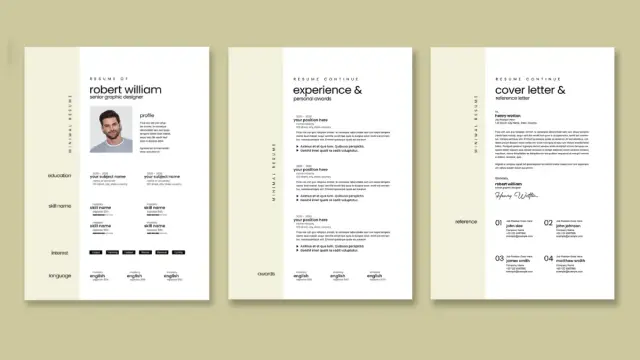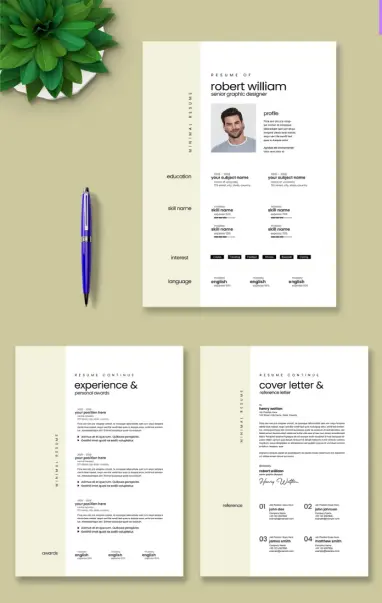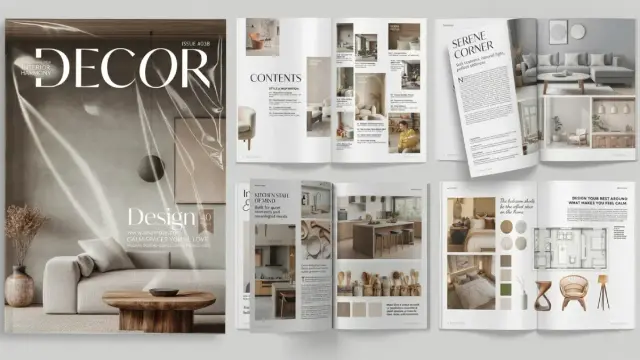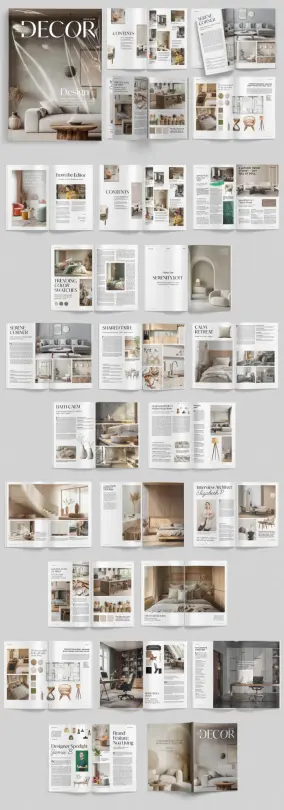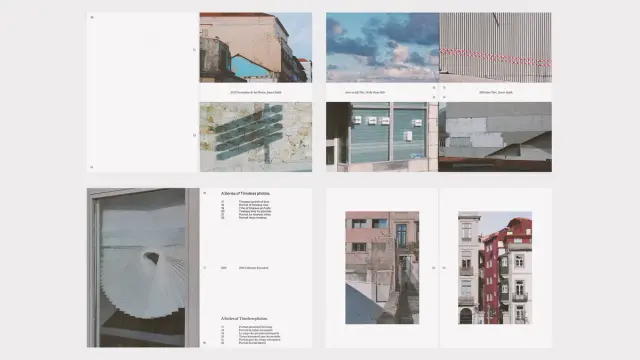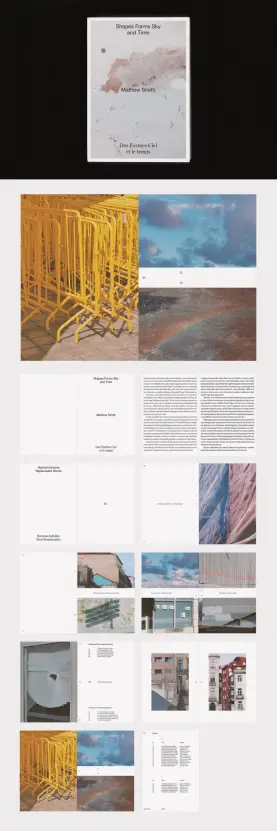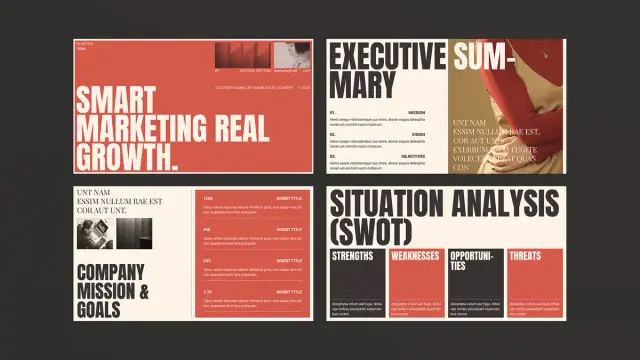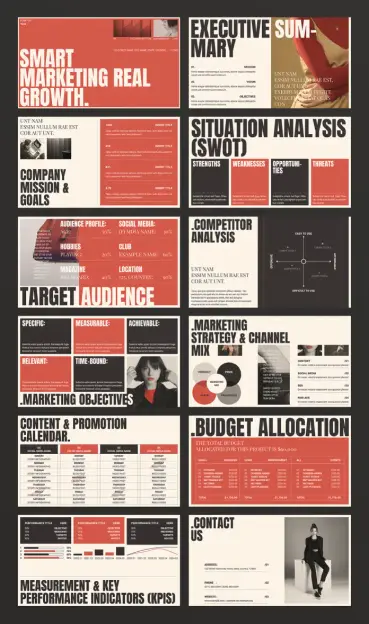
This Is a Personal Portfolio Presentation Template for Adobe InDesign That Actually Gets You Hired

You know what? I think that most portfolio presentations fail before the first slide loads. They’re either overdesigned to the point of distraction or so stripped-back that they communicate nothing about the person behind the work. Finding the balance—between editorial restraint and enough visual personality to be memorable—is one of the hardest challenges any creative faces. This personal portfolio presentation template for Adobe InDesign, designed by Adobe Stock contributor RedGiant, solves that problem with unusual clarity and conviction.

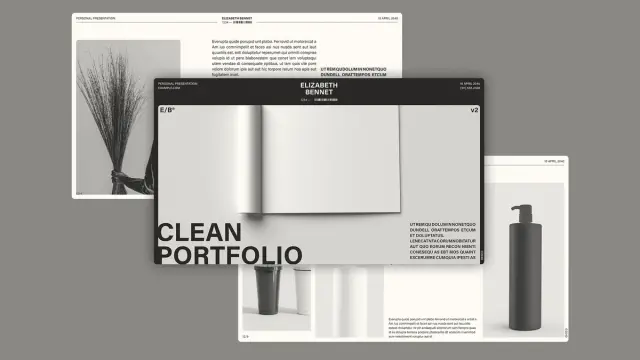
It’s a widescreen InDesign template built at 1920×1080 pixels, optimized for screen presentations from the start. So instead of retrofitting a print layout for digital display, you get a system designed specifically for how work is actually viewed today—on monitors, in browser windows, and during video calls.

The design language is monochrome, typographically driven, and unapologetically modern. Bold, condensed sans-serif headlines dominate each spread. Images function as atmosphere rather than decoration. And the overall structure gives you exactly what you need to present yourself as a working creative professional—not just a designer with a PDF.

Download the template from Adobe Stock

Please note that this template requires Adobe InDesign installed on your computer. Whether you use Mac or PC, the latest version is available on the Adobe Creative Cloud website—take a look here.

A Personal Portfolio Presentation Template for Adobe InDesign by RedGiant Download the template from Adobe Stock

What Makes a Portfolio Presentation Template Worth Using in 2025?

The market for portfolio templates is enormous and mostly disappointing. Most options look the same: a sans-serif name in the corner, a hero image that’s too abstract, and twelve slides that feel like they were designed to impress someone who stopped paying attention after the third page. RedGiant’s template avoids all of that.

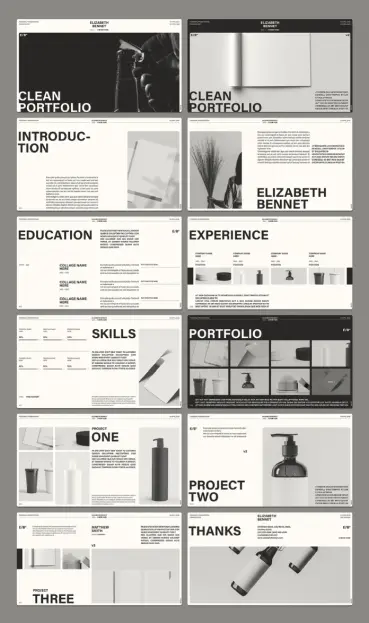
What separates this personal portfolio InDesign template from the majority of alternatives is something I’d call Structural Intentionality—the idea that every slide exists for a specific communicative purpose rather than simply to fill space. The 12 predesigned pages cover the full arc of a professional introduction: opening title, personal introduction, education, experience, skills, portfolio work, individual project showcases, and a closing thank-you slide. That’s a complete narrative, not a collection of disconnected layouts.

Furthermore, the template never tells you what to say. It builds the container and hands you the keys. All text and images are fully replaceable placeholders, so you can drop in your actual work—your photography, your product shots, your case study imagery—without fighting the layout. That’s a critical distinction. A good template should disappear once your content is in it.

The Role of Monochrome in High-Stakes Creative Presentations

The color palette here is essentially black, white, and deep gray. No accent colors, no gradient fills, no decorative palettes. At first glance, that might read as minimal—but it’s actually a strategic choice with real communicative weight.

When your presentation is monochrome, your work becomes the color. Your images carry the visual interest. Your typography becomes the personality. This is a principle I’d call Content-Forward Chromatics—designing a presentation system in a neutral register so that the inserted portfolio content can speak for itself without competing against the template’s own visual noise.

It’s a brave move. And it works, especially for creatives whose actual output is colorful, textural, or photographic. An interior designer presenting this template filled with rich material photography will see their work pop dramatically against the black-and-white grid. A product photographer gets the same effect. Even a brand strategist using brand-color screenshots benefits from the tonal contrast.

Adobe InDesign as a Presentation Tool: Underused and Underrated

Most people still reach for PowerPoint or Keynote when building a presentation. That’s understandable—both tools are purpose-built for the task. But Adobe InDesign offers something neither of them can match: absolute typographic and layout precision, combined with PDF interactivity that most creatives never fully explore.

This personal portfolio template for InDesign is built to take advantage of that. InDesign lets you export fully interactive PDFs complete with clickable navigation, embedded hyperlinks, and page transitions. For a portfolio, that means you can build a presentation that functions like a microsite—structured, navigable, and self-contained—without any web development overhead.

Additionally, InDesign’s master page system means you can apply consistent headers, footers, and branding elements across all 12 slides simultaneously. Change the name in the header once, and it updates everywhere. That’s a workflow efficiency that PowerPoint users can only dream about, especially when you’re making last-minute updates before a client meeting.

12 Slides, One Narrative: Breaking Down the Template’s Structure

Let me walk through the template’s page architecture. Each slide serves a specific function within what I’d describe as a Three-Act Portfolio Framework: Establish, Evidence, Close.

Act One — Establish (Slides 1–3): The opening spreads introduce you. A bold typographic cover with “Clean Portfolio” as the headline placeholder. A secondary title slide. And an introduction page that combines a large portrait or atmospheric image with structured text. This act is about first impressions and identity. The typography here is doing most of the work, and it does it confidently.

Act Two — Evidence (Slides 4–9): This is the longest section and the most functional. Education, experience, skills, and portfolio overview slides give viewers the facts. Individual project pages—Project One, Project Two, and Project Three—give you space to contextualize specific work with imagery, project titles, and descriptive copy. These slides are the engine of the presentation. They should be loaded with real content.

Act Three — Close (Slides 10–12): The closing sequence brings it home. A final portfolio overview, a contact slide, and a “Thanks” page with full contact details round out the narrative. This isn’t just a formality—a strong close signals professionalism and makes follow-up easy.

Personal Portfolio InDesign Template vs. Keynote and PowerPoint: An Honest Comparison

Let’s be direct about the trade-offs. This template requires Adobe InDesign, which means either an Adobe Creative Cloud subscription or access to the software through an institution. That’s not a trivial barrier for some users. If you’re a student or independent creative without a subscription, that cost matters.

But if you already use InDesign—or if you’re considering it—this template makes a compelling case for the tool as a presentation platform. The precision of layout control you get in InDesign is simply unmatched. Kerning, baseline grids, typographic scaling—all of it is infinitely more controllable than in Keynote or PowerPoint.

Moreover, InDesign’s interactivity panel lets you assign buttons, hyperlinks, and page transitions natively. That means your personal portfolio presentation can include a clickable table of contents, linked email addresses, and smooth animated transitions between slides—all inside a single exported PDF. Try doing that in Keynote without workarounds.

Who Should Use This Template?

This isn’t a universal recommendation. It’s a specific tool for a specific type of creative. Here’s who will get the most out of it:

Graphic designers and visual creatives who want a presentation that feels editorial and controlled—not like a slideshow built with a drag-and-drop tool. The typographic rigor of this template will resonate with design-literate clients and hiring managers.

Photographers and art directors whose work is image-led. The large image areas in the portfolio and project slides are designed to showcase visual work at scale. Drop in your strongest shots and let the neutral template disappear around them.

Architects and interior designers present project work to clients. The clean structure lends itself well to project-by-project storytelling, with enough copy space to add specifications, materials, or brief descriptions.

Branding and identity designers who want a presentation that looks as considered as the work it contains. If your portfolio is full of carefully crafted brand systems, your presentation should signal the same level of care. This template does that.

The Typography System Behind the Template’s Visual Identity

Typography is the backbone of this design. The template leans heavily on a large, bold, condensed typeface for slide titles—the kind of type that commands attention without decorative support. Paired with clean, structured body copy and tight grid alignment, it creates a visual system that feels genuinely editorial rather than templated.

This is worth paying attention to. The font choice signals an awareness of contemporary design culture—the kind of confident, utilitarian typography associated with Swiss design traditions and modernist editorial layout. It’s not trendy in the Instagram-design sense. It’s authoritative in a way that ages well.

Think about what that communicates to a potential client or employer. Before they’ve read a single word of your bio, the typographic confidence of the template tells them, “This person has taste.” That’s an intangible value that’s genuinely difficult to fake—and that this template gives you for free.

How to Customize Without Breaking the System

The smartest approach to customizing any InDesign template is to work within the system before you try to change it. Swap your text in first. Then swap your images. Then—and only then—consider whether you need to adjust spacing, scale, or layout.

For this template specifically, I’d recommend preserving the typographic scale and the overall black-and-white palette unless you have a compelling reason to deviate. If your personal brand includes a strong accent color, you can introduce it selectively—as a rule line, a background tint on one slide, or a typographic highlight—without disrupting the overall coherence of the design.

Keep the header format consistent across all 12 slides. The name, contact details, and date area in the top bar is part of what gives this template its professional polish. Fill it in accurately and leave the formatting alone. That detail, small as it seems, is what makes the difference between a template that looks finished and one that looks like a work-in-progress.

Screen-Optimized at 1920×1080: Why Pixel Dimensions Actually Matter

The 1920×1080 pixel format is significant and deliberate. This is the global standard for HD display—the resolution of most laptop screens, external monitors, and presentation displays. Building a portfolio template at this dimension means your slides will fill the screen edge-to-edge without letterboxing, black bars, or awkward scaling artifacts.

By contrast, many InDesign portfolio templates are still built in A4 or US Letter format, designed primarily for print. They work for PDF portfolios sent via email, but they fall apart on screen. The proportions are wrong. The type is too small for display. The images don’t fill the frame correctly. This template sidesteps all of that by starting from the screen as the primary medium.

This is what I’d call Display-Native Design—the practice of building presentations specifically for how they’ll actually be experienced, rather than repurposing print formats for digital contexts. It’s a simple principle, but it’s surprisingly rare in the template market. Most templates are designed for the wrong medium.

Practical Workflow: Getting From Template to Finished Presentation

Here’s a straightforward process for taking this template from purchase to finished deck.

Step 1 — Audit your content first. Before you open InDesign, know what you’re putting in each slide. What projects will you feature? Which images are strong enough to carry a full-bleed spread? Write your copy before you start placing it. It’s always faster to edit copy in a text document than inside an InDesign frame.

Step 2 — Replace images using the Links panel. InDesign’s Place command (Cmd/Ctrl+D) is your primary tool for image replacement. Use the Links panel to track image resolution and file status. For screen presentations, 72–150 dpi is sufficient; for export to print, you’ll want 300 dpi minimum.

Step 3 — Update all placeholder text systematically. Use Find/Change (Cmd/Ctrl+F) to locate and replace repeated placeholder text across the document in one pass. Then work slide by slide to refine copy, adjust character count, and check for widows and orphans.

Step 4 — Export for your delivery format. For interactive screen presentations, export as an interactive PDF with transitions enabled. Or for print or static email portfolios, export as a print PDF at standard print quality settings. And for Behance or portfolio website upload, export as a high-resolution JPEG sequence.

Original Frameworks for Evaluating Portfolio Presentation Templates

Over years of reviewing design resources, I’ve developed a set of criteria I use to evaluate whether a presentation template is actually worth recommending. I call these the Five Dimensions of Portfolio Template Quality:

1. Narrative Completeness. Does the template provide a full story arc from introduction to close? RedGiant’s template scores high here—its 12-slide structure covers every essential section.

2. Content Flexibility. Can the template accommodate a wide range of portfolio content types without forcing awkward layout compromises? Yes. The image areas are generous and format-agnostic.

3. Typographic Confidence. Is the type system strong enough to carry the presentation even before personal content is added? Absolutely. The bold condensed headline system is distinctive and authoritative.

4. Display-Native Resolution. Is the template built for the medium it will be experienced in? The 1920×1080 format confirms this.

5. Customization Depth. How far can you push the design before it breaks? In InDesign, the answer is always very far. And because the underlying system is disciplined, even significant customization tends to hold together.

This template scores well across all five dimensions. It’s genuinely one of the strongest personal portfolio presentation templates currently available for Adobe InDesign.

Download the template from Adobe Stock

Frequently Asked Questions About the Personal Portfolio InDesign Template

What software do I need to use this template?

You need Adobe InDesign. The template is a native InDesign file, so it won’t open in Illustrator, Photoshop, or any non-Adobe application. An active Adobe Creative Cloud subscription that includes InDesign is the standard way to access the software.

Can I use this template without design experience?

Yes, with some caveats. InDesign has a steeper learning curve than PowerPoint or Keynote. However, replacing placeholder text and images in a pre-built template is a relatively beginner-friendly task. Adobe’s own tutorials and YouTube resources make the basics accessible. If you’re comfortable with Creative Suite tools in general, you’ll manage this template without difficulty.

Is the template editable in other Adobe apps like Photoshop or Illustrator?

No. The file is an InDesign document and requires InDesign to edit. You can, of course, prepare your images in Photoshop or Illustrator and then place them into the InDesign template. That’s actually the recommended workflow for image-heavy presentations.

What file format should I export for a screen presentation?

For screen presentations, export as an interactive PDF from InDesign. This preserves any interactivity you add—hyperlinks, navigation buttons, and page transitions—and displays correctly at full screen on any monitor running the free Adobe Acrobat Reader.

Can I add more slides to the template?

Absolutely. InDesign’s pages panel lets you add pages, duplicate existing layouts, and apply master page formats to new slides. The 12 included slides give you a complete foundation, but expanding to 15 or 20 slides for a more detailed portfolio is straightforward.

Does the template work for print portfolios as well as screen presentations?

The template is designed specifically for a screen at 1920×1080 pixels. You can print it, but the 16:9 widescreen format doesn’t translate ideally to standard paper sizes. For a print portfolio, you’d want a template designed in A4 or A3 format. For screen-video calls, monitor presentations, and PDF delivery, this template is exactly right.

What industries is this portfolio template best suited for?

The template works especially well for graphic designers, photographers, art directors, branding specialists, interior designers, and architects. Its editorial and monochromatic aesthetic suits any creative field where visual sophistication and professional presentation are valued. It’s less suited to industries where color-heavy, playful, or highly branded presentations are expected—like game design or children’s content creation.

Where can I purchase or download this template?

This personal portfolio presentation template for Adobe InDesign is available through Adobe Stock, where it’s offered by contributor RedGiant. Adobe Stock licenses give you full commercial usage rights, making it suitable for client presentations, job applications, and professional use.

Can I change the color scheme?

Yes. InDesign’s swatches panel makes it easy to update the black-and-white palette to include a brand color. You can apply color to text, background shapes, and rule lines globally using the Edit Colors or Redefine Swatch functions. The monochrome system is a strength of the template, but the tool gives you full control to adapt it.

Is this template compatible with Adobe InDesign CC 2024 and 2025?

Templates distributed through Adobe Stock are generally compatible with recent versions of InDesign CC. Always check the file details on the Adobe Stock product page for specific version compatibility information before purchasing.

Check out other premium graphic design templates for different creative needs here at WE AND THE COLOR.

#AdobeInDesign #AdobeStock #design #graphicDesign #InDesignTemplate #portfolio #portfolioTemplate
A Resume and Portfolio Layout That Makes Hiring Managers Stop Scrolling

Most resumes look the same. Same fonts, same grid, same quiet desperation hidden behind bullet points. That sameness is the real problem—not a lack of experience. A resume and portfolio layout communicates your aesthetic judgment before a single word gets read. Designers know this. Yet so many still submit documents that look like they were exported from a 2012 Word template.

This resume and portfolio layout by The Royal Studio changes the conversation entirely. It arrives as a nine-page Adobe InDesign template—fully customizable, CMYK-ready for professional printing, and built around 20 abstract, colorful photographs that turn each page into a visual argument for your candidacy. Furthermore, it speaks a design language most applicant tracking systems never see: controlled chaos, intentional color, and a spatial intelligence that reads as confidence.

So why does this matter right now? Because the creative job market has never been more visually literate—and never more overloaded with generic applications.

Download the template from Adobe Stock

Please note that this template requires Adobe InDesign installed on your computer. Whether you use Mac or PC, the latest version is available on the Adobe Creative Cloud website—take a look here.

Download a colorful resume and portfolio layout as an Adobe InDesign template, designed by The Royal Studio. Download the template from Adobe Stock

What Makes a Resume and Portfolio Layout Stand Out in 2024?

The answer is not complexity. More elements rarely mean more impact. Instead, standout layouts operate through what designers call signal clarity—every visual choice justifies itself, and nothing is decorative for its own sake.

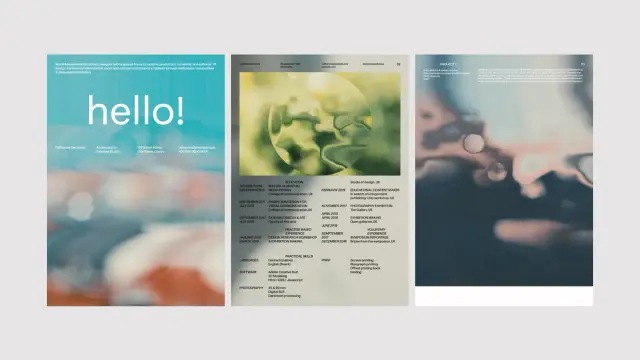
This template achieves signal clarity through contrast: small, meticulously set type against large, painterly photographs. The abstract images included—think macro-lens textures, blurred color fields, fluid forms caught mid-motion—do not illustrate anything specific. Consequently, they create an emotional atmosphere without competing with your content. That is a sophisticated editorial decision, not a stylistic accident.

The overall language is minimalist but not sterile. It carries warmth through color temperature. Moreover, it feels contemporary without leaning on any single trend that will read as dated in eighteen months.

The Aesthetic Intelligence Framework: Reading Visual Signals Before Text

Here is a framework worth naming explicitly, because it explains why this layout works on a cognitive level. I call it the Aesthetic Intelligence Framework (AIF). It proposes that hiring managers—especially in creative fields—evaluate portfolio materials through three sequential filters before engaging with content:

  • Spatial trust: Does the layout feel intentional and controlled?
  • Color credibility: Does the palette demonstrate taste rather than defaulting to safe neutrals?
  • Editorial voice: Does the document read as a curated object, not a filled-in form?
  • This template passes all three filters. Furthermore, it passes them quickly—which is the point. Attention is scarce, and a layout that communicates professional competence in three seconds buys you thirty more.

    Inside the Template: Nine Pages, Twenty Photographs, One Cohesive Identity

    The Royal Studio designed this template in A4 format. That choice signals something immediately: this is built for international markets, for studios in Berlin, London, Amsterdam, and Tokyo. It thinks globally.

    Each of the nine predesigned pages serves a specific function. There is a cover spread—a bold typographic “hello” that lands with the confidence of a gallery opening card. Furthermore, there is a CV page with a dual-column layout that handles dense information without compression. And there are project pages where full-bleed photography dominates. This way, your work gets treated like editorial content rather than an appendix.

    Additionally, the closing page—a typographic “thank you”—is a detail that sounds small but is not. It reframes the entire document as a designed experience rather than a data transfer. That is brand thinking applied to a job application.

    The Chromatic Layering Principle: Using Color as a Structural Tool

    One of the most instructive things about this template is how it handles color. The 20 included photographs span a wide chromatic range—cyan fields, amber-orange gradients, electric greens, deep blacks. Yet the template does not feel chaotic. Instead, it demonstrates what I call the Chromatic Layering Principle: the idea that photographic color and typographic color should occupy separate visual planes rather than compete.

    The typography throughout the template stays clean—predominantly white reversed out of imagery, or dark type on neutral fields. Therefore, the photographs carry emotional temperature while the type carries information. Neither compromises the other.

    This separation of concerns is exactly what separates designed templates from decorated ones. You can apply it to your own design work as a transferable lesson.

    Why Adobe InDesign Is Still the Right Tool for a Professional Portfolio Layout

    Some designers gravitate toward Figma or Canva for document work. Both have their place. However, for a print-ready creative resume and portfolio layout, InDesign remains the industry standard—and for concrete reasons.

    First, InDesign handles typographic refinement at a granularity no other tool matches: optical margin alignment, precise baseline grids, master page logic, and CMYK color management built into the workflow. Second, the CMYK color mode in this template means that the turquoise on screen matches the turquoise in print, which is not trivial when you are asking a photo lab or commercial printer to reproduce a layout where color is a major design element.

    Third, InDesign files communicate professional seriousness. When you hand over a print-ready PDF generated from a well-built InDesign document, you are demonstrating process literacy. That matters to creative directors who use the same software daily.

    The Substrate Signaling Effect: What Your File Format Communicates

    This connects to another concept worth articulating: the Substrate Signaling Effect. This describes how the production tool you use to create a document implicitly communicates your professional context to whoever receives it. A Canva export signals accessibility and speed. A well-crafted InDesign document signals craft, precision, and industry fluency.

    Neither is inherently superior—but they speak to different audiences. For senior creative roles, design studios, and agencies where InDesign literacy is a baseline expectation, the choice of substrate matters.

    Who Needs This Resume and Portfolio Layout Template?

    The obvious answer is graphic designers. But the template’s visual language reaches further. Photographers whose work benefits from full-bleed presentation. Art directors who want to demonstrate editorial sensibility. Architects presenting speculative projects. Illustrators who need a document that feels as considered as their drawings.

    Essentially, anyone whose application is undermined by a plain document should consider this template. The alternative—submitting generic work in a generic container—is a self-defeating choice in a field that rewards visual discernment at every level.

    Moreover, this is not a template you use once and discard. The modular structure of nine pages means you can configure different versions for different roles—a shorter, punchier three-page version for quick applications, a fuller nine-page build for major opportunities.

    The Portfolio Compression Problem: How Most Creatives Undersell Their Work

    Here is the core problem this template addresses, stated plainly. Most creatives have strong work. What they lack is a presentation structure that matches the quality of that work. I think of this as the Portfolio Compression Problem: the gap between the ambition of your creative output and the modesty of your self-presentation.

    Compression happens gradually—you start with a template, you add content without redesigning the container, and eventually the document looks like a spreadsheet with screenshots attached. The solution is not to build something from scratch every time. It is to start with a structural foundation ambitious enough that the content rises to meet it.

    This template provides that foundation. Your work does not have to carry the visual weight alone.

    Customization Without Losing Coherence: A Practical Guide

    One of the consistent anxieties around professionally designed templates is, what if customization breaks the design? It is a legitimate concern. Coherence is fragile—change the wrong thing and the system collapses into visual noise.

    However, this template is built for customization. The CMYK color mode means you can shift the palette systematically—swap the existing photograph selection for your own work using the same crop logic, and you maintain the structural integrity. Replace the type with your own credentials, and the hierarchy holds because the underlying grid does not change.

    The critical thing to preserve when customizing: the scale relationships between image and type. The template works because photographs are large and type is small. If you begin reducing photographs to accommodate more text, you unbalance the ratio that creates the template’s visual authority.

    The Scale Authority Principle: Why Big Images Make Small Type Look More Confident

    This deserves its own framework because it runs counter to instinct. When creatives feel insecure about their application, they add text. More detail feels like more evidence. But the visual effect is the opposite of confidence—it compresses, it hedges, it looks anxious.

    The Scale Authority Principle holds that generous image real estate makes accompanying type read as more authoritative, not less. Think of a magazine spread: a quarter-page portrait with three paragraphs of copy looks important in ways that a full page of dense text never does. This template embeds that principle structurally. Trust it.

    Print vs. Digital: How This Resume and Portfolio Layout Performs in Both Contexts

    The template is CMYK, which means it was designed for print. Nevertheless, it functions well as a digital PDF—and increasingly, creative applications require both.

    For digital delivery, export as PDF with maximum image quality and embed all fonts. The abstract photographs compress well without losing their atmospheric quality because they are not detail-dependent—a slightly compressed image of a blurred color field looks the same as the lossless original at normal screen resolution. This is a practical advantage of the photographic style chosen for the template.

    For print, the CMYK values ensure accurate reproduction on both coated and uncoated stock. Additionally, the A4 format standardizes easily across professional print services in Europe, Asia, and beyond. For US-based applications, the layout adapts to Letter with minimal adjustment.

    The Dual-Surface Deployment Strategy for Creative Job Applications

    My recommended approach is what I call Dual-Surface Deployment: sending both a print-quality physical copy and a digital PDF for any significant opportunity. The physical object functions differently from the screen version—it creates a tactile experience that is increasingly rare in application processes dominated by email and applicant tracking systems.

    A printed, well-bound version of this layout on 135gsm coated stock will be remembered. It sits on a desk instead of disappearing into an inbox. Furthermore, its visual quality serves as a physical demonstration of your production standards, which is exactly what a portfolio is supposed to do.

    Comparing This Template to Standard Resume Formats

    Standard resume formats prioritize parsability—they are built to be read by automated systems and skimmed in under ten seconds. That logic made sense in 2010. Today, most creative roles require human review that goes beyond ATS filters, and the volume of applications has made differentiation more urgent, not less.

    Compared to a standard chronological resume, this template trades density for impact. You include less textual information per page, but the information you include receives more considered visual treatment. For many creative roles, this is the correct trade-off.

    Compared to a standard portfolio PDF—usually a series of full-bleed project spreads with minimal CV integration—this template does something more interesting. It integrates credentials and work samples within a unified visual system. Therefore, the reader never has to toggle between two documents or reconcile two different visual languages.

    The Unified Document Argument: Why Separate Resumes and Portfolios Cost You Attention

    This brings me to a thesis I feel strongly about: sending a separate resume and portfolio is a missed opportunity. Two documents ask the reader to do more cognitive work. They also create a seam—a point at which the visual language shifts and the impression of coherence breaks.

    A combined resume and portfolio layout like this one eliminates that seam. Your experience and your work exist in the same designed space, and the argument for your candidacy is made visually before it is made textually. That integration is both more persuasive and more efficient.

    Abstract Photography in a Professional Document: Bold Choice or Risky Bet?

    This is the question the template invites you to wrestle with, and I think it is worth being direct. Abstract photography is a deliberate aesthetic risk. Some hiring managers will not respond to it. Some industries will find it unconventional.

    However, “unconventional” is not a problem to solve. It is a filter. A layout this visually distinctive immediately signals that you are applying to contexts where visual intelligence is valued. If the recipient of your application is made uncomfortable by a blurred green macro photograph, they are probably not the right creative director for you.

    The photographs in this template—saturated, organic, and formally abstract—communicate a sensibility. They say this applicant has opinions about imagery. That is relevant information for creative roles, and it is communicated before the first line of your CV is read.

    The Forward View: Where Resume and Portfolio Design Is Heading

    Several trends are converging in creative self-presentation. First, the PDF remains the dominant professional format—despite speculation about interactive online portfolios, recruiters still request PDFs because they are portable, printable, and universally viewable.

    Second, aesthetic differentiation is becoming more valuable as AI-generated content makes visual mediocrity cheaper and more widespread. A document that clearly reflects designed human judgment will read as more distinctive, not less, over the next several years.

    Third, the integration of print and digital delivery is strengthening. Physical materials are returning as differentiators in categories where everyone has gone fully digital. Therefore, a CMYK-ready template that performs in both contexts is a more durable investment than one optimized for screen alone.

    My prediction: the next major shift in creative self-presentation will be toward documents that feel like publications—editorial in voice, physically considered, and designed with the assumption that they will be kept rather than filed. This template is ahead of that shift, not chasing it.

    Where to Download This Resume and Portfolio Layout Template

    The Royal Studio’s resume and portfolio layout template is available on Adobe Stock. It includes nine fully customizable InDesign pages, 20 abstract, colorful photographs, CMYK color mode for professional printing, and a design system coherent enough to survive significant customization without losing its visual logic.

    If you work in Adobe InDesign and you are preparing materials for a creative role, a gallery application, a studio pitch, or any context where your document needs to demonstrate design intelligence, this template is worth serious consideration. It is not the easiest path—InDesign has a learning curve, and fully customizing nine pages takes time. But the result is a document that argues for you before you say a word.

    That is what a well-designed resume and portfolio layout is supposed to do.

    Download the template from Adobe Stock

    Frequently Asked Questions

    What software do I need to use this resume and portfolio layout template?

    You need Adobe InDesign to open, edit, and customize this template. The file is built in InDesign’s native format. If you do not have an active Creative Cloud subscription, Adobe offers a single-app InDesign plan as the most accessible entry point.

    Can I use this resume and portfolio layout for printing?

    Yes. The template uses CMYK color mode, which is the standard for professional printing. You can export a print-ready PDF directly from InDesign with full color accuracy for both commercial print services and in-house printing.

    Is the A4 format suitable for applications in the United States?

    A4 is approximately 8.27 × 11.69 inches, compared to US Letter at 8.5 × 11 inches. The difference is small, and the template adapts to the letter format with minor margin adjustments in InDesign. Most PDF viewers and printers handle A4 documents without issues, regardless of region.

    Can I replace the included photographs with my own work?

    Absolutely. The nine project and layout pages are fully customizable. You can replace any of the 20 included abstract photographs with your own project imagery. However, maintain the scale relationships built into the template—large images paired with small type—to preserve the visual authority of the design.

    Does this resume and portfolio layout work for non-design professions?

    The template’s visual language is optimized for creative roles: graphic design, photography, art direction, architecture, illustration, and related fields. For roles in finance, law, or other sectors where conventional presentation is expected, a more conservative format is appropriate. However, for any role where aesthetic judgment is relevant, this layout makes a strong case.

    How do I customize the color scheme of this portfolio template?

    In InDesign, open the Swatches panel to view and modify the document’s color definitions. Since the template uses CMYK, you can adjust color values precisely. If you replace the abstract photographs with your own imagery, align your new images’ dominant tones with the typographic color choices to maintain chromatic coherence.

    How many pages can I include in my version of this resume and portfolio layout?

    The template includes nine predesigned pages. You can add, remove, or duplicate pages within InDesign to build a shorter or longer version depending on your needs. A three-to-five page version works well for quick submissions; the full nine-page build suits major applications or studio pitches where a comprehensive presentation is appropriate.

    What is the difference between this template and a standard resume format?

    A standard resume format prioritizes information density and parsability for automated systems. This template prioritizes visual impact and editorial coherence—it integrates credentials and portfolio work within a single, designed document. The trade-off is less raw text per page in exchange for stronger visual differentiation and a more persuasive overall impression.

    Check out other professional graphic design templates here at WE AND THE COLOR.

    #AdobeInDesign #AdobeStock #branding #cv #cvTemplate #design #graphicDesign #InDesignTemplate #portfolio #resume #resumeTemplate

    An Adobe InDesign Business Newsletter Template Built for Print-Ready Professionalism

    Most business communications look like they were assembled in a hurry—mismatched fonts, cluttered layouts, no visual hierarchy. That’s a brand problem disguised as a design problem. This 12-page Adobe InDesign newsletter template by Adobe Stock contributor Refresh cuts through that noise. It arrives CMYK-ready, typographically composed, and structured for real-world business publishing. Whether you’re running a company newsletter, an investor update, or a promotional brochure, this template gives you a professional foundation that doesn’t require a senior designer to operate.

    The demand for polished internal and external communications is higher than ever. Stakeholders expect clarity. Clients expect consistency. Printed materials still carry weight in a digital-saturated environment—especially when they’re executed well. That’s exactly where a purpose-built InDesign template like this earns its place.

    Download the template from Adobe Stock

    Please note that this template requires Adobe InDesign installed on your computer. Whether you use Mac or PC, the latest version is available on the Adobe Creative Cloud website—take a look here.

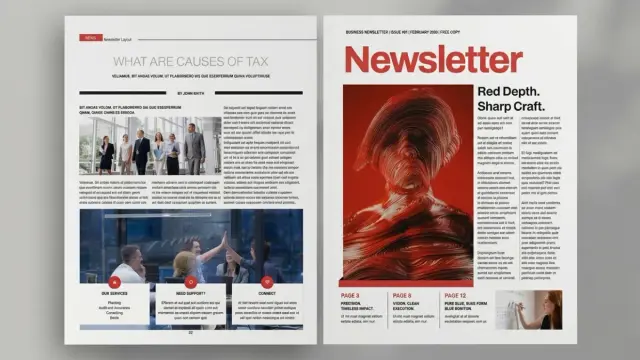
    An Adobe InDesign template for business brochures and promotional newsletters in US Letter size. Download the template from Adobe Stock

    What Makes This Adobe InDesign Newsletter Template Stand Out From Generic Options?

    The answer isn’t just aesthetics. It’s architecture. The template operates on what I call a Structured Communication Grid—a layout system where each page serves a distinct editorial function without breaking visual coherence across the spread. You get feature pages, data pages, news-style pages, and profile spreads. Each one is designed with intentional hierarchy. Nothing floats randomly.

    The color language is equally deliberate. A restrained palette of white, black, and a sharp accent of red creates what I’d describe as Editorial Tension Contrast—the red commands attention without overwhelming. It marks headlines and data points, guiding the reader’s eye in a natural, almost instinctive path. This isn’t a coincidence. It’s a typographic and chromatic decision that holds up across all 12 pages.

    CMYK Color Mode and Why It Matters for Business Print

    Refresh designed this template in CMYK color mode. That’s a deliberate choice, and it’s one many template creators skip. CMYK—Cyan, Magenta, Yellow, and Key (Black)—is the color model used by professional printing presses. Designing in RGB and converting later often produces color drift, particularly in deep reds and saturated blacks. This template avoids that entirely. What you see on screen is what comes off the press. For business brochures and promotional newsletters that will be printed in volume, this is non-negotiable.

    Furthermore, the US Letter format (8.5 × 11 inches) makes this template immediately compatible with North American print workflows. No resizing, no margin recalculation. Open it, customize it, and send it to print.

    12 Pages Designed With Editorial Intelligence

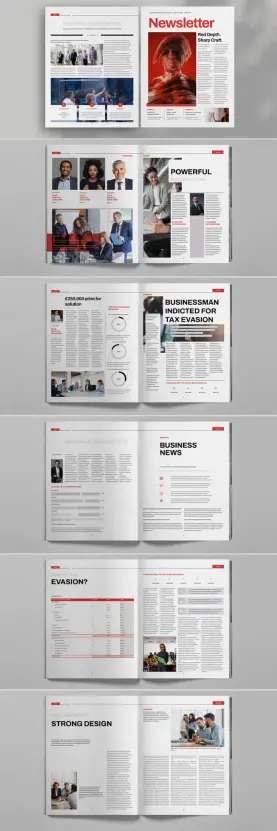
    Twelve pages sounds modest. But the page count isn’t the story—the editorial range is. This template covers the full spectrum of business publishing needs. You get a bold cover page with a dominant typographic lockup. You get a table of contents with pages that function as visual indices. Inside, you’ll find feature spreads, data visualization layouts with circular chart placeholders, personnel profile pages, and news-format pages built for dense, scannable content.

    Each page communicates a different editorial register. That variety is essential. A newsletter that looks identical on every page becomes monotonous. This template practices what I call Page Register Variation—the deliberate alternation of layout density, typographic scale, and image prominence to sustain reader engagement across a full publication.

    All Placeholder Content Is Replaceable in Minutes

    Every image, headline, body copy block, and caption in this template is a placeholder. Adobe InDesign’s linked file and text threading system makes replacing them straightforward. You click on a text frame, select all, and paste your content. For images, you use the Place command or drag and drop directly into the existing frames. The template’s proportions and crops are already set. Your content fits into a professionally designed container from the start.

    This approach reflects what I call Zero-Friction Customization—the principle that a good template should reduce production time, not create new decisions. Every design choice has already been made. Your job is simply to populate it.

    Who Should Use This InDesign Business Newsletter Template?

    This template is built for a specific kind of user: someone who understands their brand, has content ready to publish, and needs a professional structure to present it. That’s a wide category. Marketing managers producing quarterly newsletters fit this profile. Communications teams handling internal company updates fit it too. So do independent consultants, financial advisors, real estate agencies, and anyone producing a professional printed publication that represents their business.

    If you’ve ever assembled a newsletter from scratch in InDesign, you know the time cost. Grid setup, master pages, paragraph styles, color swatches—it’s a substantial setup investment before a single word of content gets placed. This template eliminates that entirely. The infrastructure is already there.

    When Adobe InDesign Is the Right Tool for Newsletter Design

    Adobe InDesign remains the industry-standard tool for multi-page print and digital publication design. Its paragraph and character styles ensure typographic consistency across every page. Furthermore, its master page system means headers, footers, and page numbers update globally. And its CMYK support and PDF export options satisfy professional print vendors worldwide.

    For a 12-page business newsletter, InDesign isn’t overkill. It’s the appropriate tool. Word processors lose consistency across pages. Presentation software lacks print fidelity. InDesign was built for exactly this use case, and this template exploits its strengths fully.

    The Editorial Design Principles Behind This Template

    Looking at this template closely, three editorial design principles emerge. Understanding them helps you work with it more effectively—and customize it more intelligently.

    Principle One: Anchor Typography

    Every major page uses a dominant typographic element as its visual anchor. On feature pages, that’s an oversized headline. On news pages, it’s a bold, all-caps category label. This Anchor Typography principle ensures that even image-heavy spreads maintain a clear entry point for the reader’s eye. You never feel lost on a page.

    Principle Two: Controlled White Space

    The template uses white space as an active design element, not as empty filler. Margins are generous. Column gutters are consistent. The absence of clutter gives each content element room to breathe and register independently. This is what separates professional print design from amateur desktop publishing.

    Principle Three: Data-Visual Integration

    Several pages incorporate circular charts and statistical callouts alongside editorial text. This integration—what I call Data-Visual Integration—treats data display as part of the editorial design rather than an afterthought. The charts match the template’s color system. They sit within the grid. They’re designed to inform, not just to decorate.

    How This Template Supports Your Brand Identity System

    A business newsletter isn’t just a communication tool. It’s a brand touchpoint. Every page a client or stakeholder reads reinforces—or undermines—their perception of your organization. This template’s restrained, authoritative visual language is compatible with a wide range of brand identities. The accent red can be swapped to your brand color. The fonts can be updated to match your typography system. The logo placement on the cover and interior headers is clearly defined.

    What remains constant is the structural logic. That logic is what makes the template valuable. Brand colors change. Editorial architecture should not.

    Printing Specifications and Production Readiness

    Because the template is CMYK and formatted to US Letter dimensions, it meets the baseline specifications of most North American commercial print vendors. When exporting, use InDesign’s PDF/X-1a or PDF/X-4 export preset for print. Include bleed marks if your design extends to the edge of the page. The template provides a clean starting point for those specifications without requiring additional setup.

    For digital distribution, InDesign’s Interactive PDF export produces a screen-optimized version suitable for email attachments or web downloads. The same file serves both channels without redesign.

    Adobe InDesign Newsletter Template vs. Building From Scratch: An Honest Comparison

    Building a 12-page InDesign layout from scratch—with proper master pages, paragraph styles, color swatches, and grid systems—takes an experienced designer between four and eight hours. Customizing this template takes under one hour for someone comfortable with InDesign. That time difference compounds quickly if you publish quarterly or monthly.

    Beyond time, there’s a quality floor to consider. When you build from scratch, the quality ceiling is your own skill level. When you start with a professionally designed template, the quality floor is already high. You’re customizing down from a professional standard, not building up from a blank page.

    That’s not a small distinction. It’s the entire value proposition of a well-designed template.

    Future of Print Newsletter Design: Why Templates Are a Strategic Asset

    Print is not dead. It has, however, become selective. Organizations that invest in high-quality printed communications now stand out precisely because so many have abandoned the format. A beautifully printed, professionally designed newsletter arriving in a client’s mailbox or conference folder commands attention in a way that a PDF email attachment simply does not.

    Templates like this one make that level of quality accessible without the cost of a full design engagement. As AI-generated design tools proliferate, the demand for human-structured, professionally composed layouts will actually increase. Discerning readers will be able to distinguish between algorithmically generated content and intentionally designed publications. A template built by an experienced designer—structured, typographically sound, print-ready—sits firmly in the latter category.

    My prediction: the market for professional InDesign newsletter templates will grow over the next three years as organizations recognize that their communications design quality is a direct reflection of brand credibility. Templates are how mid-sized businesses access that quality without agency budgets.

    Where to Get This Adobe InDesign Business Newsletter Template

    This template is available through Adobe Stock, where it was published by contributor Refresh. Adobe Stock subscribers can download it as part of their Creative Cloud subscription. Non-subscribers can license it individually. Because it’s distributed through Adobe Stock, it integrates directly into InDesign’s built-in stock search—you can license and place it without leaving the application.

    Download the template from Adobe Stock

    For designers and marketers already working within the Adobe Creative Cloud ecosystem, that frictionless workflow is a meaningful advantage. The template arrives in your InDesign environment ready to open and edit.

    Frequently Asked Questions

    What software do I need to use this newsletter template?

    You need Adobe InDesign. The template was created in InDesign and requires it for editing. An active Adobe Creative Cloud subscription gives you access to InDesign and to Adobe Stock, where this template is available.

    Is this template suitable for professional printing?

    Yes. The template uses CMYK color mode, which is the standard for professional commercial printing. It’s formatted to US Letter size (8.5 × 11 inches), compatible with most North American print vendors.

    Can I change the colors and fonts to match my brand?

    Absolutely. All design elements in the template are fully customizable. You can update the accent color to your brand color, replace fonts with your brand typography, and adjust any layout element using standard InDesign tools.

    How many pages does the template include?

    The template includes 12 fully designed, prebuilt pages. Each page has a distinct editorial layout covering covers, feature spreads, news pages, data visualization pages, and profile layouts.

    Do I need advanced InDesign skills to use this template?

    Intermediate InDesign skills are sufficient. You should be comfortable placing images, editing text frames, and swapping colors. The template’s structure eliminates the need for advanced skills like building master pages or setting up paragraph style systems from scratch.

    Can this template be used for digital distribution as well as print?

    Yes. InDesign supports both print-optimized PDF export and interactive PDF export for digital distribution. The same template file works for both outputs.

    Are the images included in the template?

    No. All images in the template are placeholders demonstrating layout and composition. You replace them with your own licensed images using InDesign’s Place command or by dragging files directly into the existing image frames.

    Is this template available through Adobe Creative Cloud?

    Yes. The template is available on Adobe Stock, which is integrated into Creative Cloud. Subscribers with an Adobe Stock plan can access it as part of their subscription.

    Check out other popular graphic design templates here at WE AND THE COLOR.

    #AdobeInDesign #AdobeStock #BrochureTemplate #businessBorochure #design #graphicDesign #InDesignTemplate #newsletterTemplate

    Luxury Brand Guidelines InDesign Template for Screen-Ready Presentations

    Brand guidelines used to live in PDFs nobody opened. That era is over. Today, brand identity documents are expected to function as presentations, reference tools, and communication assets — all at once. The luxury brand guidelines InDesign template by Tom Sarraipo answers that demand directly, with a presentation layout built for screens, not printers.

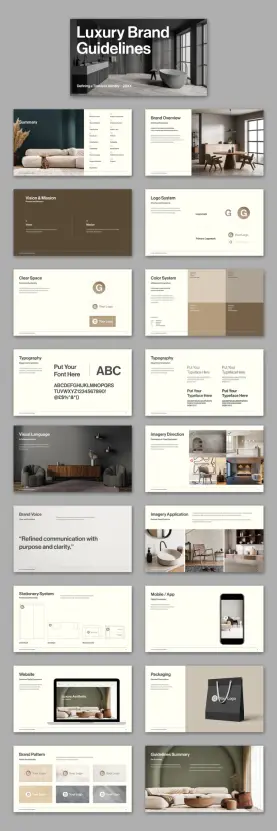
    This is a 21-page, 1920 × 1080 px Adobe InDesign template. It covers every major touchpoint of a brand identity system — from logo architecture and color palettes to packaging, stationery, and digital mockups. And it does all of this inside a visual language that feels restrained, precise, and unmistakably premium.

    But beyond the aesthetics, this template represents a specific philosophy about how brand documentation should work. Furthermore, it challenges designers to rethink what a brand guidelines document is actually for.

    Download the template from Adobe Stock

    Please note that this template requires Adobe InDesign installed on your computer. Whether you use Mac or PC, the latest version is available on the Adobe Creative Cloud website—take a look here.

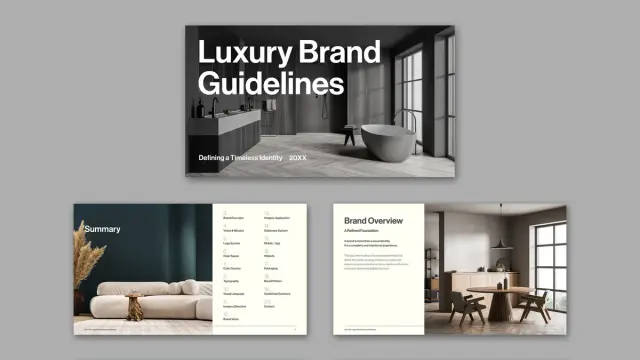
    Adobe InDesign Brand Guidelines Presentation Layout by Tom Sarraipo Download the template from Adobe Stock

    What Makes a Brand Guidelines Presentation Template Actually Useful?

    Most brand guidelines templates fall into one of two failure modes. Either they are too generic — a grid of colors and fonts that tells nobody anything — or they are too rigid, demanding a visual style that overwrites the client’s actual brand. Tom Sarraipo’s template avoids both.

    The layout operates on what I’d call the Neutral Scaffold Principle: the structure is opinionated, but the content slots are entirely neutral. Every image, logo, and typeface is a placeholder. Consequently, the designer’s job is to fill the scaffold with the client’s actual brand reality — not adapt their brand to fit a template’s personality.

    This distinction matters enormously in practice. A scaffold that imposes its own aesthetic becomes a liability. Meanwhile, a scaffold that stays out of the way becomes a genuine tool. Sarraipo’s template is firmly in the second category.

    The minimalist layout is built around high contrast, clean white space, and editorial typographic hierarchy. Therefore, it reads as premium without performing premium — a critical distinction for luxury branding work.

    The Architecture of the Template: 21 Pages, Zero Waste

    Twenty-one pages sounds like a lot. In practice, every spread in this template earns its place. Let me walk through the structure and explain what each section actually accomplishes.

    Cover and Summary

    The cover establishes visual tone immediately. It uses a bold sans-serif headline — “Luxury Brand Guidelines” — against a full-bleed lifestyle image. This is the First Impression Frame, the single slide that sets the entire emotional register of the document. Get it wrong, and nothing else recovers. Get it right, and every subsequent page benefits from the credibility established here.

    The summary page follows with a structured content index. It lists every section — Brand Overview, Logo System, Color System, Typography, Visual Language, and more — in a scannable two-column layout. Additionally, it sits alongside a curated image block that reinforces the overall visual direction.

    Brand Overview and Vision & Mission

    The Brand Overview page introduces what Sarraipo’s layout calls “A Refined Foundation.” This section exists to establish context before introducing any visual assets. Moreover, it anchors the subsequent visual decisions in purpose, not just aesthetics.

    The Vision & Mission spread is deliberately spacious. Two columns — Vision and Mission — sit against an earth-toned background. The breathing room here is intentional. These statements should feel considered, not compressed. Thus, the whitespace is functional, not decorative.

    Logo System and Clear Space

    The logo section is where many brand guidelines templates overcomplicate. Sarraipo’s version is admirably direct. It shows the logomark, the primary logomark, and the relationship between the two — clean, labeled, and unambiguous.

    The Clear Space page follows with a dedicated spread for logo protection zones. This is often the most ignored section in brand documentation, yet it is among the most practically important. By giving it its own full page, the template signals that this is non-negotiable territory.

    Color System

    The color palette spread uses a grid of color blocks — warm neutrals, deep taupes, and muted earth tones in the placeholder version. Each block carries the color’s name, HEX, RGB, and CMYK values. This is the Color Specification Matrix approach, and it is the correct one for any brand document that will be used by both digital and print teams.

    Furthermore, the grid layout allows for immediate visual comparison, which is exactly what a working designer needs when checking brand compliance on a real project.

    Typography Spreads

    There are two dedicated typography pages — a notable choice. The first establishes the typeface family, showing the full character set from A to Z and 0 to 9. The second demonstrates typographic hierarchy in use: primary, secondary, and supporting type roles shown side by side.

    This dual-page approach reflects what I’d call the Type-in-Context Protocol: never show type in isolation. Always show it doing something. The second spread accomplishes exactly this, and it makes the typography section significantly more useful than a single specimen page.

    Visual Language and Imagery Direction

    The Visual Language spread is the most editorial section of the template. It uses a full-bleed lifestyle photograph alongside a curated color palette strip — establishing the mood and compositional approach that defines the brand’s image world.

    The Imagery Direction page then goes further, showing both approved and rejected image treatments side by side. This is the Approval/Rejection Axis, a framework for communicating aesthetic standards without lengthy written descriptions. One correct image and one incorrect image teach more than three paragraphs of guidelines text.

    Brand Voice

    A single page carries a single quote: “Refined communication with purpose and clarity.” The entire slide is devoted to this one statement. This is not minimalism for its own sake — it is a demonstration of the principle itself. The brand voice page uses the brand voice to define the brand voice. That kind of self-referential precision is genuinely clever design thinking.

    Applications: Stationery, Mobile, Website, Packaging

    The applications section is where brand guidelines move from theory into practice. Sarraipo’s template covers four distinct touchpoints: stationery (letterhead, envelope, business card), mobile and app interface, website mockup, and packaging.

    Each spread uses realistic mockup photography alongside annotated layout diagrams. This combination — what I’d call the Mockup-to-Blueprint Pairing — gives both the client and the production team exactly what they need. Clients see the vision; production teams see the specifications.

    Brand Pattern and Guidelines Summary

    The Brand Pattern page shows the logo used as a repeating graphic element — tiles of logomarks across varying backgrounds. This is practically useful for merchandise, packaging, and digital surface design. Additionally, it demonstrates the logo’s flexibility without compromising its integrity.

    The final Guidelines Summary page closes the document with a lifestyle image and a structured list of key principles. It is the Closing Anchor Frame — the last impression, designed to leave the reader with clarity and confidence rather than information overload.

    Why the 1920 × 1080 px Format Changes Everything

    Brand guidelines have historically been delivered as PDFs at print dimensions — A4, US Letter, sometimes A3. That format made sense when the primary output was a printed binder. Today, almost nobody prints brand guidelines. They present them, share them, and review them on screens.

    Sarraipo’s choice of 1920 × 1080 px — standard HD resolution and the native aspect ratio of virtually every contemporary monitor, laptop, and projector — is a direct response to this reality. The template fills the screen completely. There are no white bars, no awkward margins, no scroll required. It simply fits.

    This format also has a practical advantage in client presentations. When you present brand guidelines at a 16:9 aspect ratio on a widescreen display, the experience is fundamentally different from sharing a PDF via email. The guidelines become a presentation. Consequently, they carry the weight and authority of a presentation.

    Moreover, Adobe InDesign’s interactive features — hyperlinks, page transitions, video embeds — work within this format in ways that print-oriented documents cannot accommodate. The template is explicitly designed to support interactivity, transforming what would otherwise be a static reference document into an active communication tool.

    The Minimalist Aesthetic as a Strategic Choice

    Tom Sarraipo’s design aesthetic throughout this template is restrained to the point of discipline. Warm neutrals — off-whites, taupes, deep browns — dominate the palette. Typography is clean and geometric. Image placements are considered rather than decorative. Nothing competes for attention that isn’t earning it.

    This is not merely a stylistic preference. It is a strategic design decision. A brand guidelines template that asserts its own visual identity too strongly will inevitably conflict with the client brand it is meant to document. Therefore, the template needs to be something closer to a neutral container than a designed artifact.

    Sarraipo achieves this through what I’d describe as Aesthetic Recessive Design — the deliberate suppression of the template’s own visual personality in service of the content it will hold. The template looks premium because premium brands need premium documentation frameworks. But it does not look like any specific premium brand. That distinction is the entire point.

    Who Actually Needs This Template?

    The obvious answer is brand designers and creative directors. But the real answer is more specific than that.

    This template is built for designers who work with clients for whom presentation quality is part of the value delivered. Luxury brand clients, high-end hospitality groups, fashion brands, architecture firms — these clients evaluate the quality of their designer’s documentation as part of how they assess the quality of their designer’s thinking. A polished, professional brand guidelines presentation communicates competence before anyone reads a single word.

    It is also well suited to in-house brand teams at companies undergoing identity work — rebrands, sub-brand launches, brand consolidation projects. These teams need a documentation format that their internal stakeholders will take seriously. A 21-page structured presentation carries considerably more institutional weight than a shared Google Doc.

    Additionally, design educators working on brand identity curriculum will find the template’s structural logic useful — not just as a tool, but as a teaching example of how brand documentation should be organized.

    Customizing the Template in Adobe InDesign: What to Know

    Adobe InDesign remains the professional standard for multi-page layout work, and this template uses it properly. Every text block is a placeholder. Every image frame is ready to accept your own photography or graphics. The color swatches in the Color System page are editable InDesign color objects — replace the HEX values and the blocks update automatically.

    The typography placeholders use the message “Put Your Font Here” explicitly — an unusually direct instruction that makes the customization workflow immediately clear. Replace the typeface, update the character samples, and the entire typographic story of your client’s brand becomes visible in seconds.

    For interactive use, InDesign’s Export to Interactive PDF or Publish Online features allow the completed template to function as a clickable presentation. Page transitions, hyperlinked table of contents entries, and embedded media all become possible within this document structure.

    One practical note: because the template is built at 1920 × 1080 px, it exports cleanly to PowerPoint or Keynote via PDF intermediary — useful for clients who need to maintain the document internally without InDesign access.

    The Broader Shift: Brand Guidelines as Brand Experiences

    There is a longer argument embedded in a template like this one. Brand guidelines are not just reference documents. They are, in a very real sense, the first experience of the brand that internal teams and external partners have. If the guidelines are clumsy, disorganized, or visually incoherent, they undermine confidence in the brand itself — regardless of how strong the underlying identity work might be.

    I’d frame this as the Documentation-as-Brand-Experience Thesis: the quality of your brand documentation is itself a brand signal. Luxury brands, in particular, cannot afford to separate the experience of using their brand from the experience of reading about their brand. They need to be the same experience.

    Sarraipo’s template operationalizes this thesis. It is not just a convenient way to document brand decisions. It is a demonstration that brand thinking extends into every artifact the brand produces — including the document that governs the brand.

    That is a more sophisticated position than most brand guidelines templates take. And it is why this particular template deserves attention beyond its surface-level functionality.

    A Forward-Looking Prediction

    Within the next three to five years, static PDF brand guidelines will become the exception rather than the rule. Interactive, screen-native brand documentation — delivered as web apps, interactive PDFs, or hosted brand portals — will become the standard expectation for professional brand identity work. Templates like this one, built at screen resolution with interactivity in mind, are the precursor to that shift.

    Designers who build their documentation workflow around screen-native formats now will be significantly ahead of this curve when clients begin expecting it as standard practice. Furthermore, they will have developed the design fluency in this format that takes time to build.

    Download the template from Adobe Stock

    The Sarraipo luxury brand guidelines template is, among other things, a bet on where professional brand documentation is heading. From where I stand, it is a well-placed bet.

    Frequently Asked Questions

    What software do I need to use this brand guidelines template?

    You need Adobe InDesign to edit this template. Any current Creative Cloud subscription that includes InDesign will work. The template is delivered in standard InDesign format and does not require any additional plugins or extensions.

    What is the page size of this brand guidelines template?

    The template is designed at 1920 × 1080 px, which matches standard HD screen resolution. This makes it ideal for on-screen presentations, projector display, and interactive PDF export. It is not designed for print use at standard paper dimensions.

    How many pages does the template include?

    The template includes 21 pre-designed, fully customizable pages covering brand overview, logo system, clear space rules, color system, typography, visual language, imagery direction, brand voice, imagery applications, stationery system, mobile and app mockups, website mockup, packaging, brand pattern, and a guidelines summary.

    Can I use this template for clients across different industries?

    Yes. Because the template uses a neutral, minimalist aesthetic and placeholder content throughout, it adapts to virtually any brand identity project. It works particularly well for luxury, hospitality, fashion, architecture, and premium consumer brands, but the scaffold is flexible enough to support other sectors.

    Can I make the brand guidelines interactive?

    Yes. Adobe InDesign supports interactive PDF export and Publish Online, both of which enable hyperlinks, page transitions, and embedded media. The 1920 × 1080 px format is specifically suited to interactive presentation use.

    Are the images and fonts in the template included?

    All images and typography shown in the template are placeholders. You replace them with your own assets — client photography, brand typefaces, and logo files. The template provides the structural framework; the brand content is yours to supply.

    Is this template suitable for a luxury brand identity project?

    Yes, and it is specifically designed with that context in mind. The minimalist, screen-native layout communicates professionalism and restraint — exactly the qualities that luxury brand clients expect from their documentation. The template’s Neutral Scaffold Principle ensures it supports rather than overrides the client’s own brand personality.

    Where can I get this Adobe InDesign brand guidelines template?

    The luxury brand guidelines presentation template by Tom Sarraipo is available on Adobe Stock. You can browse and license it directly through Adobe Stock, where it is available as part of a standard or extended license depending on your intended use.

    Check out other graphic design assets here at WE AND THE COLOR.

    #AdobeInDesign #brandGuidelines #design #graphicDesign #InDesignTemplate #layout #luxuryBrand #presentation #presentationTemplate

    This Professional Resume Template Proves Clean Design Still Wins

    Your resume has about six seconds. That’s roughly how long a hiring manager glances at it before deciding whether to keep reading. Six seconds. And yet most people still hand off their career story in a cluttered, typographically inconsistent document that looks like it was built in 2009. That’s the problem this professional resume template solves — and it solves it with confidence.

    Designed by Adobe Stock contributor Phillip and built entirely in Adobe Illustrator, this template is one of the cleaner, more structurally intelligent layouts available right now. It’s available in both A4 and US Letter formats, which immediately signals that it was built for a global audience. So whether you’re applying to a studio in Berlin or an agency in New York, the formatting holds up.

    But there’s more going on here than just good proportions. This is a template that understands what a resume actually needs to do — and that understanding is visible in every design decision.

    Download the template from Adobe Stock

    Please note that to edit this template, you need professional graphic design software like Adobe Illustrator installed on your computer. You can get the latest version from the Adobe Creative Cloud website. Just have a look here.

    A professional resume template with an organized structure for Adobe Illustrator in A4 and US Letter. Download the template from Adobe Stock

    What Makes a Resume Template Truly Professional in 2025?

    The word “professional” gets thrown around so casually that it’s nearly lost its meaning. But in resume design, it has a precise definition. A truly professional resume template does three things simultaneously: it communicates hierarchy, it guides the eye, and it gets out of the way of the content.

    Most templates fail at least one of those. They either over-design the layout to compensate for weak content, or they strip out so much personality that the result reads as forgettable. This template, however, walks that line with unusual skill.

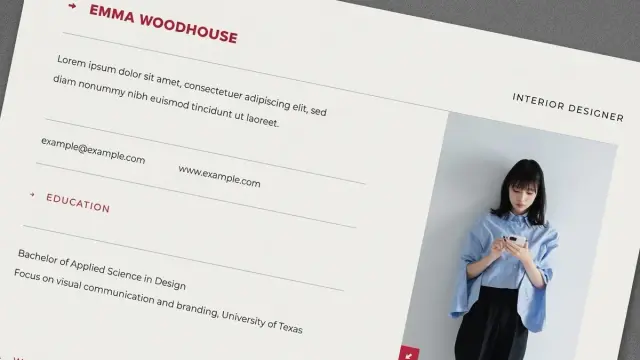
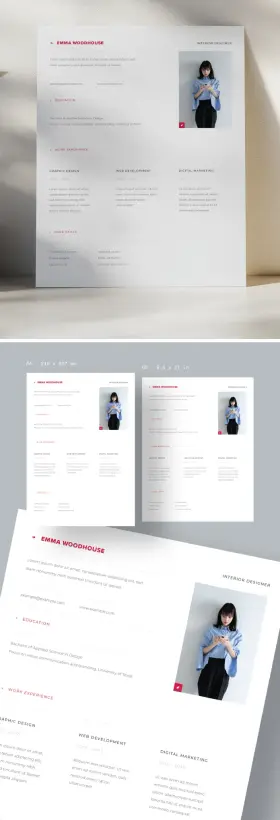
    The layout uses a restrained two-column structure at the top — name and job title on the left, a professional photo block on the right — then expands into a clean, full-width body below. That top section anchors the reader immediately. You know exactly who this person is at first glance. That’s not accidental. It’s the result of deliberate visual hierarchy, a principle I’d call Anchor-Then-Expand: establish identity fast, then let the depth follow.

    The Role of Accent Color in Resume Credibility

    Notice the red. It’s not aggressive — it’s controlled. A small arrow-style marker appears before each section heading: Education, Work Experience, Hard Skills. That’s it. One accent color, used sparingly, is placed precisely where the eye needs a cue.

    This approach follows what I call the Single-Signal Color Rule: in a document where the goal is legibility and trust, using more than one accent color almost always backfires. It introduces visual competition. The template avoids that entirely. The red functions as a navigation system, not a decoration — and that distinction matters enormously.

    Think of it this way: every color decision in a resume either earns trust or costs it. Red, used this way, earns it.

    How the Professional Resume Template Uses White Space as a Design Tool

    White space is one of the most misunderstood concepts in document design. People often mistake it for emptiness, as if unused space represents wasted real estate. It doesn’t. White space is structure. It’s the pause between ideas that gives the reader room to process information.

    This template uses white space aggressively — and I mean that as a compliment. The margins breathe. The section gaps are generous. The text columns in the Work Experience section don’t crowd each other. The result is a document that feels calm, organized, and in control.

    For professional creatives — interior designers, graphic designers, art directors, brand consultants — that sense of control is part of the message. Your resume isn’t just a list of your accomplishments. It’s evidence of how you think about visual communication. A cluttered resume from a designer is a contradiction. This template removes that contradiction entirely.

    Three-Column Work Experience: A Structure That Scales

    The Work Experience section uses a three-column horizontal layout. Each column represents a separate role: Graphic Design, Web Development, and Digital Marketing in the sample. That structure is worth examining closely.

    Traditional resume layouts stack work experience vertically, which works fine for linear careers. But for creatives with parallel or overlapping skill sets, a horizontal layout tells a more accurate story. It says: these things happened together, these competencies reinforce each other. That’s a fundamentally different — and often more honest — professional narrative.

    I call this the Parallel Competency Model: rather than implying a rigid progression from one role to the next, the layout acknowledges that real creative careers are rarely that linear. The three-column format reflects how multi-skilled professionals actually work.

    Professional Resume Template for Adobe Illustrator: What You Can Customize

    The file format here is Adobe Illustrator (.AI). That’s a deliberate choice, and it’s the right one for this type of document. Illustrator gives you full vector control over every element — the typography, the spacing, the color values, the photo placeholder, the section markers. Nothing is locked. Nothing is approximate.

    If you don’t have Illustrator, Adobe Photoshop can open .AI files, though with some limitations on vector editing. Adobe Acrobat can open .AI files as PDFs if saved with PDF compatibility enabled. Inkscape, the free open-source vector editor, also opens Illustrator files, though complex formatting may shift slightly. For the cleanest editing experience, Adobe Illustrator CC is the recommended tool — and if you’re a Creative Cloud subscriber, you already have it.

    What can you actually change? Everything. The name, job title, and contact details are straightforward text swaps. The photo placeholder accepts any image you drop in — just match the crop proportions. The section headings, body copy, and skills list are all editable text. The accent color can be changed globally in minutes by editing the swatches panel. Want navy instead of red? Three clicks.

    A4 vs. US Letter: Which Format Should You Choose?

    The template comes in both A4 (210 × 297 mm) and US Letter (8.5 × 11 in). If you’re applying to companies in Europe, the Middle East, Asia, or Australia, use A4. If you’re applying in the United States or Canada, use US Letter. The difference is subtle but visible — particularly if a recruiter prints your resume. A misformatted page with awkward white bars at the bottom or sides reads as careless. Both formats are included, so there’s no reason to compromise.

    Who Is This Resume Template Actually For?

    Let’s be specific, because “professional creatives” covers a wide range. This template is particularly well-suited for graphic designers, UX/UI designers, brand strategists, interior designers, architects, art directors, photographers, motion designers, and creative directors. The layout is clean enough to work across industries, but its visual intelligence speaks directly to hiring managers in design-adjacent fields.

    That said, it would also serve professionals in marketing, communications, and digital media effectively. The structure is universal. The aesthetic is elevated but not niche.

    What this template is not: it’s not designed for heavily technical roles like software engineering or data science, where dense, ATS-optimized formats often perform better. The visual sophistication here is a feature for some applications and a potential mismatch for others. Know your audience.

    The ATS Question: Does a Beautiful Resume Still Get Parsed?

    Applicant Tracking Systems (ATS) are the first gatekeepers at most large companies. They parse resume text before a human ever reads it. A purely vector-based Illustrator file, submitted as-is, can confuse some ATS platforms.

    The practical solution: after customizing your template in Illustrator, export a clean PDF. Most modern ATS tools handle PDF text extraction reliably if the fonts are embedded and the text isn’t converted to outlines. Keep your text as live text — don’t flatten it. Test your exported PDF with a free ATS checker tool before submitting to large organizations. For smaller studios and agencies, where a human opens your resume directly, the visual impact of this template is a clear advantage.

    What This Template Gets Right That Most Don’t

    Here’s my honest take: the majority of resume templates available online make the same mistakes. They overuse color to compensate for weak structure, stack columns awkwardly, or use decorative fonts that undermine readability at small sizes. They ignore the relationship between the header and the body.

    This template avoids all of those. The typography is clean and consistent. The hierarchy is logical. The color use is disciplined. The section system is intuitive without being predictable. And the decision to include a photo placeholder — handled tastefully in the top-right quadrant — reflects how European and international hiring norms often differ from North American conventions.

    What I find most impressive is what I’d call the Quiet Confidence Principle: this layout doesn’t try to impress you. It simply performs. There’s no gradient, no decorative border, no icon overload. Just structure, space, and clarity. In a sea of overdesigned templates, that restraint is its own form of sophistication.

    Why Modern Resume Design Is Moving Toward Minimalism

    The trend is clear and it’s accelerating. As hiring becomes more digital and resumes are viewed more often on screens than on paper, clutter becomes a liability. Small screens and compressed PDF previews punish dense layouts. Clean, high-contrast, well-spaced documents read better everywhere — on a MacBook display, on a recruiter’s phone, printed on an office laser printer.

    This template was designed with that reality in mind. The generous white space and clear section breaks hold up across viewing conditions. That’s not a minor point. That’s the difference between a resume that works and one that only looks good in its own preview image.

    How to Download and Use This Professional Resume Template from Adobe Stock

    The template is available through Adobe Stock, where it can be licensed for personal and commercial use. Adobe Stock subscribers can access it as part of their existing plan. Non-subscribers can purchase a standard license directly.

    Once downloaded, open the .AI file in Adobe Illustrator. If you’re using Creative Cloud, you’ll have the most current version of Illustrator with full compatibility. Replace the placeholder text with your own information, swap in your photo, adjust the accent color if needed, and export as PDF. The whole process, once you’re comfortable in Illustrator, takes under an hour.

    For those newer to Illustrator, Adobe’s own tutorial library covers the basics of text editing and color adjustments. The template is structured in clearly labeled layers, which makes navigation straightforward even for intermediate users.

    Comparing This Template to Competing Formats

    Canva templates are fast and browser-based, but they offer limited typographic precision. Google Docs templates are ATS-friendly but visually generic. Microsoft Word templates are widely used but rarely elegant. InDesign templates offer similar quality to this Illustrator file but require more advanced skills.

    The Illustrator format sits in a sweet spot: more precise and visually sophisticated than Word or Canva, more accessible than InDesign for most creatives. It’s the right tool for a document that needs to look polished at the professional level this template is designed for.

    The Forward-Looking Case for Investing in Your Resume Design

    Here’s a prediction worth stating clearly: as AI-generated application materials flood hiring pipelines, the quality of visual presentation will become a stronger differentiator, not a weaker one. When every candidate’s cover letter sounds similar, the physical document — the PDF that a creative director actually opens — carries more weight.

    Hiring for creative roles is partly about taste. A resume that demonstrates visual intelligence before the portfolio is even opened sends a signal. It says: this person understands presentation, proportion, and communication. That signal starts with the template you choose.

    This particular template — clean, structured, globally formatted, and fully customizable — is a strong foundation for that signal. It doesn’t make decisions for you. It gives you a system that works and then gets out of the way.

    That’s exactly what good design should do.

    Download the template from Adobe Stock

    Common Questions:

    What software do I need to open this resume template?

    The template comes as an Adobe Illustrator (.AI) file. Adobe Illustrator is the recommended application for full editing capabilities. Adobe Photoshop and Inkscape can also open .AI files, though with some limitations. Saving with PDF compatibility enabled also allows the file to open in Adobe Acrobat.

    Is this resume template available in both A4 and US Letter sizes?

    Yes. The template includes both A4 (210 × 297 mm) and US Letter (8.5 × 11 in) formats, making it suitable for job applications worldwide.

    Can I change the accent color in this professional resume template?

    Absolutely. The red accent used for section markers and decorative elements is fully editable in Adobe Illustrator. You can change it to any color using the swatches panel, and applying it globally takes only a few clicks.

    Is this resume template ATS-compatible?

    The template is designed as a visual layout in Illustrator. For ATS compatibility, export your completed resume as a PDF with embedded fonts and live (non-outlined) text. Most modern ATS platforms can extract text from well-structured PDFs. Avoid flattening or converting text to outlines before export.

    Who is this professional resume template best suited for?

    This template is ideal for graphic designers, UX/UI designers, interior designers, art directors, photographers, brand strategists, and other visual creatives. Its clean, elevated layout is also suitable for marketing and communications professionals.

    Where can I download this resume template?

    The template is available on Adobe Stock, created by contributor Phillip. It can be licensed individually or accessed through an active Adobe Stock subscription.

    Can I use this template for commercial purposes?

    Adobe Stock licenses cover both personal and commercial use, depending on the license type selected at purchase. Review the specific license terms on Adobe Stock before using the file in commercial contexts.

    Do I need advanced Illustrator skills to customize this template?

    Intermediate Illustrator skills are sufficient. The template uses clearly structured layers and standard text editing tools. Basic tasks like replacing placeholder text, swapping the photo, and adjusting colors are straightforward. Adobe’s tutorial library can help if you’re building your Illustrator skills.

    Don’t hesitate to find other trending design templates for creative professionals here at WE AND THE COLOR.

    #AdobeInDesign #AdobeStock #cv #InDesignTemplate #resume #resumeDesign #resumeTemplate

    This Visual Editorial Art Book InDesign Template Redefines How Creatives Present Art

    Some templates exist to fill space. Others exist to frame meaning. This Adobe InDesign editorial art book template, designed by McLittle Stock and available on Adobe Stock, belongs firmly in the second category. It carries a quiet confidence that most layout templates simply lack. The spreads don’t shout. They breathe. And that restraint, more than anything else, is what makes this template worth talking about.

    Download the template from Adobe Stock

    Please note that this template requires Adobe InDesign installed on your computer. Whether you use Mac or PC, the latest version is available on the Adobe Creative Cloud website—take a look here.

    Download a visual editorial art book layout as an Adobe InDesign template, designed by McLittle Stock. Download the template from Adobe Stock

    Visual editorial art book templates are having a genuine moment right now. Galleries, independent publishers, fine art photographers, illustrators, and even brand studios are rethinking how they package and present creative work. The PDF portfolio feels dated. The Instagram grid feels disposable. So what fills that gap? A thoughtfully designed art book layout — one that treats the work with seriousness and the reader with respect.

    This template does exactly that. Moreover, it does it in a format that any designer, regardless of experience level, can actually use.

    What Makes an Editorial Art Book Layout Template Different from a Standard InDesign Template?

    Most InDesign templates are built for utility. They help you lay out text, align columns, and hit a deadline. An editorial art book InDesign template operates under a completely different logic. Here, the layout is not a container for content. Instead, the layout is the content.

    This distinction matters enormously. A standard brochure template asks: Where does the information go? An editorial art book template asks: how does the image feel on this page? What tension exists between the typography and the photograph? How much white space earns silence, and how much earns emptiness?

    This McLittle Stock template answers those questions beautifully. The spreads alternate between full-bleed image moments and restrained typographic compositions. Bold, condensed serif headlines sit alongside narrow columns of body text. Paintings appear as standalone full-page bleeds or curated in multi-panel grid arrangements. The result is a pacing system — what I’d call a Visual Breath Sequence — where tension and release trade off across pages with editorial intelligence.

    Furthermore, the template operates across a wide tonal range. Aerial landscape photography, classical oil paintings, flat graphic illustration, and delicate botanical art all appear in the preview, and each fits the layout without friction. That tonal versatility is not accidental. It reflects a layout designed around compositional principles rather than specific content categories.

    The Typography Hierarchy Does More Than Organize — It Signals

    Look at the headline treatment in this template. The large, stacked serif type — condensed, high-contrast, unabashedly bold — does not merely label a section. It asserts authority. It tells the reader: this publication takes itself seriously.

    Typography in editorial art books carries enormous responsibility. It sets the expectation before a single image registers. The headline style here references the visual grammar of mid-century European art catalogues and contemporary independent publishing. It feels informed without feeling derivative.

    Body copy columns are narrow and generous in line spacing. That combination slows the reading pace intentionally. Art books are not read — they are experienced. The typographic design supports that mode of engagement.

    Why Art Directors and Independent Publishers Should Pay Attention to This Template

    Here is an honest observation: most ready-made InDesign templates for art books fall into one of two failure modes. They are either so generic that they could belong to any industry, or so ornate that they overpower the artwork itself. This template avoids both traps.

    The layout system uses what I’d define as Compositional Neutrality — a design posture where the template architecture recedes just enough to let the artwork lead, while still maintaining enough structural personality to feel curated rather than invisible. That is genuinely difficult to achieve, and it is the most important quality a visual editorial art book template can have.

    Additionally, the US Letter format makes this immediately practical for North American publishers, studios, and independent creatives who need both digital and print-ready output. The CMYK color mode supports professional offset and digital printing without color conversion headaches. These are not minor details. They are the difference between a template that looks good in a mockup and one that survives production.

    Who This Template Actually Serves

    Let’s be specific. This editorial art book InDesign template works particularly well for the following use cases:

    • Fine art photographers building a physical or digital portfolio publication
    • Illustrators and painters creating a self-published artist monograph
    • Galleries producing exhibition catalogues on a constrained budget
    • Creative directors developing a luxury lookbook or brand editorial
    • Design educators creating course materials or student showcase publications
    • Independent publishers launching a visual essay or zine in a professional format

    In each of these contexts, the template provides immediate structural credibility. You start with a layout that already knows what it is. Your job becomes curation, not construction.

    The Editorial Art Book InDesign Template and the Rise of the Independent Creative Publisher

    Something meaningful is shifting in how creatives think about publishing. The tools to produce gallery-quality printed books are no longer exclusive to large publishing houses. Print-on-demand platforms, digital distribution, and tools like Adobe InDesign have democratized the production side entirely. Yet the design side — the actual editorial layout work — has remained a bottleneck.

    Templates like this one close that gap. They transfer curatorial intelligence into a reusable, customizable structure. Think of it as a Layout Language Transfer — the encoded design decisions of an experienced editorial designer, available to anyone who can use InDesign.

    This matters for the broader creative economy. When independent photographers, painters, and illustrators can produce publications that look genuinely professional, they change how their work is perceived. A hand-bound zine signals one thing. A sixty-page art book with editorial-grade typography signals something entirely different. Both have value. But they serve different contexts, different audiences, and different price points.

    Moreover, the customizability of this template means that two different creatives using it will produce two completely different publications. All images and texts are placeholder elements. Replace them with your own content, adjust the color palette, swap typefaces if needed, and the template becomes your template. That adaptability is core to its value.

    What the Spread Compositions Tell Us About Layout Intelligence

    Study the spreads in this template carefully. Several compositional strategies repeat across pages, and each one reflects a deliberate editorial choice.

    First, the full-bleed landscape photographs create visual anchors. They stop the reader. They demand attention before the page turn. Second, the multi-panel arrangements — particularly the pages where two or three paintings appear side-by-side — create curatorial dialogue between works. Third, the typographic-heavy spreads use negative space aggressively, giving the headline room to register at scale.

    Together, these strategies create what I’d call a Tri-Rhythm Layout System: impact spreads, dialogue spreads, and rest spreads. The sequence creates momentum without fatigue. It is the same rhythm that experienced editorial designers use when building magazine features or gallery catalogues. Finding that rhythm embedded in a downloadable template is genuinely impressive.

    How to Customize This Visual Editorial Art Book Template Effectively

    Downloading a template and replacing placeholder text is the beginning, not the end. Here is how to approach customization thoughtfully.

    Start with image curation, not placement. Before opening InDesign, select your final image set. Organize works by tonal weight — dark, mid, and light compositions. Then sequence them so the template’s built-in rhythm amplifies your content rather than fights it.

    Respect the typographic system. The existing headline and body type hierarchy carries significant visual intelligence. Changing typefaces is absolutely an option, but do so with intention. Choose a replacement that maintains the same contrast between display and text weights.

    Use the CMYK color mode as a starting point for your palette. If your artwork carries a dominant color — warm ochres, cool blues, desaturated neutrals — you can carry that tone into decorative elements or section dividers while keeping the primary layout clean.

    Don’t over-populate the white space. The generous margins and breathing room in this template are structural, not accidental. Resist the urge to fill every empty area. The negative space is doing compositional work.

    Printing This Art Book Template: What You Need to Know

    The template’s CMYK color mode and US Letter format (8.5 × 11 inches) make it compatible with most professional print-on-demand services, local print shops, and offset printers. For best results, embed all fonts and flatten transparency before exporting to PDF/X-1a or PDF/X-4 format.

    If you plan to print a small run physically, consider uncoated stock for a gallery-quality matte finish, or a semi-gloss coated paper for maximum photograph reproduction quality. Both work with this layout. Your paper choice will shift the overall register of the publication significantly, so order samples before committing to a full print run.

    The Editorial Art Book InDesign Template as a Strategic Asset for Creative Professionals

    Here is a perspective worth considering: a professionally designed art book publication is not just a portfolio document. It is a positioning tool. It signals seriousness, commercial viability, and editorial vision to gallery directors, collectors, brand collaborators, and editorial clients.

    A template that enables independent creatives to produce that level of publication — quickly, affordably, and without compromising visual quality — has genuine strategic value. Not just aesthetic value. Strategic value.

    Furthermore, the art book format travels well. Send a digital PDF to an international gallery. Ship a printed copy to a potential collector. Upload a preview to your website. Each context reads the same level of editorial intention. That consistency across distribution channels is something Instagram and Behance portfolios simply cannot provide.

    I genuinely believe that the creatives who will differentiate themselves over the next five years are the ones who invest in physical and digital publishing artifacts that carry editorial weight. This template is a legitimate starting point for that investment.

    Adobe Stock and the Expanding Ecosystem of Professional InDesign Templates

    McLittle Stock’s contribution to Adobe Stock reflects a broader trend: professional-grade InDesign templates are increasingly available at a fraction of the cost of custom design work. The quality ceiling has risen significantly. Five years ago, the template market was dominated by generic corporate formats. Today, editorial art book InDesign templates like this one demonstrate that template design has matured into a serious creative discipline.

    For creative professionals who use Adobe Creative Cloud, the integration is seamless. Download, open in InDesign, and begin customization immediately. No conversion, no compatibility friction, no rebuilding from scratch.

    Forward-Looking Prediction: The Editorial Art Book Will Become the Standard Creative Portfolio Format

    Here is a prediction worth recording: within five years, the editorial art book — whether printed, digitally distributed, or both — will become the expected portfolio format for serious fine art, photography, and illustration professionals. The PDF portfolio and the social media grid will remain. But neither will carry the cultural authority that a thoughtfully designed publication carries.

    The tools to produce these publications already exist. Adobe InDesign templates like this one lower the barrier to entry further. As the quality floor rises across independent creative publishing, the differentiator will not be whether you have a publication. It will be how well-designed that publication is.

    Download the template from Adobe Stock

    Templates like this McLittle Stock editorial art book layout give independent creatives a genuine head start. The structure is already there. The editorial intelligence is already embedded in the layout. What you bring is the work itself — and that, ultimately, is the only part that cannot be templated.

    Frequently Asked Questions About the Visual Editorial Art Book InDesign Template

    What software do I need to use this editorial art book template?

    You need Adobe InDesign to open, edit, and customize this template. The file is formatted specifically for InDesign and is not directly compatible with other layout applications. Adobe InDesign is available through an Adobe Creative Cloud subscription.

    What is the page size of this art book InDesign template?

    The template is designed in US Letter size, which measures 8.5 × 11 inches. This format is standard for professional printing in North America and compatible with most print-on-demand services and commercial printers.

    Is this template suitable for professional printing?

    Yes. The template uses CMYK color mode, which is the standard color space for professional offset and digital printing. Export your final document as a PDF/X-1a or PDF/X-4 file for best print compatibility. Always embed fonts and images before sending to a printer.

    Can I replace all the placeholder images and text with my own content?

    Absolutely. All images and text in the template are placeholder elements. You can replace every element with your own photographs, illustrations, paintings, or other artwork, along with your own copy, titles, and captions. The template is fully customizable within Adobe InDesign.

    What types of creative projects work best with this editorial art book template?

    This template suits a wide range of creative projects, including fine art photography books, artist monographs, gallery exhibition catalogues, luxury brand editorials, illustration portfolios, and independent visual essays. The layout system accommodates photography, painting, illustration, and mixed-media art equally well.

    Who designed this visual editorial art book InDesign template?

    McLittle Stock, an Adobe Stock contributor, designed this template. It is available for download on Adobe Stock and comes with a commercial-use license that covers both personal and professional projects.

    Do I need advanced InDesign skills to customize this template?

    Intermediate InDesign skills are sufficient for basic customization — replacing images, editing text, and adjusting colors. More advanced modifications, such as restructuring the grid system or altering the master page layouts, benefit from stronger InDesign experience. The template’s clean construction makes it accessible to designers at multiple skill levels.

    Can I use this template for a digital-only publication?

    Yes. While the CMYK color mode is optimized for print, you can export the completed document as an interactive PDF or adapt it for digital distribution. For screen-only use, you might consider adjusting the color profile to RGB for more vibrant on-screen color rendering.

    What makes this art book InDesign template different from a standard magazine template?

    An editorial art book template prioritizes image presentation and compositional breathing room over information density. This template uses a Tri-Rhythm Layout System of impact, dialogue, and rest spreads that mirrors gallery-quality catalogue design — a structure that standard magazine templates rarely employ. The result feels more like a curated publication than a periodical.

    Where can I download this visual editorial art book InDesign template?

    This template is available for download on Adobe Stock. Search for McLittle Stock’s editorial art book template using relevant keywords on the Adobe Stock platform to locate and license the file directly.

    Check out other popular graphic design templates here at WE AND THE COLOR.

    #AdobeInDesign #AdobeStock #artBookTemplate #brochure #BrochureTemplate #design #graphicDesign #InDesignTemplate

    This InDesign Resume Template Does the First Impression Work for You

    Most resume advice focuses on content. Write strong bullet points. Quantify your achievements. Tailor the language. All of that matters. But none of it lands if the layout signals low effort before a hiring manager reads a single word. Design communicates credibility. Structure signals professionalism. And a minimal, well-spaced resume says something about you that typography alone cannot fake.

    That’s exactly why this three-page InDesign resume template by ContestDesign — available on Adobe Stock — deserves attention. It isn’t just a pretty document. It’s a precision-engineered presentation system built for professionals who understand that visual hierarchy is a career tool, not a vanity choice.

    Download the template from Adobe Stock

    Please note that this template requires Adobe InDesign installed on your computer. Whether you use Mac or PC, the latest version is available on the Adobe Creative Cloud website—take a look here.

    A professional resume, CV, and cover letter template in A4 for Adobe InDesign by ContestDesign. Download the template from Adobe Stock

    So let’s talk about what makes a professional InDesign resume template genuinely useful — and why this one, specifically, earns that label.

    Why Does Your Resume Template Choice Signal More Than You Think?

    Recruiters spend an average of six to seven seconds on an initial resume scan. That’s not a myth. That’s a documented behavioral pattern across hiring research. And in those seconds, they aren’t reading — they’re seeing. They’re registering layout confidence, information density, and visual tone before any content registers consciously.

    This is what I call First-Frame Credibility — an editorial construct describing the trust a document earns in its first visual contact. A cluttered resume fails at this stage. So does a generic one-column Word document with inconsistent spacing. Even strong candidates get filtered out because their documents don’t match the level they’re applying to.

    A professional InDesign resume template solves a real, measurable problem. It engineers who first frame. It sets the visual register before the reader forms a judgment. And in competitive markets — creative fields, senior roles, international applications — that initial impression isn’t recoverable once it’s lost.

    What’s Included in This Three-Page InDesign Resume Template Set

    This template set covers three distinct documents. You get a resume, a CV continuation page, and a cover letter with a reference section. Together, they form a complete professional application package — designed with a matching visual identity across all three pages.

    Page One: The Minimal Resume

    The primary resume page leads with the applicant’s name in a large, confident serif-meets-sans typographic treatment. A profile photo sits cleanly in the upper right section, balanced by a short bio block. Below that, the layout moves through education, skills, interests, and language proficiency — each section clearly labeled with left-column category headers and right-column content blocks.

    The skill representation uses a short horizontal bar format. This communicates proficiency at a glance without requiring the reader to parse text-heavy descriptions. Furthermore, the interest tags appear as small labeled chips — a subtle but smart design choice that humanizes the document without breaking the minimal aesthetic.

    Page Two: Experience and Personal Awards

    The second page follows the same vertical rhythm. It handles work experience with a clean date-left, role-right structure. Each position includes a short paragraph description and two bulleted achievement lines. Awards and additional language competencies run along the bottom of the page, maintaining visual consistency with page one.

    Crucially, this layout avoids the common trap of visual noise. Many experience-heavy resumes collapse under the weight of inconsistent spacing, mixed font weights, and unclear hierarchy. This template maintains a single visual logic throughout. That’s harder to achieve than it looks.

    Page Three: Cover Letter and Reference Page

    The third page handles two functions simultaneously. The upper half presents a formal cover letter with a printed signature treatment — a detail that reads as deliberate rather than templated. The lower half introduces a reference grid with four numbered contacts, each with name, job title, company, and contact details.

    This dual-function page is especially useful for applications requiring a full professional dossier. Moreover, it saves the applicant from managing a separate fourth document. The integrated reference layout is, frankly, one of the more thoughtful structural decisions in this template set.

    The Typographic Logic Behind a Minimal Resume Template for Adobe InDesign

    Typography is the architecture of a resume. Every spacing decision, every font weight choice, every alignment rule either builds or undermines the document’s authority. This InDesign resume template operates on what I’d describe as the Structured Silence Principle — an editorial framework where white space is treated as an active design element, not as empty area to be filled.

    The template uses wide margins and generous line spacing. Section labels run vertically along the left edge of certain columns, a typographic move that creates a quiet, sophisticated grid without demanding attention. The result is a layout that feels restrained but not cold — authoritative but not stiff.

    Additionally, the font pairing works across both screen display and printed output. That matters because InDesign files are inherently print-production-grade tools. This template ships in CMYK color mode, which means the color values are calibrated for physical printing — not just screen display. If you submit printed application materials or if your industry expects physical portfolios, this distinction is critical.

    Who Is This InDesign Resume Template Actually Built For?

    The honest answer is that this template sits at an intermediate to advanced level of use. Opening an INDD file assumes you have Adobe InDesign installed. Customizing it assumes basic familiarity with layer structures, text frames, and paragraph styles. These aren’t steep barriers, but they’re real ones.

    That said, the target user is clearly a creative professional — a graphic designer, art director, brand strategist, UX designer, or similar — who expects to produce application materials at the same level of craft they bring to client work. Submitting a generic Word template while claiming design expertise is a credibility gap that smart hiring managers notice immediately.

    This template eliminates that gap. It gives creative professionals a document that matches their stated skill level. Moreover, it signals — without stating it explicitly — that they understand design systems, typographic hierarchy, and production standards. That’s a meaningful signal to send before an interview conversation begins.

    CMYK Color Mode and Print-Ready Resume Design: Why It Matters

    Most resume templates are built for the screen. They use RGB color values, screen-optimized fonts, and layouts designed for PDF preview rather than physical output. This template takes a different approach entirely. It uses CMYK color mode — the standard for professional offset and digital printing — which means colors render accurately when printed without unexpected shifts.

    This isn’t an academic distinction. Consider the Output Fidelity Gap — another editorial construct describing the difference between what a document looks like on screen and what it produces in print. RGB files converted at the point of printing introduce color inconsistencies. CMYK files don’t. For applications submitted as physical documents, portfolio packets, or printed for interview follow-ups, that gap is the difference between polished and unprofessional.

    Professional print shops, in-house HR printers, and high-quality home printers all respond better to correctly profiled CMYK documents. The fact that this InDesign resume template ships print-ready straight from download is a real workflow advantage.

    How to Customize This InDesign Resume Template Without Breaking the Layout

    Customization is where many people run into trouble. The safest approach follows what I call the Content-First, Structure-Last method — an editorial workflow sequence I apply whenever editing modular template systems.

    Start with text content. Replace the placeholder names, job titles, and bio copy before touching any design element. This reveals where the layout needs to flex to accommodate your actual content length. Only then should you adjust spacing, reposition elements, or modify column widths.

    Next, work with the paragraph styles panel. Every text element in a well-built InDesign template is styled — meaning you can update font size, weight, and spacing globally rather than element by element. Resist the urge to override styles manually. Instead, edit the style definition itself. This keeps your customized version internally consistent.

    Finally, export as a print-quality PDF for submission. Set the export settings to PDF/X-1a or PDF/X-4 for maximum compatibility with both screen viewing and professional printing. Furthermore, embed all fonts on export to avoid rendering issues on the recipient’s machine.

    Why Minimal Resume Design Continues to Outperform Decorative Alternatives

    There’s a persistent temptation in resume design to add more — more color blocks, more icons, more visual flourishes. It’s understandable. Candidates want to stand out. But research and practical hiring feedback consistently support restraint over decoration.

    The reason is structural. A heavily decorated resume competes with itself. Visual elements draw attention away from content rather than directing attention toward it. Minimalism removes that competition. Every element earns its place or doesn’t appear at all.

    This InDesign resume template commits fully to that philosophy. The color palette stays within neutral warm tones with selective dark accents. The grid is rigid but not mechanical. The result is a document that reads clearly under any lighting condition, at any zoom level, and in both screen and print contexts.

    My honest opinion? Minimal resume design isn’t a trend. It’s a permanent professional standard for anyone operating at a senior or creative level. Decoration dates. Clarity doesn’t.

    Adobe InDesign vs. Word for Resume Templates: The Honest Comparison

    Word templates are accessible. InDesign templates are precise. That’s the clearest way to frame the comparison. Word gives you a working document quickly. InDesign gives you typographic control that Word’s rendering engine structurally cannot match.

    Specifically, InDesign handles text frame positioning, optical margin alignment, baseline grids, and mixed typeface rendering at a level of precision that produces noticeably better-looking printed documents. For a one or two-page resume reviewed on screen, the difference may be subtle. For a printed A4 document reviewed physically, the difference is immediately apparent.

    Additionally, InDesign’s layer structure makes version management cleaner. You can isolate design elements, lock layers during editing, and maintain master page rules that keep multi-page documents visually consistent. None of that is possible in Word.

    The trade-off is accessibility. InDesign requires a Creative Cloud subscription and a learning curve. However, for designers who already use CC tools daily, that cost is already built into their workflow. The marginal effort to open and edit an INDD resume file is low relative to the output quality it produces.

    The Quiet Power of a Matching Application Package

    Most candidates submit a resume. Fewer submit a resume with a matching cover letter. Almost none submit a resume, cover letter, and reference sheet with a coherent visual identity across all three. That coherence communicates something important: attention to detail, systems thinking, and professional maturity.

    This three-page InDesign resume template gives you that coherence out of the box. The typography, spacing, label system, and layout logic carry across all three pages without requiring you to design that consistency yourself. You focus on content. The template handles visual identity.

    That’s a meaningful productivity advantage — especially for designers who spend client work hours building systems for other people and shouldn’t have to rebuild a document system from scratch for their own applications.

    Template Specifications at a Glance

    This InDesign resume template was designed by Adobe Stock contributor ContestDesign. It includes three pages — resume, CV continuation, and cover letter with reference grid. The document size is A4, formatted in CMYK color mode for professional printing. The template is fully customizable within Adobe InDesign and is suitable for both screen-optimized PDF export and print production workflows.

    Download the template from Adobe Stock

    Frequently Asked Questions

    What software do I need to use this InDesign resume template?

    You need Adobe InDesign, available through an Adobe Creative Cloud subscription. The template ships as an INDD file, which is InDesign’s native format. You cannot open it in Word, Illustrator, or other applications without conversion.

    Is this InDesign resume template suitable for professional printing?

    Yes. The template uses CMYK color mode, which is the standard for professional offset and digital printing. Colors will render accurately without the RGB-to-CMYK conversion shifts that affect screen-first templates.

    Can I change the fonts in this resume template?

    Yes. InDesign’s paragraph styles panel allows you to update typography globally. Replace font settings within the style definitions rather than overriding them individually for the cleanest result.

    Does this template work for non-design industries?

    It can. The minimal aesthetic is broadly professional and avoids visual styles that read as industry-specific. However, certain sectors — particularly finance and law — maintain conservative expectations around resume format. Evaluate the visual tone against your target industry’s norms before submitting.

    What is the page size of this InDesign resume template?

    The template is formatted for A4 — the international standard paper size used across Europe, Asia, and most of the world outside North America. If you need US Letter format, you can adjust the document setup in InDesign without affecting the overall layout proportions significantly.

    Where can I download this InDesign resume template?

    This template is available on Adobe Stock, designed by contributor ContestDesign. You can license it directly through Adobe Stock as a standalone purchase or through an Adobe Stock subscription plan.

    How many pages does this resume template set include?

    The set includes three pages: a primary resume page, a CV continuation page covering experience and awards, and a cover letter page with an integrated reference grid for four contacts.

    Is the template fully customizable?

    Yes. All text, colors, layout elements, and graphic components are fully customizable within Adobe InDesign. The template is built with editable text frames and adjustable design elements throughout all three pages.

    Check out other design templates here at WE AND THE COLOR.

    #AdobeInDesign #AdobeStock #cv #InDesignTemplate #resume #resumeTemplate

    Download an Interior Design Magazine Layout as Adobe InDesign Template — 40 Pages, Print-Ready

    This post contains affiliate links. We may earn a commission if you click on them and make a purchase. It’s at no extra cost to you and helps us run this site. Thanks for your support!

    Most interior design publications you admire didn’t start with a blank page. They started with a system. A grid. A typographic hierarchy. A set of decisions made once so they never had to be made again. That’s exactly what this Adobe InDesign template delivers — and it’s why it matters right now, when the barrier between professional publication and self-published content has practically dissolved.

    This interior design magazine layout by Adobe Stock contributor Adam is a 40-page, fully customizable A4 template built for designers, studios, and editorial teams who want print-ready results without the layout overhead. Furthermore, it ships in CMYK color mode, which means what you see on screen is what your printer produces. That’s not a small thing. That’s the difference between a proof and a disappointment.

    So let’s talk about what’s actually here — the structure, the design logic, and why this particular interior design magazine layout stands out in a crowded field of generic template offerings.

    Download the template from Adobe Stock

    Please note that this template requires Adobe InDesign installed on your computer. Whether you use Mac or PC, the latest version is available on the Adobe Creative Cloud website—take a look here.

    This customizable A4 interior design magazine layout is available for download as an Adobe InDesign template. Download the template from Adobe Stock

    What Makes a Professional Interior Design Magazine Layout Work?

    Before unpacking the template itself, it’s worth asking: what separates a magazine layout that communicates authority from one that just looks like a lot of pages? The answer usually comes down to three things — spatial rhythm, editorial hierarchy, and visual restraint.

    Spatial rhythm means your reader’s eye always knows where to go next. It means consistent margins, intentional white space, and columns that breathe. Editorial hierarchy means headlines, subheads, body copy, and captions each occupy a distinct visual tier. Visual restraint means not every spread tries to be the cover. Some pages earn quiet. Others earn drama. The skill is knowing which is which.

    This template gets all three right. The 40-page interior design magazine layout uses a warm, neutral editorial palette — creams, taupes, soft grays — that feels contemporary without chasing a trend. Additionally, the typographic choices across section headers, pull quotes, and body columns reflect an editorial sensibility closer to a premium shelter magazine than a DIY layout kit.

    The Visual Architecture of the Template

    Open the template and you’ll immediately notice the cover section is designed around a dominant hero image with a masthead treatment that holds authority without overpowering the photography. This matters enormously in interior design publishing. The space is always the star. Typography is the frame.

    Inside, the template cycles through several distinct layout modes. There are full-bleed photography spreads, text-heavy feature pages with tight, readable column grids, and product-style pages with modular image grids alongside supporting copy. Moreover, there are dedicated sections for interviews, designer spotlights, and brand features — all structurally independent but visually coherent.

    This structural variety is what I’d call Editorial Range Architecture — the deliberate design of layout diversity within a single coherent visual system. Too many magazine templates fail here. They offer ten variations of the same spread. This one doesn’t.

    How This Interior Design Magazine Layout Is Built to Be Customized

    Adobe InDesign is the industry-standard tool for this kind of work, and the template is built to take full advantage of it. Every text frame is live and editable. Furthermore, every image placeholder is linked and ready to swap. And every color is adjustable through the swatches panel. Consequently, you don’t need to rebuild anything — you need to replace, refine, and publish.

    The 40 pages cover a complete editorial structure: cover, table of contents, editor’s letter, feature spreads, product showcases, project deep-dives, interview pages, brand features, and back matter. That’s not just a template — that’s a publication framework. You can strip pages you don’t need or duplicate spreads you want to expand. InDesign’s master page system means global changes — header styles, margin guides, recurring elements — apply everywhere at once.

    Who Actually Uses a Template Like This?

    The honest answer is: more people than you’d expect. Interior design studios produce client-facing publications to showcase completed projects. Architecture firms issue annual lookbooks. Independent designers build their own branded editorial content as a marketing channel. Small publishers launch niche shelter titles on a lean budget. Real estate developers produce property lifestyle magazines for high-end listings.

    All of them need a professional interior design magazine layout for their specific content. None of them want to spend weeks building one from scratch. This template solves that problem directly.

    It’s also worth noting that this template works equally well for digital distribution as a PDF publication. The A4 format translates cleanly to screen-optimized PDFs, and the CMYK-to-RGB conversion in InDesign’s export settings is straightforward. So the same file serves both a print run and an email distribution list.

    The CMYK Advantage in Interior Design Print Publishing

    Here’s something that gets glossed over in most template write-ups: color mode is not a technicality. It’s a creative decision with real consequences. RGB looks luminous on screen. CMYK is what ink on paper actually does. When you design in RGB and print in CMYK, you’re gambling with your palette. Certain saturated blues and greens simply don’t survive the conversion intact.

    Because this interior design magazine template ships natively in CMYK, every color decision made in the design — those warm neutrals, the soft sage accents, the near-black editorial type — was made for print. Therefore, you get predictable results at the press. For a publication built around interior spaces, where color accuracy in photography is non-negotiable, this matters more than any feature list.

    Print Specifications Worth Knowing

    The A4 format (210 × 297mm) is the international standard for editorial publishing. It’s what commercial printers worldwide are optimized for. But not just that. It’s what newsstand distributors expect. And it’s also proportionally close to US Letter, which means adapting the template for North American printing is a minor margin adjustment, not a redesign.

    For anyone planning a print run, the CMYK setup here pairs well with coated stock in the 130–170gsm range for interior pages and a 300gsm cover. Those specs will give you the tactile quality that interior design readers — who are, by nature, people who care about surfaces — will notice immediately.

    Interior Design Magazine Layout Trends Shaping Editorial Design in 2025

    Editorial design for interiors is going through a quieter, more considered phase right now. The maximalist grid experiments of the early 2020s — overlapping text, aggressive asymmetry, color-saturated backgrounds — are giving way to something more restrained. Call it Considered Editorial Minimalism: layouts that trust the photography, use white space as a structural element, and treat typography as architecture rather than decoration.

    This template lands squarely in that current. Its section headers are confident without being loud. Its body columns are readable without being boring. The image grids are organized but not rigid. It feels contemporary because it reflects the same design thinking driving the best print publications in the category right now.

    Additionally, the rise of AI-assisted content creation is increasing demand for professionally designed layout frameworks. When content production accelerates, layout quality becomes a differentiator. A polished interior design magazine layout signals editorial seriousness in a way that no AI-generated content alone can achieve.

    The Designer Spotlight and Interview Page Format

    One of the template’s strongest sections is the designer spotlight spread — a format that’s become increasingly important as interior design publishing shifts toward personality-driven editorial. Readers don’t just want to see beautiful rooms. They want to understand the thinking behind them. They want to know the designer.

    The interview page layout here balances a strong portrait image with pull quotes and columnar body text in a way that feels editorial rather than promotional. That distinction matters. A promotional layout makes the reader feel like they’re reading an ad. An editorial layout makes them feel like they’re reading a story. This template consistently delivers the latter.

    Why This Adobe InDesign Template Is Worth Using Over Building From Scratch

    I’ve watched designers spend three weeks building a magazine grid from scratch that they could have adapted from a quality template in three days. The logic is usually something about creative control or brand uniqueness. But here’s the thing: a magazine grid isn’t where your creative identity lives. It lives in your photography direction, your editorial voice, your choice of stories. The grid is infrastructure.

    Using a professional template like this one doesn’t compromise your creative identity. It accelerates it. You spend your time on the decisions that actually differentiate your publication — not on whether your baseline grid is 12pt or 14pt.

    Furthermore, this template represents the accumulated design intelligence of someone who has built these structures before. The column widths, the gutter spacing, the relationship between display type and body type — these proportions weren’t chosen randomly. They were tested, refined, and published. You inherit that refinement the moment you open the file.

    Customization Without Compromise

    The template’s placeholder content — photography, headlines, body copy — is neutral enough to read clearly as placeholder while being styled well enough to show you exactly how your real content will feel in context. That’s a harder design problem than it sounds. Poorly designed placeholder content actively misleads you about how a layout will perform with real material.

    Here, the placeholder photos use the same warm, neutral palette as the overall design system. So when you swap in your own photography, the visual logic holds. The layout tells you the truth about itself before you commit to it.

    What This Template Tells Us About the Future of Independent Design Publishing

    There’s a broader shift happening in design publishing that this template reflects. The tools for producing print-quality editorial content — InDesign, high-resolution stock photography, professional printing on demand — are now accessible to independent studios and solo designers in a way they weren’t a decade ago. The infrastructure gap between a major publisher and a well-resourced independent has closed considerably.

    What remains as a differentiator is editorial quality and design sophistication. A template like this one raises the floor for both. It means a two-person interior design studio can produce a client publication that competes visually with work coming out of firms ten times their size. That’s genuinely significant. It changes what’s possible for independent practitioners.

    Download the template from Adobe Stock

    I think we’re entering a period where a professionally produced interior design magazine layout — self-published, distributed in print and digitally — becomes — built on professional templates, populated with original editorial content, distributed both in print and as PDFs — become a meaningful marketing and positioning tool for design professionals. The magazine-as-portfolio is a format that’s due for a revival. Templates like this one make it practical.

    Frequently Asked Questions About This Interior Design Magazine Layout Template

    What software do I need to use this interior design magazine layout?

    You need Adobe InDesign to open, edit, and export this template. InDesign is available through Adobe Creative Cloud as a standalone subscription or as part of the full Creative Cloud suite. The template is not compatible with Canva, Affinity Publisher, or other layout tools without significant conversion work.

    How many pages does the template include?

    The template includes 40 fully customizable pages. These cover a complete editorial structure including cover, contents, feature spreads, project showcases, interview pages, designer spotlights, brand features, and back matter.

    Can I use this template for commercial printing?

    Yes. The template is set up in CMYK color mode, which is the standard for professional offset and digital printing. A4 format is universally supported by commercial printers. Always request a proof before a full print run to verify color accuracy on your chosen paper stock.

    Are the photos included in the template?

    No. The photography shown in the preview images is placeholder content for demonstration purposes only. You need to supply your own photography or license images separately through Adobe Stock or another provider.

    Can I adapt this template to a different page size?

    Yes. InDesign’s document setup and reflow tools allow you to adjust the page size. Converting from A4 to US Letter, for example, requires minor margin adjustments. More significant size changes may require layout refinement across individual spreads.

    Is this template suitable for digital distribution as well as print?

    Yes. InDesign exports to high-quality interactive PDFs suitable for digital distribution. You can configure export settings to convert CMYK to RGB for screen-optimized output while keeping the print version in CMYK. The same master file serves both formats.

    Who designed this template?

    The template was designed by Adam, a contributor to Adobe Stock. It is available for download through Adobe Stock under the standard licensing terms applicable to Adobe Stock assets.

    Can I add or remove pages from the 40-page template?

    Yes. InDesign allows you to add, delete, duplicate, and reorder pages freely. You can expand the template for a larger publication or reduce it for a shorter edition. Master pages ensure that recurring design elements update globally when you make changes.

    What is the focused keyword density recommendation for SEO when writing about this template?

    For editorial content targeting the keyword “interior design magazine layout,” a keyword density between 2% and 2.5% of total word count is generally effective. This article follows that guideline, placing the keyword in the headline, the opening paragraph, and selected subheadings without overstuffing the text.

    What makes this template different from free InDesign magazine templates?

    Professional templates like this one are built with print production standards in mind — correct CMYK setup, proper bleed settings, structured master pages, and editorial layout variety across 40 pages. Free templates frequently lack one or more of these qualities, resulting in additional setup work or print errors. The investment in a professionally designed template pays for itself in time saved and quality gained.

    Check out other premium design templates here at WE AND THE COLOR.

    #AdobeInDesign #AdobeStock #catalogDesign #catalogLayout #catalogTemplate #InDesignTemplate #interiorDesign

    An Urban Portfolio Book InDesign Template With a Genuine Editorial Voice

    Portfolio presentation has a visibility problem. Most creatives spend months on their work, then present it inside a template that looks like everyone else’s. The layout itself becomes noise. Consequently, the work fades into the background, which is the exact opposite of what a portfolio should do. This urban portfolio book InDesign template by Adobe Stock contributor The Royal Studio challenges that pattern directly. It offers something rarer than a clean grid: a genuine visual language of its own.

    Download the template from Adobe Stock

    Please note that this template requires Adobe InDesign installed on your computer. Whether you use Mac or PC, the latest version is available on the Adobe Creative Cloud website—take a look here.

    An Urban Portfolio Book Layout as an Adobe InDesign Template by The Royal Studio Download the template from Adobe Stock

    What Makes an Urban Portfolio Book Layout Actually Work?

    The answer isn’t complexity. More often, it’s restraint applied with intention. This InDesign portfolio template uses a minimalist structure that resists the decorative excess so common in portfolio design. Yet it doesn’t feel sparse. Instead, it communicates something more valuable — confidence.

    The template carries what I’d call a Contextual Restraint System: a layout logic where negative space is as deliberate as content placement. White areas aren’t empty. They’re active. They direct attention, establish rhythm, and give the reader’s eye room to settle.

    This approach is relatively rare in commercially available portfolio templates. Most designs try to do too much. They compete with the work they’re meant to showcase.

    The Structural Foundation: 20 Pre-Designed Pages

    The template includes 20 fully customizable pages built inside Adobe InDesign. Each spread has been designed as part of a coherent sequence, not just a collection of individual layouts. Therefore, the whole thing reads like a book — not a slideshow.

    You get covers, chapter openers, full-bleed image spreads, text-heavy editorial pages, and index-style list layouts. These work together. The typographic hierarchy stays consistent across all pages, which gives the final document a unified, editorial-quality feel.

    That consistency is actually harder to achieve than it looks. Many designers find it easier to create one striking spread than to sustain visual coherence across twenty pages.

    Urban Portfolio Book Design: A Framework for Thinking About Space

    Let me introduce a framework I call Spatial Authorship. It describes the idea that a portfolio layout is not a neutral container for work — it is itself a creative statement. Every margin, every type size, every image crop tells the reader something about how you think.

    This template practices Spatial Authorship well. The page architecture references urban visual culture: exposed structures, raw materials, compressed space, and graphic directness. So it suits documentary photographers, architects, urban planners, visual artists, and editorial creatives especially well.

    But the principles transfer broadly. Any creative professional who values clarity over decoration will find this layout works for their content.

    Typography as Editorial Infrastructure

    The typographic system in this template functions as what I’d call Editorial Infrastructure — the underlying structure that makes content readable without calling attention to itself. The typefaces are understated and modern. They support the imagery rather than competing with it.

    Heading sizes, body copy proportions, and caption treatments all follow a coherent scale. This is not incidental. Good typographic scaling is the difference between a layout that feels designed and one that merely functions.

    For a professional creative portfolio book, that distinction matters enormously. Clients and collaborators read design fluency through these details, often without realizing it.

    Why CMYK Color Mode Matters for Print-Ready Portfolio Templates

    The template ships in CMYK color mode. If you plan to print your portfolio — and there are still very good reasons to do so — this is non-negotiable. RGB files convert unpredictably in professional print workflows. Colors shift. Blacks flatten. Details disappear.

    CMYK ensures that what you see on screen translates accurately to printed output. Combined with a properly structured InDesign file, this template is a genuinely print-ready portfolio design from the start.

    At the same time, the layout works equally well as a digital PDF. The visual balance holds at screen resolution. The grid doesn’t rely on fine print detail to communicate. So whether you’re sending a PDF or handing over a physical book, the quality reads through.

    All Preview Images Are Included

    One detail worth highlighting: all images shown in the preview are included in the download file. This is less common than you’d expect. Many templates leave placeholders, forcing you to source your own imagery before you can evaluate how the layout actually functions.

    Here, you can open the file and immediately see a fully populated document. That makes it far easier to understand how your own content should be scaled, cropped, and positioned.

    The Quiet Confidence of Minimalist Portfolio Layouts

    There’s a concept I think about often in design criticism, which I call the Silence Principle. It holds that the most confident visual statements are often the quietest ones. They don’t shout and don’t perform. They simply present — and trust the audience to pay attention.

    This minimalist portfolio book template operates by the Silence Principle. It doesn’t try to impress through visual complexity. It impresses through clarity, proportion, and editorial integrity.

    That quality is genuinely difficult to find in the template market. Most commercially available designs trend toward busyness — ornamental borders, heavy color blocking, aggressive typography. They try to compensate for a lack of design confidence through visual noise.

    This one doesn’t. And that restraint, to me, is its strongest selling point.

    Who Should Use This Template?

    The design sensibility is clearly influenced by European editorial tradition — clean, typographic, image-forward. So it fits naturally for photographers working in documentary, urban, or fine art genres. Architects and interior designers will find the grid compatible with plan drawings, renders, and site photography.

    Graphic designers presenting brand identity work will also benefit. The neutral layout gives identity systems room to breathe. And editorial creatives — art directors, creative directors, and content strategists — will recognize the publication-style logic immediately.

    That said, the template is fully customizable. Nothing locks you into a specific aesthetic. The structure is the foundation. What you build on it is yours.

    How to Use This Adobe InDesign Portfolio Template Effectively

    First, resist the urge to customize everything immediately. Open the file and read it as a document. Understand the sequencing logic before you start replacing content. The order of the pages tells a story — a beginning, a middle, and an end.

    Then, edit typographically before editing visually. Replace the placeholder text with your actual copy. Check how your words fit the existing type containers. Adjust from there rather than rebuilding the layout from scratch.

    Next, be selective with your image choices. This layout rewards strong photography. High-contrast, well-composed images will look extraordinary. Low-quality or poorly cropped images will expose the structure rather than benefit from it.

    Finally, keep your color palette simple. The template’s neutral base allows you to introduce one or two accent colors without overwhelming the design. Less here is reliably more.

    Customization Without Compromising the System

    Customization is where most people break good templates. They add too much. They dilute the design logic that made the template worth choosing in the first place.

    Think of this as what I call Constrained Personalization: customizing within the logic of the system rather than against it. Change fonts if necessary, but respect the typographic hierarchy. Replace images, but match the crop ratios. Adjust colors, but keep the tonal range consistent.

    The goal is a portfolio that looks like it was designed specifically for you — not a template you clearly bought and reskinned.

    Urban Portfolio Books and the Future of Physical Creative Presentation

    Physical portfolios are not obsolete. If anything, they’re experiencing a revival among creative professionals who understand that a printed book communicates commitment in a way a PDF link cannot. Handing someone a well-designed printed portfolio is a material statement. It says: this work is worth paper, ink, and craft.

    The trend toward printed portfolio books for designers reflects a broader cultural recalibration. Screens are everywhere. Printed matter has become scarce — and therefore more meaningful. A well-produced physical portfolio stands out precisely because most people no longer bother.

    Templates like this one make that investment accessible. You don’t need to hire a designer to build a publication-quality layout. You need an InDesign license, a thoughtful selection of work, and the discipline to edit ruthlessly.

    My Forward-Looking Prediction: The Hybrid Portfolio Standard

    Here’s a prediction worth putting on record: within the next three to five years, the professional standard for creative portfolios will shift toward what I call the Hybrid Portfolio Model. This model presents the same body of work in two synchronized formats simultaneously — a print-ready document and an optimized digital PDF — generated from a single source file.

    Templates built in InDesign with CMYK color modes and clean grid structures will be central to this workflow. The design investment happens once. The distribution flexibility is infinite.

    This template is already positioned for that model. It’s both a print artifact and a digital document in a single file.

    The Royal Studio and the Case for Thoughtful Template Design

    Adobe Stock contributor The Royal Studio has produced a template that avoids the generic center of the market. That’s harder than it sounds. The commercial template space rewards speed and volume. Designing something with a genuine editorial point of view — and restraining that point of view enough to be broadly useful — requires real design judgment.

    The result is a professional portfolio InDesign template that functions as both a product and a design argument. It argues, quietly but clearly, that creative presentation should have as much integrity as the work it presents.

    That argument resonates. More creatives are realizing that the frame around their work is part of their creative identity. They’re choosing templates with editorial character over templates with generic polish.

    My Final Thoughts: Layout as Creative Position

    Your portfolio is not just a selection of work. It’s a position. It communicates how you see, how you think, and what you value. Therefore, the layout you choose to present it in carries real weight.

    This urban portfolio book template earns that weight. It’s specific without being inflexible. It’s minimal without being cold. And it respects the work it was built to frame.

    If you’re serious about how your creative output is perceived, the structure you present it in matters. This template is a strong place to start.

    Download the template from Adobe Stock

    Frequently Asked Questions

    What is an urban portfolio book InDesign template?

    An urban portfolio book InDesign template is a pre-designed layout built in Adobe InDesign that allows creatives to present their work in a structured, publication-style format. Urban portfolio book designs typically feature minimalist grids, editorial typography, and image-forward layouts suited to architectural, photographic, or design work.

    Is this InDesign portfolio template suitable for print?

    Yes. The template uses CMYK color mode, which is the industry standard for professional printing. This ensures accurate color reproduction when working with offset printers, digital print services, or on-demand printing platforms.

    Can I use this template as a digital PDF portfolio?

    Absolutely. The layout is equally well-suited for export as a digital PDF. The visual structure holds at screen resolution, making it an effective tool for emailing to clients or uploading to portfolio platforms.

    How many pages does this InDesign portfolio template include?

    The template includes 20 pre-designed, fully customizable pages. These cover a complete portfolio sequence, including covers, image spreads, editorial pages, and index layouts.

    Do I need advanced InDesign skills to use this template?

    A working knowledge of InDesign is helpful. You should be comfortable replacing text in text frames, swapping linked images, and exporting to PDF. The template is designed to be customizable without requiring you to rebuild any layouts from scratch.

    Are the preview images included in the download?

    Yes. All images shown in the template preview are included in the download file. This allows you to open a fully populated document and understand the design system before replacing content with your own work.

    Who designed this urban portfolio book template?

    The template was designed by The Royal Studio, a contributor to Adobe Stock. The design reflects a European editorial sensibility with a minimalist, image-forward visual language.

    What type of creative professionals benefit most from this template?

    Photographers, architects, graphic designers, art directors, and visual artists will find this layout particularly compatible with their work. However, any creative professional presenting a body of work in a publication format can adapt it effectively.

    What software do I need to open and edit this template?

    You need Adobe InDesign. The template is a native InDesign file and is not compatible with other layout applications without conversion.

    Where can I find this portfolio template?

    The template is available through Adobe Stock. You can access it directly with an Adobe Stock subscription or as a single purchase through the Adobe Stock marketplace.

    Check out other professional graphic design assets here at WE AND THE COLOR.

    #AdobeInDesign #AdobeStock #InDesignTemplate #portfolio #portfolioTemplate
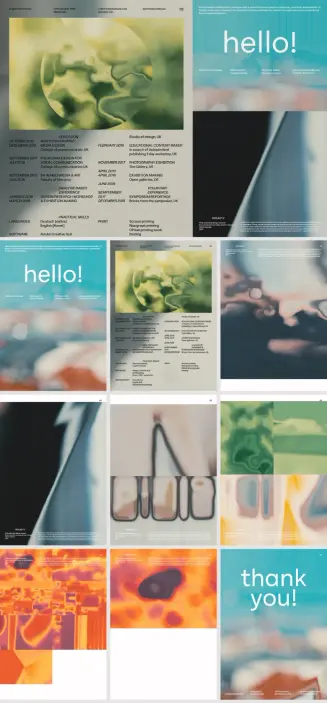
    This Adobe InDesign Digital Marketing Plan Template Is Built for Serious Strategists

    Most marketing presentations fail before they begin. Not because the strategy is weak, but because the format undermines the message. Clients lose confidence. Stakeholders zone out. The work gets dismissed. A strong digital marketing plan layout changes that equation entirely — and the Adobe InDesign template by E-Type is one of the sharpest available right now.

    This is a 12-page, fully customizable InDesign layout designed specifically for digital marketing plans, strategy decks, and campaign presentations. It’s clean, editorial, and built with the kind of structural intelligence that most templates lack. If you need a professional marketing presentation template that looks like it came out of a boutique agency, this is worth your attention.

    But let’s go deeper than just the surface appeal. This template represents something broader: a shift in how marketers and designers think about presentation as a strategic tool, not just a visual afterthought.

    Download the template from Adobe Stock

    Please note that this template requires Adobe InDesign installed on your computer. Whether you use Mac or PC, the latest version is available on the Adobe Creative Cloud website—take a look here.

    This fully customizable digital marketing plan presentation layout by E-Type is available for download as a professional Adobe InDesign template. Download the template from Adobe Stock

    Why Does Your Digital Marketing Plan Layout Matter More Than You Think?

    Structure is a form of communication. The way you organize a marketing plan signals how you think. A messy, inconsistent layout tells the reader — consciously or not — that your strategy is equally muddled. Conversely, a well-designed digital marketing presentation framework implies discipline, clarity, and confidence.

    The E-Type template operates on this principle. Every spread is intentional. Every section has a purpose. Nothing is decorative without also being functional. That’s rare in template design, where ornament usually outpaces utility.

    Think about the last time you sat through a poorly formatted marketing strategy deck. You probably spent more energy decoding the layout than processing the content. Good design prevents that. It removes friction. It lets the strategy speak.

    What the E-Type Digital Marketing Plan InDesign Template Actually Includes

    The template ships with 12 predesigned pages covering every essential section of a complete digital marketing plan. Each page addresses a specific strategic component. Together, they build a coherent, professional narrative from cover to the contact page.

    Cover Page: First Impressions That Hold

    The cover leads with bold, large-format typography set against a controlled black, white, and coral red palette. The headline “Smart Marketing Real Growth” functions as both a placeholder and a directional statement. It communicates confidence immediately. Replace the text and imagery with your own brand, and the impact transfers directly.

    Executive Summary: Setting the Stage

    The executive summary spread uses a split-layout structure. One column carries the oversized display text; the other contains concise mission, vision, and objectives blocks. This Asymmetric Summary Architecture — a layout principle where visual weight contrasts with information density — keeps readers engaged while delivering high-level context fast.

    Company Mission and Goals: Beyond the Boilerplate

    Rather than a plain text dump, this section pairs key performance indicators with supporting copy. The layout introduces metric callouts — bold numerical values like 120K, 45K, 83%, and 3.7K — positioned to draw the eye before the explanatory text. That’s deliberate hierarchy, and it works.

    SWOT Analysis: Four Columns, Maximum Clarity

    The SWOT spread is divided into four equal columns labeled Strengths, Weaknesses, Opportunities, and Threats. Each column carries a header in the brand’s coral red and white palette. The visual symmetry makes comparison intuitive. Clients absorb the analysis faster because the layout maps to how people actually process parallel information.

    Target Audience Profile: Data Made Visual

    This page combines demographic breakdowns — age, hobbies, media consumption, location — with percentage-driven visual elements. The bold “Target Audience” footer anchors the spread. It’s a strong example of what I’d call Demographic Cartography: turning audience data into a readable, scannable visual map rather than a bulleted list.

    Competitor Analysis: Positioning the Playing Field

    The competitor analysis page includes a four-quadrant positioning matrix — plotting competitors across axes of “Easy to Use vs. Difficult to Use” and “Expensive vs. Affordable.” This kind of visual positioning framework communicates competitive context in seconds. Add your actual competitor names, and the slide becomes immediately actionable.

    Marketing Objectives: SMART Framework, Visual Edition

    This spread translates the SMART framework — Specific, Measurable, Achievable, Relevant, Time-Bound — into a clean grid layout. Each element occupies its own cell. The structure prevents overlap and forces concision. Good frameworks deserve clear visual treatment, and this page delivers exactly that.

    Marketing Strategy and Channel Mix

    Here, the template introduces a circular marketing mix diagram (Product, Price, Place, Promotion) alongside a channel breakdown covering Content, Social Media, SEO, and Paid Ads. This Channel Matrix Visualization approach — presenting strategy as interconnected layers rather than separate line items — reflects how modern digital marketing actually functions.

    Content and Promotion Calendar

    A weekly content calendar occupies this spread, organizing posts across four social channels by day type: Story, Blog Post, Video Post, and Reels Video. It’s immediately operational. Drop in your actual content plan and the calendar becomes a working document, not just a slide.

    Budget Allocation: Numbers with Structure

    The budget page presents total project spend alongside category-level breakdowns in a clean table format. The coral red highlight on the budget headline draws attention to the financial commitment without making the page feel alarming. That tonal control — urgent but composed — is a design choice most templates don’t make consciously.

    Measurement and KPIs: Proving the Work

    The KPI spread includes performance bars, timeline graphs, and a structured table for objectives, measures, targets, and initiatives. Reporting slides are notoriously hard to design well. This one manages to look authoritative without becoming overwhelming.

    Contact Page: Closing with Credibility

    A clean contact spread closes the deck with address, phone, and website fields. The inclusion of a strong portrait image maintains the editorial tone through to the final page. Endings matter in presentations, and this one lands properly.

    The Aesthetic Logic Behind This Adobe InDesign Marketing Template

    Style without substance is decoration. Substance without style is noise. The E-Type template finds a balance that’s genuinely hard to engineer.

    The dominant palette — coral red, off-white, and charcoal — is bold without being aggressive. It communicates urgency and modernity while remaining professional. The typography scales dramatically between section headers and body copy, creating strong visual rhythm across all 12 pages.

    This approach reflects what I’d define as Editorial Marketing Design: a philosophy borrowed from magazine and editorial layout, applied to business presentation. The result is a document that reads like a premium publication rather than a corporate slideshow.

    Minimalism is often misunderstood as emptiness. Here, it means restraint — using only the elements that earn their place. Every rule, every weight shift, every color block serves a structural purpose. That discipline is what separates a professional marketing presentation template from a generic one.

    How Easy Is It to Customize This InDesign Marketing Template?

    Adobe InDesign’s paragraph styles, master pages, and object styles make batch customization straightforward. Replace the placeholder text with your own copy. Swap the placeholder images with your photography, client visuals, or branded graphics. Adjust the color swatches to match your brand palette. The entire 12-page deck can be customized in a few hours.

    All text blocks are fully editable. All images are placeholder assets — simply replace them using InDesign’s linked image workflow. If you’re working with a brand system, you can apply your typefaces by reassigning the paragraph styles globally. The template accommodates that without forcing a rebuild from scratch.

    For designers who regularly produce digital marketing strategy documents, this kind of modular customization framework — where each page functions independently but coheres as a system — is exactly what efficient production requires.

    Who Actually Needs a Professional Digital Marketing Plan Template Like This?

    The honest answer: more people than admit it. Marketing strategists, brand consultants, agency creative directors, freelance designers, in-house marketing leads, and business founders who pitch their own campaigns all benefit from a template at this level.

    The alternative — building a presentation from scratch for every client or campaign — is time-consuming and inconsistency-prone. Templates don’t diminish the work. They protect the thinking by giving it a reliable structure to inhabit.

    This template is also worth serious consideration for anyone producing annual marketing reports, quarterly strategy reviews, new business pitches, or brand audit presentations. The section structure maps cleanly onto all of those formats with minor adjustments.

    The Strategic Value of Presentation Design in Modern Marketing

    There’s a concept I’d call Presentation Capital — the accumulated credibility a brand or individual builds through the consistent quality of how they present ideas. It compounds over time. Clients and stakeholders develop expectations. When those expectations are consistently met with high-quality, well-structured materials, trust increases.

    Conversely, a single poorly designed presentation can erode months of good work. That’s not an exaggeration. Decision-makers make fast judgments about competence based on visual presentation. A digital marketing plan layout that looks professional signals that the strategy behind it is equally considered.

    This template builds Presentation Capital. It positions its user as someone who takes the communication of strategy as seriously as the strategy itself.

    Adobe InDesign vs. Other Platforms for Marketing Templates

    PowerPoint and Keynote are familiar, but they cap design quality at a ceiling that InDesign doesn’t have. Adobe InDesign offers precise typographic control, advanced color management, superior grid systems, and output quality that holds across print and digital formats.

    For a professional marketing presentation template intended for client delivery, agency pitches, or PDF distribution, InDesign produces a noticeably better result. The difference shows in typography rendering, color accuracy, and layout precision. Clients notice — even when they can’t articulate why.

    If you’re already in the Adobe ecosystem — using Photoshop for images, Illustrator for graphics — InDesign integrates naturally. The placed images workflow, the shared color libraries, and the cross-application consistency: it all reduces friction in production.

    Future-Proofing Your Marketing Presentation Strategy

    Looking ahead, the demand for high-quality digital marketing plan templates will accelerate, not stabilize. As AI tools democratize strategy generation, the differentiator shifts to presentation quality. Anyone can produce a marketing framework. Fewer people can present one compellingly.

    My prediction: within two to three years, marketing presentation design will be recognized as a distinct professional competency — separate from both graphic design and marketing strategy, but essential to both. Templates like this one sit at the center of that emerging space.

    Download the template from Adobe Stock

    The brands and consultants who invest now in structured, high-quality presentation systems will hold a visible advantage. Not because presentation is everything. But because it’s the first thing anyone sees.

    Frequently Asked Questions About This Digital Marketing Plan Adobe InDesign Template

    What software do I need to use this template?

    You need Adobe InDesign to open, edit, and customize this template. It is not compatible with PowerPoint, Keynote, or Google Slides. An active Adobe Creative Cloud subscription gives you access to the latest version of InDesign.

    How many pages does the template include?

    The template includes 12 fully predesigned pages covering all major sections of a comprehensive digital marketing plan, from the executive summary through to the contact page.

    Can I change the colors and fonts?

    Yes. All colors are editable through InDesign’s swatches panel. Fonts can be changed via paragraph styles for global updates. The template is fully customizable to match any brand system.

    Are the images and text in the template final?

    No. All images and text are placeholder content. You replace them with your own photography, graphics, and copy. The layout and structure remain intact while you populate it with your actual content.

    Who created this template?

    The template was designed by E-Type, a contributor to Adobe Stock. It is available for download through Adobe Stock’s template library.

    Is this template suitable for client presentations?

    Yes. The professional, minimalist design and comprehensive structure make it well-suited for client-facing marketing strategy presentations, agency pitches, and internal campaign planning documents.

    Can I use this template for print as well as digital?

    Adobe InDesign supports both print and digital output. The template can be exported as a high-resolution PDF for print or as an interactive PDF for digital distribution.

    How long does it take to customize the full template?

    With a clear strategy and brand assets ready, an experienced InDesign user can customize the full 12-page template in two to four hours. First-time InDesign users may need additional time to familiarize themselves with the application’s editing workflow.

    Does the template include a competitor analysis framework?

    Yes. The template includes a four-quadrant competitor positioning matrix as part of its dedicated competitor analysis page. You can replace the placeholder competitor labels with your actual market data.

    Where can I download this digital marketing plan InDesign template?

    The template is available on Adobe Stock. You can access it through an Adobe Stock subscription or purchase it as a single asset directly from the platform.

    Check out other design templates for professional creatives here at WE AND THE COLOR.

    #AdobeInDesign #AdobeStock #design #digitalMarketing #graphicDesign #InDesignTemplate #presentation