 daieno bika
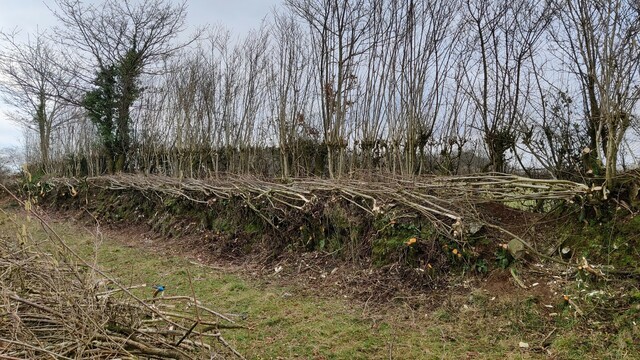
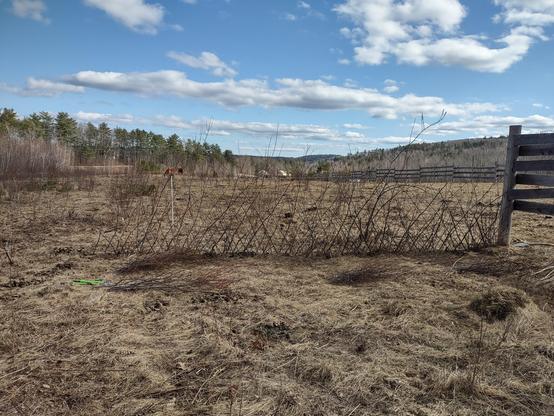
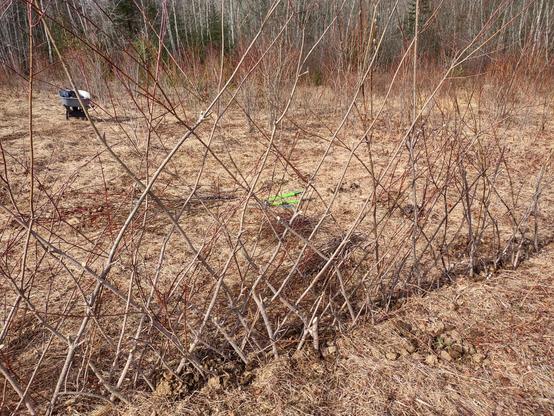
Yesterday was a good day for cutting willow stakes and stabbing them back into the ground. So I spent four and a half hours doing so, and accomplished this!
It’s maybe 20 feet of #fedge that will eventually become an actual hedge to fence in the horses.
For now it needs protection in the form of an electric fence to keep them from chewing off all the growing parts before it gets established. It will take me multiple seasons to extend it all the way to where I need it to go.
Why do this instead of building more board fencing, you ask? (No one asked. I’m going to tell you anyway.) Well, the land our rural co-op exists on is very hilly, which means some parts are high and dry - great for putting posts in the ground and having them last for decades - and some parts are low and soggy - terrible for putting fence posts in because they will rot. Also, board fencing can be pricey, even if we’re doing all the work to install it ourselves.
But we still need fencing in those areas to keep the ponies contained. I don’t like using electric fencing for perimeter fencing. I want a real physical barrier that won’t suddenly stop working when it’s icy, snowy, the charger isn’t working, etc etc. I also don’t super like having the horses get shocked. Which does happen to poor Henry sometimes, because he can’t see very well and doesn’t always register that the fence is there before he walks into it, and then he gets a nasty surprise. There are things I can do to mitigate each of these problems, but… long term, I want to reduce the use of the zappy fence as much as possible.
Luckily, willow will grow into a nice coppiced thicket with a bit of encouragement, and we have lots of it growing here! I can cut whips from right nearby and use them to build living fencing that will benefit more creatures of our landscape than just the horses, and it doesn’t even damage the areas I harvest from because they’ll sprout right back up with even more stems. I think this is so cool. I can hardly wait to see it sprouting once the weather warms up a bit more!
I’m also looking forward to getting my hands on Paul Lamb’s new book, Of Thorn & Briar, about the craft of hedge laying in the UK. This willow weaving thing I’m doing isn’t quite that, but it’s not entirely dissimilar, either.
#hedge #OfThornAndBriar #HedgeLaying #LivingFence #willow #coppice #homesteading #sustainability #PastureManagement #LivingWithTheLand #FenceWeaving #grow
 Pollinators
 Dan
Dan Kris
Kris Jonathan Wright
 Nathan Nelson
 Habitat Aid Ltd.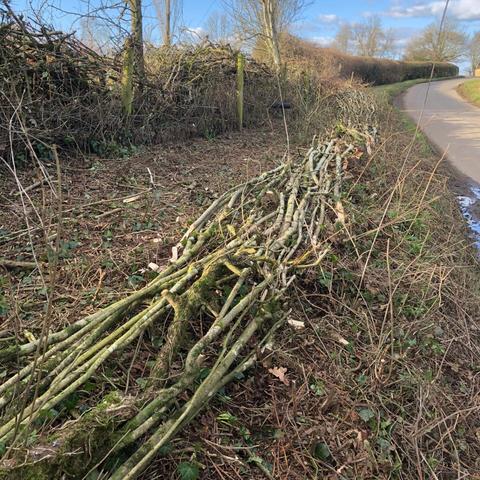

 James
James