 kinyutaka
Would you like to play a game?
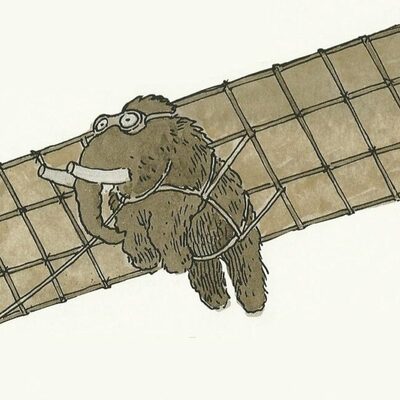
5 images of #AIArt made by typing the prompts backward
Can you #GuessThePrompt?
Images 1/2
Would you like to play a game?
5 images of #AIArt made by typing the prompts backward
Can you #GuessThePrompt?
Images 1/2
In the vast, peculiar universe of human history, where events, much like interstellar hitchhikers, often find themselves in unexpected places, there was an extraordinary, and largely improbable, occurrence known as the Spanish Revolution. Somewhere in the early 20th century, nestled in a corner of the Earth called Spain, the revolution unfolded in a manner so utterly Adamsesque, that one could hardly believe it wasn't designed by an Infinite Improbability Drive.
In a world that had, for the most part, decided that capitalism and state control were the only means by which societies could be managed (not unlike a Vogon constructor fleet deciding to demolish Earth for a hyperspace bypass), there emerged a group of rather idealistic and tenacious beings called the Confederación Nacional del Trabajo (CNT). These anarchists believed in a different kind of world, one where workers called the shots and hierarchical structures were as obsolete as digital watches or a bowl of petunias falling through space.
While the universe has never been particularly kind to idealists, it seemed that in the mid-1930s, the cosmic dice had rolled in their favor. The Spanish Revolution began to take root, and the CNT found itself in a position to put their rather unconventional ideas into practice. In this brief and shining moment, industries were collectivized, and workers managed their own affairs as if someone had handed them the keys to the universe and said, "Why don't you give this whole self-governance thing a whirl?"
Of course, much like Arthur Dent discovering that Earth was about to be destroyed, the good times were not to last. The universe, as it is wont to do, threw a wrench into the works in the form of a brutal civil war. The anarchists, valiant though they may have been, found themselves caught between the hammer of the fascists and the anvil of the communists, both of whom had as much interest in an anarchist utopia as a Vogon has in poetry appreciation.
And so, the Spanish Revolution, like so many improbable phenomena, fizzled out, leaving behind only whispers of what could have been, and perhaps a slightly bitter taste in the mouths of those who had dared to dream. In the great cosmic joke that is human history, the Spanish Revolution and the CNT were but a fleeting moment of anarchistic fancy – a reminder that sometimes, even in the face of overwhelming odds, beings will still strive for a better world, even if the universe appears largely uninterested.
As the great philosopher and galactic hitchhiker Douglas Adams would likely have remarked, "So long, and thanks for all the anarchism."
 BJ Kennedy
 Super User Do