Sailor’s Eyeball (Valonia ventricosa): The World’s Largest Single-Celled Organism

Quick Facts: Sailor’s Eyeball

Scientific Name Valonia ventricosa Common Names Sailor’s Eyeball, Sea Grape, Bubble Algae Class Green Algae (Chlorophyceae) Size Up to 5cm (Golf ball size) Location Tropical zones (Caribbean, Indo-Pacific) Key Feature It is a single massive cell

The Biological Anomaly

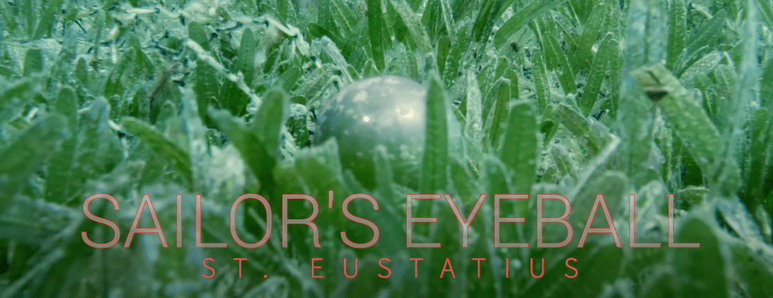
Spotting a Sailor’s Eyeball is a unique experience because you are looking at a freak of nature. Unlike most marine plants that are made of millions of microscopic cells, the Valonia ventricosa is a single, massive cell.

This unique biology creates its signature metallic shine. Because there are no internal cell walls to scatter light, the entire organism reflects the blue ocean water like a polished mirror. It is essentially a living, liquid-filled balloon.

https://youtu.be/p11XgD3pu5s

Field Observation: Sint Eustatius

I filmed this particular specimen off the coast of Sint Eustatius in the Caribbean. Unlike many that are firmly wedged into the reef, this one was drifting and bouncing freely among the seagrass.

Watching it roll with the gentle surge highlights just how delicate it is. It really does behave like a fluid-filled balloon, completely at the mercy of the current. It’s a rare opportunity to see one fully exposed like this, rather than hidden inside a dark crevice.

Camera Gear & Settings

  • Camera: Panasonic GH5
  • Lens: LUMIX G Series 14-42mm
  • Housing: Nauticam
  • Audio: Original composition (Logic Pro X)

FAQ: Is the Sailor’s Eyeball Dangerous?

No. The Sailor’s Eyeball is not dangerous to divers or humans. It is not venomous and does not sting.

However, divers should avoid squeezing them. Because the organism is a single cell, “popping” it releases thousands of spores into the water column. In some conditions, this can cause the algae to spread rapidly and overgrow surrounding coral.

#bubbleAlgae #greenAlgae #Nature #sailorSEyeball #seaGrape #underwaterBall #ValoniaVentricosa
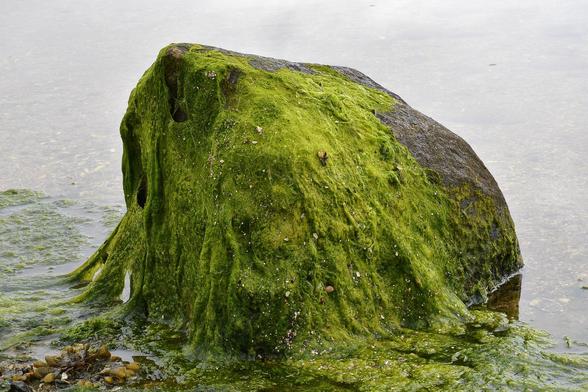
For 6 years, the proliferation of #GreenAlgae in the Bay of #Morlaix (Finistère) has worried #oyster farmers, but this year, "it's unprecedented". Despite efforts to clean the oyster beds, losses could reach 40%. With the help of associations, analyses and legal action are being taken.
https://france3-regions.francetvinfo.fr/bretagne/finistere/morlaix/cette-annee-c-est-une-veritable-catastrophe-les-algues-vertes-etouffent-les-huitres-dans-la-baie-de-morlaix-3015188.html
"Cette année, c'est une véritable catastrophe", les algues vertes étouffent les huîtres dans la baie de Morlai

Depuis 6 ans, la prolifération des algues vertes en baie de Morlaix (Finistère) inquiète les ostréiculteurs mais cette année, "c'est du jamais vu". Malgré les efforts pour nettoyer les parcs à huître, les pertes pourraient...

France 3 Bretagne

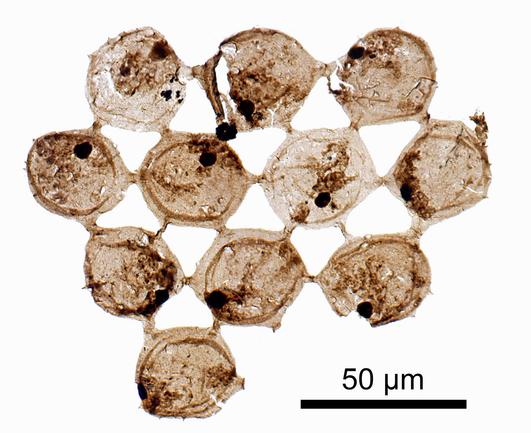
Bizarre new fossils shed light on ancient plankton https://phys.org/news/2023-10-bizarre-fossils-ancient-plankton.html

Colonial #GreenAlgae in the #Cambrian #plankton https://royalsocietypublishing.org/doi/10.1098/rspb.2023.1882

"The #fossils have the same sort of colonial structure as the modern #algae, with cells linking together, explaining their neat, geometric arrangements."

#protists #microbes #microorganisms #fossil #plants

Bizarre new fossils shed light on ancient plankton

A scientist from the University of Leicester has discovered a new type of fossil that reveals life in the oceans half a billion years ago. The tiny organisms, detailed in a new study in the journal Proceedings of the Royal Society B: Biological Sciences, resemble modern-day algae and might also give scientists an insight into the climate changes that affected our oceans.

Phys.org

Who knew that my holiday would consist of a quick "course" in swimming pool cleaning and maintenance. 😂

#holiday #swimmingpool #Greenalgae

Using a green algae capsule to deliver chemotherapeutic drugs to a mouse via the GI tract

A team of researchers at the University of California, San Diego, has developed a green algae capsule for delivering chemotherapy drugs to the gastrointestinal (GI) tract. In their study, published in the journal Science Robotics, the group delivered drugs via the capsule, which passed through the stomach without being digested.

Phys.org

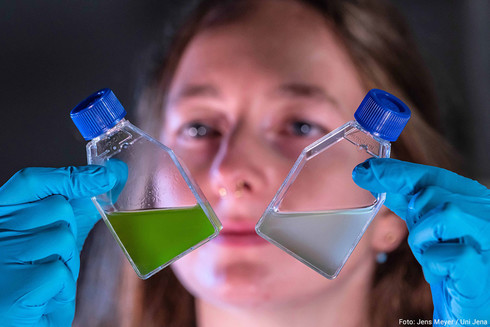
The #bacterial #toxin protegencin, which is deadly for #greenalgae, disorientates and immobilizes them. Researchers @[email protected] found this out using #Raman #spectroscopy. They have published their results in the scientific journal @[email protected].

➡️ https://www.uni-jena.de/en/210816_Protegencin

Bacterial toxin blinds algae

Jena research team discovers natural product from soil bacteria that kills algae