🐦🌿 Hope for wildlife! France’s 2018 ban on bee-killing neonicotinoids is paying off—insect-eating birds like blackbirds & chaffinches are up 2-3%. First clear sign the EU-wide ban is helping reverse decades of decline. Nature is bouncing back! Read more: https://www.theguardian.com/environment/2025/nov/17/france-wildlife-insect-bird-numbers-rise-neonicotinoid-pesticide-ban-aoe

@goodnews

#GoodNews #BirdRecovery #PesticideBan #GoodNewsForNature #BiodiversityWin
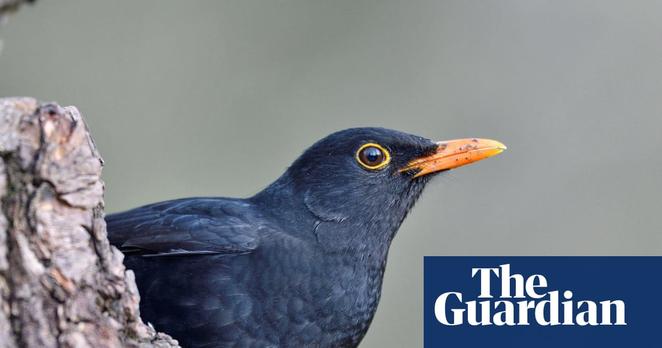
France’s birds start to show signs of recovery after bee-harming pesticide ban

Analysis shows small hike in populations of insect-eating species after 2018 ruling, but full recovery may take decades

The Guardian

RT by @ciarancuffe: ‼️ Just six months after announcing Ireland's biggest EVER protected area for birds, I have some #GoodNewsForNature today that surpasses even that! 'Seas off Wexford' is Ireland's NEW Special Protection Area for birds, and at 305,000 hectares is bigger than County Wexford itself.

🐦🔗: https://nitter.cz/noonan_malcolm/status/1745400534910025824#m

[2024-01-11 11:01 UTC]

#ClimateScienceNews
Europe 🇪🇺 is setting the pace for a citizen led green transition‼️ The remainder of this tiny blue planet will have to play catch-up.
#GoodNewsForNature
https://www.anthropocenemagazine.org/2023/03/inside-europes-people-powered-green-transition/
Inside Europe’s people-powered green transition

A quantitative analysis of citizen-led sustainable energy initiatives reveals surprising heft

Anthropocene | Innovation in the Human Age
The astonishing marsh-building power of the humble mussel

Researchers transplanted 200,000 of them and tracked the elevation of marshlands over 3 years; they contributed to new land at 5x the predicted rate.

Anthropocene | Innovation in the Human Age
Panama protects over 54% of its oceans with the expansion of Banco Volcán

Within the framework of the Our Ocean Conference on Mar. 2-3, 2023 in Panama City, Panama's President Laurentino Cortizo and Minister of Environment Milciades Concepción added 36,058 square miles to the Banco Volcán marine protected area in the Caribbean. During the last two decades, researchers at the Smithsonian Tropical Research Institute (STRI) along with local and international collaborators have offered much of the science backing Panama's successful proposals to create the MPA's bringing more than 50% of its ocean waters under some form of management or protection.

Phys.org
#EnvironmentScienceNews Communications does work‼️ A single 50 minute presentation to university students on the negative environmental impacts of eating meat yields a 9% reduction in their consumption after 3 years.
#GoodNewsForNature
https://phys.org/news/2023-03-students-ate-meat-years-negative.html
Students ate less meat in the three years after hearing talk on its negative environmental impacts

A trio of climate scientists from Occidental College, Claremont Graduate University and the University of California, respectively, has found that after a 50-minute talk outlining the negative environmental impacts of raising and consuming meat, students ate on average 9% less meat over the following three years. In their paper published in the journal Nature Food, Andrew Jalil, Joshua Tasoff and Arturo Vargas Bustamante describe analyzing the eating habits of student volunteers.

Phys.org
#GoodNewsForNature
Given that our oceans are the best direct air #CarbonDioxide capture system we have and the concentration of ocean carbon is over 100 times greater than in the atmosphere. MIT scientists 🇺🇸 are concentrating on efficiently removing #CO2 from our oceans, and they are making great progress‼️ Let #MotherNature do the heavy lifting with direct air carbon capture.
https://www.sciencedaily.com/releases/2023/02/230216172243.htm
How to pull carbon dioxide out of seawater: A new method for removing the greenhouse gas from the ocean could be far more efficient than existing systems for removing it from the air.

Researchers may have found the key to a truly efficient and inexpensive mechanism for removing carbon dioxide from seawater. The method could be far more efficient than existing systems for removing the greenhouse gas from the air.

ScienceDaily
#GoodNewsForNature
Sri Lanka will ban single-use plastics to protect wild elephants 🐘 and deer 🦌 ✅
#BanSingleUsePlastic
#WinWinForNature
https://phys.org/news/2023-02-sri-lanka-single-use-plastics-elephants.html
Sri Lanka bans single-use plastics to save elephants

Sri Lanka will ban single-use plastics, the government said Tuesday, in a move that follows a series of wild elephant and deer deaths from plastic poisoning.

Phys.org
#WinWinForNature
#EnvironmentScienceNews
The #California🇺🇸 wintering #Monarch population is on a rebound for the second year in a row‼️ 330,000 butterflies butterflies counted making it the highest in six years.
#GoodNewsForNature
https://phys.org/news/2023-02-monarch-butterflies-wintering-california-rebound.html
Monarch butterflies wintering in California rebound

The population of western monarch butterflies wintering along the California coast has rebounded for a second year in a row after a precipitous drop in 2020, but the population of orange-and-black insects is still well below what it used to be, researchers announced Tuesday.

Phys.org
#ClimateScienceNews
#StanfordUniversity 🇺🇸 announces major breakthrough in #lithium #battery technology‼️ ✴️Solid electrolyte lithium batteries✴️ are light, have a huge charge capacity, recharge quickly and are fireproof, exactly what modern #ElectricVehicles require. However, they are subject to a mysterious short-circuiting failure. It is nothing more than mechanical stress...and now they are working on solutions.
#GoodNewsForNature
https://scitechdaily.com/stanford-breakthrough-paves-way-next-generation-lithium-metal-batteries-that-charge-very-quickly/
Stanford Breakthrough Paves Way Next-Generation Lithium Metal Batteries That Charge Very Quickly

New lithium metal batteries with solid electrolytes are lightweight, inflammable, pack a lot of energy, and can be recharged very quickly, but they have been slow to develop due to mysterious short-circuiting and failure. Now, researchers at Stanford University and SLAC National Accelerator Laborato

SciTechDaily