
Golpar, cont.

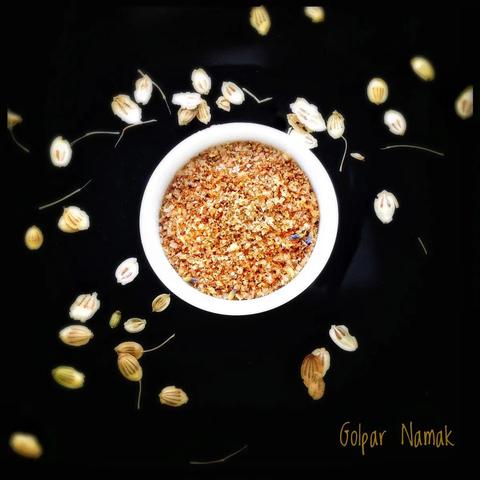
The powder is usually mixed with salt for an intriguing seasoning called Golpar Namak.

Slightly bitter, earthy and woody, you will find it quite aromatic too. You might be able to buy the powder, but I can only get the seeds and grind it myself.

I got chatting to a gentleman in the local Afghan shop, and he says that Golpar is not only used in Middle Eastern countries, but is also known and commonly used in Eastern European countries too. It is sometimes called Angelica seeds, but that is incorrect.

Golpar Namak is the name of the powder mixed with salt. It is a great seasoning, useful for almost anything, and especially good with beans, grains, rice and lentils, as well as cucumber and pomegranate kernels. If you can find sour plums, use it with them too. Put some in your preserves and chutneys.
#FromTheKitchen #IranianFood #Food #Golpar

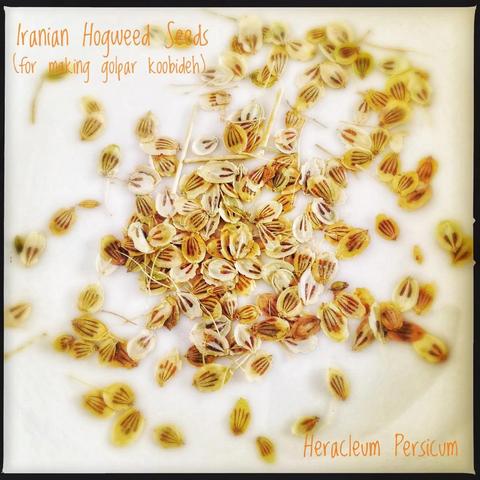
These are the seeds of the Irani Hogweed. Often they are called Angelica seeds, but this is a mistake. Angelica is a herb of another variety entirely.

The seeds are available from Afghani and Middle Eastern groceries, and some groceries specialising in German and European products.

The whole Irani Hogweed Seed is often used in pickles. For many other uses, they are ground into a powder, Golpar Koobideh, which has an earthy, slightly bitter and sour taste.

It is used in Middle Eastern and some European cooking, and goes excellently with broad beans, pomegranate, mushrooms, potatoes and brown lentils. It is also used with rice, vegetables and soups.

One of the most popular uses of this particularly Persian spice is to sprinkle golpar over cooked fava beans. Also to sprinkle golpar over a bowl of pomegranate kernels. It mixes well into yoghurt, and is commonly used in lentil soup.

#FromTheKitchen #IranianFood #Food #Golpar