
On Speaking Terms with the Living God

The Bible in a Year

“Abram fell on his face; and God talked with him.”
Genesis 17:3

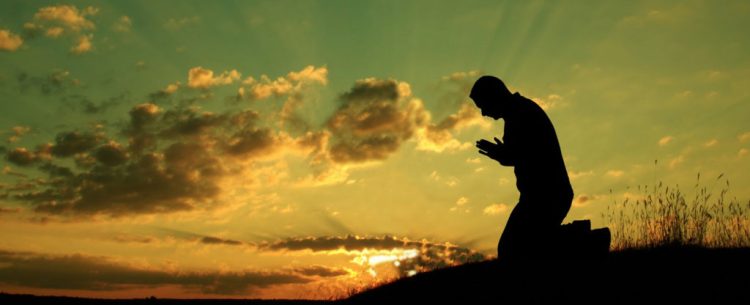
One of the quiet longings that surfaces again and again as we read Scripture together through the year is the desire to hear God speak—not audibly, perhaps, but personally, clearly, and faithfully into the circumstances of our lives. Genesis 17:3 offers a strikingly simple picture of what that kind of communion looks like. Abram does not argue, negotiate, or present credentials. He falls on his face. The posture is telling. Before God speaks further about covenant, identity, and promise, Abram’s body preaches a sermon of its own. The text does not say Abram asked God to speak, but that God talked with him. The initiative is divine, yet the posture is human, and together they reveal a pattern repeated throughout Scripture: God speaks where reverence, humility, and worship converge.

Being on speaking terms with God is not portrayed in the Bible as a mystical achievement reserved for spiritual elites. It is presented as one of life’s great blessings, but also as a relationship shaped by disposition of heart. The narrative makes clear that God does not speak indiscriminately. Abram’s response to God’s renewed covenant promise is gratitude. God has just reaffirmed His intention to make Abram the father of many descendants, despite years of waiting and apparent impossibility. Abram’s falling on his face reflects the ancient Near Eastern expression of thankfulness and acknowledgment. Gratitude opens the door to deeper revelation. As the text continues, God speaks more—clarifying the covenant, renaming Abram, and unfolding promises yet to come. Gratitude, then, is not a polite afterthought; it is a spiritual posture that invites continued communion. Ungratefulness, by contrast, dulls spiritual hearing. When entitlement replaces thanksgiving, Scripture often grows quiet, not because God has withdrawn capriciously, but because the heart is no longer receptive.

Closely tied to gratitude is humility. Falling on one’s face is an embodied confession: God is God, and I am not. Abram’s humility is not performative; it is instinctive. Standing upright before God would have implied equality. Bowing low confesses dependence. Scripture consistently affirms that humility attracts divine nearness. “Humble yourselves in the sight of the Lord, and he shall lift you up” (James 4:10). Peter echoes the same truth when he writes, “God resisteth the proud, and giveth grace to the humble” (1 Peter 5:5). Pride disrupts fellowship because it assumes self-sufficiency. Humility, however, creates space for grace. God does not converse with pride; He confronts it. But where humility is present, communication flourishes, because humility listens rather than demands.

The third posture evident in Abram’s response is worship. To fall before God is to acknowledge His worth, not merely His power. Worship is not an accessory to faith; it is its orientation. We were created to worship, and Scripture is unambiguous that God actively seeks worshipers. Jesus later articulates this when He says, “The Father seeketh such to worship him” (John 4:23). Worship aligns the heart with reality—God at the center, everything else in its proper place. When worship is neglected, faith tends to drift into self-management. The study rightly notes that habitual neglect of worship is not neutral; it reshapes our loves. Choosing the pleasures of the world over gathered worship is not merely a scheduling issue but a theological one. It reflects a reluctance to bow, and that reluctance inevitably affects our sensitivity to God’s voice.

Reading this passage as part of a year-long journey through Scripture presses an important question into daily life: am I cultivating the kind of posture that keeps me on speaking terms with God? Gratitude recalibrates how I interpret my circumstances. Humility governs how I see myself before God and others. Worship reorients my priorities and affections. These are not abstract virtues; they are daily disciplines expressed in prayer, posture, and practice. As John Calvin observed, “The true knowledge of God is born of obedience.” Hearing God’s voice is less about technique and more about alignment.

Genesis 17 reminds us that when God speaks, He often does so in moments of surrender rather than control. Abram’s face-to-the-ground posture precedes one of the most significant covenantal moments in Scripture. Names change. Futures expand. Identity deepens. God speaks because Abram is ready to receive, not because Abram has mastered a formula. For those walking faithfully through the Bible this year, the encouragement is both sobering and hopeful. God still speaks. The question is whether we are cultivating lives that listen.

For further reflection on hearing God’s voice through Scripture and posture of heart, see this helpful article from The Gospel Coalition:
https://www.thegospelcoalition.org/article/how-does-god-speak-today/


FEEL FREE TO COMMENT, SUBSCRIBE, AND REPOST, SO OTHERS MAY KNOW

#BibleInAYear #Genesis17 #hearingGod #humilityBeforeGod #spiritualDisciplines #worshipAndGratitude
Genesis 17, 5/24/2025 - Joplin Server

For the audio and visual of this sermon:

Psalm 22:22-23  Praise God, you that fear God; stand in awe of Abba God, O offspring of Israel; all you of Jacob’s line, give glory. For God does not despise nor abhor the poor in their poverty; neither does Abba God hide God’s face from them; but when they cry to Abba God, God hears them.

Introduction

Last week our focus was on the world and its mess. In this global chaos and tumult, it’s easy to lose sight of our own national crises. Sometimes, we will find some sort of macabre comfort casting our gazes outward toward wars located across the planet because we it allows us to ignore what’s going on here within our own boarders (or just outside of them). We’re eager to support causes and advocate for cease-fire, we quickly gather money and supplies and send them across oceans, and we pray and plea for an end to the loss of life and carnage. We throw our weight in the ring backing organizations uphold our personal values, sending aid and assistance to war-torn countries.

None of this is wrong; and I am not criticizing it. However, the error comes when our attention is so solidly fixed elsewhere that we forget our nation is also quite chaotic right now. All I have to say is, “election year”; I bet I solicited a cornucopia of feelings and sensations as 2024 begins to draw its political battle lines—each side suiting up to take the victor’s seat. Each election draws these lines darker and deeper. Each election creates new mythologies and falsehoods burying the truth—whatever that is—deeper in the ground. An election year reminds all of us that our bodies and our lives do not really matter in battles for the seat; many of our bodies are just collateral damage in the debates about legitimacy and alterity. Anyone here feel certain they’re seen, heard, and truly represented? Or are we just chips in a wager on the political poker table where winner takes all?

So much feels hopeless. Anyone feel safe? Our classrooms (from preschools to universities) aren’t safe, not with easy access to military weapons. School bathrooms aren’t safe, not with antiqueer and homophobic rhetoric inspiring violence against our queer children. Grocery stores aren’t safe; roads aren’t safe either. We live in a world that is caught on a seesaw of anger and fear; each time one side drops to the ground it sends out tumultuous waves and ripples of violence, death, and chaos killing, maiming, and disorienting everyone. Every day feels like a gamble, will we all come home tonight or will sorrow and grief darken my door? I feel as if I’m striving to cling to anything, but it’s all slipping away from under my fingers. There’s a pit in my stomach that yells and screams: Go back! Run back to what was! Go back to that shore that was once comfort! Go back to not knowing, go back to when it was easier, go back to when things were better…I don’t care where, just go back to where it’s safe to just live…

Human beings have a hard time fighting against this lure and seduction of the romanticized past; the more we fight the more stuck we become. We are buried in the past, captive to what was.

Genesis 17:1-7, 15-16

…God said to him, “As for me, this is my covenant with you: You shall be the ancestor of a multitude of nations. No longer shall your name be Abram, but your name shall be Abraham; for I have made you the ancestor of a multitude of nations. I will make you exceedingly fruitful; and I will make nations of you, and kings shall come from you.’…“As for Sarai your wife, you shall not call her Sarai, but Sarah shall be her name. I will bless her, and moreover I will give you a son by her. I will bless her, and she shall give rise to nations; kings of peoples shall come from her.”

In our story in Genesis, Moses tells us about the third statement of the covenant between God and Abraham. The first one takes place in Genesis 12 where God initially summons Abram to follow God and God will bless him making him into a great nation. The second time is when this covenant is made more specific in chapter 15. Then our text in chapter 17 is another statement with no reference to the previous statements but incorporating two new aspects to the covenant: a sign will accompany this covenant (circumcision) and a direct mention of Sarai.[1] This iteration of the covenant between Abram and God bears more resemblance to God’s covenant with Noah than it does to the other two summons and covenants.[2]

Moses records God’s discourse to Abram opening with “‘I am El Shaddai.’” This name may appear out of nowhere, but it illuminates the dating of the text. There is some belief that this name means, “‘God, the One of the Mountain,’”[3] and is the way the patriarchs (not Moses) would have experienced God; YHWH—the four-letter word translated as the Lord—would be the word for God known among Moses’s era.[4] So, El Shaddai shows up and speaks to Abram. Abram, at 99, throws himself on his face in the presence of God. And God continues to speak by restating the previous pacts with Abraham. However, this time God changes Abraham’s name because of the future fulfillment of this pact; thus, Abram’s name change to Abraham and Sarai’s change to Sarah mark out their shared destiny: they who are childless will be the progenitors of nations and royal dynasties.[5] This is God’s eternal covenant with Abraham and Sarah and all their offspring and this everlasting covenant will not only bless Abraham and Sarah and their descendants but also all the nations.

God summons Abram and Sarai to walk in a new way, to follow God and walk in God’s ways. This is not a backwards motion. They are called further forward and further into the covenant with God. “Abraham threw himself on his face and laughed, as he said to himself, ‘Can a child be born to a man a hundred year sold, or can Sarah bear a child at ninety?’” (v. 17). They are asked to walk forward by faith and love, to take hold of God’s hand and descend into the mysteriously impossibile so that God can birth divine possibility through them. They are summoned to die to what they know, all that is comfortable and familiar, even die to that which is scientifically possible, so that they can proceed headfirst into the void of uncomfortable and unfamiliar, into the unknown. Abraham and Sarah must cling to God and descend into this profound mystery.

Conclusion

God is not stuck in the past; God is not captive to what was. God summons and coaxes forward God’s beloved—all creation, from the teensiest, weensiest critter to the biggest, ziggest beast; from the ones that live deep in the oceanic abyss to the ones residing on the peakiest of mountains. God woos the beloved forward, into something NEW, into something new and of God because backward is the stuff of humanity that has long ago expired, gone sour, become septic. For Abram and Sarai, the only way is forward by faith with God as Abraham and Sarah. God does not desire to do an old thing with God’s people; God desires to do new things with his people in a new way and to have them be known by new names.

For us, in our situation, facing what we are facing in our land, the chaos and tumults, the death and destruction, the fear and the anger, we who follow Christ, follow a new and different way of God. Our land is deeply threatened by the old narratives, desperately trying to keep themselves relevant; but they’re not. To follow in these ways is to walk in the way of hopelessness. Rather, we are exhorted to walk with God, to follow in God’s ways, to follow Christ, to live according to the Spirit of love, life, and liberation so that we can bring God’s liberation, life, and love to everyone caught in captivity, death, and indifference as if their lives were expendable (both young and old). However, we cannot do it if we are dead set on going backward, desperately clinging to our comforts and ease. We must let faith lead us down into the darkness, into the impossible so that God may bear through us God’s divine possibility.

Beloved, God calls, may our ears perk up. God comforts, may our souls be soothed. God speaks, may our ears delight in comforting words. God comes, may we run to Abba God. God is doing a new thing in this man from Nazareth, Jesus, the beloved, in whom, by whom, and through whom we are being coaxed forward, released from the past and liberated from what was…

[1] Jon D. Levenson, “Genesis,” The Jewish Study Bible Jewish Publication Society Tanakh Translation, eds. Adele Berlin and Marc Zvi Brettler (Oxford: OUP, 2004), 37. “Nothing in ch 17 indicates any awareness that the covenant mandated therein has, in fact, already been established two chapter earlier. In our chapter, the two chief innovations are that the covenant acquires a sign (circumcision, v. 10) and that it is Sarah who, despite her advanced age, shall bear the promised son (vv. 15-16, 19).”

[2] Leveson, “Genesis,” 37. “The closest parallel to ch 17 in style and diction is 9.1-17, the account of the covenant with Noah.”

[3] Leveson, “Genesis,” 37. , “El Shaddai is believed to have originally meant ‘God, the One of the Mountain’ and thus to have expressed the association of a deity with his mountain abode well known in Canaanite literature.”

[4] Leveson, “Genesis,” 37. “…the four-letter name translated as Lord was disclosed only in the time of Moses (Exod. 6.2-3), and El Shaddai was the name by which God revealed Himself to the patriarchs.”

[5] Leveson, “Genesis,” 37-38. “The change of name here and in v. 15 signifies change in destiny: The Childless couple will become the ancestors of many nations, including royal dynasties (v. 6).”

https://laurenrelarkin.com/2024/02/25/buried-in-the-past-captive-to-what-was-national-chaos/

#AbrahamAndSarah #AbramAndSarai #Anger #Chaos #Covenant #DeathToLife #Fear #Following #Genesis17 #Hope #Hopelessness #Jesus #JesusTheChrist #JPSStudyBible #NationalChaos #Pact #Void

“Buried in the Past; Captive to What Was”: National Chaos

Psalm 22:22-23  Praise God, you that fear God; stand in awe of Abba God, O offspring of Israel; all you of Jacob’s line, give glory. For God does not despise nor abhor the poor in their …

LaurenRELarkin.com