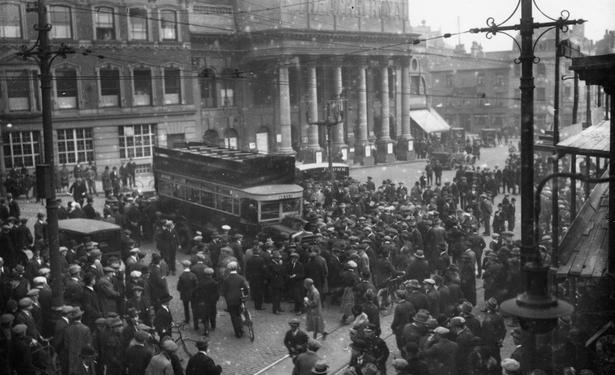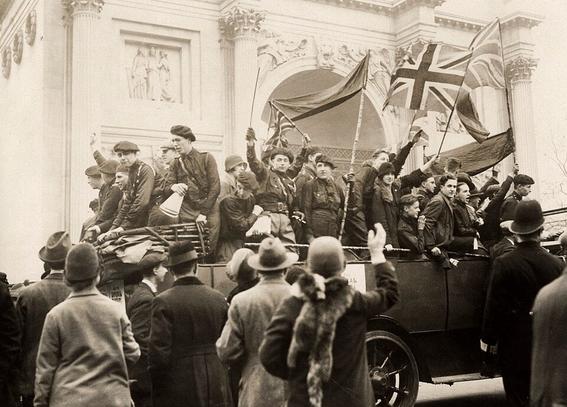
#OnThisDay: 6 May 1926 first issue of Nottingham's twice-daily Strike Bulletin urged workers to ignore "any Government or anti-strike propaganda publications, obviously inspired to mislead the public and to attempt to break the General Strike."

#OTD #GeneralStrike100 #RadicalHistory #WorkingClassHistory #NottinghamHistory

General Strike, day 3.

Like most cities and towns, Bath's trade unions were organised under a local committee which directed the strike locally: they initially received a "magnificent response" from their members.

A major frustration was the lack of reliable information from further afield. On 6 May, Bath Trades and Labour Council wrote to London requesting copies of the TUC paper 'British Worker' and a reply to an earlier letter: "Why no news?"

#otd #generalstrike100 #generalstrike

The final part of our #GeneralStrike100 series is now out for all! We hear how the state used the military against strikeers and how TUC leaders lied to get members back to work. Listen here, or wherever you get your podcasts: https://workingclasshistory.com/podcast/e119-121-1926-general-strike/ #WorkingClassHistoryWednesday
Nine Days in May: the UK's 1926 General Strike

Explore the UK's 1926 General Strike in this captivating miniseries, featuring interviews with pivotal participants and deep historical insights.

Working Class History
This Saturday May 9th! The General Strike in #Hackney. Free event: 4pm at Hackney Archives, with @pasttense
as part of Hackney History Festival. #GeneralStrike100 https://www.tickettailor.com/events/hackneyhistoryfestival/2091604

#OnThisDay: Morning 5 May 1926 Printers at the Nottingham Guardian walk off the job, despite the paper's editorial the previous evening which stated: "we imagine there is very little enthusiasm for a General Strike amongst the vast majority of workers."

#OTD #GeneralStrike100 #RadicalHistory #WorkingClassHistory #NottinghamHistory

#OnThisDay: At 9pm, May 4 1926 some 400 demonstrators supposedly led by local boxer 'Seaman' Carrington besieged the Palais-de-dance but were forced to disperse by police with truncheons

#OTD #GeneralStrike100 #RadicalHistory #WorkingClassHistory #NottinghamHistory

#OnThisDay: 4 May 1926 Around 2,000 strikers toured Queens Drive area demanding work stopped at several local factories. After they rushed the Nottingham Brewery Company, the police were called and scuffles and fights broke out. Later they visited the Midland Timber Company and the works of Messrs Jardine but as they were accompanied by a strong force of police they were unable to call out workers of these firms.

#OTD #GeneralStrike100 #RadicalHistory #WorkingClassHistory #NottinghamHistory

#OnThisDay: 4 May 1926 During one demonstration private car belonging to a Nottingham bus proprietor Mr A Burton was turned over. This proprietor made a determined effort to run his bus fleet with non-union labour, but after a great deal of trouble with pickets who in some cases removed the carburettors of buses, he discontinued the effort about noon.

#OTD #GeneralStrike100 #RadicalHistory #WorkingClassHistory #NottinghamHistory

#OnThisDay: 4 May 1926 Huge meetings of transport workers & railwaymen held in various parts of Nottingham. Mood summed up at joint meeting of rail unions where NUR District Organiser Mr W Hall after appealing for order and discipline said: "we knew this day was bound to come sooner or later and we ought to be glad. It is a day we have hoped for and prayed for and looked forward to... we ought to be delighted."

#OTD #GeneralStrike100 #RadicalHistory #WorkingClassHistory #NottinghamHistory

#OnThisDay: 4 May 1926 the first day of the General Strike. The Nottingham Guardian managed to produce an edition which carried a story detailing "great activity" outside the offices of the T&GWU and the NUGMW where workers not yet called out were anxiously inquiring if they could cease work.

#OTD #GeneralStrike100 #RadicalHistory #WorkingClassHistory #NottinghamHistory