NewsLib and Sept. 11, 2001 – Internet Archive – 9/11 – We Will Never Forget
https://web.archive.org/web/20040617130947/http://parklibrary.jomc.unc.edu/NewsLibtulloch.html
AprJun
Dec17
20032004
200517 captures, 6 Dec 2003 – 16 Aug 2013
About this capture
Paula Hane, a contributing editor to Information Today and editor of Newsbreaks, issued an editorial on September 17, 2001 entitled, “Information Professionals Respond Following Terrorist Attacks.” (1) This article inspired me to look at a specific group of information professionals. This group of information professionals performs both ready-reference and in-depth research for its clients. Most members of this group are true generalists, make little money, and work on extremely tight deadlines. (Perhaps not surprisingly, their interactions on their newsgroup – NewsLib — seem similar in many ways to our own ESU-SLIM class listgroups.) The individuals in this group of information professionals are generally known as news librarians or news researchers. To gain some insight into their work, I followed their interactions in the NewsLib group from September 11, 2001 to September 21, 2001.
From my review of approximately 300 email postings during the period from September 11, 2001 to September 21, 2001, I gathered three distinct impressions of news librarians/news researchers. I was impressed by their professionalism, the diversity within the group, and, perhaps, most of all, by their willingness to share and assist each other – their sense of community — especially during such a difficult time in our history.
Professionalism
Postings to NewsLib in the days prior to September 11, 2001 consisted of many of the issues that other librarians and researchers face. Postings included solicitations for help in finding resources, accessing resources, verifying resources, and assessing the quality of resources. Other topics included the following: a discussion about when news researchers “should” and “should not” receive research credit in a story; a discussion about copyright infringement; and, a survey solicitation by a group of researchers wanting to gather data on the “state of news libraries” for an upcoming conference. (2)
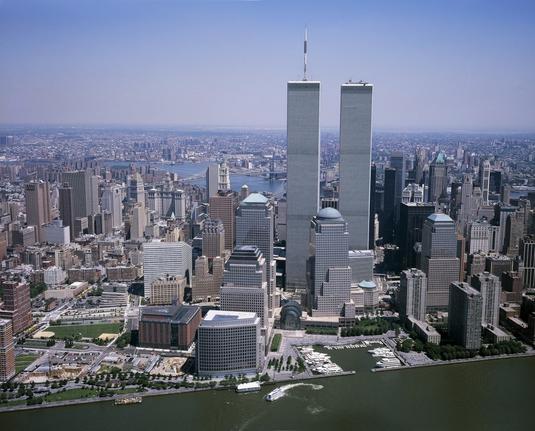
From September 11, 2001 to September 14, 2001 postings increased four-fold on NewsLib as news librarians and researchers searched for information on behalf of a stunned public. These people seemed to understand that they had a job that HAD to be done and they searched, shared, and asked for help, all in an extremely professional but human manner. The first question on the morning of September 11 was posted by Shelley Lavey of the Detroit Free Press at 9:24 am EST. Shelley asked the question that probably crossed the public’s mind later in the day. “Has anyone come across any significance to the date of September 11 that might be related to the events at the World Trade Center today?” (3)
In the midst of postings about the possible significance of September 11, Mike Reilly, a professor of journalism, offered his professional support. “For those of you researching and backgrounding air disasters, there are reliable resources at www.journaliststoolbox.com It has an entire section on airline disasters. Share with your newsrooms. Take care, Mike Reilly.” By 11:00 am EST, Abigail Brigham at the CNN library in New York shared a link to a list of tenants at the World Trade Center. By noon, Mari Keefe of ComputerWorld posted specific facts (and their sources) about the World Trade Center in response to the frantic inquiry, “Anybody got the fast facts like how many tons of concrete, etc? I keep getting a 404 message! “ by Suzanne Henderson of the Charleston Post and Courier.
In the few hours following the attacks, other news librarians shared information about web sites that track enroute flights. They also shared their frustration with these flight-tracking sites and other sites being overwhelmed, as well as reporting to each other that the live feed for the FAA flight-tracking web site had been suspended. Other requests and responses on NewsLib focused on gathering and putting together timelines of terrorist activities over the last twenty years.
Later in the day on September 11, researchers tried to verify among each other stories about price gouging at gas station. They also took “roll” on who had put out special edition newspapers (4). Finally, they continued to share resources. By early evening Gary Price, an “information and Internet consultant” in Washington DC, announced that he had begun compiling links to transcripts of world leaders’ responses to the attacks on his web site. At 7:30 pm EST, Jill Konieczko, MLS, a Lexis-Nexis marketing manager announced to her colleagues that beginning at 9pm EST, special packaged content would be available for free.
By early evening Gary Price, an “information and Internet consultant” in Washington DC, announced that he had begun compiling links to transcripts of world leaders’ responses to the attacks on his web site.
Article…
Noted Konieczko, “Our own information professionals at Lexis-Nexis are crafting searches to deliver on-point information for analysis and crisis management on the following topics:
News and Background Terrorism Legislation Other Attacks on the U.S.
Terrorist Groups Victims of Terrorism Act Oklahoma City
Terrorist Organizations Terrorism: Selected Statutory U.S. Embassy Bombing
U.S. Response to Terrorism Materials Kenya and Tanzania (1988)
Osama Bin Laden World Trade Center (1993) Pearl Harbor (1941) “
Ms. Konieczcko encouraged her colleagues to contact her to suggest additional topics and said that her own team would be continuously adding content.
What most impressed me about Ms. Koniecscko’s letter to her colleagues and patrons on NewsLib was her acknowledgment of the difficult job that they were doing and would continue to do in the days ahead. On September 11, when I remember doing little but watch the news coverage that these individuals helped to produce, these information professionals knew they had a job to do and they did it. Ms. Koniecscko described this situation well in her note to NewsLib. “We rely on your coverage to grapple with the details, understand the weight of the day’s events, and persevere… Again, please know that we are thinking of you, and please let us know what we at LexisNexis can do to better assist you in your research in these very difficult times.”
On September 11, when I remember doing little but watch the news coverage that these individuals helped to produce, these information professionals knew they had a job to do and they did it.
Article…
Diversity:
In addition to the professionalism displayed by NewsLibbers, I was struck by the diversity of the group. NewsLib has over 1250 subscribers from 22 different countries. These statistics certainly speak to the diversity of its members, but what impresses and surprises me is the diversity of news organizations that contribute to NewsLib. Researchers from newspapers and news organizations with circulations/audiences of 100,000 have equal footing with organizations with circulations/audiences of 1,000,000 on NewsLib. A researcher from the Seattle Times soliciting information from the NewsLib group might receive responses from a researcher at NBC, a news librarian at the Worcester Telegram & Gazette, an independent information professional, or a researcher from the Brazilian National News Agency. NewsLibbers also recognize the value of diverse opinions. Researchers in the United States called on Canadian researchers to get the facts on Gordon Sinclair, whose column about America had been circulating over the Internet in the day or two following the attacks. Similarly, early this week, a colleague in Belgium answered a question from a colleague in the United States about production of American flags outside of the United States. The NewsLib group highlights the democratic nature of information (information wants to be free!) and the value of different sources of information.
Community:
My final and over-riding impression of NewsLibbers is their commitment to assist each other in a common goal: to disseminate specific, validated, usable information to the public as quickly as possible. I have already noted examples of the sharing of information that goes on among NewsLibbers; now let me share a few additional examples of NewsLibbers’ “community spirit.” At 3 pm EST on September 11, Richard Geiger of the San Francisco Chronicle couldn’t access the “Government Interagency Domestic Terrorism Concept of Operations Plan (pdf)” (January 2001) from the FBI web site, so he asked for assistance and received the document as an attachment from a colleague. Also on September 11, Mari Keefe of Computer World happened to be working remotely and could not reach some co-workers that normally assisted her in acquiring photos. In the absence of direct assistance from her co-workers, Leigh Montgomery of The Christian Science Monitor came to Mari’s aid by providing all of the contact names and numbers necessary for Mari to purchase photos from Reuters. This happened within 8 minutes of Mari posting her initial request for assistance. Later in the week, the same kind of “community spirit” was evident. A news librarian in the Netherlands received a faxed copy of a 1980 article from the Far Eastern Economic Review from a colleague in Canada. The Canadian librarian found the article – an article about the last king of Afghanistan – copied it, and sent it to the Dutch librarian… all within 20 minutes of the initial request. If NewsLibbers are representative of news librarians overall, they are a tight-knit community indeed.
Closing Remarks
In closing, I want to introduce you to the moderator of the NewsLib group. Her name is Barbara Semonche ( [email protected] ) and she is Library Director at the University of North Carolina –Chapel Hill School of Journalism and Mass Communications. On September 13, she announced that she had gathered the threads of the conversations and organized the resources for the benefit of the news community on a web site entitled: September 11, 2001: NewsLib research queries following the World Trade Center Attack. In her closing remarks, Barbara Semonche said, “May I say that you are all extraordinary in your efforts to research and share data and information during this tragedy. You are truly impressive under deadline pressure, way beyond ‘just doing your job.’” Indeed. I will be contacting Barbara by email in the upcoming weeks to gain more insight into NewsLib, news librarians, and her assessment of how this group performed in the midst of this crisis. I will keep you posted!
(1) Full text available at: http://www.infotoday.com/newsbreaks/nb010917-1.htm
- (2) News Libraries: An Assessment A lot of changes are taking place in newsrooms and news research libraries across the country. Ownership changes, new content management concerns, tightening budgets, and expanding publication / distribution options are creating new opportunities, and new challenges. The University of Minnesota’s Institute for New Media Studies and Minnesota Journalism Center are planning a summit meeting on these changes, opportunities and challenges to be held Nov. 15-16, 2001. An important step in preparing for the summit is to get a full picture of where the changes are occurring, and the impact of these changes on the dynamic relationship between newsrooms and news libraries. Please an overview of this research project and the summit at http://www.inms.umn.edu/research/newslib/overview.htm.
- (3) Three days later, that question was still being debated on NewsLib. The only consensus reached on an accurate and direct connection on the significance of September 11 was this: September 11 was the 10th anniversary of the United Nation’s sponsored Day of Peace.
- (4) Many reported that these special editions were the first their papers had published since the Kennedy assassination.
Thankfully, this post and article remains in the Internet Archive and Wayback Machine. Never Forget…
See also: The companion piece showing the messages, the work, the help. https://web.archive.org/web/20040617101301/http://parklibrary.jomc.unc.edu/NWSworldtradecenter.html
We lost Barbara in 2015. RIP.
https://www.legacy.com/us/obituaries/newsobserver/name/barbara-semonche-obituary?id=12173408
#2025 #911 #America #BarbaraSemonche #CNN #Education #Film #Films #GaryPrice #History #JillKonieczko #Libraries #Library #Memorial #NationalPublicRadio #NewYork #NewYorkCity #NewsLibrarians #NewsLib #Politics #Reading #Resistance #September112001 #Television #TerroristAttacks #TheParkLibrary #TheUniversityOfNorthCarolinaAtChapelHill #TwinTowers #UnitedStates #WorldTradeCenter #YouTube
 DrWeb
DrWeb

 petersuber