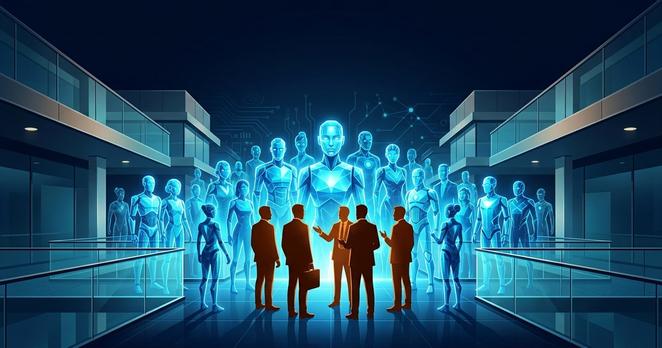
Two independent teams hit the same failure this week. Both skipped their change-tracking systems. Not reckless—the process was built for a speed that no longer exists.

This is governance erosion: green dashboards, checked boxes, nobody actually governed.

https://www.paulwelty.com/your-process-was-built-for-a-different-speed/

#AILeadership #GovernanceDebt #FutureOfWork #OrganizationalDesign

Your process was built for a different speed

When work changes velocity, governance systems don't just fall behind. They become theater. And theater is worse than nothing—it gives you the feeling of control without any of the substance.

Paul Welty, PhD
Technology succeeds when people trust it. How are you aligning your emerging technology strategy with real human behavior? Let’s discuss. #DigitalTransformation #CIO #DigitalLeadership #EnterpriseAI #ITStrategy #DecisionMaking #BusinessTransformation #FutureOfWork
https://stayingalive.in/cataloguing-strategic-innov/human-centered-technology.html
Technology succeeds when people trust it. How are you aligning your emerging technology strategy with real human behavior? Let’s discuss. #DigitalTransformation #CIO #DigitalLeadership #EnterpriseAI #ITStrategy #DecisionMaking #BusinessTransformation #FutureOfWork
https://stayingalive.in/cataloguing-strategic-innov/human-centered-technology.html

RIP The Click (1994 – 2026): Welcome To The Age of The Agentic Web

The Internet Is No Longer Built for You: Welcome to the Age of the Agentic Web

We are witnessing the most fundamental shift in the internet’s infrastructure since the invention of the browser.

New data confirms what we’ve all felt: The internet is no longer being built for humans.

The Traffic Flip: Less than half of online traffic (44%) is now human.
The Zero-Click Reality: 60% of searches end on the search page. 80% of users rely on AI summaries instead of visiting websites.
The Infrastructure Overhaul: Developers are abandoning visual-first designs for “Agentic” interfaces—APIs that let AI bots scrape data without navigating clunky menus or popups.

What does this mean for business? The “View Economy” is dying. The “Crawl Economy” is being born. If your content isn’t structured for an AI agent to read, verify, and cite, you might as well be invisible.

The future isn’t about getting users to your site. It’s about getting your data into their agents.

https://www.nbloglinks.com/rip-the-click-1994-2026-welcome-to-the-age-of-the-agentic-web/

#AI #TechTrends #FutureOfWork #Web3Gaming

RIP The Click (1994 – 2026): Welcome To The Age of The Agentic Web – nbloglinks

The Internet Is No Longer Built for You: Welcome to the Age of the Agentic Web We are witnessing the most fundamental shift in the internet's infrastructure sin

nbloglinks

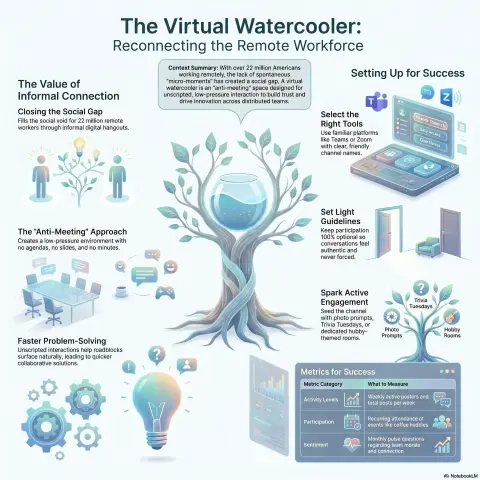
Gamified Onboarding: Using Game Elements to Engage New Hires 📊
Our latest infographic visualizes the key strategies for this topic.

#SmartKeys #FutureOfWork #Business #Innovation #Productivity # Leadership #AI

https://smartkeys.org/gamified-onboarding/

Everyone Used to Wear a Hat — What History Teaches Us About Agentic AI

For most of Western history, stepping outside without a hat was unthinkable. Not merely unfashionable — socially illegible. The hat was a signal of respectability, profession, and belonging. Then, over roughly a decade in the 1960s, it disappeared almost entirely. Not because hats stopped working. Because the world they expressed stopped existing.

That story is more instructive than it first appears — especially if you are trying to understand what agentic AI is about to do to the modern organisation.

The Hat Was Never Just a Hat

Hats served real purposes: protection from sun, rain, and cold. But by the time they vanished, those purposes had long been supplemented by enclosed automobiles, heated offices, and weatherproof buildings. What kept hat-wearing alive was not function. It was the elaborate social scaffolding built around it — hat checks at restaurants, dress codes, etiquette rules about tipping and doffing, and the silent language of status that different hats communicated.

The hat persisted because it was load-bearing infrastructure for a particular social world. And it collapsed when that social world did — when postwar formality dissolved, when the counterculture rejected the visible grammar of hierarchy, when young men like John F. Kennedy appeared bareheaded and made the old uniform suddenly look ceremonial rather than necessary.

The hat didn’t die because it became useless. It died because the social world it expressed stopped existing.

This is the distinction that matters. The car was the proximate cause — it removed the practical need. But the real transformation was cultural: new assumptions about what formality meant, what status should look like, and what it meant to be a serious person in public life.

Most Organisational Rituals Are Hats

Look honestly at how large organisations actually spend their time. Status meetings that report what everyone already knows. Approval workflows that exist to distribute accountability rather than improve decisions. Slide decks prepared not to inform but to demonstrate that work is happening. Email chains that loop in stakeholders whose primary function is to be looped in.

These are not inefficiencies waiting to be optimised. They are social performances — the organisational equivalent of hat-wearing. They signal seriousness, effort, and belonging. They make the institution recognisable to itself. And like hats, they will not yield to logic alone. They will yield when the conditions that make them meaningful stop existing.

Agentic AI is changing those conditions.

Agents Are the Automobile, Not a Better Horse

The error most organisations are currently making is treating agentic AI as a productivity tool — a faster, cheaper way to do what humans already do. This is the equivalent of strapping an engine to a carriage and calling it a car. The car didn’t make horses slightly less useful. It restructured the entire geography of daily life so comprehensively that the horse’s role became unrecognisable.

When an agent can autonomously gather information, synthesise it across sources, brief stakeholders, draft the follow-up, execute the next step, and flag exceptions for human review — the elaborate human choreography built around those activities loses its structural justification. Not because the people doing it are incompetent, but because the conditions that required that choreography have changed.

The question is not which tasks will agents handle. The question is which conditions of work are being permanently altered — and therefore which rituals, roles, and structures will find themselves, like the hat, suddenly without a world to express.

Six Things the Hat Teaches Us

1. Resistance will come from the infrastructure, not the people

Hat-wearing persisted partly because of the ecosystem around it — hat racks, dress codes, social scripts. Organisations have equivalent load-bearing structures: org charts built around information gatekeeping, job descriptions filled with coordination overhead, performance metrics that measure activity rather than outcomes. These will resist transformation not because they are useful, but because they are how the institution recognises itself as functioning.

2. There will be a JFK moment — and it may be closer than you think

Kennedy didn’t kill the hat alone, but he was a visible signal that the shift was real and sanctioned from the top. Every organisation is currently waiting — consciously or not — for its own bareheaded moment: a leader who visibly works with agents, not just alongside them, and whose results make the old way look ceremonial by comparison. That moment tends to arrive faster than institutions expect, and once it arrives, the old normal looks absurd in retrospect.

3. The technology is the proximate cause. The transformation is cultural

Organisations that treat agentic AI as a tooling question will be perpetually behind. The real questions are civilisational: What does accountability look like when execution is automated? What is human presence in a process actually for? What does a serious professional look like when the choreography is gone? These are not HR questions. They are questions about identity, value, and what it means to work.

4. New expressive surfaces will emerge — and they will be more individual, not less

When hats disappeared, hair became the expressive surface — personal, visible, impossible to standardise. As agents absorb execution and coordination, what humans bring that cannot be agentified becomes the new differentiator: ethical judgment, contextual taste, relational trust, the capacity to ask the question that wasn’t on the agenda. The professionals who will thrive are not those who resist agents. They are those who figure out what they uniquely express when the hat is gone.

5. Governance will lag — and the lag will be costly

Society didn’t immediately build new traffic law, urban planning, and infrastructure for the car. The transition produced decades of costly improvisation. The same is true here. Organisations deploying agents without rethinking accountability structures, oversight models, and decision rights are building motorways with horse-carriage rules. The governance question is not a compliance afterthought. It is the core design challenge.

6. The winners won’t be the fastest movers. They’ll be the clearest thinkers

The first automobiles were unreliable, dangerous, and impractical. The people who shaped the automobile era were not those who bought the first car, but those who understood what kind of world the car made possible — and built for that world. The same will be true of agentic AI. Speed matters less than the quality of the mental model you bring to the transformation.

So — Where Does That Leave You?

The hat was not abandoned overnight, and it was not abandoned by everyone at once. There were people who kept wearing hats long into the hatless era — some out of genuine preference, some out of habit, some because their particular world still required it. There will always be contexts where the old forms persist and serve real purposes.

But for most organisations, in most sectors, the question is no longer whether agentic AI will fundamentally alter the conditions of work. It already is. The question is whether you are building for the world that is emerging — or defending the world that is passing.

History is not kind to hat defenders. Not because they were foolish, but because they were loyal to the wrong thing: to the artefact, rather than to the purpose the artefact once served.

The hat is the workflow. The agents are the car. The only real question is what you are going to do with your hair — what you will bring, distinctly and irreplaceably, when the choreography is finally someone else’s job.

#agenticAI #AITransformation #digitalLeadership #enterpriseAI #futureOfWork #organisationalChange

The Tiiny AI Pocket Lab: Goodbye Cloud Subscriptions! Hello, 120B Parameters in My Pocket🛠️🦾

I just got my hands on the Tiiny AI Pocket Lab, and it’s officially breaking the “Cloud dependence” loop.

120B Parameters? Locally.
Internet? Not needed.
Privacy? 100%.

While everyone else is paying $20/month to let Big Tech read their prompts, this 300g beast is running Llama 3 and DeepSeek locally at 20+ tokens/sec.

It’s got 80GB of RAM (yes, in a pocket device) and runs at just 65W. Guinness World Record holder for a reason. 🏆

The Tiiny AI Pocket Lab is the first credible challenge to the cloud-only AI model. For enterprises and researchers, the value proposition is simple:

Security: Zero-latency, zero-cloud data processing.
Cost: No per-token fees or monthly subscriptions.
Power: 80GB LPDDR5X RAM in a 300g form factor.
This isn’t just a “mini-PC.” It’s a shift toward Edge Intelligence. When you can run a 120B model locally at 65W, the “setup tax” of AI disappears.

The future isn’t in a data center; it’s in your palm.

Is your organization ready for the shift from Cloud AI to Private AI?

https://www.nbloglinks.com/the-tiiny-ai-pocket-lab-goodbye-cloud-subscriptions-hello-120b-parameters-in-my-pocket/

#LocalAI #OpenSource #TechHardware #PrivacyFirst #TiinyAI #CES2026 #ArtificialIntelligence #EdgeComputing #DataPrivacy #FutureOfWork #TechLeadership #gadget

The Tiiny AI Pocket Lab: Goodbye Cloud Subscriptions! Hello, 120B Parameters in My Pocket🛠️🦾 – nbloglinks

I just got my hands on the Tiiny AI Pocket Lab , and it’s officially breaking the "Cloud dependence" loop. While everyone else is paying $20/month to let Big Te

nbloglinks
The author's groundbreaking analysis reveals that AI has gone from high schooler to college student in record time! 🎓 Meanwhile, customer support jobs are stubbornly refusing to be vaporized by the AI apocalypse, leaving doomsayers scrambling for new sky-is-falling narratives. 🚀💥
https://martynasm.com/2026/03/22/white-collar-ai-apocalypse-narrative-is-just-another-bullshit/ #AIanalysis #AIcollege #CustomerSupport #TechTrends #FutureOfWork #HackerNews #ngated
White-Collar AI Apocalypse Narrative Is Just Another Bullshit

Here is an exercise in critical thinking. According to Dario, “two years ago AI was at the level of a smart high school student, now it’s at the level of a smart college student”1…

Martynas M.
Welcome to the Post-Resume Job Market: Navigating AI, Skills-Based Hiring, and Your Career

In recent months the ground has seemed to shift beneath white-collar workers’ feet. Tech leaders are warning of an AI-driven upheaval – Microsoft’s AI chief predicts “human-level” automation of mos…

MrKarthikKN

The future of work is human–AI teams, and navigating the "exotic team dynamics" which emerge when collaborating with advanced AI (agentic, autonomous, or autopoietic).

https://scottgraffius.com/exotic-team-dynamics.html

#AI #AIResearch #HumanAI #HumanAITeamwork #ExoticTeamDynamics #FutureOfWork