
Mycorrhizal networks

"Fungi form well-documented and functionally relevant symbioses with the majority of plants and the fungi grow inside the roots, forming symbiotic exchange interfaces."

"Reasons underpinning this focus on common mycorrhizal networks (CMNs) are quite evident: these fungi form well-documented and functionally relevant symbioses with the majority of plants and the fungi grow inside the roots, forming symbiotic exchange interfaces (Smith & Read, 2008)."
>>
Rillig, M.C., Lehmann, A., Mounts, I.R. and Bock, B.M. (2025), Concurrent common fungal networks formed by different guilds of fungi. New Phytol. https://doi.org/10.1111/nph.20418
#FungalNetworks #fungi #flora #networks #roots #symbioses #PlantFungalInteractions #CMNs #entanglement #forests
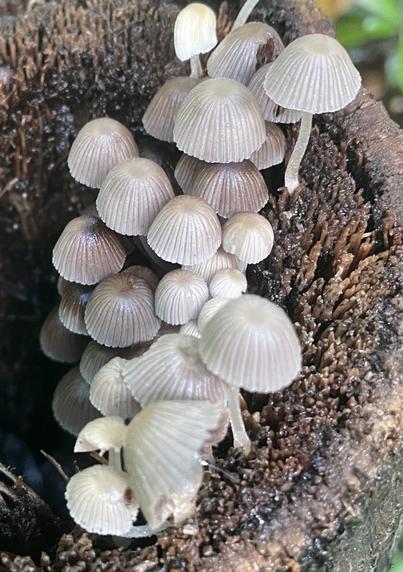
soaking up rainfall
tree roots and fungal networks
talking in droplets

#amwriting #nature #rainfall #rain #fungi #fungalnetworks #mycelium #observations #poetry #haiku #senryu #3lines

Machine learning is helping researchers identify underground fungal networks. A machine-learning algorithm was used to predict regions around the world that are biodiversity hotspots for mycorrhizal fungi. This discovery could have major implications for biotechnology, human health, and plant science. #machinelearning #fungalnetworks #biodiversity https://news.mongabay.com/2023/08/machine-learning-helps-researchers-identify-underground-fungal-networks/
Machine learning helps researchers identify underground fungal networks

Justin Stewart left for Mount Chimborazo in August 2022 to collect fungal samples from the Ecuadoran volcano at an elevation of 4,000 meters, or about 13,000 feet. Given that vegetation would be sparse at that altitude, Stewart says he didn’t expect to find enough plant roots underground that would support mycorrhizal fungi, the species he […]

Mongabay Environmental News