 Eicke 🫧
So lange übers Essen nachgedacht und in der Zwischenzeit andere Dinge getan (z.B. Pizzateig für kommende Tage produziert), dass ich das Essen fast vergessen hätte. Für mich also womöglich eine elaborierte Strategie Gewicht zu verlieren: Übers Essen nachdenken. #foolproof
 Follow GOLF
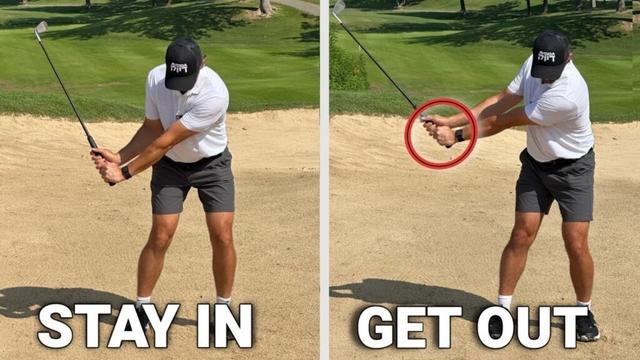
https://www.fogolf.com/1068823/get-out-of-any-bunker-every-time-the-foolproof-simple-method/ Get Out of Any Bunker Every Time (The Foolproof Simple Method) #AlexFortey #AvodaGolf #BetterGolf #bunker #ConsistentGolf #Foolproof #Golf #GolfSkills #GolfSkillsVideos #GolfSkillsVlog #GolfSkillsYouTube #GolfSwing #GolfSwingTips #GolfSwingVideos #GolfSwingVlog #GolfSwingYouTube #GolfTips #HitLongerDrives #method #SeniorGolfSwing #SIMPLE #SimpleGolf #SimpleGolfSwing #TheArtOfSimpleGolf #TIME
 The Vidalia News Recorder
Hidden Word Search – What is the Sound of Wind?
Well... Our lead #puzzle #editor has, revived, of a sort, from the dead, so, she made this puzzle. And look, yeah, alright, we're happy to have her back in the office but she's not remotely listed on that new app called, Am I a Regular Human? We understand it's not #foolproof, but we're worried all the same, especially because this is all she turned in for today's puzzle #vidalianewsrecorder
http://vidalianewsrecorder.com/2025/07/20/hidden-word-search-what-is-the-sound-of-wind/

 Filmizleilk
Kusursuz Soygun - Foolproof 2003 Filmini izle
#Foolproof #KusursuzSoygun #Komedi #Netflix #Film #Filmizle #Diziizle #izle #Fullizle #sinema

Kusursuz Soygun - Foolproof 2003 izle - Kusursuz Soygun - Foolproof 2003 Film izle - Kusursuz Soygun - Foolproof 2003 Full izle -
Kusursuz Soygun - Foolproof 2003 izle , Kusursuz Soygun - Foolproof 2003 Film izle , Kusursuz Soygun - Foolproof 2003 Filmini Full HD 1080p Bluray Tek Part Full izle
 skua
skua@michaelzimmer
Mon Dieu!
Sacre bleu!
#InspectorClouseau was unprepared for this!
Is nothing #Foolproof?
 Tally Michelle

 Anthony Collette
  / Loistava
PRIVACY: Don’t Make A Fool Out Of Me
Can the psychology of the “sucker’s game” help explain consumer behavior toward online privacy?
In her new book, contracts specialist Tess Wilkinson-Ryan dives deep into the “everywhere all the time” dynamic driving our collective need to avoid feeling like we’ve been duped. We’ll do almost anything to avoid the humiliation of winding up as the sucker in any situation — even change our own beliefs.
“When I’m doing a lot of research, for example, I come across a button that says something like “Accept all cookies” or “I agree to the Privacy Policy” multiple times a day, sometimes literally every ten minutes. If I reflect on it, I have signed away almost all of my data privacy rights over the years.
If you asked me to think very seriously about my values and preferences, specifically with respect to data privacy, I would tell you that data privacy is important to me. Unfortunately, it is also true that I keep agreeing to sell it for basically nothing. One interpretation of my situation is that I am a sucker. I just keep assenting to terrible privacy deals while companies get rich off of my carelessness.
I don’t want to feel like a sucker, though. I value data privacy; I have signed away my rights to data privacy: these two dissonant statements create psychological pressure. That sets up a new situation where I am looking for a way to relieve the cognitive dissonance. The reason the data privacy beliefs feel bad is because the implication is that I am a pawn, giving up something I value for scant rewards. So what can I do? I can become a data privacy fanatic, quit Facebook and Twitter, refuse cookies, eschew Google. This is unrealistic, probably, because it would be onerous and limiting. I can live in rage and disappointment, of course, but that’s just dwelling in the pressure rather than relieving it.
If I can’t do much about my data privacy — I submit to you that few of us can — and I don’t want to reckon head-on with my fundamental inability to control unseen pernicious forces, there is still one option left for me: on second thought, maybe I don’t care about data privacy as much as I thought? I can’t change the cookies but I can change my beliefs. This is the psychology of cognitive dissonance, which describes the internal pressure to resolve incompatible cognition.”
“Being a sucker is almost definitionally a state of cognitive dissonance: (1) This transaction is exploitative of me; and (2) I agreed to it. If these two statements feel bad, and the facts are stuck, it’s the judgment that has to give way. This transaction is fine, not exploitative. This looks like a bad deal, but that’s just how contracts are made these days.”
This book was a real eye-opener. Endless examples of how our very deep-seated, very human revulsion at even the *thought* of being a sucker shows up in politics, business, and everyday life. The human need to avoid feeling we’ve been duped is so prevalent, so “everywhere,” it fades into the background and we stop noticing it. But it’s pervasive, effective and pushes us into otherwise difficult-to-explain behavior.
It’s always valuable to know what people are thinking.
Tess Wilkinson-Ryan is a professor at the University of Pennsylvania Carey Law School. She has a law degree and a doctorate in psychology, and studies the moral psychology of legal decision-making, teaching courses in contracts, consumer law, and leadership.
 JL Roberson
PRIVACY: Don’t Make A Fool Out Of Me
Can the psychology of the “sucker’s game” help explain consumer behavior toward online privacy?
In her new book, contracts specialist Tess Wilkinson-Ryan dives deep into the “everywhere all the time” dynamic driving our collective need to avoid feeling like we’ve been duped. We’ll do almost anything to avoid the humiliation of winding up as the sucker in any situation — even change our own beliefs.
“When I’m doing a lot of research, for example, I come across a button that says something like “Accept all cookies” or “I agree to the Privacy Policy” multiple times a day, sometimes literally every ten minutes. If I reflect on it, I have signed away almost all of my data privacy rights over the years.
If you asked me to think very seriously about my values and preferences, specifically with respect to data privacy, I would tell you that data privacy is important to me. Unfortunately, it is also true that I keep agreeing to sell it for basically nothing. One interpretation of my situation is that I am a sucker. I just keep assenting to terrible privacy deals while companies get rich off of my carelessness.
I don’t want to feel like a sucker, though. I value data privacy; I have signed away my rights to data privacy: these two dissonant statements create psychological pressure. That sets up a new situation where I am looking for a way to relieve the cognitive dissonance. The reason the data privacy beliefs feel bad is because the implication is that I am a pawn, giving up something I value for scant rewards. So what can I do? I can become a data privacy fanatic, quit Facebook and Twitter, refuse cookies, eschew Google. This is unrealistic, probably, because it would be onerous and limiting. I can live in rage and disappointment, of course, but that’s just dwelling in the pressure rather than relieving it.
If I can’t do much about my data privacy — I submit to you that few of us can — and I don’t want to reckon head-on with my fundamental inability to control unseen pernicious forces, there is still one option left for me: on second thought, maybe I don’t care about data privacy as much as I thought? I can’t change the cookies but I can change my beliefs. This is the psychology of cognitive dissonance, which describes the internal pressure to resolve incompatible cognition.”
“Being a sucker is almost definitionally a state of cognitive dissonance: (1) This transaction is exploitative of me; and (2) I agreed to it. If these two statements feel bad, and the facts are stuck, it’s the judgment that has to give way. This transaction is fine, not exploitative. This looks like a bad deal, but that’s just how contracts are made these days.”
This book was a real eye-opener. Endless examples of how our very deep-seated, very human revulsion at even the *thought* of being a sucker shows up in politics, business, and everyday life. The human need to avoid feeling we’ve been duped is so prevalent, so “everywhere,” it fades into the background and we stop noticing it. But it’s pervasive, effective and pushes us into otherwise difficult-to-explain behavior.
It’s always valuable to know what people are thinking.
Tess Wilkinson-Ryan is a professor at the University of Pennsylvania Carey Law School. She has a law degree and a doctorate in psychology, and studies the moral psychology of legal decision-making, teaching courses in contracts, consumer law, and leadership.