 Global Feed
🔥 TRENDING
📢 Hyperloop-Projekt in Zürich nimmt Form an - Vogel Communications Group
#Hyperloop-projekt #Zürich #Form #Vogel #GlobalFeed #News #DE
*Automatisch gepostet von Global Feed Bot*
🔥 TRENDING
📢 Hyperloop-Projekt in Zürich nimmt Form an - Vogel Communications Group
#Hyperloop-projekt #Zürich #Form #Vogel #GlobalFeed #News #DE
*Automatisch gepostet von Global Feed Bot*
W3 Prompt #213: Wea’ve Written Weekly
Intro
Dear friends,
Welcome to our W3 Poetry Prompt, which goes live on Wednesdays at The Skeptic’s Kaddish.
You may click here for a fuller explanation of W3; but here’s the ‘tldr’ version:
Part I
The main ingredient of W3 is a weekly poem written by a Poet of the Week (PoW), which participants read before participating in the prompt.
Part II
The second ingredient is a writing guideline (or two) provided by the PoW. Guidelines may include, but are not limited to: word counts, poetic forms, inclusion of specific words, and use of particular poetic devices.
Part III
After five days, when the prompt closes, the PoW shall select one participant’s poem as the W3 prompt for the following week, and its author becomes the next PoW.
Simple enough, right?
Kindly note: All entries for the W3 poetry prompt must be the original work of the submitting author. AI-generated poetry is not permitted.Okie dokie ~ Let’s do this thing!
I. The prompt poem:
‘Door shut’ by Reena Saxena
Bang!II. Reena’s prompt: East meets West
For this week’s W3 challenge, writers are invited to combine one Western poetic form with one Japanese poetic form. You may choose any one of the following combinations.
1. Cinquain + Haiku
Cinquain follows the syllabic structure of 2, 4, 6, 8, 2.
Haiku may follow any of the following syllabic structures:
Both parts should either reflect the same theme, or the second part may overturn the first with a shift in mood. However, they should remain connected in some way and not read like two separate poems.
2. Shadorma Haibun
Haibun is tightly written prose, preferably nonfiction, written in first person. Replace the haiku in this format with a shadorma, and feel free to vary its placement.
You may place the shadorma at the beginning, middle, or end.
Shadorma follows the syllabic structure of 3, 5, 3, 3, 7, 5.
3. Limerick + Kyoka
Limerick is a light-hearted five-line verse with the rhyme scheme AABBA.
Kyōka is a playful Japanese verse form with the syllabic structure 5, 7, 5, 7, 7. You may use the following progression as a guide:
4. Poet’s choice
If you think you can do better by combining other Western and Japanese forms, feel free to experiment. Just let us know the names and syllabic structures of the forms you chose.
III. Submit: Click on ‘Mister Linky’ below
In order to participate and share a poem, open up this blog post, outside of the WordPress reader. At the bottom, just below these words, you will see a small rectangular graphic with the words ‘Mr Linky’. Click on that to submit.
Submissions are open for 5 days, until Monday, June 1, 10:00 AM (GMT+2)
Last week’s W3 poem
This week’s W3 prompt poem (above), composed by Reena, was written in response to last week’s W3 prompt poem, which Ange wrote:
‘brick-breath’ by AJ Wilson
raised from clay and sweat
🔥 TRENDING
📢 Hyperloop-Projekt in Zürich nimmt Form an - Vogel Communications Group
#Hyperloop-projekt #Zürich #Form #Vogel #GlobalFeed #News #DE
*Automatisch gepostet von Global Feed Bot*

Netflix’s upcoming film “Husbands in Action” has announced its release date with a new trailer and poster!
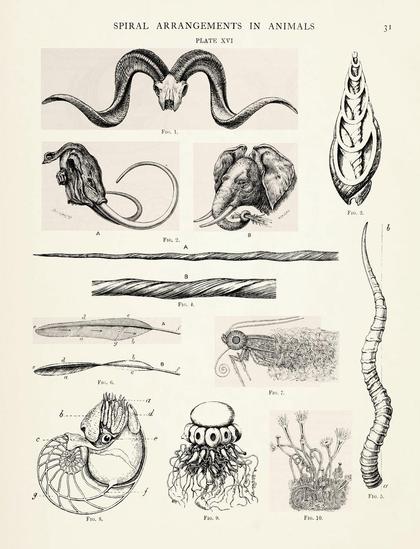
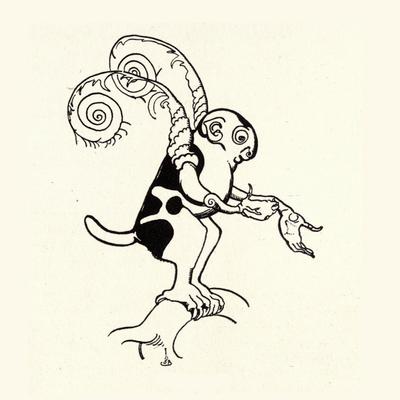
Spiral structures as seen in shells, horns, tusks, teeth, feathers, proboscides, tentacles. (1908) by James Bell Pettigrew, from Design in Nature
.
Source: Cornell University Library / Internet Archive
Available to buy as a print.
https://pdimagearchive.org/images/8e86e367-b1eb-4c8d-9faa-2fee17e91b3c
#animals #form #flying #snakes #tusks #spirals #evolution #shells #hearts #art #publicdomain

(28)
Früher war von irgendwo ein Ton gekommen, ein Rhythmus und ich habe geschrieben. Der Inhalt kam aus einem zutiefst unbewussten Bereich. Jetzt will ich etwas erzählen, ich suche nach Details, nach Fakten. Und vor allem suche ich nach einer angemessenen Form für diese Geschichte, die nicht persönlicher ist als alle Texte davor, aber sozusagen aus einer anderen Richtung auf das Schreiben zielt. Man möchte ja alles durchschaubar machen. Aber es gelingt nicht. Es ist eben kein Text, mit dem ich mich wegschreiben kann, sondern er bewegt sich beharrlich auf mich zu. Manchmal diese Gewissheit, dass ich schreiben kann, dass ich eine Form finden werde. Aber die meiste Zeit das Gegenteil. Zweifel, Misstrauen.
Der Ohrenarzt, der die Diagnose meiner Hausärztin nicht im geringsten teilt, ermahnt mich weiter Gleichgewichtsübungen zu machen, auch wenn es schwierig ist, nicht aufzuhören. Das ist der Fehler, den die meisten machen, sagt er: Machen Sie unbedingt weiter. Es wäre schön, wenn die innere Stimme mir beim Schreiben ähnliche Aufträge erteilen würde.
Diese neue Spielregel, dass man nicht aufgeben darf.
Als würde sich ein großes zu spät ausbreiten. Und verrückterweise öffnet dieses zu spät die Möglichkeit jetzt wirklich manche Fragen zu stellen. Mich diesen Fragen zu stellen. Nichts daran ist logisch, aber vermutlich ist es absolut menschlich.
Ich lese über 30 Jahre später noch einmal Christa Hoffmann-Riems „Das adoptierte Kind“. Plötzlich wird mir bewusst, dass ich versucht habe, meine Kindheitswunden wissenschaftlich zu versorgen, zu heilen womöglich. Die Hausarbeit über das adoptierte Kind, die Diplomarbeit über Sterben und Tod. Und beiden liegt die These zugrunde, dass wir unsere Wirklichkeit konstruieren, dass das wenigste im Leben selbstverständlich ist.
#Adoption #Form #Schreiben #TextToward the sijo, or: Room for weather
I tried limericks first,d’Verse: Unlock with lists
At d’Verse, Björn encourages us to compose ‘list poems’.
Let’s write poetry together!
When it comes to partnership, some humans can make their lives alone – it’s possible. But creatively, it’s more like painting: you can’t just use the same colours in every painting. It’s just not an option. You can’t take the same photograph every time and live with art forms with no differences.
–Ben Harper (b. 1969)Would you like to create poetry with me and have a completed poem of yours featured here at the Skeptic’s Kaddish? I am very excited to have launched the ‘Poetry Partners’ initiative and am looking forward to meeting and creating with you… Check it out!
#Collaboration #Discovery #Exploration #Form #FreeVerse #Learning #ListPoem #Poetry #Process #Sijo
 The Skeptic's Kaddish
 The whale
 N氏
N氏 Kpop News Hub
 Public Domain Image Archive
 Grumpy Website
 muetzenfalterin