Over on our @fairsharing blog, guest writer #GerhardMayer from #EDITH and the Heidelberg Institute for Theoretical Studies, has written about how EDITH has integrated FAIRsharing as part of their procedure for standards evaluation and endorsement. Find out more at his blog post here:
https://blog.fairsharing.org/?p=616
#FAIR
#FAIRstandards
How EDITH has integrated FAIRsharing as part of their procedure for standards evaluation and endorsement – FAIRsharing Blog
Paying it forward: How the neuroscience community builds on FAIRsharing to make digital objects more FAIR – FAIRsharing Blog
Robert Crystal-Ornelas et al. have just published a lovely paper on Enabling #FAIR data in #EarthSciences and #EnvironmentalSciences with community-centric (meta)data reporting formats https://www.nature.com/articles/s41597-022-01606-w
#FAIRstandards
Thanks for the citation of #FAIRsharing too!
Box 1 in particular has some handy hints for getting your community started down the #FAIR road!


Enabling FAIR data in Earth and environmental science with community-centric (meta)data reporting formats - Scientific Data
Research can be more transparent and collaborative by using Findable, Accessible, Interoperable, and Reusable (FAIR) principles to publish Earth and environmental science data. Reporting formats—instructions, templates, and tools for consistently formatting data within a discipline—can help make data more accessible and reusable. However, the immense diversity of data types across Earth science disciplines makes development and adoption challenging. Here, we describe 11 community reporting formats for a diverse set of Earth science (meta)data including cross-domain metadata (dataset metadata, location metadata, sample metadata), file-formatting guidelines (file-level metadata, CSV files, terrestrial model data archiving), and domain-specific reporting formats for some biological, geochemical, and hydrological data (amplicon abundance tables, leaf-level gas exchange, soil respiration, water and sediment chemistry, sensor-based hydrologic measurements). More broadly, we provide guidelines that communities can use to create new (meta)data formats that integrate with their scientific workflows. Such reporting formats have the potential to accelerate scientific discovery and predictions by making it easier for data contributors to provide (meta)data that are more interoperable and reusable.
 FAIRsharing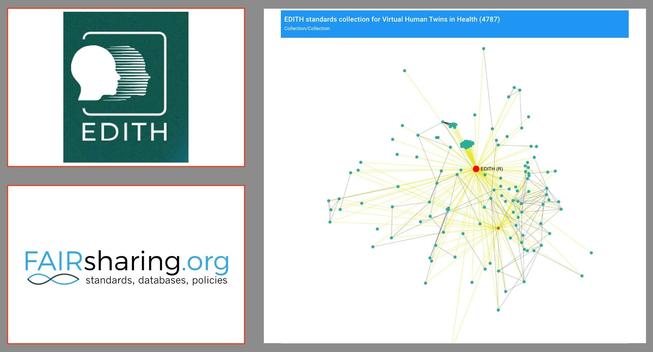
 Allyson Lister