 Licho
Licho#SolarPunkSunday #3dprinting waste #PLA to a green chemistry solvent etlyl lactate, #EtLa. https://link.springer.com/article/10.1007/s10924-020-01824-6
I wonder if I could actually do it in my kitchen. Maybe with a different catalyst, that thing sounds super complicated. And I don't want to be using THF.
I could probably try putting a jar full of denaturatem alcohol and ground failed 3d prints to an oven with a few drops of acid at 150°C for 2h. It might work, who knows.
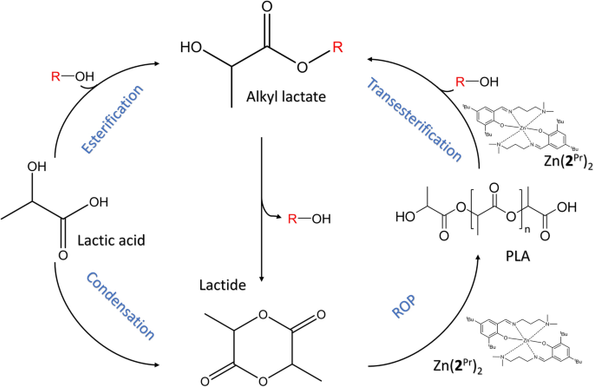
Ethyl Lactate Production from the Catalytic Depolymerisation of Post-consumer Poly(lactic acid) - Journal of Polymers and the Environment
Bioplastics such as poly(lactic acid) (PLA), which are derived from renewable sources, promoted as biodegradable and implemented for numerous functions, offer a promising alternative to the enduring synthetic plastics abundant in society. However, the degradation of PLA is slow under natural environmental conditions. A chemical recycling route is thus required to couple mitigation of plastic persistence repercussions with circular economy adherence. In the present work, the production of ethyl lactate by the catalysed transesterification of post-consumer PLA was investigated. The catalyst employed was a propylendiamine Zn(II) complex. The PLA samples investigated consisted of a phone case, an infant’s toy, a film, a cup and 3D printing material. Degradation reactions were studied at 50 °C and 90 °C and the concentrations measured at two different time intervals, 1 h and 3 h. The results revealed that greater activity of the catalyst was observed at 50 °C for two PLA samples (cup, 3D print). PLA film achieved the greatest lactate yield (71%) of all samples after 3 h at 50 °C. It is concluded that the propylenediamine Zn(II) catalyst can be used to produce green solvent ethyl lactate at mild temperatures from post-consumer PLA, even in the presence of unknown additives.
 Hanna
Hanna

 tuulimukka.bsky.social
 plataforma570
 Elon Muksis 🇺🇦 🇵🇸 🇪🇺

 Yachtbar
 Stoking the Fire