 Kirst Mason D'Raven
The Dragon of South Yorkshire – Hero, Hoax or Hidden History?
Pull up a chair, pour yourself a brew, and let us head into the wild country north-west of Sheffield, where the gritstone edges rise above the woods and the wind still rattles through the trees of Wharncliffe. It is here, amongst the crags and valleys of South Yorkshire, that one of England’s strangest dragon legends was born.
Long before paranormal investigators chased ghosts with EMF meters just down the road at Stocksbridge Bypass, before cryptozoologists searched for big cats on the moors, and before social media turned every unexplained event into a viral sensation, the people of Yorkshire told stories of a monster known as the Wantley Wyrm.
A creature of iron scales and fiery eyes. A beast so terrible that it devoured livestock, laid waste to the countryside and defied every attempt to destroy it.
At least, that is the story. Whether the Wantley Wyrm was ever intended to be taken seriously is another matter entirely.
The legend survives as one of Britain’s most entertaining pieces of folklore, balancing somewhere between heroic dragon-slaying epic and savage local satire. More than three hundred years after it was first written down, the story continues to fascinate historians, folklorists and lovers of Yorkshire folklore alike.
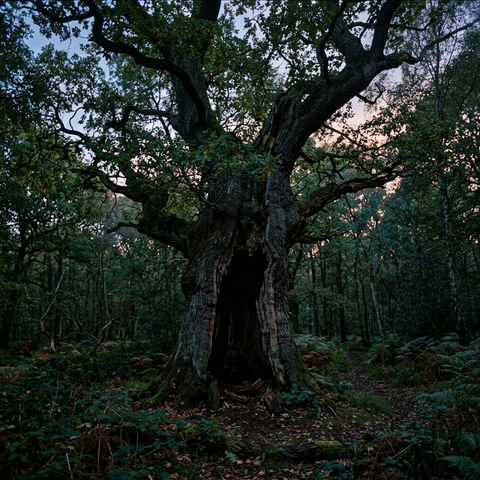
The traditional home of the wyrm is Wharncliffe, a dramatic area of woodland and rocky escarpment overlooking the valley of the River Don. Even today it feels like the sort of place where legends might cling to the landscape. The steep cliffs, ancient woods and hidden ravines create an atmosphere that easily sparks the imagination. According to the tale, the creature made its lair amongst the crags.
Descriptions vary, but the beast was generally said to possess a body covered in scales as hard as iron, claws capable of tearing through stone and a tail powerful enough to flatten trees. It terrorised the surrounding countryside, consuming livestock and spreading fear amongst local people.
The monster’s hide proved impervious to weapons. Swords shattered. Spears bent. Nothing could penetrate its armour. The countryside suffered. And then came the hero.
His name was More of More Hall. I mean, its not very original but I didn’t write it so its not my fault.
Now there is something wonderfully Yorkshire about More. Unlike many dragon-slayers in folklore, he is not a knight in shining armour sent by a king. He is not a saint performing miracles. He is simply a local man faced with a very practical problem.
The tale tells us that More consulted a wise woman who revealed the dragon’s secret. Although its scales covered almost every part of its body, one vulnerable patch existed beneath its tail. Yes. It’s butt.
Anyway, armed with this knowledge, More commissioned a fancy suit of armour covered in sharp spikes so that when the wyrm attacked, it lashed out repeatedly, striking against the spiked armour and injuring itself in the process. Eventually the creature exposed its vulnerable underside, allowing More to deliver the fatal blow.
The beast died. Yorkshire was saved. The end.
Or perhaps not.
What makes the Wantley Wyrm particularly interesting is that much of what we know comes not from medieval manuscripts but from a seventeenth-century ballad known as The Wantley Dragon, written anonymously but widely attributed to the English poet and satirist, Henry Carey. Unlike the heroic dragon-slaying stories of earlier centuries, this ballad is comic, rude and frequently absurd. (Hence the ‘Butt’)
The dragon is described in extravagant terms that seem designed to raise a laugh. The hero himself is hardly presented as a noble champion. In fact, the entire tale feels as though the audience is being invited to enjoy the joke. Many historians believe that the ballad was intended as satire. One theory suggests that the dragon represented an unpopular local landowner or legal figure whose actions were causing hardship to ordinary people. The hero’s victory may have symbolised resistance against authority rather than a literal battle against a monster.
This would not have been unusual. Throughout British history, dragons frequently appear in folklore as symbols of oppression, greed or tyranny. Killing the dragon often represents the restoration of social order. In some cases the “monster” may be nothing more than a powerful individual viewed unfavourably by the local population. The Wantley Wyrm may therefore tell us less about mythical creatures and more about local politics.
That said, folklore does have a habit of accumulating layers. Perhaps there was once a genuine local legend about a monstrous creature haunting Wharncliffe. Over time the story may have merged with satire, social commentary and humour until the version we know today emerged. It is not difficult to see how such a process might occur. The landscape itself certainly encourages storytelling. Stand on the edge of Wharncliffe Crags on a misty autumn morning and the woods below seem almost prehistoric. Shadows drift between the trees. Strange shapes emerge from the fog. The rocks themselves appear twisted and ancient.
Many dragon legends across Britain are rooted in dramatic natural features like these – before geology offered explanations, unusual rock formations often became associated with giants, monsters and supernatural beings.
The Wantley Wyrm may owe part of its existence to the landscape that inspired it.
There is, however, another possibility. Of course there is.
Folklorists have long noted that dragon legends frequently emerge in areas where ancient remains are discovered. Large fossil bones, prehistoric animal remains and unusual geological finds have often been interpreted as evidence of dragons. A farmer uncovering part of a mammoth skeleton several centuries ago would have had little reason to doubt that he had found the remains of some monstrous beast.
Could discoveries of ancient bones have contributed to stories of the wyrm? We cannot know for certain, but it is a possibility worth considering. What we do know is that the Wantley Wyrm belongs to a wider northern tradition of worm and dragon legends. Across northern England similar creatures appear again and again. County Durham has the Lambton Worm. The North East boasts the Sockburn Worm. Even North Yorkshire has its own dragon stories, and these creatures often share common features. They inhabit lonely places, terrorise local communities and require an unconventional hero to defeat them.
Unlike the courtly dragons of continental Europe, northern worms often feel deeply rooted in local landscapes and local identities. They belong to specific hills, rivers and valleys. The Wantley Wyrm is unmistakably Yorkshire.
Even today the legend remains woven into the cultural identity of the region. Walkers visit Wharncliffe. Local historians continue to debate the origins of the tale. Folklorists return to it repeatedly because it occupies that fascinating space where myth, humour and history overlap and that is why the story is still told today.
The truth is that dragons were never simply monsters. They were ways of talking about fear, power, injustice and the unknown. Sometimes they represented real dangers. Sometimes they represented people. Sometimes they existed simply because human beings love a good story and few stories are better than that of a stubborn Yorkshireman who defeated an iron-scaled dragon by essentially waiting for it to hit itself on a suit of spiky armour.
Whether the Wantley Wyrm was a genuine folk belief, a political satire, a distorted memory of older traditions or simply a very good joke, it continues to slither through the folklore of South Yorkshire. The dragon may be gone but the story remains.
And on misty evenings amongst the crags of Wharncliffe, with the wind sighing through the trees and the shadows gathering beneath the rocks, it is easy to understand why people still remember the beast that once terrorised Yorkshire.
Or why some secretly hope that it never really left.
Further Reading
- Joseph Hunter, Hallamshire: The History and Topography of the Parish of Sheffield
- Jacqueline Simpson and Steve Roud, A Dictionary of English Folklore
- Katharine Briggs, British Folk Tales and Legends
- The seventeenth-century ballad The Wantley Dragon