Weltweit sind Ökosysteme und die Artenvielfalt in Gefahr. Deshalb hat die EU Schutzgebietsziele bis 2030 entwickelt, wobei jew. 30 % der Land- und Meeresfläche unter effektiven Schutz und ein Drittel davon, also jeweils 10 % unter strengen Schutz gestellt werden. Die wichtigsten Fragen dazu beantworten wir in unserer Rubrik „Häufig gefragt“
https://www.bfn.de/haeufig-gefragt-umsetzung-der-eu-schutzgebietsziele-2030-Deutschland#Schutzgebiete #EUBiodiversityStrategy #KunmingMontrealFoto © BfN
New research explores the challenges and interconnections in applying the
#EUBiodiversityStrategy Read the full article here 👉
https://besjournals.onlinelibrary.wiley.com/doi/10.1002/pan3.70106Svi oblici života na 🌍 ovise jedni o drugima, no danas je biološka raznolikost ozbiljno ugrožena.
Na #InternationalBiodiversityDay i Dan zaštite prirode, podižemo svijest o važnosti raznolikosti biljaka, životinja i ekosustava. 🦔🌱👇🏼
#EUBiodiversityStrategy @EU_ENV
🐦🔗: https://n.respublicae.eu/EK_Hrvatska/status/1660553167535321089

EK Hrvatska (@EK_Hrvatska)
Svi oblici života na 🌍 ovise jedni o drugima, no danas je biološka raznolikost ozbiljno ugrožena.
Na #InternationalBiodiversityDay i Dan zaštite prirode, podižemo svijest o važnosti raznolikosti biljaka, životinja i ekosustava. 🦔🌱👇🏼
#EUBiodiversityStrategy @EU_ENV

Biodiversity strategy for 2030
Read about the EU’s biodiversity strategy for 2030 - our ambitious and long-term plan to protect nature and reverse the degradation of ecosystems.
📢 Let’s celebrate #Natura2000 Day!
🏞️ Natura 2000 is Europe's most important network for nature conservation and the largest network of protected areas in the world. 🌐
The 🇪🇺 EU protects nature through the #EUBiodiversityStrategy for 2030 and the Birds & Habitats Directives.
🐦🔗: https://n.respublicae.eu/EU_EESC/status/1660186162571640832

European Economic and Social Committee (@EU_EESC)
📢 Let’s celebrate #Natura2000 Day!
🏞️ Natura 2000 is Europe's most important network for nature conservation and the largest network of protected areas in the world. 🌐
The 🇪🇺 EU protects nature through the #EUBiodiversityStrategy for 2030 and the Birds & Habitats Directives.


Earth Observation in support of EU policies for biodiversity - A deep-dive assessment of the Knowledge Centre on Earth Observation
This report describes the results from a deep dive assessment of the Knowledge Centre on Earth Observation (KCEO) exploring the use of Earth Observation (EO) products and services to support EU biodiversity policies.
EU policy needs in the biodiversity domain are analysed with the ambition to verify how and to what extent existing EO products and services meet these needs, highlight existing gaps and provide recommendations on future evolution.
The spatial resolution of Copernicus products in most cases matches the user requirements. Improvements are suggested on more regular and frequent updates of products, as well as on products latency. The length of time series and their consistency over time are considered not always adequate. Uncertainty and accuracy of EO products are key but not addressed in the deep dive.
Other areas of improvement are related to the thematic detail: existing land cover maps are not sufficient for many biodiversity applications, and this is as well applicable to land use and sea use products. There is a need to map ecosystem types further refining more aggregated land cover classes, to drive the assessment of habitats and ecosystems condition.
In this respect, although satellite EO can already offer significant and valuable datasets to support biodiversity related policies, for the full exploitation of available technology, the availability of ground-based and more broadly in-situ data both on land and in marine and freshwater environments, is essential and should be enhanced.

Earth Observation in support of EU policies for biodiversity - A deep-dive assessment of the Knowledge Centre on Earth Observation
This report describes the results from a deep dive assessment of the Knowledge Centre on Earth Observation (KCEO) exploring the use of Earth Observation (EO) products and services to support EU biodiversity policies.
EU policy needs in the biodiversity domain are analysed with the ambition to verify how and to what extent existing EO products and services meet these needs, highlight existing gaps and provide recommendations on future evolution.
The spatial resolution of Copernicus products in most cases matches the user requirements. Improvements are suggested on more regular and frequent updates of products, as well as on products latency. The length of time series and their consistency over time are considered not always adequate. Uncertainty and accuracy of EO products are key but not addressed in the deep dive.
Other areas of improvement are related to the thematic detail: existing land cover maps are not sufficient for many biodiversity applications, and this is as well applicable to land use and sea use products. There is a need to map ecosystem types further refining more aggregated land cover classes, to drive the assessment of habitats and ecosystems condition.
In this respect, although satellite EO can already offer significant and valuable datasets to support biodiversity related policies, for the full exploitation of available technology, the availability of ground-based and more broadly in-situ data both on land and in marine and freshwater environments, is essential and should be enhanced.

Earth Observation in support of EU policies for biodiversity - A deep-dive assessment of the Knowledge Centre on Earth Observation
This report describes the results from a deep dive assessment of the Knowledge Centre on Earth Observation (KCEO) exploring the use of Earth Observation (EO) products and services to support EU biodiversity policies.
EU policy needs in the biodiversity domain are analysed with the ambition to verify how and to what extent existing EO products and services meet these needs, highlight existing gaps and provide recommendations on future evolution.
The spatial resolution of Copernicus products in most cases matches the user requirements. Improvements are suggested on more regular and frequent updates of products, as well as on products latency. The length of time series and their consistency over time are considered not always adequate. Uncertainty and accuracy of EO products are key but not addressed in the deep dive.
Other areas of improvement are related to the thematic detail: existing land cover maps are not sufficient for many biodiversity applications, and this is as well applicable to land use and sea use products. There is a need to map ecosystem types further refining more aggregated land cover classes, to drive the assessment of habitats and ecosystems condition.
In this respect, although satellite EO can already offer significant and valuable datasets to support biodiversity related policies, for the full exploitation of available technology, the availability of ground-based and more broadly in-situ data both on land and in marine and freshwater environments, is essential and should be enhanced.
RT @RicardMourinho: The @EIB puts #biodiversity on equal footing as climate. We are fully committed to support the #EUBiodiversityStrategy inside & outside 🇪🇺. Discover what we do as EU Climate bank to preserve #forests, at the core of biodiversity around the🌎 👉https://www.eib.org/en/publications/20220173-forests-at-the-heart-of-sustainable-development #COP15
🐦🔗: https://n.respublicae.eu/EIB/status/1602962605068685312

20220173 Forests at the heart of sustainable development
This report provides an overview of sustainability in the forestry sector. It sets out the benefits for society, describes the regulatory environment and examines the challenges encountered by companies and investors operating in this sector. Finally, it addresses the role of public banks in helping to develop the sector.
Nationally designated terrestrial protected areas in Europe
 Bundesamt für Naturschutz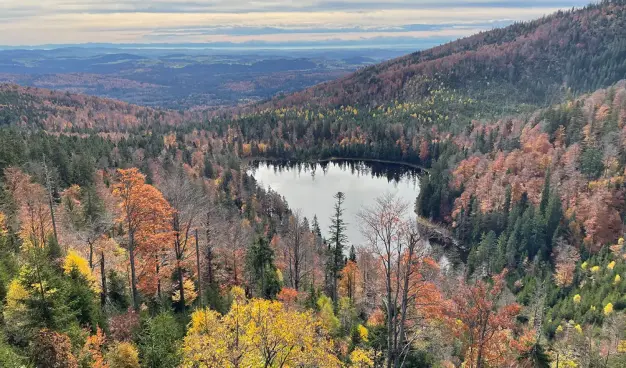
 European Citizen Science Assc.
 EK Hrvatska
 Evropska komisija
 European Economic and Social C
 🇪🇺 DG DEFIS #StrongerTogether
 Copernicus EU
 LIFE Programme
 European Investment Bank
 EU EnvironmentAgency