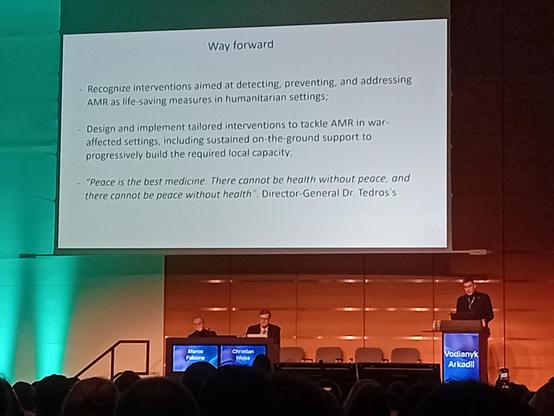
A very calm, measured talk today by Dr Arkadii from Ukraine, on the subject of antimicrobial resistance in the setting of conflict.
He described emerging problems with resistance in war wounded, compounded by supply chain issues, staff shortages, waves of overcrowding, and transfer of patients nationally & internationally.
There have been over 3000 attacks on healthcare in Ukraine since the war started.
He ends by quoting Dr Tedros of the WHO: "Peace is the best medicine."
#ESCMID #ESCMID2026
Some fascinating bone and joint infection cases in this session - Bacteroides in a neonate, tularaemia in a rural Spanish patient's hip, and a severe multifocal Burkholderia osteomyelitis in tibia and ankle requiring extensive drainage and debridement.
The last one, exposed through farming in the Philippines, recovered superbly, as shown by a video of him dad dancing with his son, just 12 weeks after surgical drainage.
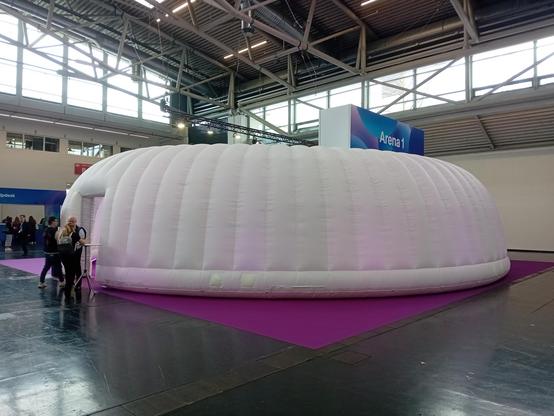
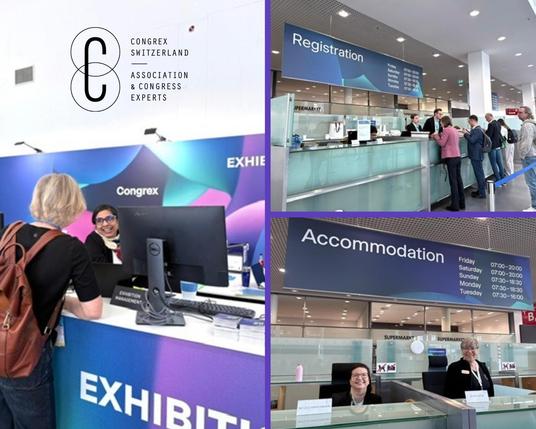
ESCMID Global 2026 is underway in Munich.
Our team is on site, bringing months of planning to life and supporting a key global platform for scientific exchange.
Proud to be part of it.
Patient priorities are vital. For instance, a younger fitter person may not mind some limited side-effects if it gets them out of the hospital and back to work / life more promptly.
A frail older person with little reserve might instead prioritise treatment with the lowest risk of side-effects, which could be more problematic in the long run, even if treatment takes longer.
Really interesting session this morning on outcome measurements in antibiotic therapy: mortality, or simple "cure vs not cure" measures are not always useful.
For instance, two patients might be cured with antibiotics, but one might suffer a life-threatening adverse event (e.g. C diff) and spend much longer in hospital, with functional decline and long-term consequences.
Alternative, stratified outcomes are sometimes more helpful.