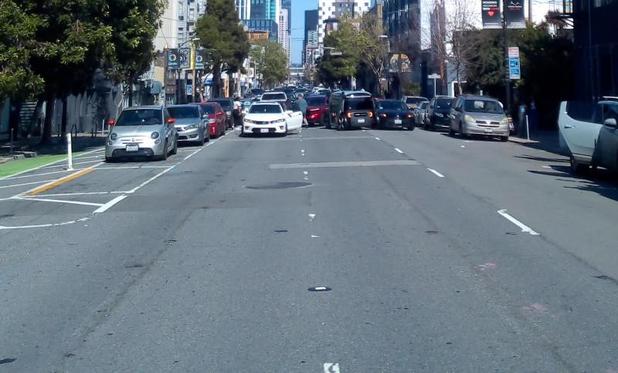
A minor fender bender happened involving one robo car. As a result, all three lanes of this busy street are blocked. Everybody is stopped and getting out of their cars and screaming at each other. Nobody seems to know how to fix it.

You know the signs saying "in case of minor accident, pull over to shoulder"? Robots can't do that.

#Traffic #DriverlessCar #SanFrancisco

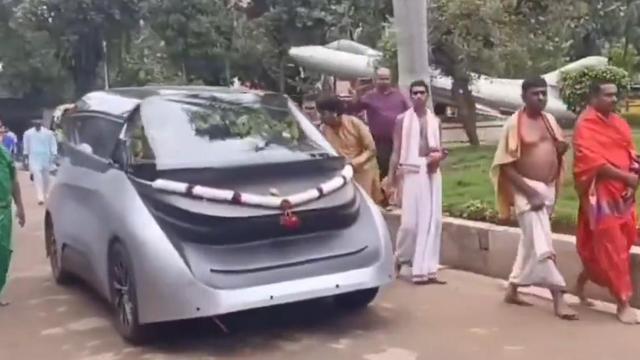
India’s push toward autonomous mobility received a boost as a driverless car prototype, WIRIN (Wipro–IISc Research and Innovation Network), was unveiled in Bengaluru. https://english.mathrubhumi.com/technology/wipro-iisc-rv-college-unveil-indigenous-driverless-car-wirin-bengaluru-bjctwsfm?utm_source=dlvr.it&utm_medium=mastodon #Tech #DriverlessCar #LatestNews #WIRIN #Bengaluru

Most Brits don’t trust driverless cars as 2026 launch looms

A new survey by motoring insurance comparison site Quotezone.co.uk found 66% of respondents had an unfavourable opinion of driverless vehicles, with just 12% saying they viewed the technology positively.

The findings come as ministers confirm plans to begin trials of self‑driving taxi and bus services in spring 2026, with a wider rollout of fully autonomous private cars pencilled in for late 2027.

Safety fears top the list

When asked about their biggest concerns, almost a quarter (24%) cited safety and accident risk. Other top worries included the chance of technical failures or malfunctions (18%), the loss of human control (17%), and the threat of hacking or other cyber‑security breaches (12%).

Insurance and liability questions were also raised, with 11% saying they were worried about who would be held responsible in the event of a crash – the driver, the manufacturer, or the software provider.

‘Public trust is still catching up’

Quotezone’s founder and car insurance expert Greg Wilson said:

“While driverless technology continues to advance at pace, it seems public trust is still catching up. Many people remain understandably cautious about handing over control to a machine – especially on busy, unpredictable UK roads.

Driverless cars bring up a lot of complex questions surrounding insurance and responsibility. Insurers will need a robust framework for claims in order to help drivers feel more secure.”

Reluctance to own

The survey of 1,000 UK adults, carried out in July, found 84% would not be willing to own a driverless car. Only 13% said they would, with the rest undecided.

Limited self‑driving features are already legal in the UK, but current rules require a human driver to remain in control at all times. The government’s planned pilot schemes would be the first time fully autonomous passenger services operate on public roads.

#driverlessCar #motoring #Quotezone #selfDrivingCar

Public scepticism grows as UK prepares for driverless cars by 2026

As the UK gears up for the arrival of driverless vehicles on public roads by 2026, new research suggests the public remains deeply sceptical about the technology.

A survey of 1,000 adults conducted by motoring insurance comparison site Quotezone.co.uk found that 66% of respondents hold a negative opinion of driverless cars, while 84% said they wouldn’t be willing to own one.

The findings come as the UK government prepares to launch pilot autonomous taxi and bus services from spring 2026, with a wider rollout of fully self-driving vehicles expected by late 2027 under the newly enacted Automated Vehicles Act.

Despite the promise of reduced human error and improved road safety, the survey highlights a significant trust gap. Safety and accident risk topped the list of public concerns (24%), followed by fears of technical failure (18%), loss of human control (17%), and cybersecurity threats such as hacking (12%).

Greg Wilson, CEO of Quotezone.co.uk, said:

“While driverless technology continues to advance at pace, it seems public trust is still catching up. Many people remain understandably cautious about handing over control to a machine — especially on busy, unpredictable UK roads.”

He added that the shift raises complex questions around insurance and liability, with 11% of respondents citing this as a key concern.

“Who would be at fault in the case of a crash? The driver, the manufacturer, or the software provider? Insurers will need a robust framework to help drivers feel more secure.”

The Department for Transport says the new legislation will require autonomous vehicles to meet safety standards equivalent to — or better than — those of careful human drivers2. The government also hopes the sector will unlock £42 billion in economic value and create 38,000 jobs by 2035.

Quotezone says it will continue to monitor public sentiment as the UK moves closer to an autonomous future.

#AutomatedVehiclesAct #autonomousCar #DepartmentForTransport #driverlessCar #driverlessTechnology #motoring #Quotezone

AI Ban in Spending Bill Would Curb States’ Driverless Car Regulations

As the first fully automated 18-wheeler rolls out, states would have no ability to govern what is taking place on their own roads.

The American Prospect
"Avec pour seul horizon l'exact antipode de la liberté des seventies : une sécurité totalitaire et maladive face à laquelle nous sommes sans arguments."
Alain Damasio, Vallée du Silicium
https://www.seuil.com/ouvrage/vallee-du-silicium-alain-damasio/9782021558746
#alaindamasio #Sécurité #VSA #driverlesscar #totalitarisme #technofascisme #oligarchy #oligarchie
Littérature française

Vallée du silicium, Alain Damasio : « Ce qui manque furieusement à notre époque, c’est un art de vivre avec les technologies

LA tech entrepreneur nearly misses flight after getting trapped in robotaxi

Mike Johns’ self-driving car started circling a parking lot, but he recognizes there are ‘glitches that need stitches’

The Guardian

I don’t need a driverless car; I need efficient, automated public transit. Let’s focus on enhancing public transportation for everyone—better systems reduce the need for so many individual vehicles.

#publictransit #driverlesscar