Investigating the Geographical Origins of First Life on Earth
Where did life on Earth start first? Scientists look at deep oceans and volcanoes to find out if we will find life on Mars or other moons.
#originoflife, #deepseavents, #volcanicpools, #nasamars, #earlyearth
https://newsletter.tf/where-did-life-on-earth-start-first-ocean-vs-volcano/
Scientists are choosing between the deep ocean and land volcanoes for the start of life. This choice tells us if we should look for aliens on Mars or icy moons.
#originoflife, #deepseavents, #volcanicpools, #nasamars, #earlyearth
https://newsletter.tf/where-did-life-on-earth-start-first-ocean-vs-volcano/

Where did life on Earth start first and how it changes our search for aliens
Where did life on Earth start first? Scientists look at deep oceans and volcanoes to find out if we will find life on Mars or other moons.

Giant deep-sea vent tubeworm symbionts use two carbon fixation pathways to grow at record speeds
In the deep-sea environment of the East Pacific Rise, where sunlight does not penetrate and the surroundings are known for their extreme temperatures, skull-crushing pressures, and toxic compounds, lives Riftia pachyptila, a giant hydrothermal vent tubeworm. Growing up to 6 feet tall with a deep-red plume, Riftia does not have a digestive system but thrives off its symbiotic relationship with bacteria that live deep within its body. These billions of bacteria fix carbon dioxide to sugars to sustain themselves and the tubeworm.
 NewsletterTF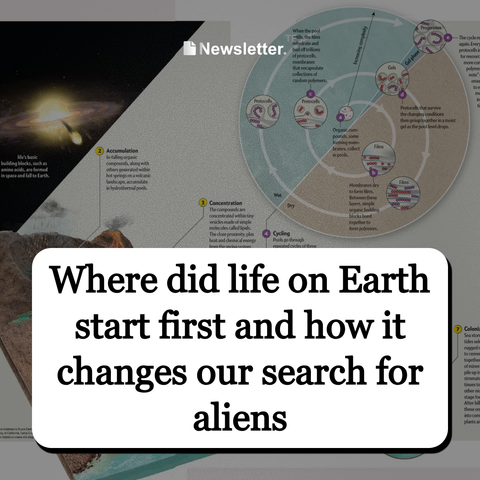
 earthling