Water droplets exposed to a cyanoacrylate (super glue) atmosphere.

📷 © @stephanedorbolo

For more images, follow LeidenForce on Instagram:
https://www.instagram.com/leidenforce/

#researchphotography #ExperimentalMethods #waterdroplets #cyanoacrylate #labphotography

During the "crash course into fatherhood" at the Y (😎), they never prepared us for one thing which drains huge amount of our time and resources:

crazygluing plastic toys after their inevitable extinction level events

💪💪💪🤩

#DadLife #parenting #CyanoAcrylate #StickyFingers #StickyEyeLashes #StickyEyeBrows #StickyNostrils #StickyDiningRoomTables #ShadyAcresInstitutionForThePeopleWhoUpUntilAFewYearsAgoSeemedToBeDoingJustFine

Pengcognito - It's one better than kintsugi.

It's one better than kintsugi.

Pengcognito
Workholding Options For The Beginner CNC Operator

Designing a file to cut on a CNC is only part of the process. You also have to keep it in place while the machine does its work. [Garrett Fromme] walks us through five different work holding techni…

Hackaday
Tech In Plain Sight: Superglue

Many inventions happen not by design but through failure. They don’t happen through the failure directly, but because someone was paying attention and remembered the how and why of the failur…

Hackaday

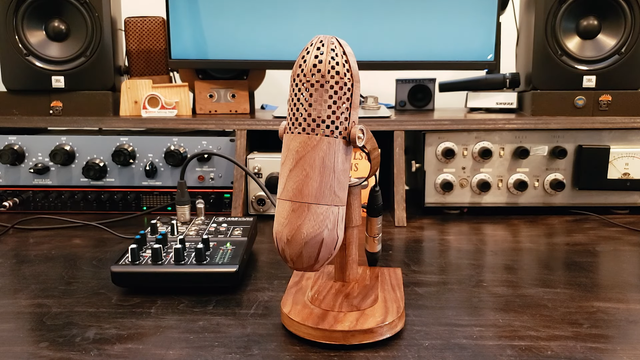
Falling Down the Labyrinth With Wooden Microphone Design

It used to be that when we featured one of [Frank Olson]'s DIY ribbon microphone builds, it was natural to focus on the fact that he was building them almost exclusively from wood. But despite how counterintuitive it may seem, and for as many comments as we get that his microphones shouldn't work without metal in the ribbon motors, microphones like this wooden RCA Model 77 reproduction both look and sound great.

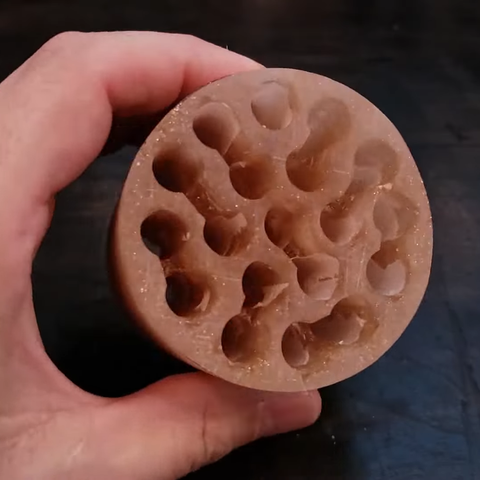
But ironically, this homage features a critical piece that's actually not made of wood. The 77's pickup pattern was cardioid, making for a directional mic that picked up sound best from the front, thanks to an acoustic labyrinth that increased the path length for incoming sound waves. [Frank]'s labyrinth was made from epoxy resin poured into a mold made from heavy paper, creating a cylinder with multiple parallel tunnels. The tops and bottoms of adjacent tunnels were connected together, creating an acoustic path over a meter long. The ribbon motor, as close to a duplicate of the original as possible using wood, sits atop the labyrinth block's output underneath a wood veneer shell that does its best to imitate the classic pill-shaped windscreen of the original. The video below, which of course was narrated using the mic, shows its construction in detail.

If you want to check out [Frank]'s other wooden microphones, and you should, check out the beautiful Model 44 replica that looks ready for [Sinatra], or the Bk-5-like mics he whipped up for drum kit recording.

#mischacks #cyanoacrylate #labyrinth #microphone #model77 #neodymium #ribbon #veneer #wood

Falling Down The Labyrinth With Wooden Microphone Design

It used to be that when we featured one of [Frank Olson]’s DIY ribbon microphone builds, it was natural to focus on the fact that he was building them almost exclusively from wood. But despit…

Hackaday

A New Wrinkle on Wooden Ribbon Microphones

Not too many people build their own microphones, and those who do usually build them out of materials like plastic and metal. [Frank Olson] not only loves to make microphones, but he's also got a thing about making them from wood, with some pretty stunning results.

[Frank]'s latest build is a sorta-kinda replica of the RCA BK-5, a classic of mid-century design. Both the original and [Frank]'s homage are ribbon microphones, in which a thin strip of corrugated metal suspended between the poles of magnets acts as a transducer. But the similarities end there, as [Frank] uses stacked layers of walnut veneer as the frame of his ribbon motor. The wood pieces are cut with a vinyl cutter, stacked up, and glued into a monolithic structure using lots of cyanoacrylate glue. The video below makes it seem easy, but we can imagine getting everything stacked neatly and lined up correctly is a chore, especially when dealing with neodymium magnets. Cutting and corrugating the aluminum foil ribbon is no mean feat either, nor is properly tensioning it and making a solid electrical contact.

The ribbon motor is suspended in a case made of yet more wood, all of which contributes to a warm, rich sound. The voice-over for the whole video below was recorded on a pair of these mics, and we think it sounds just as good as [Frank]'s earlier wooden Model 44 build. He says he has more designs in the works, and we're looking forward to hearing them, too.

#mischacks #audio #bk5 #cyanoacrylate #microphone #neodymium #ribbon #transformer #walnut

A New Wrinkle On Wooden Ribbon Microphones

Not too many people build their own microphones, and those who do usually build them out of materials like plastic and metal. [Frank Olson] not only loves to make microphones, but he’s also g…

Hackaday

Polymer Discovery Gives 3D-printed Sand Super Strength

Research activity into 3D printing never seems to end, with an almost constant stream of new techniques and improvements upon old ones hitting the news practically daily. This time, the focus is on a technique we've not covered so much, namely binder jetting additive manufacturing (BJAM for short, catchy huh?) Specifically the team from Oak Ridge National Laboratory, who have been exploring the use of so-called hyperbranched Polyethyleneimine (PEI) as a binder for jetting onto plain old foundry silica sand (nature, free access.)

Roll, spray, bake. Simples.

The PEI binder was mixed with a 75:25 mix of water and 1-propanol (not to be mixed up with 2-propanol aka isopropanol) to get the correct viscosity for jetting with a piezoelectric print head and the correct surface tension to allow adequate powder bed penetration, giving optimal binding efficiency. The team reported a two-fold increase in strength over previous jetting techniques, however, the real news is what they did next; by infusing the printed part (known as the green part) with common old ethyl cyanoacrylate (ECA, or super glue to us) the structural strength of the print increased a further eight times due to the reaction between the binder and the ECA infiltrate.

To further bestow the virtues of the PEI binder/ECA mix, it turns out to be water-soluble, at least for a couple of days, so can be used to make complex form washout tooling -- internal supports that can be washed away. After a few days, the curing process is complete, resulting in a structure that is reportedly stronger than concrete. Reinforce this with carbon fiber, and boy do you have a tough building material!

Not bad for some pretty common materials and a simple printing process.

We covered a similar binder jetting process for using sawdust a little while ago, and a neat way of printing with metal powder by carrying it in a stream of argon and cooking it with a laser, but there is an opening for a DIY effort to get in on the binder jetting game.

Thanks [Victor] for the tip!

#3dprinterhacks #binder #cyanoacrylate #jetting #pei #sand

Polymer Discovery Gives 3D-printed Sand Super Strength

Research activity into 3D printing never seems to end, with an almost constant stream of new techniques and improvements upon old ones hitting the news practically daily. This time, the focus is on…

Hackaday