 C++ on Sea
ACCU on Sea 2026 SESSION ANNOUNCEMENT: Portable Reflection in C++26 by Dan Katz
https://accuonsea.uk/2026/sessions/portable-reflection-in-cpp26
Register now at https://accuonsea.uk/tickets/
ACCU on Sea 2026 SESSION ANNOUNCEMENT: Portable Reflection in C++26 by Dan Katz
https://accuonsea.uk/2026/sessions/portable-reflection-in-cpp26
Register now at https://accuonsea.uk/tickets/
ACCU on Sea 2026 SESSION ANNOUNCEMENT: Portable Reflection in C++26 by Dan Katz
https://accuonsea.uk/2026/sessions/portable-reflection-in-cpp26
Register now at https://accuonsea.uk/tickets/
Today is the 8th anniversary of C++ Insights. In my latest post, I discuss its status and the gift for this special day.
https://andreasfertig.com/blog/2026/05/happy-8th-anniversary-cpp-insights/

What the Heck Is Reflection?
C++26에 도입된 리플렉션 기능은 ^^ 연산자와 [: :] 스플라이서 연산자를 통해 컴파일 타임에 타입, 변수, 함수 등의 메타 정보를 다룰 수 있게 한다. 이를 활용하면 기존에 번거롭고 오류가 잦았던 enum 문자열 변환 코드를 간결하고 안전하게 작성할 수 있다. 아직 주요 컴파일러에서 완전 지원되지는 않았지만, 곧 실무에 적용 가능할 것으로 기대된다. 이 기능은 C++ 메타프로그래밍과 코드 자동화에 큰 변화를 가져올 전망이다.
ACCU on Sea 2026 SESSION ANNOUNCEMENT: C++26 Uncovered - Everything You Need to Know About the New Standard by Inbal Levi
Register now at https://accuonsea.uk/tickets/
ACCU on Sea 2026 SESSION ANNOUNCEMENT: C++26 Uncovered - Everything You Need to Know About the New Standard by Inbal Levi
Register now at https://accuonsea.uk/tickets/
@bjn that is a great bug.
simplified https://godbolt.org/z/MnEGcE595
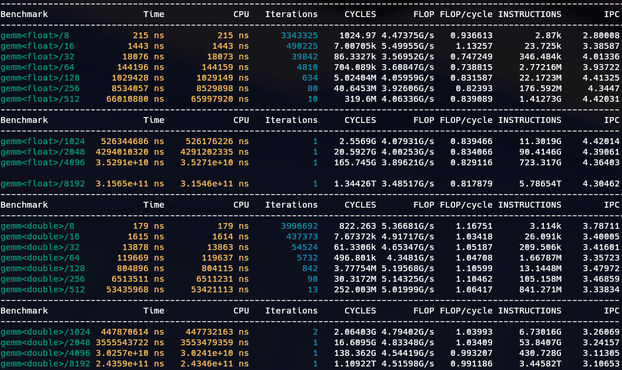
Two more results. This time without using std::simd. One uses a plain loop over C[i, j] += A[i, k] * B[k, j] (in the inner kernel—it is still blocked over all levels of the cache hierarchy).
This is ~10–30x slower.
1/2
ACCU on Sea 2026 SESSION ANNOUNCEMENT: Demystifying C++ initializer_list - Design, Behavior, and Best Practices by Prithvi Okade & Chandranath Bhattacharyya
Register now at https://accuonsea.uk/tickets/

 ACCUConf
 Andreas Fertig
 sayzard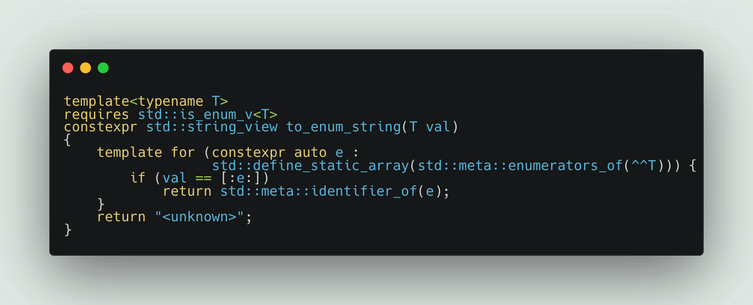

 Bruno Nicoletti
 Gareth Lloyd (He/him)
 Matthias Kretz | Vir