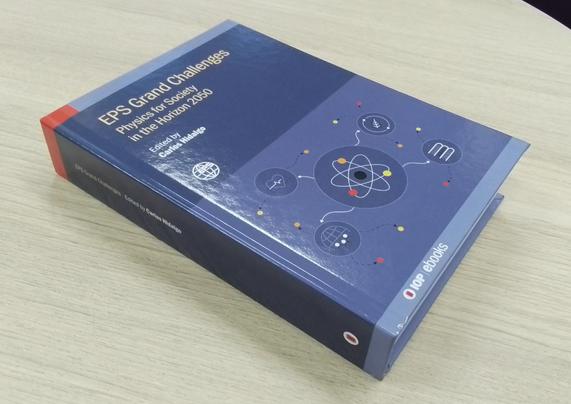
Finally, we also got the printed book on Grand Challenges with our contribution on "Physics for the environment and sustainable development" (including
#recurrence_plot and
#complex_networks analysis) – what a thick book!
https://iopscience.iop.org/book/oa-edit/978-0-7503-6342-6/chapter/bk978-0-7503-6342-6ch6Physics for the environment and sustainable development - Book chapter - IOPscience
Tomorrow evening, quite a special event:
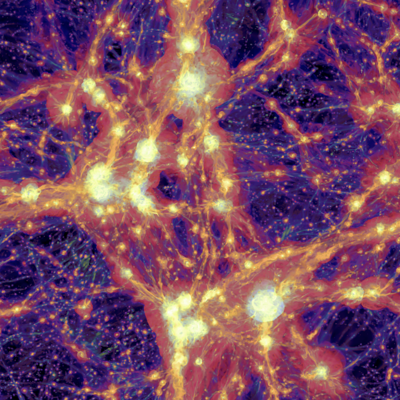
I will be at Villa Galilei in the hills around #Florence, where Galileo spent his latest years of home imprisonment, to speak about how the human brain and the cosmic web might look alike, through the lens of #complex_networks analysis and together with my (neurosurgeon) colleague.
Events organized by Inaf and University of Florence.
https://portalegiovani.comune.fi.it/urlnews/webzine/48720.html
#astronomy #astrodon
"Inner Worlds, Outer Spaces", a Villa Galileo si inaugura la mostra di Daniela De Paulis
Portalegiovani del Comune di Firenze : notizie, informazioni e servizi su Firenze e hinterland fiorentino
Quantifying Biases in Online Information Exposure
(2018) : Nikolov, Dimitar and Lalmas, Mounia and Flammini, Alessandro and Menczer, Filippo
url:
http://arxiv.org/abs/1807.06958#bias #complex_networks #information #metrics #online #quantitative #tax#my_bibtexQuantifying Biases in Online Information Exposure
Our consumption of online information is mediated by filtering, ranking, and
recommendation algorithms that introduce unintentional biases as they attempt
to deliver relevant and engaging content. It has been suggested that our
reliance on online technologies such as search engines and social media may
limit exposure to diverse points of view and make us vulnerable to manipulation
by disinformation. In this paper, we mine a massive dataset of Web traffic to
quantify two kinds of bias: (i) homogeneity bias, which is the tendency to
consume content from a narrow set of information sources, and (ii) popularity
bias, which is the selective exposure to content from top sites. Our analysis
reveals different bias levels across several widely used Web platforms. Search
exposes users to a diverse set of sources, while social media traffic tends to
exhibit high popularity and homogeneity bias. When we focus our analysis on
traffic to news sites, we find higher levels of popularity bias, with smaller
differences across applications. Overall, our results quantify the extent to
which our choices of online systems confine us inside "social bubbles."
 Norbert Marwan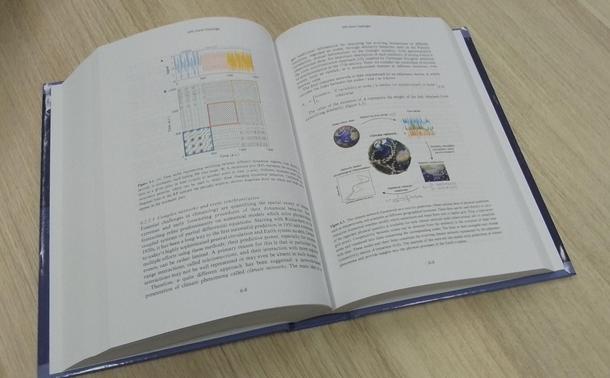
 franco_vazza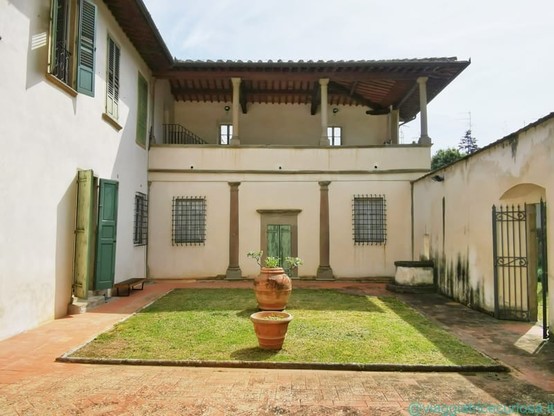
 nope
nope