LFortran compiles fpm

LFortran can now compile fpm, the Fortran Package Manager. We opened up an issue for it in April 2025, when we started focusing on it as a priority. We closed it on February 7, 2026. fpm is the most complex project that we now successfully built and run. It is an interesting project: it is not computational, but rather a system project which exercises running other programs, reading environment variables, command-line argument parsing, reading and writing files, directories, parsing enough Fortran to understand dependencies, etc. It uses almost all modern Fortran features: classes, inheritance, allocatable components, constructors, arrays of classes, select type, associate, automatic LHS (left-hand side) reallocation, strings, arrays of strings and it exposed dozens and dozens of bugs and missing features in LFortran. And we have now implemented them all. As a result, LFortran is really close to beta, and we are advancing our progress bar to 9/10.


LFortran
GitHub - elide-dev/gradle: Experimental Gradle plugin for Elide

Experimental Gradle plugin for Elide. Contribute to elide-dev/gradle development by creating an account on GitHub.

GitHub
LFortran compiles PRIMA

We’re thrilled to share that LFortran can now successfully compile and execute libprima/PRIMA. PRIMA marks the eighth production-grade, third-party code that LFortran has compiled with bit-for-bit alignment to GFortran’s output. This milestone brings us closer to our goal of compiling 10 such codes—an essential step toward achieving a beta-quality compiler. About PRIMA PRIMA is a package developed by Zaikun Zhang for solving general nonlinear optimization problems without using derivatives. It provides the reference implementation for Powell’s derivative-free optimization methods, i.e., COBYLA, UOBYQA, NEWUOA, BOBYQA, and LINCOA. PRIMA means Reference Implementation for Powell’s methods with Modernization and Amelioration, P for Powell. The package is written in Fortran and is widely used in the scientific community for solving optimization problems.

LFortran

How?

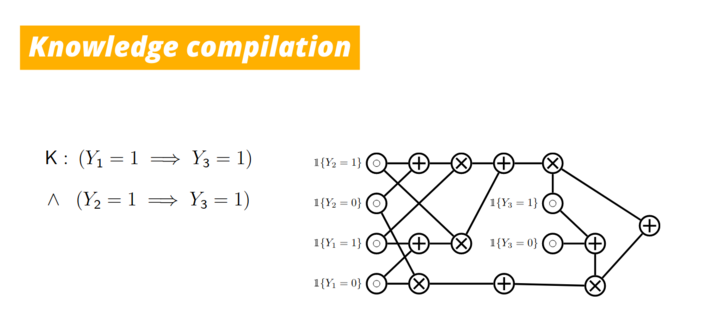
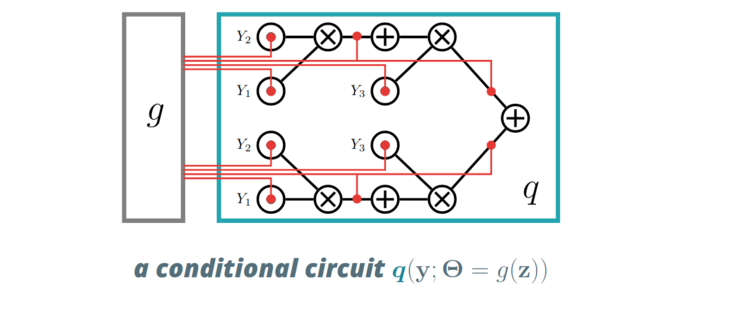
SPLs realize a #tractable product of #experts via 2 #circuits.

One encodes an #expressive distribution over the labels, the other compactly #compiles the #symbolic #constraint!

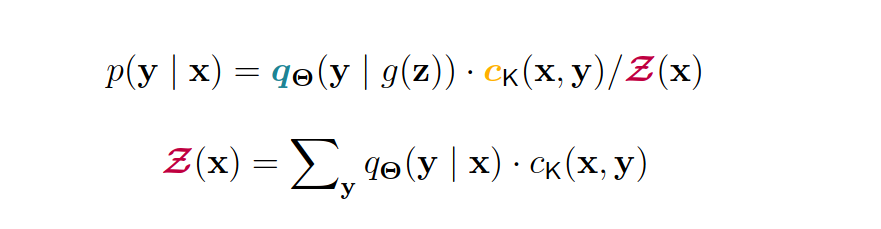
We can compute #exact #gradients because we can normalize them in one feedforward pass!

This can be of interest to many #probabilistic folks!

cc @nbranchini @avehtari @PhilippHennig

5/

Brian Robert Callahan

Let me start with that I'm NOT A SHILL, I'm simply stating my own preferences for a program that I have come to very much enjoy in the past few weeks/months, despite the fact that it has been developed by a tyrannically corrupt, capitalistic-minded government (my words and not theirs).

I've recently made #Ghidra a serious part of my regularly used development toolkit, particularly when it comes to coding with C/C++ despite the fact that this particular piece of software has been developed by the NSA themselves in the United States.

The potential security concerns are simply outweighed by the immense amount of useful, reverse engineering features that #Ghidra provides to the average software developer, without having to invest a small mortgage into something alternative like #IDAPro, which would've been the more traditional choice.

So yeah! I think anyone who is serious about developing software, particularly if it's with code that #compiles natively to machine code, that they take up learning and/or trying out Ghidra!

The list of features is too large to list but my favorite would have to be the version tracking provided, so you can easily make comparisons between different versions of software at a glance, whilst reverse-engineered, and see what a close-sourced developer has been up to in their time. Or simply see for yourself what a change in a LOC has accomplished for you!

I haven't even mentioned the best part and that is the fact that the program features an #ouroboros #Dragon eating its own tail while breathing #binary #code as its breath weapon! Just have a look at the attachment, it really does look as cool as it sounds.

https://ghidra-sre.org/

#ReverseEngineering #ReverseEngineered #Programming #Software