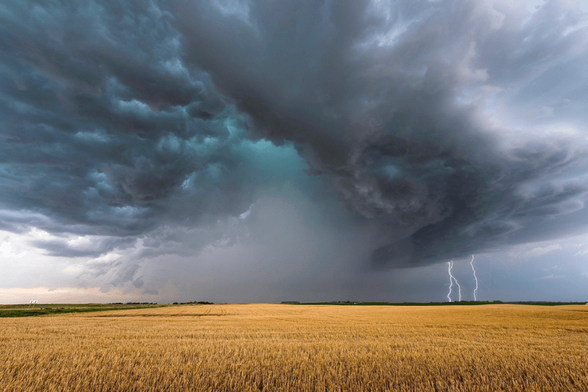
"The research found that sudden, large temperature fluctuations from one day to the next -- a largely overlooked form of extreme weather -- are becoming more frequent, more intense and larger in magnitude.

The study attributes the trend primarily to greenhouse gas emissions, with drier soils and increased variability in air pressure and soil moisture identified as key contributing factors."

https://qazinform.com/news/study-finds-sharp-rise-in-extreme-day-to-day-temperature-swings-worldwide-b1e7dd/amp
#ClimateVariability #WeatherWhiplash

Study finds sharp rise in extreme day-to-day temperature swings worldwide

Extreme day-to-day temperature swings have intensified markedly in recent decades, particularly in low- and mid-latitude regions where most of the world’s population lives, according to a study published in the journal Nature, Anadolu Agency reports. 

МИА «Казинформ»

"One of the study’s most important insights is that the problem is not declining average rainfall, but rising #ClimateVariability.

Statistical tests show little difference in average drought conditions between the early and recent periods. However, when the researchers examine extremes, a clear shift emerges. Wet periods have become wetter, but dry periods have also become drier. The gap between these extremes has widened sharply, especially over longer time scales."

https://www.devdiscourse.com/article/science-environment/3744047-the-climate-paradox-increasing-rainfall-but-growing-drought-risks-in-south-korea

The Climate Paradox: Increasing Rainfall but Growing Drought Risks in South Korea | Science-Environment

p data-start283 data-end924Researchers from the Department of Infrastructure Engineering at the University of Melbourne and the Korean Water Resources Corporation K-water set out to answer a troubling question how can droughts worsen in South Korea when rainfall is increasing Using more than a century of temperature and precipitation records from six of the countryrsquos oldest weather stations combined with streamflow data from South Korearsquos ten largest dams the study examines how climate change has reshaped drought patterns and water availability over time The findings overturn a common assumption that more rain automatically means greater water securityp h2 data-start926 data-end961Warmer Wetter Yet More Fragileh2 p data-start963 data-end1600The data show clear long-term warming across South Korea Since the early 1900s temperatures have risen steadily at all six stations with especially strong warming in cities such as Seoul and Daegu At the same time annual rainfall has increased everywhere by roughly 15 to nearly 30 millimetres per decade On average the country is both warmer and wetter than it was a century ago Yet these averages mask growing instability Seasonal analysis reveals that most rainfall increases are concentrated in summer while winters show little change or even slight declines increasing the risk of dry periods outside the monsoon seasonp h2 data-start1602 data-end1635Why Droughts Are Getting Worseh2 p data-start1637 data-end2146To understand drought more accurately the researchers used the Standardized Precipitation Evapotranspiration Index or SPEI Unlike rainfall-only measures SPEI accounts for temperature-driven evaporation which is increasingly important in a warming climate The results show that droughts have become more frequent and more intense in recent decades particularly when measured over longer periods of one to five years These long-term droughts matter most for rivers reservoirs and water supply systemsp p data-start2148 data-end2504Short-term droughts still fluctuate widely from year to year but long-term drought patterns now show deeper and longer-lasting dry conditions than those observed in the early 20th century In several major cities including Seoul drought frequency has more than doubled at some time scales This worsening occurs even though total rainfall has increasedp h2 data-start2506 data-end2547The Hidden Role of Climate Variabilityh2 p data-start2549 data-end3018One of the studyrsquos most important insights is that the problem is not declining average rainfall but rising climate variability Statistical tests show little difference in average drought conditions between the early and recent periods However when the researchers examine extremes a clear shift emerges Wet periods have become wetter but dry periods have also become drier The gap between these extremes has widened sharply especially over longer time scalesp p data-start3020 data-end3458This growing variability is driven by two forces Rainfall has become more uneven with stronger swings between wet and dry years while rising temperatures have increased evaporation pulling moisture out of soils rivers and reservoirs faster than before Much of the extra rainfall is therefore lost reducing its benefit for long-term water storage In simple terms South Korea is receiving more rain but keeping less usable waterp h2 data-start3460 data-end3497What This Means for Water Securityh2 p data-start3499 data-end4068The study confirms that these worsening drought patterns directly affect water resources Across all ten major dam catchments the researchers found very strong links between meteorological drought and reduced streamflow especially at time scales longer than one year This means that changes in climate variability are already translating into lower and less reliable river flows Drought indices that include temperature effects perform better at explaining these changes than rainfall-only measures highlighting the growing role of heat in shaping water shortagesp p data-start4070 data-end4724 data-is-last-node data-is-only-nodeThe findings carry a clear warning Water management strategies based on historical averages are no longer sufficient in a warming world Even countries experiencing more rainfall may face higher drought risk if climate variability increases For South Korea where population density is high and water demand is intense the results point to an urgent need to rethink drought planning reservoir management and climate adaptation strategies The paradox revealed by this study that more rain can coincide with worse droughts offers a lesson with global relevance as climate change reshapes water systems worldwidep

Devdiscourse

#seaice #Arctic #ClimateVariability #climate #ClimateScience #climatechange

Original open access article

England et al. 16 Aug 2025, Geophys Res Lett 52(15)

Minimal Arctic Sea Ice Loss in the Last 20 Years, Consistent With Internal Climate Variability

https://doi.org/10.1029/2025GL116175

🌦️ “The small-scale matters for the large-scale!” - C. Hohenegger

When the Storms & Land group began their #nextGEMS journey, their mission was clear: find out how explicitly resolving #storms and land-surface features at km-scale changes our understanding of #ClimateVariability.

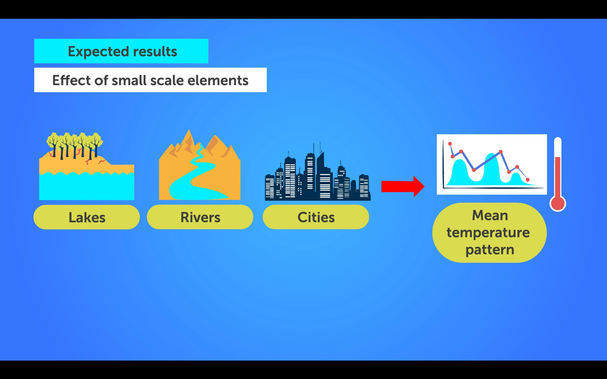
Over the past four years, under the leadership of Cathy Hohenegger (MPI-M), the team explored how precipitation and #temperature patterns over land are shaped by fine-scale features, such as rivers and soil moisture, and how these effects can differ dramatically from coarser #ClimateSimulations.

The results? Surprising, and a reminder that small details can have global consequences.

▶️ Watch the full video, titled "Small-scale resolution reshapes our understanding of land-climate dynamics", in our Media Library (Project outcomes) to hear Cathy explain the discoveries and their significance.

#ClimateModeling #H2020 #EarthSystemScience #StormResolvingModels

@cinea_EU

How has our climate changed in the past? #ClimateChange #ClimateVariability

YouTube

"Melting ice sheets are slowing the Antarctic Circumpolar Current (ACC), the world's strongest ocean current, researchers have found. This melting has implications for global climate indicators, including sea level rise, ocean warming and viability of marine ecosystems".
#ocean #climatevariability #marine #ecosystems #Antarctic #icesheet #globalwarming

https://phys.org/news/2025-02-antarctic-ice-sheets-earth-strongest.html

Melting Antarctic ice sheets are slowing Earth's strongest ocean current, research reveals

Melting ice sheets are slowing the Antarctic Circumpolar Current (ACC), the world's strongest ocean current, researchers have found. This melting has implications for global climate indicators, including sea level rise, ocean warming and viability of marine ecosystems.

Phys.org

"Determining the degree to which shifting drought conditions around the world are attributable to natural hydroclimatic variability and how much they are caused by climate change is a complicated task. Scientists often use complex computer models to simulate past climate variability and to identify unprecedented drought conditions".

#droughts #treerings #climatevariability
https://phys.org/news/2025-02-tree-reveal-climate-driven-drought.html

Tree ring records reveal climate-driven drought shifts across Europe and Asia

Determining the degree to which shifting drought conditions around the world are attributable to natural hydroclimatic variability and how much they are caused by climate change is a complicated task. Scientists often use complex computer models to simulate past climate variability and to identify unprecedented drought conditions.

Phys.org
Have you heard of climate variability? #ClimateChange #ClimateVariability

YouTube

Our new paper is out!! 🎉 📑
https://www.nature.com/articles/s41561-023-01299-9

🌐 🔁 🧊 By comparing proxy reconstructions and climate model simulations we find that climate models underestimate regional but not global temperature variability.

The paper originated from the workshop “Beyond Palaeoclimate Ping Pong” supported by the Hengsterberger Prize awarded to Kira Rehfeld. Thanks again to all participants!

Find out more 👉 https://uni-tuebingen.de/en/university/news-and-publications/press-releases/press-releases/article/keeping-an-eye-on-the-regions-when-it-comes-to-climate-change/

#modeldatacomparison #cvas #climatevariability

@unituebingen @awi

Regional but not global temperature variability underestimated by climate models at supradecadal timescales - Nature Geoscience

Discrepancies between model simulations and proxy reconstructions of regional multidecadal to centennial climate variability are primarily due to climate model deficiencies, which might also impact future projections, according to a synthesis of recent work.

Nature
Climate variability a shock to the crop system, shows study

As the world faces more climate variability and extremes in the face of global warming, sudden environmental changes add an extra layer of stress to food production in the United States and around the world. It is critical, then, to figure out how the areas in which crops are planted and harvested respond to these stressors, which can bring on 'shocks' in production—or, put differently, sudden and statistically significant crop declines.

Phys.org