Sharks, rays, chimaeras further threatened by deep-sea mining

The habitat of thirty species of sharks, rays, and chimaeras, also called ghost sharks, overlap with areas where proposed deep-sea mining may occur, according to new research. Nearly two-thirds of these species are already threatened with extinction due to human impacts, so deep-sea mining, which will disrupt the seafloor and discharge large plumes of sediment into the water above, has the potential to elevate their extinction risk.

EurekAlert!
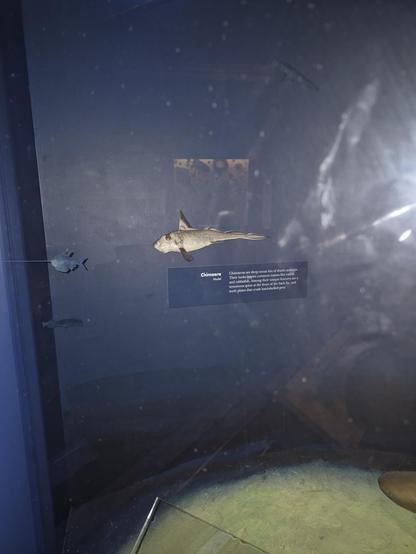
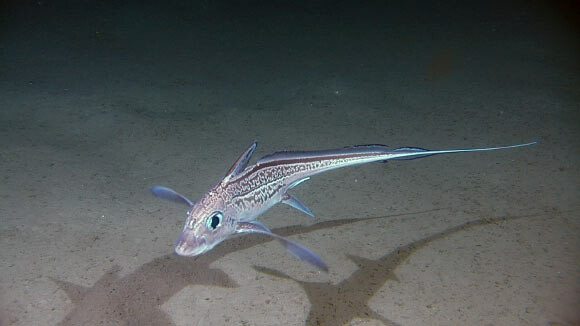
#chimaeras[1] are cartilaginous fish in the order Chimaeriformes (/kɪˈmɛrɪfɔːrmiːz/), known informally as ghost sharks, rat fish (not to be confused with rattails), spookfish, or rabbit fish

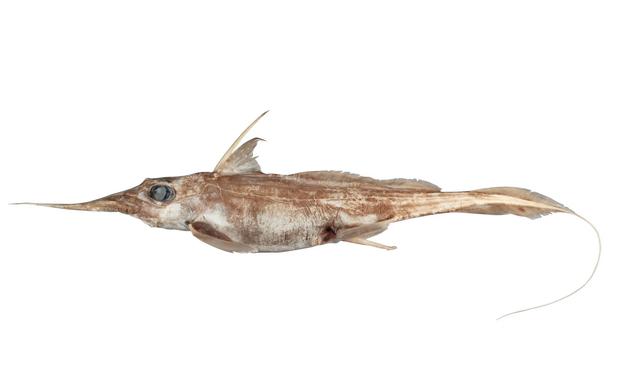
#NewSpecies of #GhostShark with unusually long nose discovered in deep seas off #NewZealand https://www.theguardian.com/world/2024/sep/25/ghost-shark-new-species-spookfish-discovered-new-zealand

Harriotta avia sp. nov. – a new rhinochimaerid described from the Southwest Pacific: Brittany Finucci et al. https://link.springer.com/article/10.1007/s10641-024-01577-4

#Chimaeras are quite cryptic in nature – they can be hard to find in the #DeepSea… and they generally don’t get the same attention #sharks do, when it comes to research.”

New ghost shark species with unusually long nose discovered in deep seas off New Zealand

The narrow-nosed spookfish is also found in Australian waters and is distinctive for its elongated snout and whip-like tail

The Guardian

#Field Guide to #Sharks, #Rays, and #Chimaeras of the East Coast of North America ((@)PrincetonUPress)
by David A. Ebert and Marc Dando

#book review by Jake Wood of the (@)MarianneEPorter lab
& free ICB & our sibling journal , IOB ,reads

https://integrativeandcomparativebiology.wordpress.com/2024/08/06/field-guide-to-sharks-rays-chimaeras-of-the-east-coast-of-north-america/

Field Guide to Sharks, Rays, & Chimaeras of the East Coast of North America

Book review by Jake Wood is a Integrative Biology Ph.D. student at Florida Atlantic University of Field Guide to Sharks, Rays, and Chimaeras of the East Coast of North America by David A. Ebert and…

Integrative and Comparative Biology

#WeirdArtToot time!

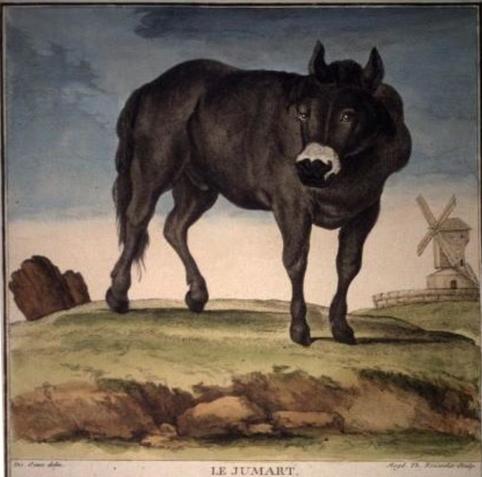
This week, I found out about an old-school #mythicalcreature that I’d somehow never noticed before, despite their presence in folklore since at least the 17th century.

The featured creature is the #Jumart, a hybrid #monster, but a mundane one- part horse and part bull.

This #anomoly barely qualifies as #mythical, since there are genetically unusual, but wholly equine horses that look like this.

The #Curiosities #Deyrolle chart shows some other strange farm #chimaeras.

#CrittersOfMastodon
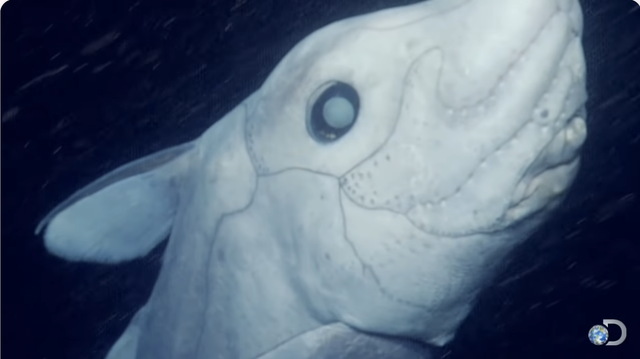
#GhostShark

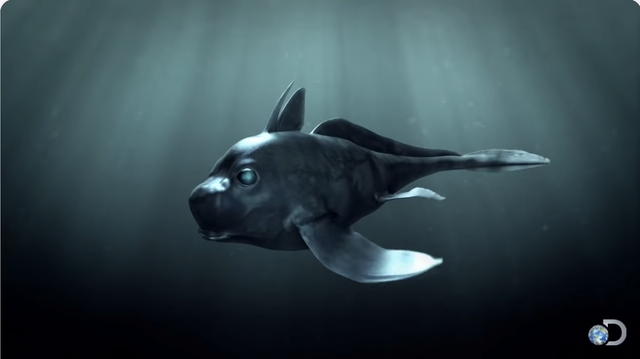
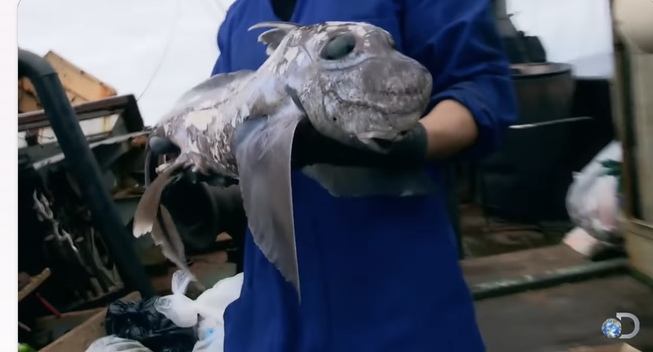
#Chimaeras (ghost sharks) are soft-bodied, shark-like fish with bulky heads and long, tapered tails; measured from the tail, they can grow up to 150 cm (4.9 ft) in length.

Ghost sharks are not actual sharks, but a species of fish closely related to sharks and rays.

They 're cartilaginous, meaning their skeletons are primarily composed of cartilage, which gives them an eerie, ethereal quality.
They're known for their winged fins, protruding forehead and "dead eye gaze".

The ghost shark's retractable sex organ resembles a spiky club that sits at the end of a stalk.

The first dorsal fin, which is the fin present on its back, is uniquely shorter than its curved spine.

Most species of ghost shark inhabit the deep sea, although a handful of species prefer to live in shallow coastal waters.
They're thought to originate around 420 million years ago/

This video is thought to be the first time one has been caught on camera.

https://www.bing.com/videos/riverview/relatedvideo?&q=Ghost%20Shark%20Animal&mid=8989748199A3A90F86738989748199A3A90F8673&ajaxhist=0

Ghost Shark Animal - Bing video

#Carboniferous-Period #Chimaeras Were Suction Feeders
https://www.sci.news/paleontology/carboniferous-period-chimaeras-11575.html

Evidence for high-performance suction feeding in the Pennsylvanian stem-group holocephalan Iniopera https://www.pnas.org/doi/10.1073/pnas.2207854119

In their early evolutionary history, some chimaeras were inhabiting ecological niches that are now monopolized by ray finned #fishes — a far cry from their modern life as specialized shell-crushers.

Curtin University researchers have revealed how the #pelvic #fins of fish such as #sharks and #chimaeras have #evolved from their sudden appearance in the fossil record over 410 million years ago.
#MarineBiology #sflorg
https://www.sflorg.com/2022/12/mb12152201.html
3D imaging of shark embryos reveals evolution of pelvic fins

In primitive sharks and cartilaginous fish, pelvic fin radials attach primarily to the pelvis