.
.
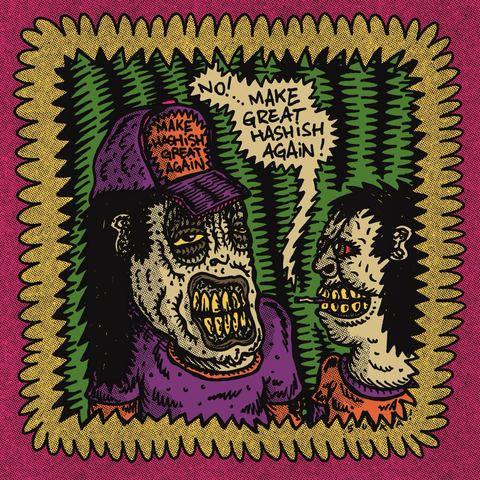
#hashish #fumo #quantita #qualità #quantité #qualité #makegreathashishagain #pappagallo #caramello #charas
Il Twix al #caramello è una sòla.
Per l'occasione ho coniato la scala di valutazione delle STALLE MICHELON, e questo per me ne prende 4.
Non si sente il caramello, non si sente il salato, ma solo un sapore dolce indistinto. Va bene che è industriale, ma il mio palato ha i suoi diritti!
A larger question is whether this is what Grothendieck would have wanted.
In 1972, during his ecologist phase,
concerned that capitalist society was driving humanity towards ruin,
he gave a talk at CERN, near Geneva,
entitled
"Can We Continue Scientific Research?"
He didn’t know about AI
– but he was already opposed to this collusion between science and corporate industry.
Considering his pacifist values, he would probably also have been opposed to Huawei’s championing of his work;
-- its chief executive, #Ren #Zhengfei, is a former member of the People’s Liberation Army engineering corps.
The US department of defense,
as well as some independent researchers,
believes Huawei is controlled by the Chinese military.
Huawei insists it is a private company,
owned by its employees and its founding chairman,
Ren Zhengfei,
and that it is “not owned, controlled or affiliated to any government or third-party company”.
Lafforgue points out that France’s IHES,
where Grothendieck and later he worked,
was funded by industrial companies
– and thinks Huawei’s interest is legitimate.
Caramello, who is the founder and president of the Grothendieck Institute research organisation,
believes that he would have wanted a systematic exploration of his concepts to bring them to fruition.
“Topos theory is itself a kind of machine that can extend our imagination,” she says.
“So you see Grothendieck was not against the use of machines.
He was against blind machines, or brute force.”
What is unsettling is a degree of opaqueness about Huawei’s aims regarding AI and its collaborations,
including its relationship with the Grothendieck Institute,
where Lafforgue sits on the scientific council.
But Caramello stresses that it is an entirely independent body that engages in theoretical,
not applied research,
and that makes its findings available to all.
She says it does not research AI and that Lafforgue’s involvement pertains solely to his expertise in Grothendieckian maths.
#Huawei #topos #Olivia #Caramello #Grothendieck #Laurent #Lafforgue #Pierre #Cartier
In mid-April, dapper Parisians are filing out of the polished foyer of a redeveloped hotel in the seventh arrondissement, heading for lunch.
The first French TV programmes were broadcast from the building -- now, #Huawei is pushing for a similar leap in AI here.
It has set up the Centre-Lagrange,
an advanced mathematics research institute, on the site and hired elite French mathematicians,
including Laurent Lafforgue, to work there.
An aura of secrecy surrounds their work in this ultra-competitive field,
compounded by growing suspicion in the west of Chinese tech.
Huawei initially refused to answer any questions, before permitting some answers to be emailed.
Grothendieck’s notion of the #topos,
developed by him in the 1960s,
is of particular interest to Huawei.
Of his fully realised concepts, toposes were his furthest step in his quest to identify the deeper algebraic values at the heart of mathematical space,
and in doing so generate a geometry without fixed points.
He described toposes as a “vast and calm river”
from which fundamental mathematical truths could be sifted.
#Olivia #Caramello views them rather as “bridges” capable of facilitating the transfer of information between different domains.
Now, Lafforgue confirms via email,
Huawei is exploring the application of toposes in a number of domains, including telecoms and AI.
Caramello describes toposes as a mathematical incarnation of the idea of vision;
-- an integration of all the possible points of view on a given mathematical situation that reveals its most essential features.
Applied to AI, toposes could allow computers to move beyond the data associated with, say, an apple;
-- the geometric coordinates of how it appears in images, for example, or tagging metadata.
Then AI could begin to identify objects more like we do
– through a deeper “semantic” understanding of what an apple is.
But practical application to create the next generation of “thinking” AI is, according to Lafforgue, some way off.
0 Likes, 0 Comments - Man of Many (@manofmany) on Instagram: "Just chillin’ with a giant tub of @cadburyaust ice cream filled with more rubs of ice cream �..."