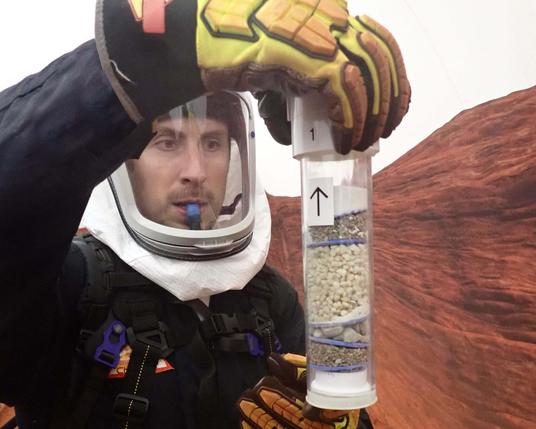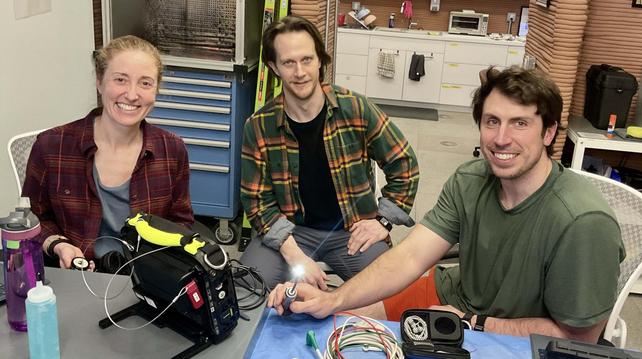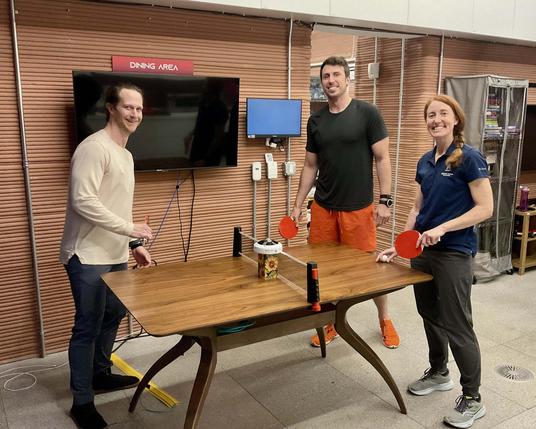
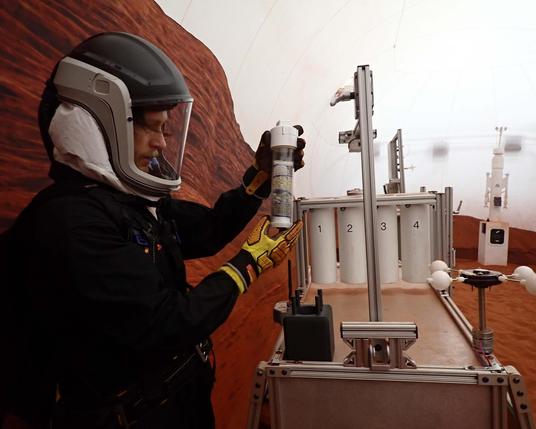
L'équipe de 4 personnes de la simulation martienne CHAPEA, menée par la NASA pendant un an, réalise des expériences de culture, de suivi du stress physique et mental des "astronautes"
EN BREF 🚀 Quatre volontaires ont vécu en isolement pendant plus d’un an dans un habitat simulant la vie sur Mars. 🛰️ La NASA a utilisé cette mission pour tester les conditions de vie martiennes sans quitter la Terre. 🎮 Les jeux vidéo, notamment de stratégie, ont été essentiels pour maintenir le moral de l’équipage.
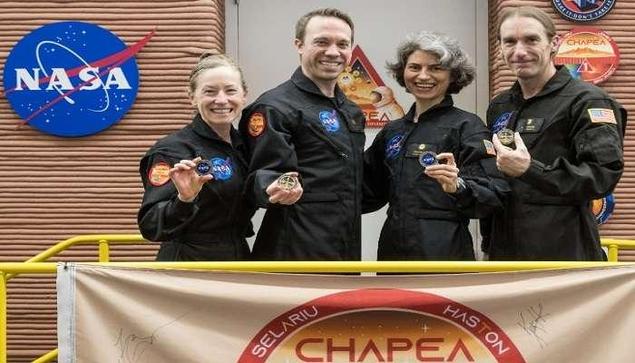
La tripulación de cuatro personas, CHAPEA 1, compuesta por el comandante Kelly Haston, el ingeniero de vuelo Ross Brockwell, el oficial médico Nathan Jones y la oficial científica Anca Selariu, escenificaron un momento crucial en la exploración espacial cuando salieron de un edificio aparentemente común en el Centro Espacial Johnson de la NASA en Houston, Texas, el 6 de julio de 2024.
Four volunteer crew members who spent more than 12 months inside NASA’s first simulated Mars environment at Johnson Space Center in Houston have emerged from the artificial alien enviroment. Kelly Haston, Anca Selariu, Ross Brockwell and Nathan Jones entered the 3D-printed habitat on June 25, 2023, and emerged around 5 p.m. Saturday. The maiden crew of the space agency’s Crew Health and Performance Exploration Analog project spent 378 days inside the space of 1,700 square feet to simulate a mission to the red planet. The crew in the first of three planned CHAPEA missions focused on establishing possible conditions for future Mars operations through simulated spacewalks, as well as growing and harvesting vegetables to supplement their provisions and maintaining the habitat.
Crew of NASA's earthbound simulated Mars habitat emerge after a year
On member said their 378 days in confinement “went by quickly.”