Join our upcoming webinar 𝘍𝘳𝘰𝘮 𝘉𝘦𝘩𝘢𝘷𝘪𝘰𝘶𝘳𝘢𝘭 𝘐𝘯𝘴𝘪𝘨𝘩𝘵𝘴 𝘵𝘰 𝘌𝘯𝘦𝘳𝘨𝘺-𝘌𝘧𝘧𝘪𝘤𝘪𝘦𝘯𝘵 𝘏𝘢𝘣𝘪𝘵𝘴: 𝘓𝘪𝘯𝘬𝘪𝘯𝘨 𝘗𝘰𝘭𝘪𝘤𝘺 𝘢𝘯𝘥 𝘗𝘳𝘢𝘤𝘵𝘪𝘤𝘦
📆 02. June 2026 10:00 CET
⏳ Registration closes soon. Secure your place: https://climatealliance-org.zoom.us/meeting/register/KA7uvomgQp-IpvzlATAYyg#/registration
#SaveEnergyTogether #BehaviouralInsights #ClimateAction #LIFEProject #LIFEProgramme
I'm sharing highlights from the 3rd #BehaviouralInsights & #AntimicrobialResistance Workshop over on BlueSky: https://bsky.app/profile/byrdnick.com/post/3lp7cmrfpkk2e
The program looks great — the closer is our latest preprint: https://osf.io/preprints/psyarxiv/d2pc4
Cheers to sustainable, virtual, international conferencing!

Nick Byrd, Ph.D. (@byrdnick.com)
I'm Zooming to Vienna from the U.S. for the 3rd #BehaviouralInsights & #AntimicrobialResistance Workshop.
Kudos to @abc-network.bsky.social for sustainable international conferencing!
I'll share highlights (even if I need to sleep through sessions starting at 3:30 AM my time 😅).
Great program! 👇
[contains quote post or other embedded content]
The UK
#COVID19 Inquiry will hear from
#DavidHalpern later today, on
#behaviouralinsights for policy - especially the
#HerdImmunity fiasco. Should be fascinating. My reflections on this back in April 2020
https://policy-centre.com/wp-content/uploads/2017/04/Herd-Impunity-090420-FINAL-2.pdf🌟 Discover the challenges faced by blood donation services, including the aging donor population and the influence of disruptive events on donor behaviour.
#BehaviouralInsights can help overcome these obstacles! 🩸 @EU_Health @EU_ScienceHub
#EUPolicyLab https://europa.eu/!6Kx3xQ
Unveiling the Power of Blood Donation in the EU: Saving Lives through Behavioural Insights
Every drop of blood has the potential to save a life. In the EU, blood donation plays a vital role in providing healthcare systems with the resources they need to treat patients and offer hope for recovery. However, maintaining a steady supply of blood is not without its challenges. That is where behavioural insights and innovative interventions come into play to boost voluntary and unpaid blood donations.

Senior Analyst: Strategic Behavioural Insights Team, Resources and Waste Social Research & Evaluation Team - Civil Service Jobs - GOV.UK
Search and apply for jobs in the UK Civil Service
RT @jolitaEU: In case you’ve missed it, @WHO officially declared the end of #COVID19 global emergency. But this last pandemic is a goldmine for lessons which can help us better prepare for future #health crises. Our #EUPolicyLab #behaviouralinsights worked with @ECDC_EU to draw lessons 👇 https://t.co/yB52F4HUUN
🐦🔗: https://n.respublicae.eu/EU_ScienceHub/status/1657493902134243328

Jolita Butkeviciene on Twitter
“In case you’ve missed it, @WHO officially declared the end of #COVID19 global emergency. But this last pandemic is a goldmine for lessons which can help us better prepare for future #health crises. Our #EUPolicyLab #behaviouralinsights worked with @ECDC_EU to draw lessons 👇”
Congrats to fellow #EUPolicyLab -er @Marianna_Baggio @EU_Commission for her contribution to the @ECDC_EU ’s latest report on #LessonsLearnt from the #COVID19 crisis.
Love seeing the role of #BehaviouralInsights in improving public authorities’ reponse, outreach and engagement of citizens in the face of a massive healthcare crisis such as #COVID19.
Find out more here:
https://www.ecdc.europa.eu/en/publications-data/lessons-covid-19-pandemic-may-2023
@PulseofEurope @eunews

Lessons from the COVID-19 pandemic - May 2023
This document aims to collate and present the lessons identified from the public health stakeholders who responded to the COVID-19 pandemic. It is intended to serve as input for countries revising their pandemic or emergency preparedness plans.
RT @jolitaEU: #DYK over 60% of household waste still ends up in a landfill in some parts of the 🇪🇺 ?
👉by 2030, 70% of all packaging in the EU will be recycled.
#EUPolicyLab is helping @EU_ENV harmonise waste 🗑 sorting labels across the EU through #DesignThinking and #BehaviouralInsights.🧵 https://t.co/YxlQGNT1cN
🐦🔗: https://n.respublicae.eu/EU_ScienceHub/status/1653457498974633986

Jolita Butkeviciene on Twitter
“#DYK over 60% of household waste still ends up in a landfill in some parts of the 🇪🇺 ?
👉by 2030, 70% of all packaging in the EU will be recycled.
#EUPolicyLab is helping @EU_ENV harmonise waste 🗑 sorting labels across the EU through #DesignThinking and #BehaviouralInsights.🧵”

Applying lessons from behavioural sciences to vaccination acceptance and demand : final report.
This Joint Research Centre (JRC) technical report gives an overview of a large project on vaccination acceptance and demand and illustrates its outcomes and lessons learnt. The project started at the end of 2019 and was completed in 2022. The overarching objective of the project was to facilitate and execute research on vaccine confidence, identifying behavioural determinants of vaccine hesitancy across different subgroups of the population, like parents and healthcare workers, for specific categories of vaccines in several Member States of the European Union. The project highlighted the complexity of vaccine acceptance and demand, bringing to attention several challenges and opportunities. In particular, it has brought out the importance of civic trust in increasing vaccination acceptance and demand and the crucial role played by healthcare providers. While it proposes a taxonomy of parents (classifying them into four distinct categories: acceptors, hesitant acceptors, delayers, and skippers) that allows for more effective, targeted policy interventions, it also points out that some groups are resistant to nearly all attempts at increasing vaccination uptake. Furthermore, the project seized the opportunity to take stock of the progress made in understanding the behavioural determinants of vaccination during the COVID-19 pandemic. This invaluable knowledge is fundamental to improved health emergency preparedness, response plans and infrastructures. The project consisted of four key and four supplementary activities. The activities were designed by JRC’s Competence Centre on Behavioural Insights (CCBI) and executed with the support of external contractors.
 Save Energy Together Project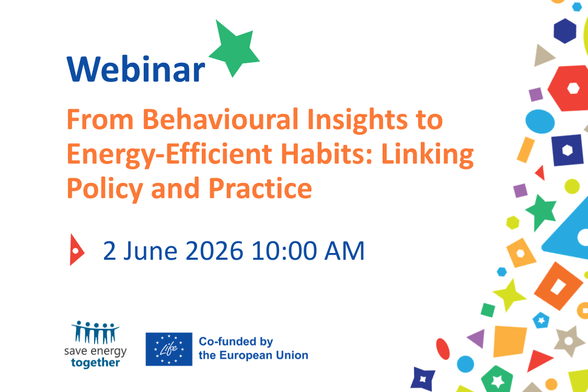
 Nick Byrd, Ph.D.
 Tony Hockley
 Alexia Gaudeul
 Sabine.Pahl
 EU_ScienceHub
 Alexia Gaudeul