A killer whale is a Giant Dolphin

A killer whale is a Giant Dolphin

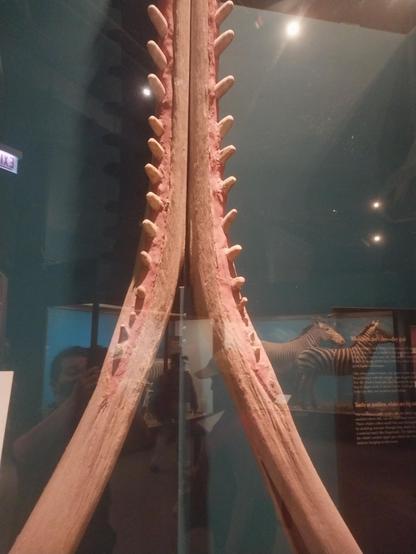
These are not teeth

In a surprising discovery, a new study reveals that among seven species of baleen whales, only the humpback is capable of the high-performance turns required for its signature bubble-net feeding strategy. The research, led by recent University of Hawaiʻi at Mānoa graduate Cameron Nemeth, shows humpbacks use their unique pectoral flippers to achieve this maneuver, shedding new light on the biomechanics of this iconic feeding strategy.
#Migrating #baleen #whales transport high-latitude nutrients to tropical & subtropical ecosystems.
Baleen whales migrate from high latitude feeding grounds to subtropical reproductive winter grounds, translocating limiting nutrients across ecosystems. This study estimates the latitudinal movement of nutrients from carcasses, placentas and urea for four species of baleen whales that exhibit annual migrations.
Râââh ! C'est quoi encore ce truc, là : #Baleen ?
Ça m'empêche de consulter un site institutionnel : vie-publique.fr
#DILA
Cc @nos_oignons
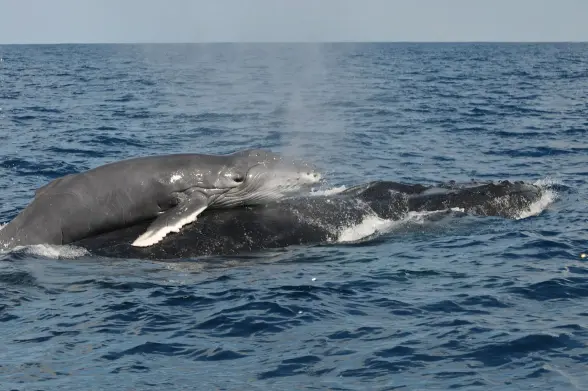
Hear how baby #Humpback #Whales burp and bark to beg for food.
The burps, barks and snorts #humpbackwhales make when asking their mother for milk are the first recorded instances of begging-like behavior in a #baleen whale.
https://www.scientificamerican.com/article/baby-humpback-whales-burp-and-bark-to-beg-mom-for-milk/
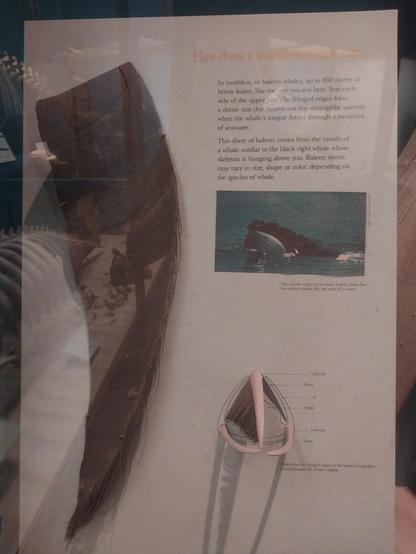
#Baleen plates provide new insight on life history of blue and fin whales https://phys.org/news/2024-07-baleen-plates-insight-life-history.html Paper by Malia Smith et al.: https://onlinelibrary.wiley.com/doi/10.1002/ece3.11376
"The analysis revealed approximately six years of life history data for blue whales and four years for fin #whales... providing a unique window into their behaviors over 80 years ago... The research was conducted using samples collected in the late 1940s that were recently rediscovered in the #Smithsonian National Museum of Natural History."
Researchers have recently released a study in Ecology and Evolution outlining their in-depth analysis of historic baleen plates, the comb structures that are used by some species of whales to filter food, from Southern Hemisphere blue and fin whales. The research was conducted using samples collected in the late 1940s that were recently rediscovered in the Smithsonian National Museum of Natural History.