 Italian News by RSS
Adnkronos - ultimoratop: Pardi (Università Vita-Salute San Raffaele Milano) a Mad for Science 2026: "Conta idea più della fattibilità"
(Adnkronos) - “Per quanto mi riguarda, il criterio principale è l’idea scientifica: avere una domanda e capire quanto i ragazzi conoscano già l’argomento rispetto a quanto vogliano scoprire”. Lo ha detto Ruggero Pardi, membro della giuria della Challenge 2026 del progetto Mad for Science e professore ordinario presso l’Università Vita-Salute San Raffaele di Milano., a margine della finale nazionale promossa da Fondazione Diasorin Ets all’Acquario Romano di Roma.
Socialist Sanchez embroiled in scandals. Here's how the criminal trial works in Spain.
Government and Spanish Socialist Workers’ Party officials have been embroiled in a series of judicial scandals that are consolidating Prime Minister Sanchez’s government. The opposition is demanding a return to a vote, while even Sumar’s allies are pressing the PSOE, deeming the explanations given yesterday by the prime minister from Rome, following an inspection by Civil Guard agents at the headquarters in calle de Ferraz, “insufficient.” To understand what is happening in the courts, it is necessary to explain how the criminal process works in Spain, which has some differences compared to the Italian legal system and is defined as “mixed,” because it combines inquisitorial elements in the investigative phase with accusatory guarantees in the trial (which, like in Italy, include the presumption of innocence, the right to technical defense, the obligation to have the assistance of a lawyer from the moment of arrest or investigation, the right not to incriminate oneself, the right to an impartial third judge, the principle of contradiction, and the right to a trial without undue delays). The total typical duration for a criminal trial that passes through the first instance and an appeal generally ranges between 2 and 3 years, although “fast trials” (juicios rápidos, used for example for minor crimes or domestic violence) conclude in much shorter times, in the order of a few weeks or months. Here is what the three phases that make up the criminal trial consist of:
Phase de Instrucción (the investigation)
It serves to gather evidence and identify the perpetrators. Unlike other legal systems, the investigation is headed by an independent judge (Juez de Instrucción) and not by the Public Prosecutor (Ministerio Fiscal). The judge decides whether to close the case for lack of evidence or to send the accused to trial (Auto de procesamiento). The duration varies depending on the complexity; for ordinary trials it can take from 6 to 18 months.
Fase de Juicio Oral (the trial or hearing)
It is the public phase in which the accusation is discussed before a judge or a court (and in more serious cases, with the presence of a popular jury). A Spanish peculiarity is the possibility of having multiple accusers in addition to the Public Prosecutor. There is the private accusation (the victim, acusación particular) and even the popular accusation (acusación popular), which allows citizens or entities to appear as civil parties to protect public interest (and this is the case – for example – of the right-wing trade union Manos Limpias, supported also by the People’s Party and Vox, in the trial that sees David Sanchez, the prime minister’s brother, on trial for influence peddling and abuse of office). During the trial, the prosecution and the defense present their arguments, examine witnesses and present evidence. The accused has the right to defend themselves, to be assisted by a lawyer and to exercise the right not to answer. It concludes with a judgment by the judge or verdict by the jury, which can be acquittal or condemnation. It should be remembered that the judge presiding over the trial (the trial judge) must be completely neutral and detached from the collection of evidence (which in Spain is carried out by the Juez de Instrucción).
Impugnazioni e Gradi di Giudizio
Both parties (the prosecution and the defense) can appeal the verdict. The first-instance judgment can be appealed before the Provincial Court (Audiencia Provincial) or the Supreme Court of Justice (depending on the crime). Finally, it is possible to file a petition for review with the Tribunal Supremo (Tribunal Supremo) for issues of legitimacy.
The article I socialists of Sanchez are embroiled in scandals. Here's how the criminal process works in Spain comes from Il Fatto Quotidiano.
#Sanchez #Spain #Sumar #CivilGuard #calledeFerraz #Italian #Italy #third #first #JuezdeInstrucción #Autodeprocesamiento #Spanish #thePublicProsecutor #ManosLimpias #thePeople’sParty #DavidSanchez #GradidiGiudizio #theProvincialCourt #AudienciaProvincial #theTribunalSupremo #IlFattoQuotidiano
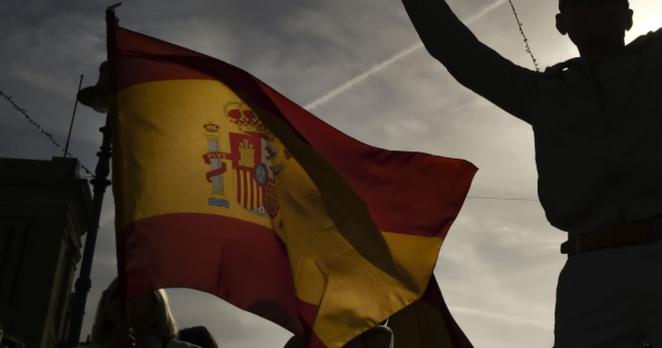
I socialisti di Sanchez travolti dagli scandali. Ecco come funziona il processo penale in Spagna
È strutturato in tre fasi e presenta alcune differenze rispetto all'ordinamento italiano. Si definisce "misto", perché fonde elementi inquisitori nella fase istruttoria con garanzie accusatorie nel dibattimento