Reminder for
#archaedons. Next week the exhibition Aztèques, dons et dieux au Templo Mayor will be inaugurated at the Musée du Quai Branly in Paris, France.
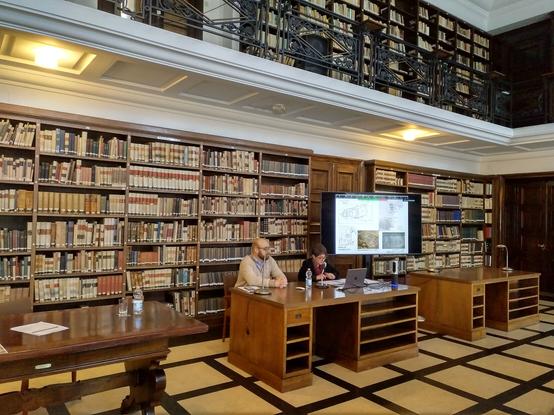
An international symposium will be held on April 4 to 6. More infos here 👉🏻
https://m.quaibranly.fr/fr/recherche-scientifique/activites/colloques-et-enseignements/conferences-et-colloques/details-de-levenement/e/rituels-en-matieres-new65d776a9e374b546009231Rituels en matière
Organisé par le musée du quai Branly – Jacques Chirac et le réseau international RITMO sur la Mésoamérique (IRN du CNRS) dans le cadre de l’exposition "Mexica : Des dons et des dieux au Templo Mayor", ce colloque international propose de réinterroger, à partir de travaux récents d’archéologues, d’historiens et d’anthropologues, les actes religieux fondamentaux que constituent, en Mésoamérique et au-delà, les offrandes et dépôts rituels.
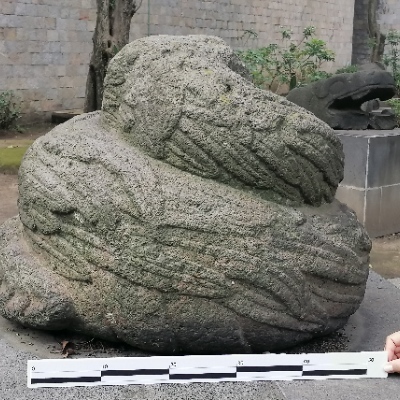
You can't miss this release if you're interested in Mexican #archaeology. It is available on Editorial Raices' website.
https://tienda.raices.com.mx/products/aves-del-mexico-antiguo
#archaedons queodons #ArqueologiaMexicana

Sicily Before the Greeks. The Interaction with Aegean and the Levant in the Pre-colonial Era
The relationship between Sicily and the eastern Mediterranean – namely Aegean, Cyprus and the Levant – represents one of the most intriguing facets of the prehistory of the island. The frequent and periodical contact with foreign cultures were a trigger for a gradual process of socio-political evolution of the indigenous community. Such relationship, already in inception during the Neolithic and the Copper Age, grew into a cultural phenomenon ruled by complex dynamics and multiple variables that ranged from the Mid-3 rd to the end of the 2 nd millennium BCE. In over 1,500 years, a very large quantity of Aegean and Levantine type materials have been identified in Sicily alongside with example of unusual local material culture traditionally interpreted as resulting from external influence. To summarize all the evidence during such long period and critically address it in order to attempt historical reconstructions is a Herculean labor. Twenty years after Sebastiano Tusa embraced this challenge for the first time, this paper takes stock on two decades of new discoveries and research reassessing a vast amount of literature, mostly published in Italian and in regional journals, while also address the outcomes of new archaeometric studies. The in-depth survey offers a new perspective of general trends in this East-West relationship which conditioned the subsequent events of the Greek and Phoenician colonization of Sicily.
 Ce Acatl Quetzalcoatl


 Bibliolater 📚 📜 🖋
 Alessio Paonessa