Rauhnåcht – Zwischenwelten Review

By Grin Reaper

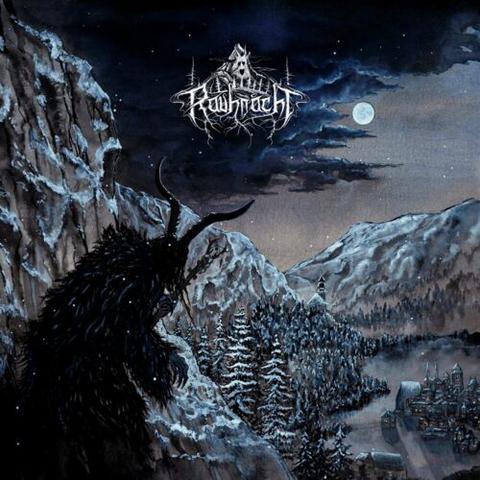
For the uninitiated, Rauhnåcht isn’t just a one-man, pagan black metal band—it’s the time between worlds as one year transitions to the next.1 This is a quiet, contemplative period drenched in folklore, when the veil between unseen, spiritual worlds and our own is thinnest, the Wild Hunt prowls the night skies, and furry, horned beasties trudge through snowcapped, picturesque villages trading offerings for luck and warding off evil. Rauhnåcht’s latest offering, Zwischenwelten, poetically translates to “the worlds between worlds,” and posits reality as a series of crossroads between antitheses, creating worlds unto themselves. Though much of reality is defined in black and white, we all exist in shades of gray. Do Zwischenwelten’s high-minded ruminations manifest in the music, or do they get lost in translation?

Rauhnåcht’s oeuvre consistently melds black metal with folk trappings. Man-behind-the-curtain Stefan Traunmüller employs a broad assortment of instruments in Zwischenwelten to charming effect, ensuring that while you’ve almost certainly heard distorted tremolos over blast beats before, there are twists here that keep the style fresh and unique. The sum total rubs elbows with Saor and Árstíðir Lífsins without imitating either. Zwischenwelten is Rauhnåcht’s fifth album overall and the first proper metal release since Grier reviewed Unterm Gipfelthron at the tail end of 2018.2 After listening to previous albums, it’s clear that Zwischenwelten is the darkest thus far. Shedding the most ebullient facets of Unterm Gipfelthron, Zwischenwelten cuts to the core and delivers an album unmistakably black metal forward. Despite that, the folk rudiments still exist; they’re just more inconspicuously assembled in this eclectic yet coherent package.

Each song on Zwischenwelten is punctuated with subtle and evocative moments. From the accordion’s airy hum in “Das Mark des Lebens” (The Marrow of Life) that conjures a fleeting, sleepy respite against freezing gusts, to the twinkle of a glockenspiel suggesting bright, piercing stars in a clear night sky (“Der Spalt zwischen den Welten” [The Gap between the Worlds]), Rauhnåcht vividly infuses traditional folk instruments into second wave fury. The vocals are a varied affair, with standard black metal screams and howls mixed with cleans that could have been pulled straight from Fear Factory’s Obsolete (“Eines Tages Seid Ihr Frei” [One Day You Will Be Free]). Throughout Zwischenwelten, choral chanting ebbs and flows (“Der Spalt zwischen den Welten,” “Das Mark des Lebens”), serving as a restrained musical theme that culminates in closer “Alleinsamkeit” (Solitude). Throughout the final track, blackened rasps trade lines with gang and choral chanting and singing, vaguely reminiscent of the interplay from “Duel of the Fates.” Through most of the song, there’s a back and forth, with tension building between half-step transitions and minor harmonies. Near the end, the two parts coalesce into a united refrain, playing in concert rather than at odds. It’s a beautiful resolution that took me several listens to pick up on, but once revealed, it was a delight to have discovered.

There’s much to unravel in the tangled knot that Rauhnåcht delivers. Zwischenwelten is protective of its secrets, but patient listeners are rewarded with a cohesive and introspective journey. Perhaps a victim of its own seamlessness, Zwischenwelten requires multiple listens to unfold, presenting a deceptively long time investment despite the reasonable forty-one-minute runtime. From the fuzzy synth pangs and flute accompaniment in “Naturgewalten” (Forces of Nature) to the black ‘n’ roll bop near the end of “Letzter Pfad” (Last Path), the variety and interweaving of disparate elements is ambitious and well-executed. Yet its understated nature makes it elusive without a focused, active listen, and could go unappreciated by more casual audiences. Another minor gripe is that occasionally the distinctive features (like the accordion in “Das Mark des Lebens”) appear in a pocket outside the black metal onslaught, but never integrate fully like the chanting in “Alleinsamkeit.” On its own, this is hardly worth a mention. Given the theme of Zwischenwelten and embracing the gray in worlds between black and white, we sometimes glimpse the extremes of sonic spectrums without a clear picture of the intersection, which feels like a missed opportunity.

Though Rauhnåcht has been absent from proper metal albums for nearly seven years, the intervening time was put to effective use. Rauhnåcht operates in a world between worlds, bound in a layered nexus of dichotomous spheres: meditative and aggressive, harsh and tender, universal and intimate. For anyone with a passing interest in black metal, and certainly anyone who enjoys folk with it, Zwischenwelten demands a listen. This is an album that requires attentiveness to appreciate it, but it is well worth the investment and a great demonstration of what a polished concept can sound like in black metal.

Rating: Very Good!
DR: 7 | Format Reviewed: 320 kb/s CBR MP3
Label: Antiq
Websites: Zwischenwelten Bandcamp | Rauhnåcht Bandcamp3 | Facebook
Releases Worldwide: August 25th, 2025

#2025 #35 #AntiqRecords #ArstidirLifsins #AtmosphericBlackMetal #Aug25 #AustrianMetal #BlackMetal #FolkBlackMetal #Rauhnåcht #Review #Saor #Sturmpercht #UntermGipfelthron #Zwischenwelten

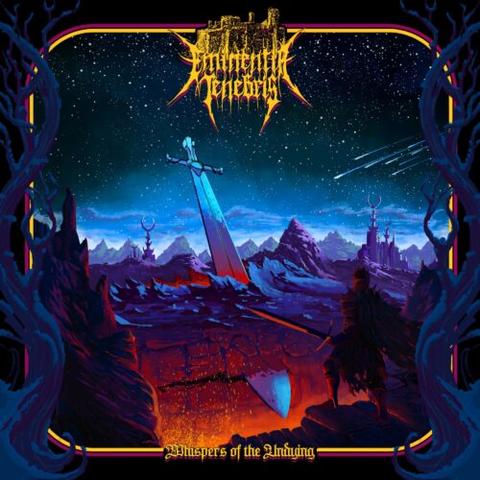
Eminentia Tenebris – Whispers of the Undying Review

By Twelve

I love black metal. But there are some black metal tropes that just don’t do it for me. I also love power metal. But there are some power metal tropes that just don’t do it for me. And it’s because of this that melodic black metal is, in my mind, a fantastic genre of music. It takes everything that’s great about black metal, most of the things that are great about power metal, and runs with them. So it’s with mild surprise that I found Eminentia Tenebris, a melodic/atmospheric black metal duo from France, are already on their fourth full-length for the style (since only 2020, no less), and I’ve been missing out! Lured in by the promise of heroic, exciting black metal, I’ve been listening to Whispers of the Undying, said fourth full-length, for a couple of weeks now. I came in with (perhaps unfairly) high expectations—how did it hold up?

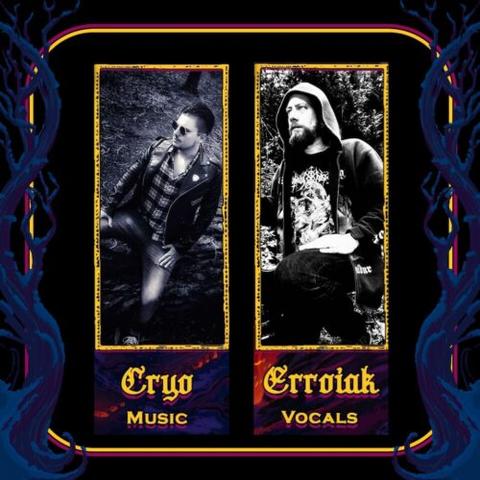
Straightaway, Eminentia Tenebris demonstrate the confidence of veteran musicians in their approach to their music. Clocking it at a mere 35 minutes, Whispers of the Undying is filled to the absolute brim with heroic, galloping black metal—as advertised! Opener “Forever Etched” is where most bands would put an epic, synth/orchestral opener to set up the mood for the next 34 minutes. Eminetia Tenebris have no time for all that. They spent the full minute and a half of the song blast beating, tremolo riffing, and screaming as if from the mountaintop. It’s grand, sweeping, and exactly what you can expect through the rest of Whispers of the Undying. Erroiak’s vocals are dominant; he roars atop blistering black metal assaults as if he’s been here since the beginning1. Cyo, the project founder, contributes drums, guitars, and synths, which are generally understated, but do a lot to add to the epic feel of the music… and make no mistake, there is epic-feeling music about here.

This might be a good spot to dissect the makeup of certain songs, but the truth is that Eminentia Tenebris are fairly consistent throughout Whispers of the Undying. Songs are driven primarily by adventurous tremolo leads and propped up by synthesized strings and horns in places where an epic swell would feel right. “Echoes of Triumph” is fun but slightly restrained, a palate cleanser ahead of chaotic forays like “Marching as One.” “Embers of Glory” switches things up by using clean chants in place of synths, while “Beneath the Moon” is bookended with acoustic guitars that serve as a welcome break between songs that are of similar lengths and styles. Cryo’s musical talent is impressive, and Erroiak’s vocals are a very strong pairing; every song has a distinct lead and vocal approach that makes the 35-minute album feel just slightly longer, a sign of good music through and through.

I’m also impressed with the production on Whispers of the Undying—and surprised, as my samples from Eminentia Tenebris’s previous releases left me worried on this front. The heavy, fuzzy, in-your-face stylings of Rise of a New Kingdom are gone; instead, Whispers of the Undying has a great deal of breathing room baked in. This feels very important for a couple of reasons: firstly, that it is far easier to feel excited and adventurous in a balanced mix, and secondly, that a lot of the songs on Whispers of the Undying work across similar lengths, paces, and themes. The mid-album duo of “Beneath the Moon” and “Through Chaos and Shadow” end up feeling a touch forgettable as a result—I can’t recall either as I’m typing—but while listening, I’m never bored, drifting off, or losing focus, and that is thanks in part to the fact that they sound good, that their adventurous spirit shines through the master and lands effectively for the listener.

Whispers of the Undying is fun. It does, seemingly, exactly what it sets out to do in building an exciting, uplifting sound rooted in aggressive, powerful black metal. While I may wish for a touch more variety in the material, there isn’t a bad song in the bunch, and never a dull moment, which alone is enough for me to recommend the experience. If, like me, you enjoy black metal that’s more on the fun side than the angry one, Eminentia Tenebris is well worth looking into.

Rating: 3.0/5.0
DR: 7 | Format Reviewed: 320 kb/s mp3
Label: Antiq Records
Websites: eminentiatenebris.bandcamp.com | facebook.com/EminentiaTenebris
Releases Worldwide: July 4th, 2025

#2025 #30 #AntiqRecords #EminentiaTenebris #FrenchMetal #Jul25 #MelodicBlackMetal #Review #Reviews #WhispersOfTheUndying

Wÿntër Ärvń – Sous l’Orage Noir – L’Astre et la Chute Review

By Twelve

Wÿntër Ärvn is a really cool project. It takes its inspiration from black metal of the ’90s and channels it into an almost fully acoustic and almost fully instrumental framework, building on many familiar feelings from that space—bitterness, inner struggles, anger, the usual stuff—in a pleasant, rather than jarring way. The French one-man project writes on acoustic guitars and builds on it such instruments as the cello, shakuhachi, and, yes, clarinet—but no electric guitars in sight. It’s a powerful concept and worked very well on Abysses, to the delight of the venerable Emya. Following up is always tricky, but a new album is here to continue the journey; how does Sous l’Orage Noir – L’Astre et la Chute stand up?

I should admit straightaway that I didn’t love Abysses. On paper, it’s right up my alley—gorgeous dark and neo folk music with a beating heart from black metal- but I found that its lack of immediacy meant it didn’t work so well for me as it did for Emya (and a lot of you). Sous l’Orage Noir – L’Astre et la ChuteUnder the Black Storm – The Star and the Fall—challenged my preconceived biases fast with “Un Voile sur l’Azur,” a calming, peaceful tune that utilizes bagpipes and whistles from Geoffroy Dell’Aria (Les Bâtards du Nord, Épaves) to stunning effect. Similarly, “Remembrances” is a gorgeous song in a similar vein, with compelling acoustic guitar and a beautiful hurdy-gurdy lead that has placed it among my most-listened-to songs over the past few weeks. It is evocative—mesmerizing, even—with an appropriately strong sense of melancholy and nostalgia that hangs over Sous l’Orage Noir in the best possible way.

As alluded to above, there is a strong diversity of instruments across Sous l’Orage Noir, thanks in part to a variety of guest musicians. Raphaël Verguin (In Cauda Venenum, Psygnosis) provides cello for “Ad Vesperam,” Vittorio Sabelli (Dawn of a Dark Age) performs clarinet for “Vingt Ans de Brouillard” and “L’Astre et la Chute,” and there’s even a harp from Laurène Telennaria (Orkhys). Similarly, not all tracks are instrumental, with singing and a few growls (Judith De Lotharingie of Ofdrykkja and Wÿntër Ärvń himself, respectively) making rare appearances throughout. Many of these elements were present in Abysses, of course, but I love the way the songwriting, production, and album direction support them. The way Sabelli’s clarinet emerges as if from the titular fog in “Vingt Ans de Brouillard” is so memorable, as is the way “Appelé à l’Abîme” builds and builds before Telennaria’s singing descends as if from a great distance. Wÿntër Ärvń demonstrates excellent songwriting on Sous l’Orage Noir, like the best of October Falls, while taking influence from across the French metal scene.

There are only two things I don’t love about Sous l’Orage Noir (a great thing to be able to say for a dark folk album). The first is that I’m not convinced the growls work with the music. While I understand the relation to black metal, I think Wÿntër Ärvń’s is too removed from the original style—his hoarse, rough growling is a stark contrast to a song as lovely as “Ad Vesperam,” and breaks my immersion a bit. It’s not even a bad choice—the backdrop of chants and percussion supports it really well, but the song itself is almost peaceful up to that point. The second is that I don’t think the back half of the album does enough to distinguish itself from the first four or five tracks, making Sous l’Orage Noir feel a bit front-loaded. I don’t love the melody in “L’Astre et la Chute, for example;” it feels passive, while “Sous L’Orage Noir” leans a bit too much on repetition. Neither are bad songs, but they don’t do much to keep up the momentum from the openers.

On the other hand, these are the same qualities that make it so easy to load Wÿntër Ärvń, close your eyes, and get carried away by the music. There is a phenomenal sense of flow to Sous l’Orage Noir – L’Astre et la Chute that complements its style so well. Whether you’re a fan of metal or folk, there’s something to love here. In my mind, Sous l’Orage Noir is a step up from Abysses, and has made me a real fan of Wÿntër Ärvń— I can’t wait to see where the music flows from here.

Rating: 3.5/5.0
DR: 8 | Format Reviewed: 320 kb/s mp3
Label: Antiq Records
Website: facebook.com/wynterarvnneofolk
Releases Worldwide: March 7th, 2025

#2025 #35 #AntiqRecords #DawnOfADarkAge #Épaves #FrenchMetal #InCaudaVenenum #LesBâtardsDuNord #Mar25 #Neofolk #OctoberFalls #Ofdrykkja #Orkhys #Psygnosis #Review #Reviews #SousLOrageNoirLAstreEtLaChute #WÿntërÄrvń

Wÿntër Ärvń - Sous l'Orage Noir - L'Astre et la Chute Review | Angry Metal Guy

A review of Sous l'Orage Noir - L'Astre et la Chute by Wÿntër Ärvń, available March 7th worldwide via Antiq Records.

Angry Metal Guy

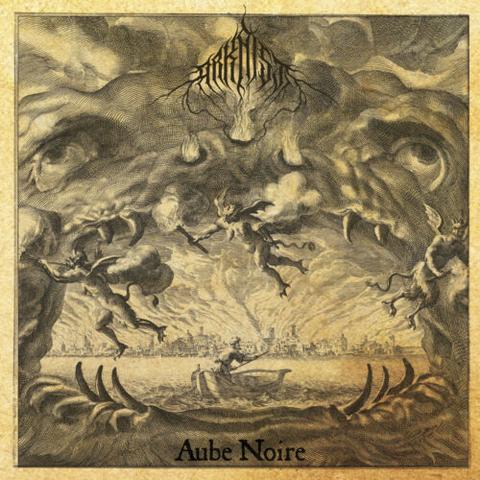
Arkaist – Aube Noir Review

By Doom_et_Al

A few years ago, my girlfriend and I went to a well-renowned barista in Paris. He was amicable and efficient, and when he handed my girlfriend her latte she enquired if she could have it with some sugar. “No,” he cheerfully rejoined. And that was the end of the conversation. I still smile when I think about this event because it sums up a lot of what I love about the French: quirky and uncompromising. Don’t fuck up their beautiful drink with your primitive sugar. The same attitude is what makes their black metal so endearing and interesting. So much of it is original and avant-garde and just… French. So I was intrigued to review Aube Noir, the debut of a new metal outfit, Arkaist, formed in 2023 by two stalwarts of the French underground scene, Beobachtan and Maeror. It also arrives on the well-regarded label Antiq. Much to be excited about. Lord knows I could do with some strong French coffee…

The first thing to note is that French may be, but Arkaist’s sound is much more closely related to their second-wave Norwegian counterparts. This is very straight-down-the-line black metal that borrows heavily from Immortal and Darkthrone. And this is where we hit the first snag. Aube Noir is so poker-faced and derivative that very little of it stands out. Arkaist surely have an identity, but you would be hard-pressed to find it on their debut. The music suggests they are aiming for something raw and scary, but the lyrics – focused as they are on the philosophy of a decaying society – muddy the waters by proposing introspective and intellectual ideas. The songs themselves are neither riffy enough to count as catchy black metal, nor fuzzy and distorted for a more atmospheric vibe. The result is an album that is unsure of what it is, and as a result, plays things far too safe.

This “safety first” approach is further evidenced in the compositions themselves. Beyond some nice moments here and there, they’re entirely formulaic. Chords move up and down with the unpredictability of a porn film. The structure is rigid with very few explorations beyond the most banal and unadventurous (“Ode à la haine” sounds like it lives and breathes its entire 4-minute run time in 5 notes). The whole endeavor can perhaps best be summed up by Maeror’s vocal performance. It is repetitive and one-note, lacking any real feeling or variation. Inexplicably, it is brought to the front of the mix, perhaps to hide the dearth of music ideas backing it.

It’s not all doom and gloom, of course. These are seasoned musicians, so there are some good moments here and there. “Terre ancestrale” has an interesting chant to begin proceedings, before launching into crunchy, mid-paced black metal that hits the spot. “Puer Aeternus” injects some feeling into a satisfying close. These moments paradoxically frustrate because they show what Arkaist are capable of, but so haphazardly deliver. The whole album has an authentically malevolent sheen, lending it an aura of authenticity. The downside is that the guitars are muddied at the expense of the unexciting vocals, creating a nondescript blur.

Aube Noir, then, is ultimately hugely disappointing. An exciting project from seasoned musicians on a discerning label? Combined with the fact that French metal is usually chock-full of character and personality? This thing checks so many interesting boxes. What we have instead is bland and lacklustre; music devoid of any sense of direction or personality. Songs that can’t decide what they’re going for beyond sounding kvlt. Arkaist need to inject some personality and drive into their material fast. In the meantime, there’s better coffee to be found elsewhere.

Rating: 1.5/5.0
DR: 9 | Format Reviewed: 320 kbps mp3
Label: Antiq Records
Websites: arkaist.bandcamp.com/album/aube-noire | www.facebook.com/p/Arkaist
Releases Worldwide: February 24th, 2025

#15 #2025 #AntiqRecords #Arkaist #AubeNoir #BlackMetal #Darkthrone #Feb25 #FrenchMetal #Immortal #Review #Reviews

Arkaist - Aube Noir Review | Angry Metal Guy

A review of Aube Noir by Arkaist, released worldwide February 24th via Antiq Records.

Angry Metal Guy

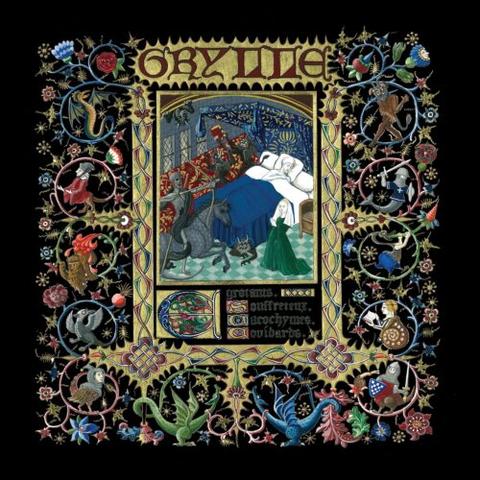
Grylle – Egrotants, Souffreteux, Cacochymes, Covidards Review

By Twelve

I like Antiq Records. Generally, their albums tread the line between different, powerful, and weird very nicely, so it’s always a treat when one of their new releases happens by the Angry Metal Offices. It should come as no surprise that I’m a fan of Hyvermor. He’s the co-owner of the label and has been a part of several projects that I love—Hanternoz, Véhémence, and Grylle, to name a few. Grylle is perhaps the least “metal” of the three1, and also the folkiest, leaning fully into the medieval themes that serve Hyvermor and Antiq Records so well. Boasting an impressive lineup of guest musicians on all kinds of fun instruments, Egrotants, Souffreteux, Cacochymes, Covidards is the third full-length release from Gylle, and is, as per usual, a treat to explore.

Now, when I say an impressive lineup of guest musicians on all kinds of fun instruments, I mean it. Apart from bass and drums by KK and Cadavre respectively, there are no fewer than seven guest musicians on Egrotants, Souffreteux, Cacochymes, Covidards, whose contributions include a small horn section, citole, bagpipes, flutes, a hurdy gurdy, and something called a mandocello. As a result, Grylle’s music feels more multifaceted than it ever has before. More than previous records, Egrotants, Souffreteux, Cacochymes, Covidards is a black metal album firmly entrenched in medieval and folk themes, with one major difference—nearly all of the leads are performed by what I believe is the mandocello. Nearly all of the tremolo leads are acoustic, and even the distorted guitars are medieval instruments, though those are distorted enough to resemble the electric instruments of today. The result is what I imagine October Falls would sound like if you made them play the metal and acoustic bits at the same time; the riffs have that slick-yet-dark edge to them, while the acoustic sections enliven and enhance.

Of course, that’s not a perfect comparison, because Egrotants, Souffreteux, Cacochymes, Covidards is unquestionably a folk metal album. The gorgeous brass and trumpets (Lazareth) on”Mauvais Sang” work with mandocello and (I think) psaltery to add a shining, hopeful dimension to the song, while the hurdy gurdy (Sparda, Hanternoz, and Créatures) makes “Réservement de Confortale Présence” a uniquely mournful march, evoking Apocalypse Orchestra. Hearing acoustic and stringed instruments race to keep up with a full metal outfit on “Moribond Flétri d’Orgueil” is a fascinating experience, and it makes for an entertaining and strangely uplifting tune. Throughout it all, Hyvermor’s vocals (joined occasionally by La Griesche (Tour d’Ivoire) and Sparda, chant, rasp, and shout out stories for the ages, binding together the eclectic sound in a firmly metal base.

I’m not sure if Grylle has a particular weakness, but there are a number of small things about Egrotants, Souffreteux, Cacochymes, Covidards that keep me from being fully drawn in. “Grande Marche des Covidards” and “Réservement de Confortale Présence” both have nice moments musically, but give the impression of being half-finished, or containing ideas that never made it to full songs. As intro and interlude tracks, they’re easily forgettable, but without them, the album is only about half an hour. With only so much in the way of metal music, every moment has to count, and while most songs are very good—”Le Tropique du Cancer” in particular is exceptional—there are a few less exciting tracks, such as closer “La Triomphe de la Mort.” Hyvermor’s vocals are also an acquired taste; his delivery is expressive and strong but sits in an odd realm of being too strong for medieval folk and not quite dark enough for black metal. I wouldn’t say it doesn’t work, but there are moments here and there where you can imagine an alternate delivery or style suiting the song better. With that said, it is hard to blame Grylle for chasing an authentic sound, and most of the time, it works well.

Egrotants, Souffreteux, Cacochymes, Covidards is a fun album and Grylle is a project to keep an eye on. This is a style of music that is familiar and new, an approach to something established that I’ve never heard before. Grylle has written and performed it extremely well. As ever, I am eager to see where medieval metal goes from here—based on Egrotants, Souffreteux, Cacochymes, Covidards, the possibilities seem endless.

Rating: 3.0/5.0
DR: 8 | Format Reviewed: 320 kb/s mp3
Label: Antiq Records
Websites: grylle.bandcamp.com | facebook.com/grylleofficiel
Releases Worldwide: November 10th, 2024

#2024 #30 #AntiqRecords #ApocalypseOrchestra #BlackMetal #Créatures #EgrotantsSouffreteuxCacochymesCovidards #FolkMetal #FrenchMetal #Grylle #Hanternoz #Nov24 #OctoberFalls #Review #Reviews #TourDIvoire #Vehemence

Grylle - Egrotants, Souffreteux, Cacochymes, Covidards Review

A review of Grylle - Egrotants, Souffreteux, Cacochymes, Covidards, a folk black metal project from Hyvermor and Antiq Records. Out on the 10th of November, 2024!

Angry Metal Guy

Silhouette – Les Dires de l’​Â​me Review

By Carcharodon

There’s a little bit of buzz about Montpellier, France’s Silhouette, ahead of their full-length debut, Les Dires de l’​Â​me. This is built on the undeniable strength of their 2022 EP, Les retranchements (which, passing the 30-minute / seven-track mark as it did, was arguably an LP but that’s by the by). There, the sextet blended various styles, including black and post-metal, and shoegaze to create a dark and dreamy atmosphere, which oscillated between ghostly beauty and harsh, post-black fury. A lot of the credit for those moods must go to Silhouette’s dual vocalists, Ondine and Yharnam, who serve up gorgeous (female) cleans and anguished (male) post-hardcore screams, respectively. Now extending themselves into longer-form album creation, can the French group conjure up similarly enchantments on Les Dires de l’Âme?

If Les retranchements found Silhouette lost in a disturbing daydream, Les Dires de l’Âme sees them trapped in a labyrinthine nightmare of dense, swirling banks of bittersweet emotion. At times, honeyed darkness, at others crawling horrors, it’s the sort of thing you wake up from wide-eyed, shaking and moist with sweat. Evoking the hopeless misery of Amenra, combined with the gossamer, ethereal turbulence of Sylvaine’s Nova, Silhouette simply sweep you along with them on this journey. Despite running to a relatively modest 45 minutes, the sheer scale and grandeur, the epic feel, packed into this record’s short run, remind me of Hulder’s Verses in Oath. However, Les Dires de l’Âme is a significantly more diverse record, subtly shifting between, at one end of the spectrum, soaring, percussion-free laments (“L’Appel”) and huge, oppressive post-black, doom-tinged pieces (title track), at the other. At their most effective, however, Silhouette seamlessly blend these two sides of their sound, allowing them to twist into and around each other (“Catalepsie”).

Undoubtedly Silhouette’s greatest asset is its vocalists. On Les Dires de l’Âme, Ondine and Yharnam voices combine to create something of the magic found on Cult of Luna and Julie Christmas’ collaboration, Mariner. Although Silhouette also attracts the post-metal tag, they have relatively little in common with Cult of Luna musically (though see “Silhouette”, where a few similarities surface in the guitar work), save for that feeling that the dueling vocals of Joanne’s Persson and Christmas were able to call forth. The shades of light and dark, beauty and pain are spellbinding, even more so when the two run in parallel, with Yharnam howling over Ondine’s airy, elegant cleans (“Une Lame Éprise,” and the back end of “Dysthymie”). All this praise for the vocalists should not detract from the work of guitarists Achlys and Vyartha. Together, they deliver towering post-metal soundscapes that crush like calving glaciers, alongside blackened tremolos but also delicately melodic, picked passages, which enhance the trance-like reverie. In places, the guitar work reminds me of the most recent Downfall of Gaia (“Une Lame Éprise” and the title track), in others Alcest’s Écailles de Lune. Zhand’s drumming is similarly deft in touch, with progressive fills and restrained, almost post-rock, beats featuring as often as the metronomically precise blasts.

It’s not just the songwriting, but also the overall pacing and structuring of the album, that makes Les Dires de l’Âme the massive success it is. Silhouette’s ability to glide between harsh and delicate, or soften the blackened edges of their sound, both through Ondine’s voice but also the keen melodies of Achlys guitar, are second to none. They also made some bold writing choices, like on “Adoubée des étoiles,” which sees Yharnam take a back seat, as Ondine’s vocals are double-tracked to stunning effect over claustrophobic, brooding guitar lines. The production is also generally strong, with drum sound particularly rich, which is not always the case for post-black bands. The positioning of the vocals in the mix also plays to their strength, putting them front and centre, allowing Ondine’s voice in particular to take flight, but without totally dominating.

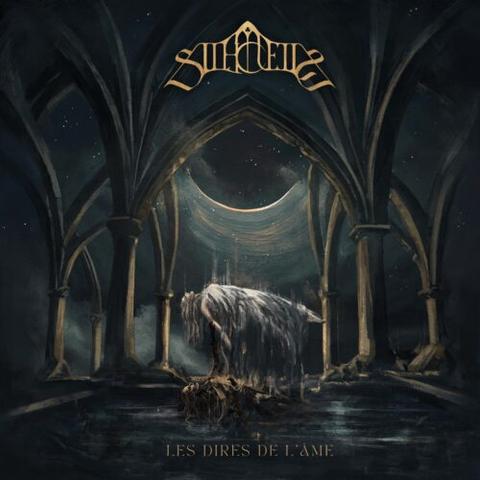
The cover art, depicting a shrouded soul drifting up from a broken corpse toward a dark and starry sky, is a good metaphor for what Silhouette created with Les Dires de l’Âme. A haunting experience from start to finish, it is one that could so easily have fallen prey to the twin pitfalls of over-indulgent writing and terrible production. It did not and that is hugely to Silhouette’s credit. They have crafted a hypnotic debut, which will truly be hard to top on their next outing. Don’t be surprised to see this appearing on some year-end Lists (including mine).

Rating: 4.0/5.0
DR: 6 | Format Reviewed: 320 kb/s mp3
Label: Antiq Records
Websites: silhouettebm.bandcamp.com | facebook.com/SilhouetteBM
Releases Worldwide: October 20th, 2024

#2024 #40 #Alcest #Amenra #AntiqRecords #AtmosphericBlackMetal #BlackMetal #CultOfLuna #DownfallOfGaia #FrenchMetal #Hulder #JulieChristmas #LesDiresDeLÂMe #Oct24 #PostHardcore #PostMetal #Review #Reviews #Shoegaze #Silhouette #Sylvaine

Silhouette - Les Dires de l'​Â​me Review | Angry Metal Guy

A review of Les Dires de l'​Â​me by Silhouette, available October 20th worldwide via Antiq Records.

Angry Metal Guy