 Craig Saila
65 years ago today
https://www.nasa.gov/image-article/building-on-americas-65-year-legacy-of-human-spaceflight/
#SpaceHistory #NASA #AlanShepard #Gemini #Freedom7 #MercuryRedstone3
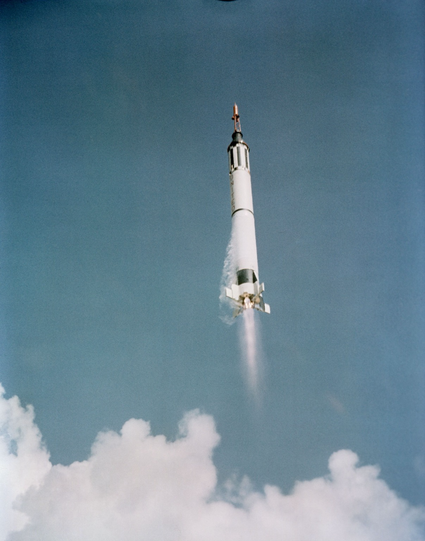
65 years ago today
https://www.nasa.gov/image-article/building-on-americas-65-year-legacy-of-human-spaceflight/
#SpaceHistory #NASA #AlanShepard #Gemini #Freedom7 #MercuryRedstone3
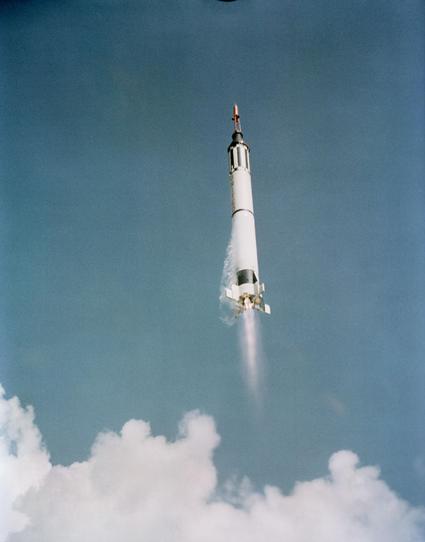
📚 Alan Shepard war der erste Amerikaner im Weltraum und startete die US-Aufholjagd im Weltraumrennen.
• USA zunächst im Weltraumrennen zurück.
• Shepards Flug vor 65 Jahren markierte Wendepunkt.
• Flug ebnete den Weg zur Mondlandung.
https://www.deutschlandfunk.de/alan-shepard-astronaut-weltraum-nasa-100.html
#AlanShepard #Weltraum #NASA #Astronaut #USA #Weltraumrennen

HD Hyundai Heavy Industries has secured a contract to provide MRO services for the US Navy's logistics support vessel USNS Cesar Chavez, following the successful completion of a similar project for the USNS Alan Shepard, highlighting the company's growing presence in the US naval maintenance market.
Felietony:
»Adam Cebula „Na marginesie kosmosu”«
Na marginesie kosmosu W zasadzie powinien być to tekst o locie Polaka w kosmos. Niestety, nie mamy własnego korespondenta w USA, nie mówiąc już o akredytacji w NASA. Zatem nie ma większego sensu konkurować z wielkimi agencjami. Owszem, jest sens przypomnieć tu kilka rzeczy o kosmosie, hard SF i okolicach Ziemi. Dlaczego wyróżniamy takie miejsce jak kosmos? Jeśli prześledzimy historyczne doniesienia, to wiemy na przykład, że Gagarin niewątpliwie był w kosmosie. Alan Shepard był, ale tylko „w […]
https://www.fahrenheit.net.pl/publicystyka/felietony/adam-cebula-na-marginesie-kosmosu/
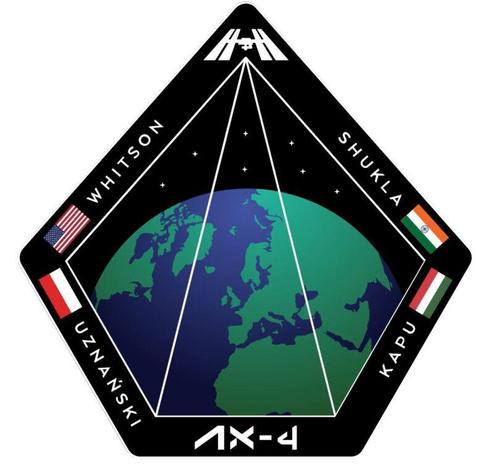
#Fahrenheit_zin #AdamCebula #JohnGlenn #kosmos #Ziemia #JurijGagarin #LotyKosmiczne #AlanShepard #SaturnV #wahadłowiec #KonstantinCiołkowski #PeggyWhitson #ShubhanshuShukla #SławoszUznańskiWiśniewski #TiborKapu
“‘So close, yet so far,’ sighs Cape” was the subheading to the lead article in the Huntsville Times on Wednesday April 12, 1961, announcing the flight of Soviet cosmonaut Yuri Gagarin as he became the first person in space.
This disappointed quote reflected NASA’s dashed hopes that the United States might take the lead in the Cold War Space Race of the 1960s. They’d come so close to launching the world’s first space traveler, but had delayed a potential astronaut launch in March 1961 in favor of one final uncrewed test of the Mercury-Redstone system.
Initiated in October 1958, just six days after NASA formally came into existence, Project Mercury was the agency’s human spaceflight program. Taking its name from the messenger of the gods in Roman mythology, the aim of the Mercury program was to demonstrate that it was possible to put a human into Earth orbit and return them safely, as well as investigating how well people could function in the weightless environment of space. Project Mercury aimed to achieve this feat before the Soviet Union, placing America ahead in the nascent-but-rapidly-heating Space Race with the USSR.
NASAThe seven members of the Mercury astronaut team, selected through a rigorous process of physical and psychological testing from 110 active-duty military test pilots, were introduced to the public in April 1959. When Walter M. Schirra Jr., Donald K. Slayton, John H. Glenn Jr., and M. Scott Carpenter, Alan B. Shepard Jr., Virgil I. Grissom, and L. Gordon Cooper, Jr. donned their now-iconic spacesuits, they entered the annals of history, as seen in this 1960 group portrait.
Known as the Mercury Seven, the astronauts quickly became national celebrities through ample media promotion, portrayed as Cold War “knights in shining armor” in their silvery spacesuits, squaring up to contest with Communism for the heavens.
The first Mercury spaceflights would be sub-orbital, following a ballistic trajectory that entered the space environment but did not put the astronaut in orbit, and utilized a variant of the Redstone Intermediate Range Ballistic Missile, designed at the Redstone Arsenal in Huntsville, Alabama. The sub-orbital missions would be followed by orbital flights launched using the more powerful Atlas Intercontinental Ballistic Missile, which was still under development as Mercury commenced.
The spacecraft and launch vehicle intended for the first human spaceflight arrived at Cape Canaveral in December 1960, with the historic mission scheduled for a tentative date in early March.
NASAIn January, astronaut Alan Shepard was nominated as the pilot of the MR-3 (Mercury-Redstone-3) mission, with John Glenn and “Gus” Grissom as back-ups. The names of all three astronauts were publicly released in February, although it was not specified which of them would become the first person in space if all went to plan.
NASAAs pilot, Shepard named his spacecraft Freedom 7, referencing the model number of the capsule (McDonnell Model #7), not the Mercury 7 astronauts as is commonly believed. The other astronauts liked the symbolism of the 7 and continued using the number when naming other spacecrafts in the Mercury program.
Preparations for the MR-3 launch were delayed by technical issues with both the spacecraft and launch vehicle. In addition, the January 31 MR-2 all-up test flight of the Mercury-Redstone system, carrying Ham the astrochimp experienced several problems with the booster rocket, and a cautious NASA (not wanting a failure during the publicly-televised launch) decided on one final flight test of the launch vehicle. It was slated for March 28, pushing MR-3 back into late April.
Unfortunately for Shepard (and the United States), the delay to the MR-3 launch cost him the chance to become the world’s first space traveler when the Soviet Union launched cosmonaut Yuri Gagarin into orbit on April 12. The USSR not only claimed the prize of the first human in space, but they also earned the prestige of placing the first person in orbit.
NASAAfter various technical and weather delays, May 5, 1961, was finally set for the MR-3 launch. US Navy Lt. Commander Alan Shepard became the first American in space when the Redstone rocket soared aloft from Cape Canaveral at 9:34 a.m. ET. The launch was broadcast live to an estimated US television audience of 45 million.
NASADuring the short flight, Shepard experienced about five minutes of weightlessness. He showed that he was able to function without impairment and could control the Mercury capsule manually. Shepard was able to distinguish major geographical features from space with the naked eye and also took photographs during the flight.
After reaching an altitude of 116 miles, Freedom 7’s sub-orbital flight splashed down 304 miles downrange in the Atlantic Ocean just 15 minutes and 22 seconds after launch. Shepard was quickly recovered and immediately hailed as a national hero.
Stung by the USSR once again beating the United States to a historic space achievement, President Kennedy addressed Congress on May 25, just three weeks after Shepard’s flight, and committed his country to “achieving the goal, before this decade is out, of landing a man on the moon and returning him safely to Earth.” This set in motion the Apollo program, resulting in the Apollo 11 mission that would achieve the first successful human mission to the moon in July 1969, effectively winning the Space Race for the United States.
Shepard’s backups, Grissom and Glenn respectively, flew the next two missions: the sub-orbital MR-4 and the orbital MA-6, which was also the first crewed Mercury-Atlas flight. As the first American to orbit the Earth, Marine Colonel John Glenn finally enabled NASA to equal that Soviet achievement, but Glenn’s fame also eclipsed that of Alan Shepard, who found himself grounded in 1963 due to a medical condition.
After acting for six years as NASA’s Chief of the Astronaut Office, Shepard returned to flight status in 1969. He became the commander of the 1971 Apollo 14 mission, the only one of the Mercury astronauts to land on the moon.
NASAFantastic Fiction: Fifteen Minutes of Fame: Alan Shepard and MR-3: American astronaut Alan Shepard could have become the first person in space, but NASA’s desire for just one more test flight delayed his launch, and he lost that historic position to Soviet cosmonaut Yuri Gagarin. Discover how NASA’s Project Mercury helped to turn the age-old dream of human spaceflight into reality in 1961 as the Cold War Space Rac… (#AlanShepard)

American astronaut Alan Shepard could have become the first person in space, but NASA’s desire for just one more test flight delayed his launch, and he lost that historic position to Soviet cosmonaut Yuri Gagarin. Discover how NASA’s Project Mercury helped to turn the age-old dream of human spaceflight into reality in 1961 as the Cold War Space Race started to heat up.
The #spacesuit that Alan #Shepard wore on the #Moon during the #Apollo 14 mission.
#AlanShepard was the first American in space and the second person in space after Yuri Gagarin.
He was grounded after he was found to have developed an inner-ear disease. A surgery fixed the problem and he returned to flight to command #Apollo14.
Get a print of this image or another at https://heronfox.pixels.com/featured/alan-shepard-spacesuit-heron-and-fox.html
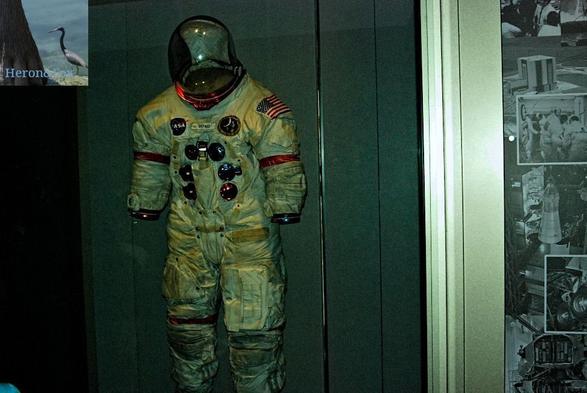
Today's episode of featured Wiki of the Day is on the article Alan Shepard.
Listen to the new episode here: https://wikioftheday.com/wotdep.php?pod=featured&epnum=2388
See our archives or subscribe here: https://wikioftheday.com
 Jim Carey
 Feed2Mastodon
 Raurquiz
 Yonhap Infomax News
 Fahrenheit
 Seattle Worldcon 2025
 Seattle Worldcon 2025
 Heron&Fox Photo
 Wiki of the Day