 Christoph Maier
 Hacker News
A shower thought turned into a beautiful Collatz visualization
https://abstractnonsense.com/collatz/
#HackerNews #showerthoughts #Collatz #visualization #abstractnonsense #creativity #techart
@apublicimage @larsweisbrod @qoheniac
Es bleibt schwierig mit der Sinnsuche.
Might very well be that my
"Creativity is combining AI books no one else has connected before"
(in the reading group, at least)
joke:
@anil 's
How, Why, (and Who) Wonder Book of Machine Learning
is something like an
"eternal golden braid"
of three rather distinct threads.
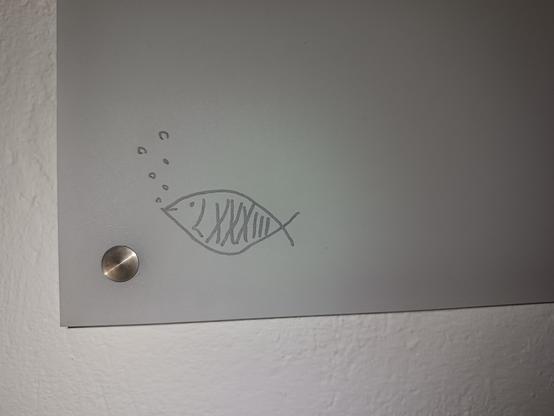
—hidden away in the ALT-text of a picture in my previous post—
might be WAY too obscure in the uncollapsed context
[https://en.wikipedia.org/wiki/Context_collapse]
of the reading group.
Maybe I should rephrase a little:
@anil 's
"Why Machines Learn"
starts (or continues, as it were)
like a three-part invention
as a braid of three rather distinct narrative strands.
Then again, by chapter 2,
@larsweisbrod 's
confusion about different
(intuitive, geometric vs. axiomatic, algebraic)
explanations of
What's All This Linear Function Stuff, Anyhow?
may already be water under the bridge.
"Quaerendo invenietis"
is my advice to the reader.
[ISBN 0-394-74502-7, p.10]
#AbstractNonsense
#SearchForMeaning
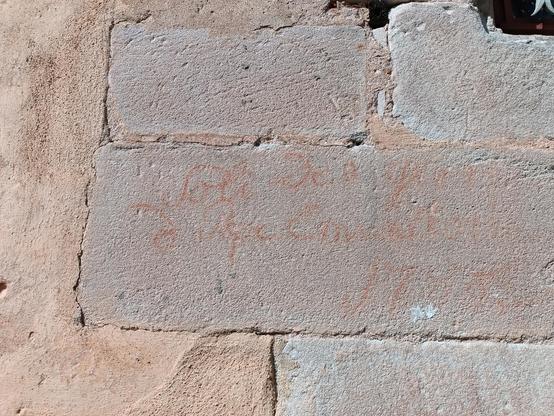
#Graffiti

A shower thought turned into a beautiful Collatz visualization
https://abstractnonsense.com/collatz/
#HackerNews #showerthoughts #Collatz #visualization #abstractnonsense #creativity #techart
Anyone got a good example of a category that "appears" thin (or one might otherwise assume is thin), that on thorough analysis turns out not to be thin? #abstractnonsense
Or, the equivalent with #haskell type classes (no orphans)?
No, the puzzle comes from another relation which relates the terms of functions to their types. This is a typechecker when run forwards and a program generator when run backwards.
I have several tests which don't run backwards; the type is inhabited via #abstractnonsense, but the generator couldn't find a suitable term for the type. This was fine; I put a timeout on the test and kept hacking. But what if...?
 Boyd Stephen Smith Jr.
 Corbin